Ceramides for Skin: Why This Barrier Ingredient Matters More After 40
The lipids that hold your skin together deplete with age — and that changes everything about how your skincare works
Most skincare conversations focus on what goes into the skin — the actives, the vitamins, the growth factors. Far fewer focus on whether the skin can actually receive them. That distinction is what makes ceramides one of the most strategically important ingredients in any serious anti-aging routine, and why their role becomes more significant, not less, as you age.
The Architecture of a Healthy Barrier
The outermost layer of the skin — the stratum corneum — doesn’t function like a passive shell. It’s an active, organized structure built on what dermatologists call the “brick and mortar” model. Keratinocytes (the bricks) are embedded in a continuous lipid matrix (the mortar). That matrix determines almost everything about how your skin behaves: how much water it retains, how readily it becomes inflamed, and how effectively topical ingredients penetrate to where they’re needed.
Ceramides make up the dominant lipid class in this intercellular matrix, accounting for approximately 40–50% of the total lipid composition of the stratum corneum [1]. They serve as the structural backbone of the barrier — forming the organized lamellar bilayers that create the semi-permeable membrane your skin uses to regulate water loss and filter environmental insults.
When the ceramide content is high and the lipid organization is intact, skin holds moisture efficiently, resists irritation, and allows actives to penetrate at a controlled, tolerable rate. When ceramide content is low or the lipid organization is disrupted, the barrier becomes leaky — water escapes faster than it should (a process called transepidermal water loss, or TEWL), environmental triggers pass through more easily, and the threshold for irritation drops sharply [1].
How Aging Depletes Ceramides
The ceramide content of the stratum corneum is not static. Research measuring stratum corneum lipid composition across female age groups found that total ceramide mass levels declined progressively with age across all body sites studied — face, hands, and legs [2]. The decline was compounded by seasonal factors, with ceramide levels reaching their lowest in winter, which helps explain why older skin struggles with xerosis and barrier compromise more severely in cold, dry conditions [2].
This isn’t a gradual, inconsequential process. Reduced ceramide levels mean reduced lamellar bilayer organization, which means increased TEWL, decreased flexibility of the stratum corneum, and greater vulnerability to any exogenous stress — including the application of active ingredients [1]. A skin that was tolerant of a retinol concentration in its 30s may become reactive to the same concentration in its 50s, not because of a change in the retinol, but because the barrier delivering it has thinned.
Studies focused on ceramide levels in menopausal skin have found significantly decreased total ceramide concentrations compared to premenopausal controls, driven partly by estrogen’s role in regulating the enzymes responsible for ceramide synthesis.
Post-menopausal women face a compounded problem. Studies focused on ceramide levels in menopausal skin have found significantly decreased total ceramide concentrations compared to premenopausal controls, driven partly by estrogen’s role in regulating the enzymes responsible for ceramide synthesis [1]. The same hormonal transition that accelerates collagen loss also undermines the lipid architecture that protects what remains.
The Active Ingredient Paradox
Here’s the irony that ceramide depletion creates: the period when skin most needs potent active ingredients — the 40s and 50s, when collagen loss accelerates and pigmentation accumulates — is precisely when a compromised barrier makes those ingredients hardest to tolerate.
Conventional retinol formulations are a clear example. These products often use chemical vehicles designed to disrupt the lipid barrier as part of their penetration strategy. On a well-ceramide-supported barrier, this disruption is manageable and temporary. On a barrier already running with depleted ceramides, the same disruption triggers a cascade: increased TEWL, inflammation, redness, and the peeling that makes retinol a polarizing ingredient for many women over 40 [3].
The result is a population of women who most need retinol’s collagen-building benefits but find themselves abandoning it because of a barrier that can no longer absorb the collateral damage of conventional delivery.
What Topical Ceramides Actually Do
Applying topical ceramides doesn’t work like applying a moisturizer. The goal isn’t to sit on the surface of the skin — it’s to integrate into the lipid matrix of the stratum corneum and restore the structural organization that drives functional barrier performance.
Here’s the irony that ceramide depletion creates: the period when skin most needs potent active ingredients — the 40s and 50s, when collagen loss accelerates and pigmentation accumulates — is precisely when a compromised barrier makes those ingredients hardest to tolerate.
When a ceramide-containing formulation is properly developed — with the right ceramide types, chain lengths, and supporting lipids like cholesterol and free fatty acids — it can meaningfully contribute to the reorganization of the lamellar structure [1]. In a randomized, observer-blind study of 34 adults with dry, eczema-prone skin, a cream containing ceramides, triglycerides, and cholesterol improved barrier integrity and resistance to irritation compared with a reference emollient after four weeks [4].
The critical qualifier is “well-formulated.” Ceramide chain length and type matter enormously — short-chain ceramides can actually disrupt barrier organization rather than support it [1]. Ceramides without the supporting lipid matrix (cholesterol, free fatty acids, the “triphasic” system) may not integrate properly. This is why ceramide products vary so significantly in their clinical outcomes despite similar ingredient listings. It is also why an authority claim on the front of a jar predicts so little, which our guide to the dermatologist recommended moisturizer label covers.
The Retinol–Ceramide Strategy
For anyone using retinol in their 40s or 50s, ceramides deserve to be thought of as an infrastructure investment — the foundation that determines how well everything else works. The practical strategy: apply a well-formulated ceramide moisturizer in the morning to fortify the barrier before it faces UV and environmental challenge. At night, use retinol. A restored, ceramide-rich barrier tolerates retinol more effectively, reduces the risk of the irritation cycle that drives abandonment, and allows the active ingredient to penetrate at the rate it’s designed to.
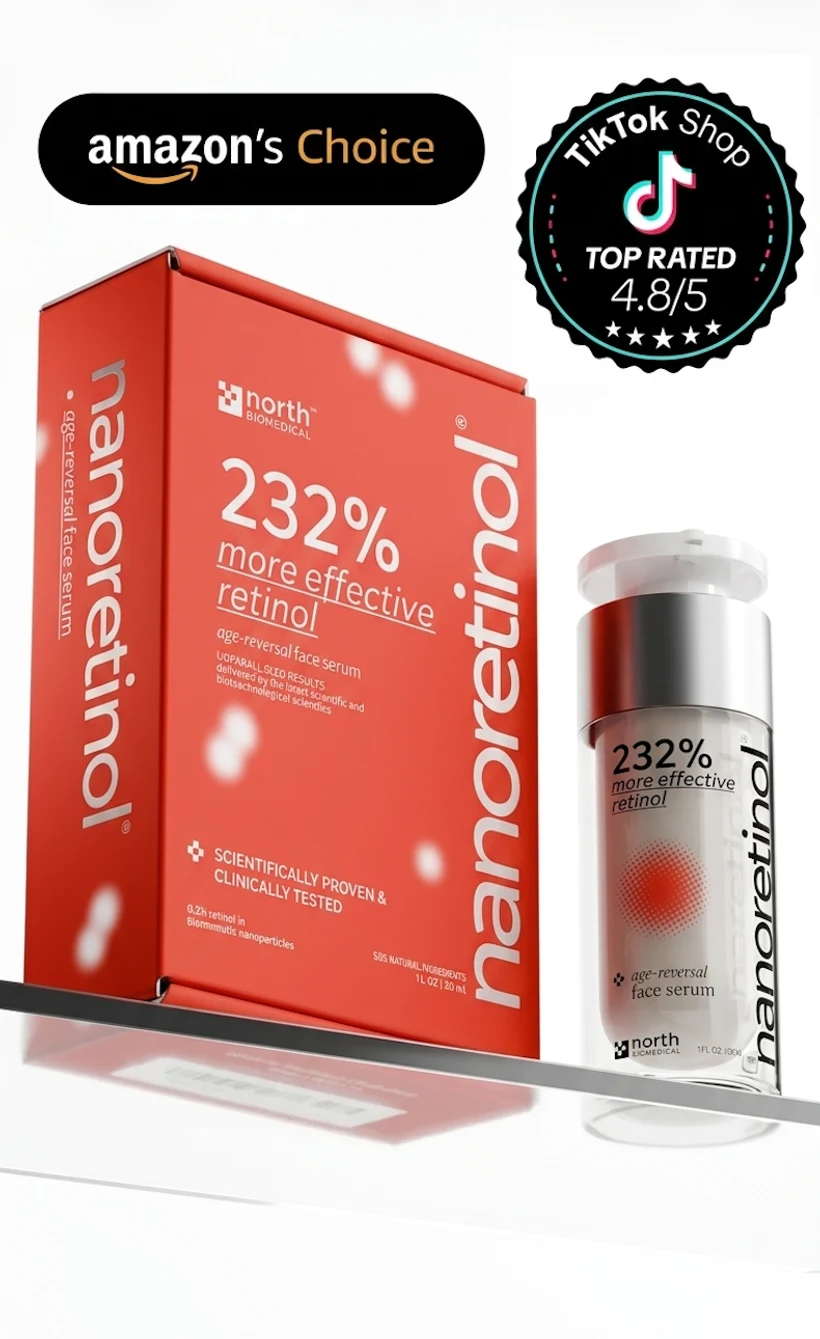
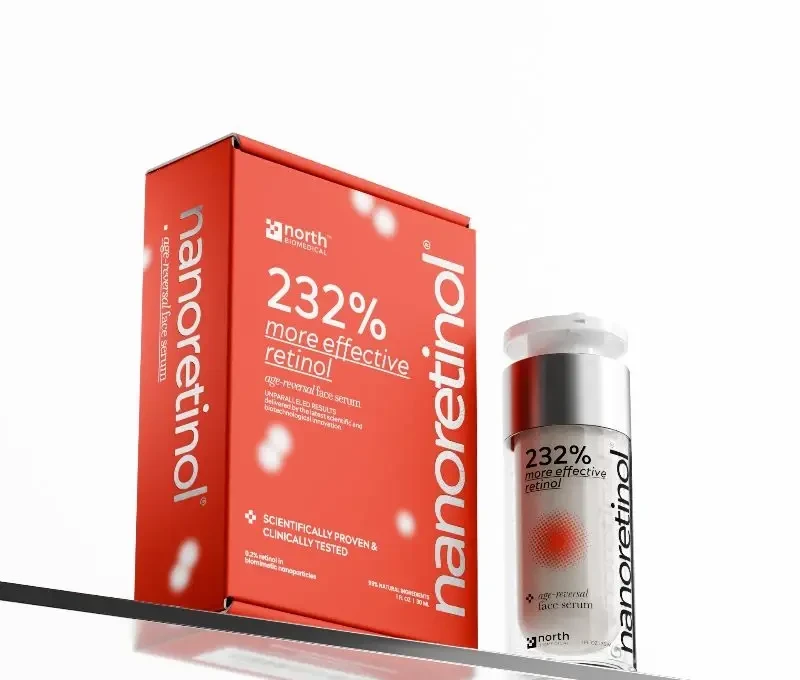
This is also why the delivery system of your retinol matters so much for sensitive and aging skin. Nanoretinol® was engineered to bypass the destructive penetration mechanism that makes conventional retinol so problematic for barrier-compromised skin. Its lipid nanoparticle shell — composed of phosphatidylcholine, the same phospholipid that forms biological cell membranes — is recognized as “self” by skin cells and passes through the barrier without disrupting it. As the nanoparticles deliver retinol and gradually release their phospholipid membrane components, they provide the skin with structural lipids as part of the delivery process itself.
The result is a retinol that doesn’t strip the barrier it depends on to function — a meaningful distinction when the barrier is already under age-related pressure.
Starting With Ceramides
If your skin is reactive, tight after cleansing, or visibly dehydrated, ceramide restoration is the sensible first priority — before introducing or re-introducing any active. An intact skin barrier is what makes the difference between a retinol protocol that works and one that cycles through irritation every few weeks.
When you are choosing a product, our guides to the best ceramide moisturizer and the lighter ceramide serum explain why the accompanying cholesterol and fatty acids matter as much as the ceramides themselves.
If your barrier is relatively stable and you’re looking to maintain it proactively, think of ceramides as the maintenance cost of keeping the system running. The 40s are the best time to start — before the menopausal drop in ceramide synthesis makes the deficit harder to address.
References
- Schild J, Kalvodová A, Zbytovská J. “The role of ceramides in skin barrier function and the importance of their correct formulation for skincare applications.” Int J Cosmet Sci. 2024. doi:10.1111/ics.12972
- Rogers J, Harding C, Mayo A, Banks J, Rawlings A. “Stratum corneum lipids: the effect of ageing and the seasons.” Skin Pharmacol. 1996;9(2):111-119. doi:10.1007/BF02505294
- Jungersted JM, Hellgren LI, Høgh JK, et al. “Ceramides and Barrier Function in Healthy Skin.” Acta Derm Venereol. 2010;90(4):350-353. doi:10.2340/00015555-0894
- Danby SG, Andrew PV, Kay LJ, et al. “Enhancement of stratum corneum lipid structure improves skin barrier function and protects against irritation in adults with dry, eczema-prone skin.” Br J Dermatol. 2022;186(5):875-886. doi:10.1111/bjd.20955