Chest Wrinkles: Why They Form and How to Restore Your Décolletage
Often ignored until they become deep, chest wrinkles require a specific structural approach to repair.
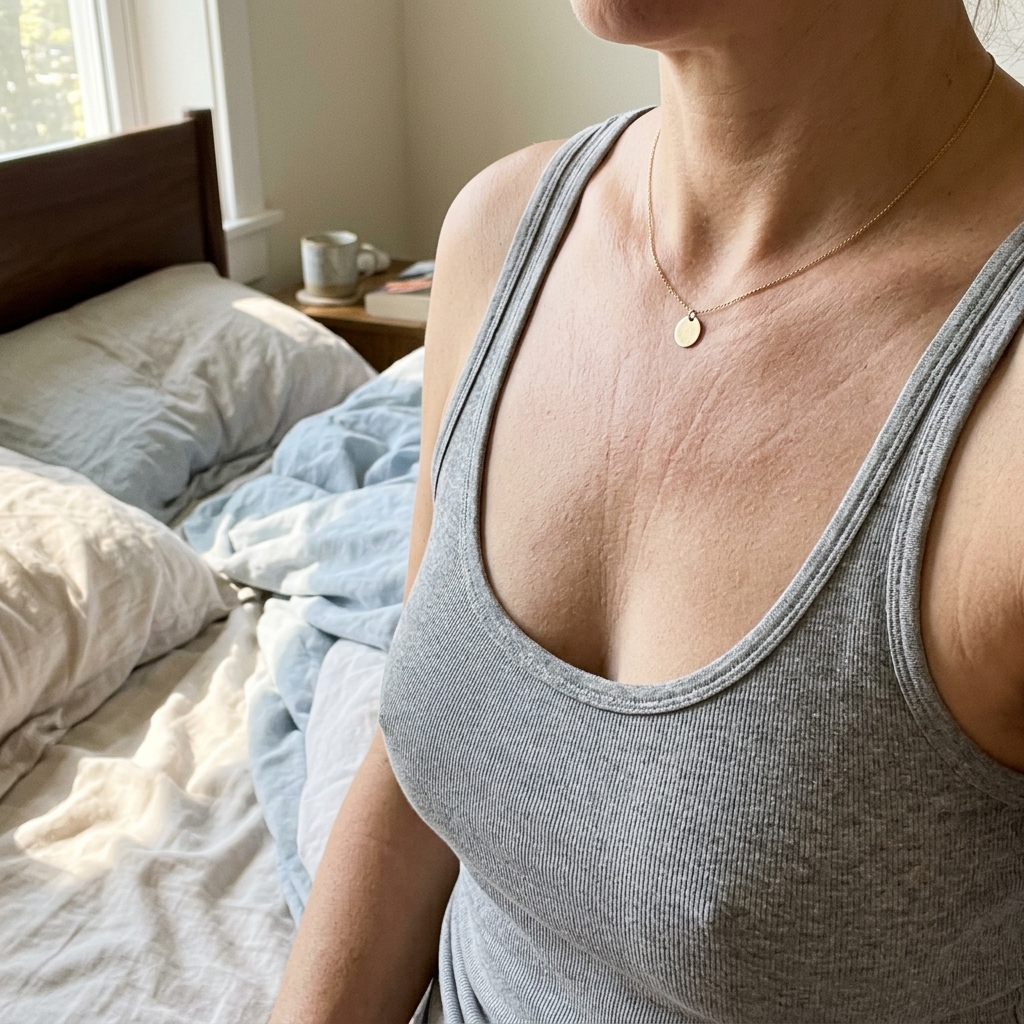
We often invest heavily in facial skincare while neglecting the area just below the neck. The chest and décolleté are frequently the first areas to “betray” a person’s age, developing deep vertical creases and a crepey texture that can be difficult to reverse once etched.
Chest wrinkles, also known as sleep wrinkles or cleavage lines, are structurally different from the expression lines found on the face. Treating them effectively requires understanding their unique mechanical and biological origins and applying targeted structural intervention.
The Three Main Causes of Chest Wrinkles
The skin on the chest is significantly thinner than the skin on your back or limbs, possessing fewer oil glands and a much thinner dermal layer. This makes it vulnerable to three primary thinning forces:
The skin on the chest is significantly thinner than the skin on your back or limbs, possessing fewer oil glands and a much thinner dermal layer.
1. Photoaging (UV Damage)
Because the chest is often exposed to the sun but rarely protected with the same rigor as the face, it accumulates massive amounts of solar damage. UV radiation triggers the production of matrix metalloproteinases (MMPs)—enzymes that chew through collagen and elastin fibers [1]. This leads to the characteristic “mottled” solar lentigines (sun spots) and a loss of dermal thickness.
2. Sleeping Positions
If you are a side sleeper, you likely notice chest wrinkles are more pronounced in the morning. Gravity causes the breasts to pull forward, folding the delicate skin of the décolletage for 6 to 8 hours every night. Over time, these mechanical “compression lines” become permanent as the skin loses its ability to recoil [2].
3. Estrogen Depletion
For women over 40 and those entering menopause, the decline in estrogen significantly impacts skin thickness. Estrogen is vital for maintaining skin moisture and collagen density; as levels drop, the skin on the chest can become paper-thin and “crepey” almost overnight [3].
Science-Backed Treatments for Chest Repair
To effectively get rid of chest wrinkles, you must address both the surface texture and the deeper dermal matrix.
Topical Retinoids: The Gold Standard
Retinol remains the most evidence-backed ingredient for reversing dermal thinning. By accelerating cell turnover and signaling fibroblasts to produce fresh collagen, retinoids can thicken the skin over time, making it more resistant to the folding forces of side sleeping [4].
However, the chest area is notoriously prone to “retinoid dermatitis.” Because the skin is thin and the barrier is often compromised by prior sun damage, conventional retinol can cause intense itching and redness in this area.
Nanotechnology and Targeted Delivery
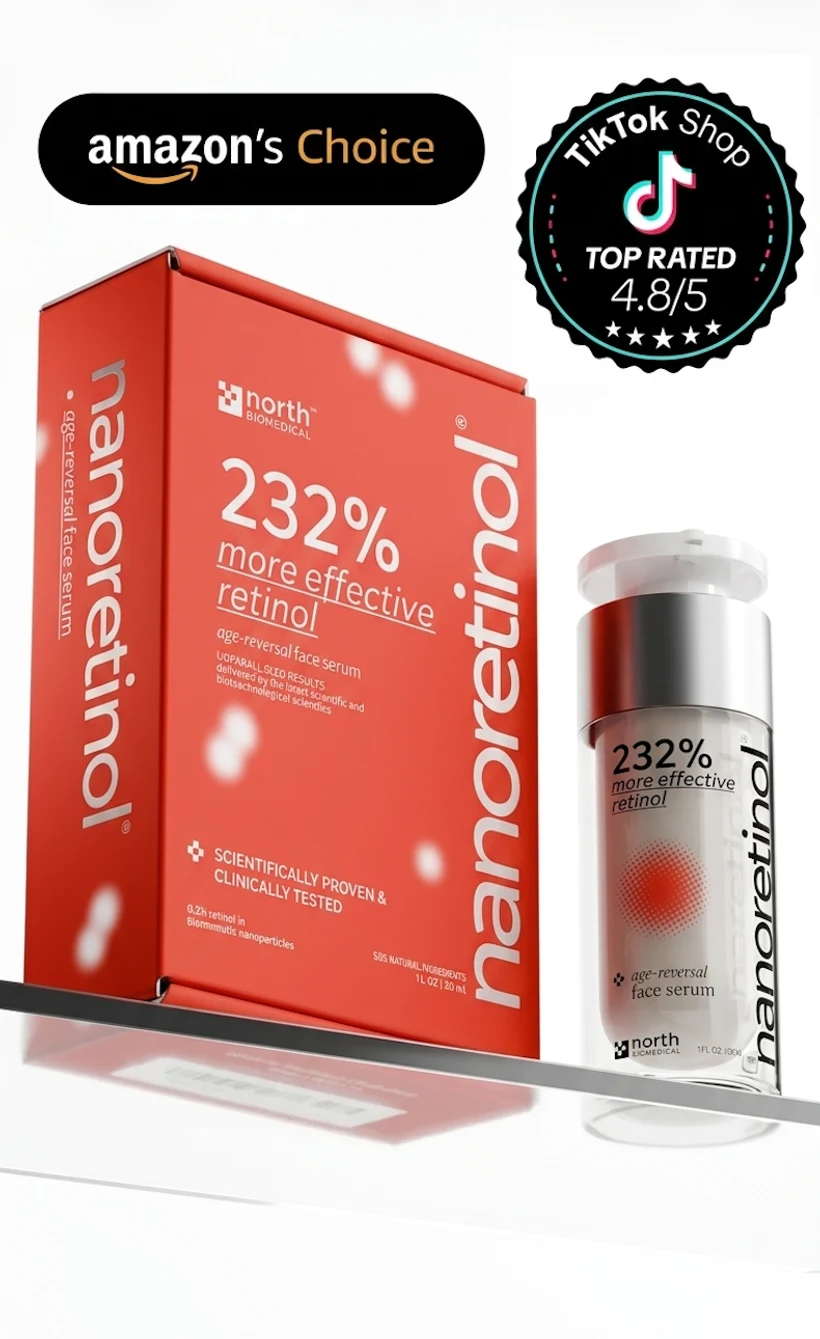
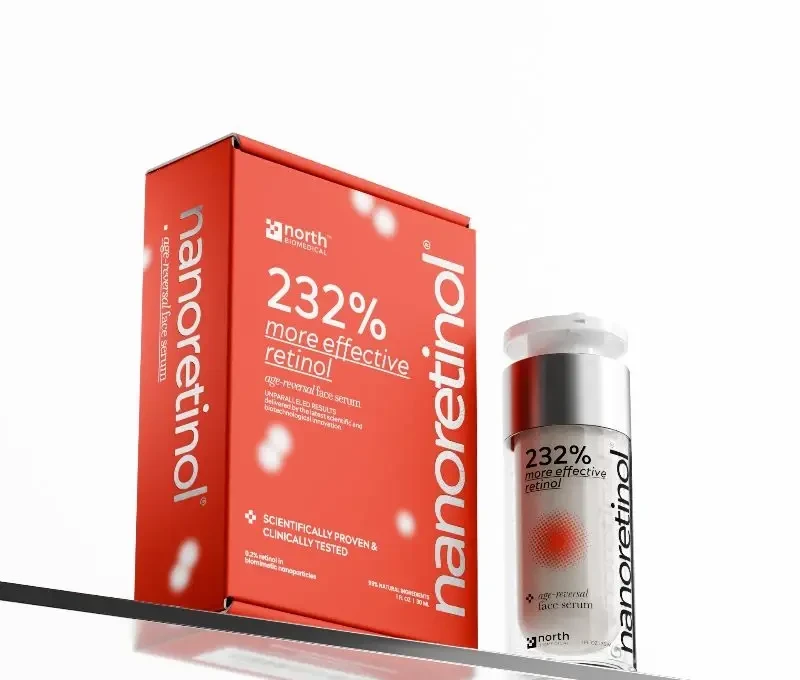
North Biomedical® has focused on solving the irritation-efficacy trade-off through lipid nanoparticle encapsulation. In clinical trials, Nanoretinol® demonstrated a +232% increase in collagen recovery compared to conventional retinol.
By using nanoparticles that are recognized as “self” by the body, the active 0.2% retinol is delivered directly to the target cells without the surface disruption that causes irritation. For the chest, this allows for nightly application—crucial for structural repair—without the downtime of traditional products.
By using nanoparticles that are recognized as “self” by the body, the active 0.2% retinol is delivered directly to the target cells without the surface disruption that causes irritation.
Professional Resurfacing
For deep, etched-in vertical lines, fractional CO2 or non-ablative Erbium lasers can provide significant results. These treatments create controlled heat zones that force the skin to undergo a massive remodeling phase, significantly increasing dermal density [5].
Prevention Beyond Skincare
While internal structural repair is vital, managing external mechanical forces is equally important. Experts often recommend:
- Sleeping on your back to prevent the compression folds from forming.
- Using silicone patches which create a micro-climate of hydration and physically prevent the skin from furrowing during sleep.
- Diligent SPF application, extending your facial sunscreen all the way down to the bra line.
A Structural Timeline for Results
When treating the décolletage, clinical results typically follow a specific structural timeline. Within 56 days of consistent use, clinical assessments of Nanoretinol® formulations showed a +61% increase in skin firmness and a +56% increase in elasticity. This “thickening” effect is what eventually causes the shallowing of visible chest wrinkles and the disappearance of the crepey, paper-like texture.
Conclusion
Chest wrinkles are not an inevitable part of aging, but they are a sign that the skin lacks the structural density to resist mechanical and environmental stress. By combining mechanical protection with high-efficiency collagen stimulators like Nanoretinol®, it is possible to restore a smooth, firm, and youthful décolletage.
References
- Fisher GJ, et al. “Molecular mechanisms of photoaging in human skin in vivo and their prevention by all-trans retinoic acid.” Photochemistry and Photobiology. 1999;69(2):154-157. doi:10.1111/j.1751-1097.1999.tb03268.x
- Sarifakıoglu N, et al. “A new phenomenon: ‘Sleep lines’ on the face.” Scand J Plast Reconstr Surg Hand Surg. 2004;38(4):244-247. PMID: 15370809
- Stevenson S, Thornton J. “Effect of estrogens on skin aging and the potential role of SERMs.” Clinical Interventions in Aging. 2007;2(3):283-297. PMID: 18044179
- Mukherjee S, et al. “Retinoids in the treatment of skin aging: an overview of clinical efficacy and safety.” Clinical Interventions in Aging. 2006;1(4):327-348. PMID: 18046911
- Manuskiatti W, et al. “Efficacy and safety of a non-ablative 1550-nm fractional erbium-doped fiber laser for the treatment of décolletage wrinkles.” Lasers in Surgery and Medicine. 2010;42(3):214-220. doi:10.1002/lsm.20894
- North Biomedical LLC. “Nanoretinol® vs. Conventional Retinol: Efficacy in Collagen and Elastin Recovery.” Clinical Study Summary, 2024.