Moisturizer for Crepey Skin: What the Science Actually Says Works
Most lotions hydrate the surface for an hour. Restoring crepey skin requires something completely different.
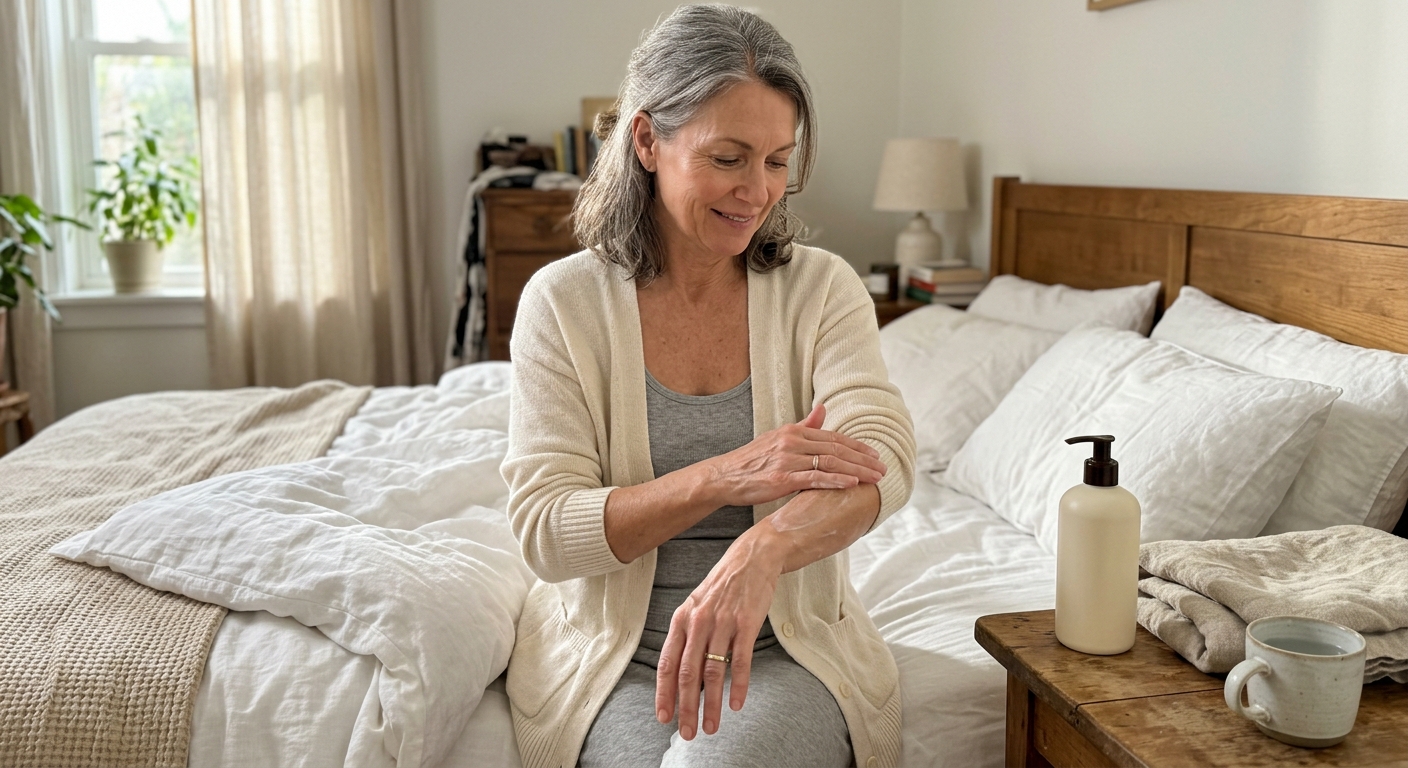
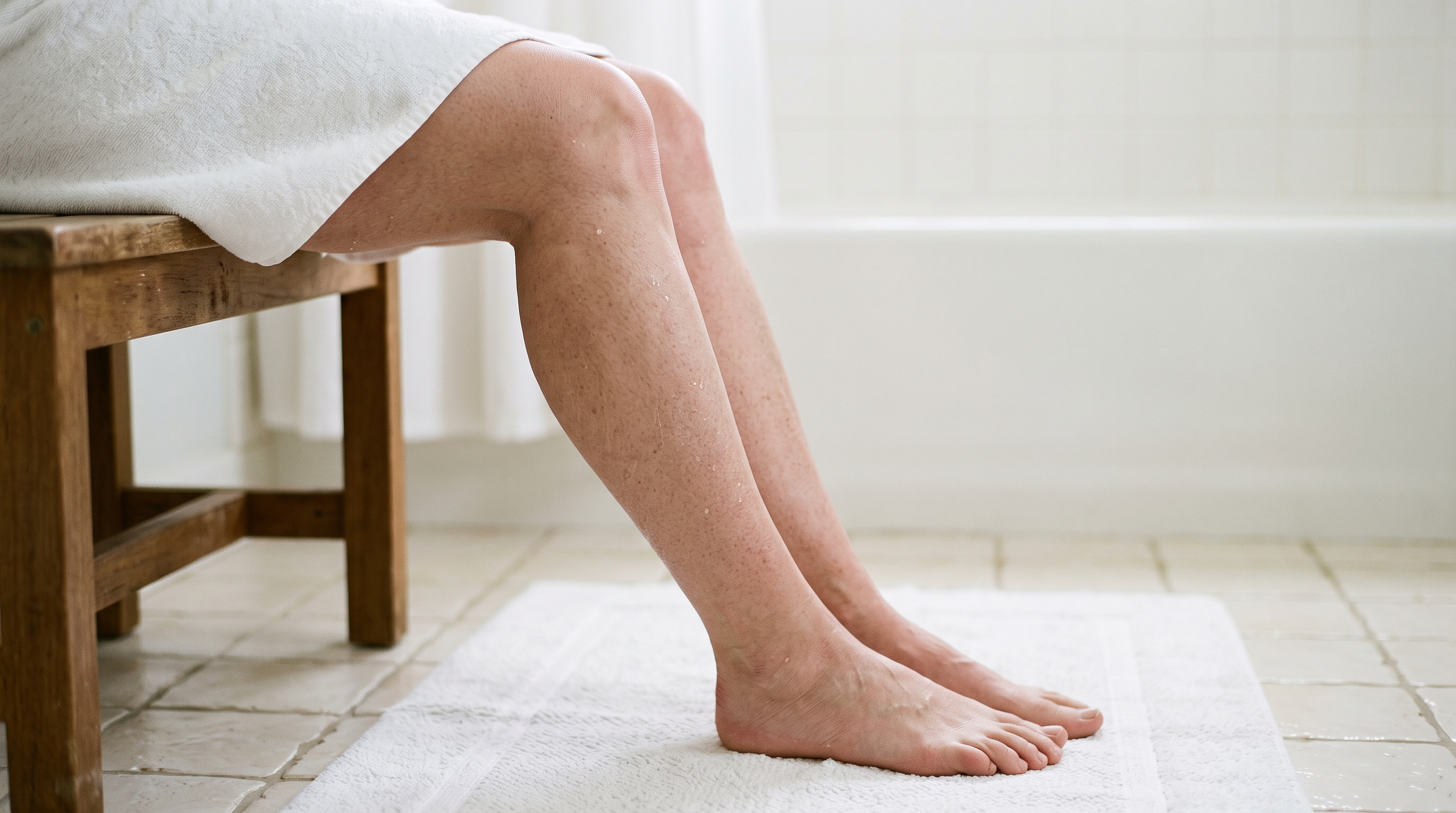
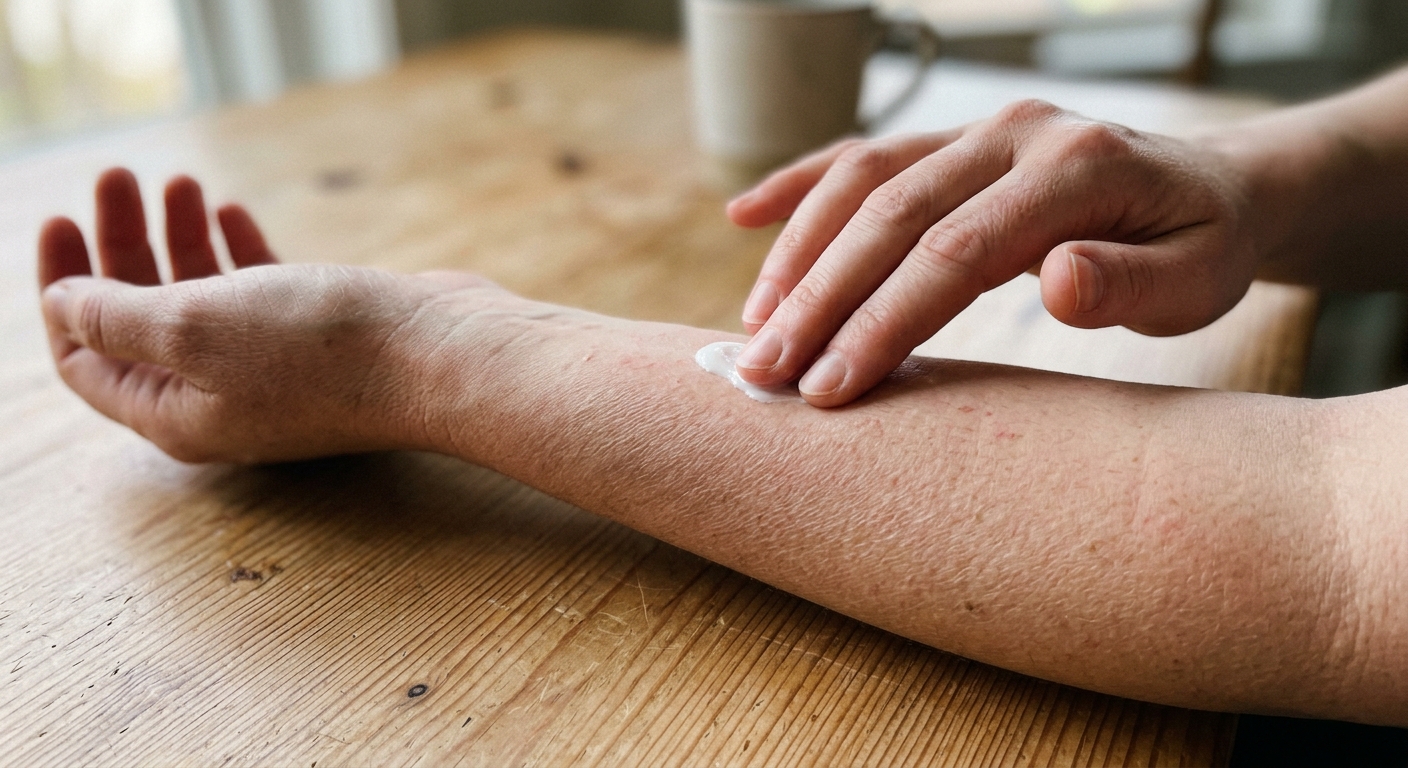
You can spot crepey skin from across the room. The surface looks like the inside of a tissue-paper envelope — fine, parallel ridges that pile up when you pinch the skin and refuse to spring back. It shows up first on the inner arms, the front of the chest, the backs of the hands, and the upper legs.
So you reach for a richer moisturizer. The skin feels softer for a few hours. Then the texture is back.
That’s because crepey skin is not a hydration problem. It’s a structural one. The dermis — the layer beneath the surface — has lost the elastin and collagen scaffolding that used to keep it taut. No amount of shea butter, oat extract, or hyaluronic acid can rebuild a scaffold. Choosing the right moisturizer for crepey skin means understanding what is actually broken inside the skin, and matching the formula to that problem.
What Is Actually Happening in Crepey Skin
Healthy skin gets its bounce-back from a dense network of elastic fibers in the dermis. Elastin is the protein that lets skin recoil after you stretch it; collagen is what gives it tensile strength. Together they form a 3D mesh that behaves a bit like a memory-foam mattress — you press down, and it springs back to its original shape.
That mesh is built largely during childhood. Elastin synthesis essentially shuts down after puberty, and the elastin we have at age 20 is mostly the elastin we will ever have [1]. From there it’s a slow process of degradation. Ultraviolet radiation accelerates it dramatically — a phenomenon dermatologists call solar elastosis, where the elastic fibers in the upper dermis become disorganized, fragmented, and replaced by abnormal accumulations of dysfunctional material [2].
Two enzymes do most of the damage. Matrix metalloproteinases (MMPs) — switched on by UV exposure, pollution, and chronic inflammation — chew through both elastin and collagen [3]. Over decades, the dermis loses up to 20% of its thickness, and the surviving fibers are tangled and brittle. The skin can no longer snap back. It folds and crinkles like fabric that has lost its weave.
This is why crepey skin appears earliest where sun exposure is highest and dermal support is thinnest: the inner arms, the décolletage, the eyelids, and the backs of the hands.
Why Most Moisturizers Don’t Work
Walk into any drugstore and you’ll find a wall of “crepey skin” lotions. Almost all of them rely on the same three categories of ingredients:
Over decades, the dermis loses up to 20% of its thickness, and the surviving fibers are tangled and brittle.
- Humectants like glycerin and hyaluronic acid pull water into the upper skin layers.
- Emollients like shea butter, squalane, and ceramides smooth the surface and reduce flaking.
- Occlusives like petrolatum and dimethicone seal in moisture so it doesn’t evaporate.
These are useful — well-hydrated skin reflects light more evenly, looks plumper, and feels less rough. But none of them touch the dermal layer where the structural damage lives. None of them tell fibroblasts (the cells that manufacture collagen and elastin) to start rebuilding. They are surface treatments for a deep problem.
What to Actually Look For
The moisturizers that produce real, measurable change in crepey skin are the ones that contain ingredients with clinical evidence for stimulating fibroblast activity. The list is shorter than the marketing suggests.
Retinol — the only over-the-counter ingredient with strong evidence
Retinol is a vitamin A derivative that converts inside skin cells into retinoic acid. Retinoic acid binds to nuclear receptors in fibroblasts and switches on the genes that produce type I and type III collagen, while simultaneously suppressing MMPs that break those proteins down [4].
In a landmark 24-week trial published in Archives of Dermatology, researchers applied 0.4% retinol lotion three times a week to the arms of subjects with a mean age of 87. Compared to vehicle-treated arms, the retinol-treated arms showed significant reductions in fine wrinkles and crepey roughness, plus a 40% increase in glycosaminoglycans (the water-binding molecules that plump the dermis) [5].
A separate study showed something even more interesting: retinol does not just stimulate collagen — it also increases the production of tropoelastin and fibrillin-1, the building blocks of new elastin fibers [6]. This was once thought to be impossible in adult skin. Topical retinol appears to be one of the few interventions that can move the needle on dermal elastin in living humans.
Peptides — useful but slower
Signal peptides like palmitoyl pentapeptide (Matrixyl) act as messengers, telling fibroblasts to produce more collagen. The clinical evidence is real but more modest than retinol’s, and they tend to take longer to show visible change. They make a reasonable supporting actor in a crepey-skin formula, but should not be the headline ingredient.
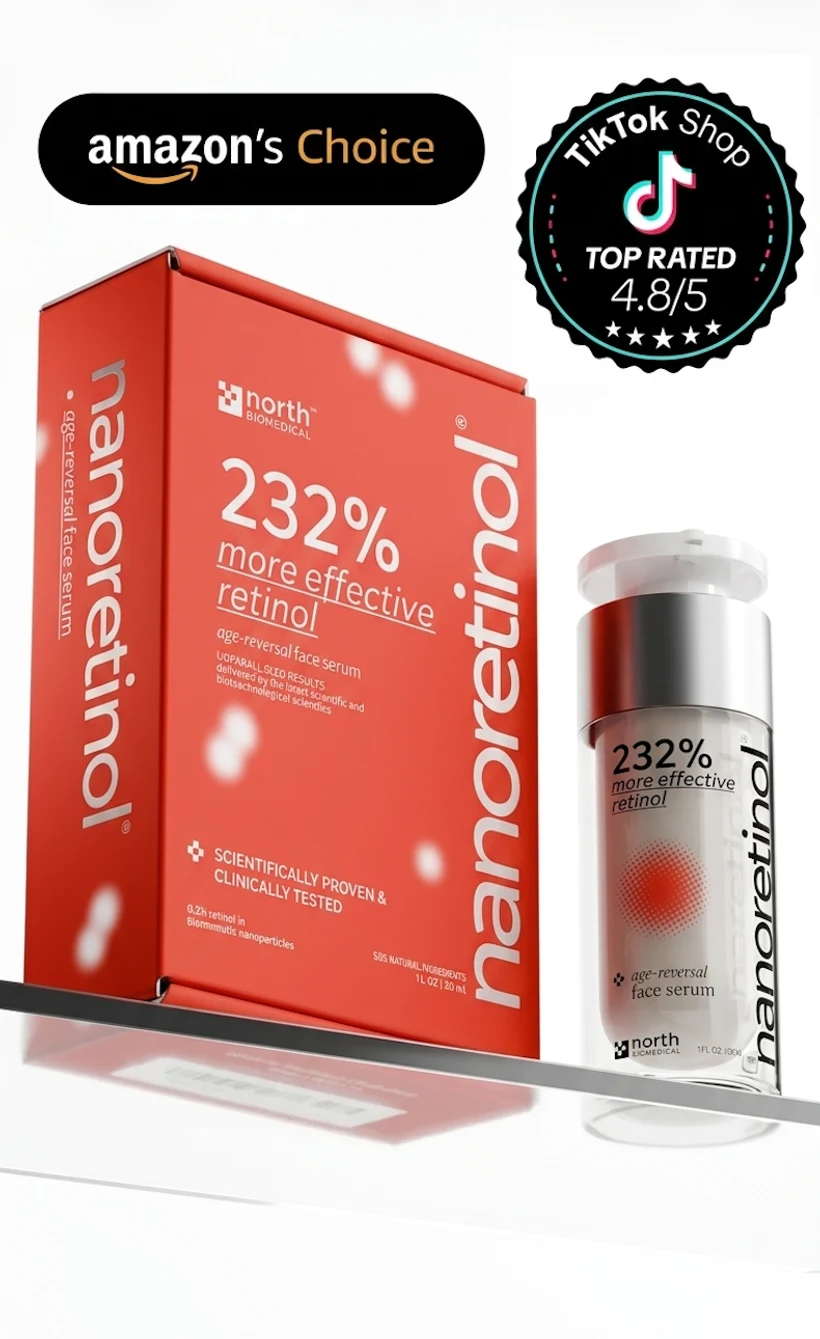
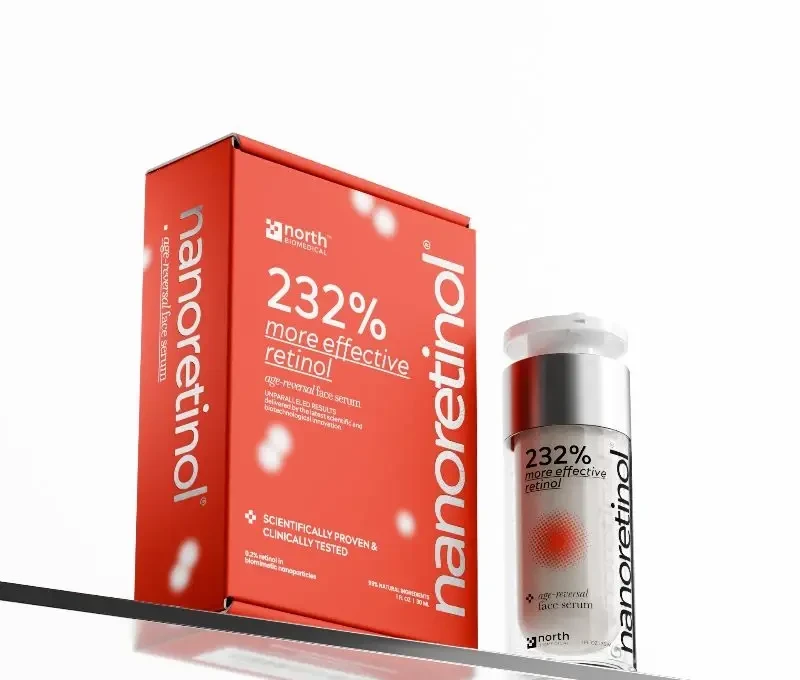
Nanoretinol encapsulates 0.2% retinol inside biomimetic lipid nanoparticles — particles that are externally identical to skin cells, so the epithelial barrier recognizes them as “self” and lets them pass through intact.
What helps but doesn’t fix
Vitamin C neutralizes the free radicals that activate MMPs and is a cofactor for collagen synthesis [7]. Niacinamide improves barrier function and reduces inflammation. Ceramides repair the lipid scaffolding of the upper skin. None of these rebuild elastin on their own — but used alongside a retinol-based product, they help create the conditions in which the deeper repair can happen.
The Quiet Problem with Most Retinol Body Lotions
Walk down the body care aisle and you’ll find dozens of “retinol body lotions” claiming to firm crepey skin. Read the ingredient list and you’ll often find retinol or retinyl palmitate near the very bottom — well below the 1% threshold that triggers ingredient labeling, meaning the active is present at trace levels designed to justify the label, not deliver an effect.
There is a more fundamental issue. Even when retinol is present at meaningful concentrations, conventional formulations struggle to deliver it through the epidermal barrier intact. Retinol is unstable — light, oxygen, and heat degrade it — and it is poorly soluble in water-based products. Most retinol body lotions are oil-heavy, which slows absorption, or use petroleum-derived solvents that disrupt the skin barrier on their way through, which is why they cause the redness, flaking, and stinging that makes so many people give up on retinol after two weeks.
You can see this play out in your own bathroom. Pick up an older bottle of retinol cream and look at the color. If it’s gone yellow or orange, the retinol has oxidized — and oxidized retinol is biologically inert. The cream still moisturizes. It does nothing for elastin.
Choosing a Moisturizer Routine That Targets Both Layers
The most effective approach for crepey skin uses two products in sequence rather than one lotion that tries to do everything badly.
The first job is the structural one — applying an active that actually triggers fibroblast activity in the dermis. This is the retinol step, and it is the only one that addresses the root cause. The second job is barrier support — a richer moisturizer with ceramides, glycerin, and squalane that hydrates the surface and reduces the irritation that retinol can cause.
For body areas with significant crepey-ness — inner arms, décolletage, the area above the knees — the same logic applies. A retinol product that delivers the active intact, followed by a barrier-supportive moisturizer.
This is where Nanoretinol changes the equation. Conventional retinol fails most users for two reasons: it degrades before it reaches the dermis, and the carrier system damages the barrier on the way in. Nanoretinol encapsulates 0.2% retinol inside biomimetic lipid nanoparticles — particles that are externally identical to skin cells, so the epithelial barrier recognizes them as “self” and lets them pass through intact. The retinol arrives at the dermis stable and biologically active, without the redness, peeling, or chronic irritation that defines most retinol experiences.
In North Biomedical’s clinical evaluation, the formulation produced a 232% improvement in collagen recovery and a 73% improvement in elastin recovery compared to conventional retinol — the structural changes that turn crepey skin back into smooth skin. Used at night on the face, neck, décolletage, or the inner arms, it provides the active half of the routine. A simple ceramide-and-glycerin moisturizer afterward handles the surface comfort.
What to Expect — and How Long It Takes
Skincare results that are real are also slow. Surface hydration shows up in 24 hours; fibroblast-driven remodeling shows up in 12 to 24 weeks. A trial of well-formulated retinol on aged skin typically shows:
- Week 4: improved smoothness, slightly less roughness
- Week 8 to 12: visible reduction in fine crepe lines
- Week 16 to 24: meaningful firming and bounce-back, particularly on body areas
If you have been using a moisturizer for crepey skin for six months and seen no structural change, the moisturizer is not the problem — the formula does not contain anything that triggers structural change. Switch to one that does, and start the clock again.
The disappointment most people have with crepey-skin lotions is the result of a category-wide mismatch between what the products do (hydrate the surface) and what the problem requires (rebuild the dermis). Once you understand the difference, the choice gets easier.
References
- Baumann L, Bernstein EF, Weiss AS, Bates D, Humphrey S, Silberberg M, Daniels R. “Clinical Relevance of Elastin in the Structure and Function of Skin.” Aesthetic Surgery Journal Open Forum. 2021;3(3):ojab019. doi:10.1093/asjof/ojab019
- Weihermann AC, Lorencini M, Brohem CA, de Carvalho CM. “Elastin structure and its involvement in skin photoageing.” International Journal of Cosmetic Science. 2017;39(3):241-247. doi:10.1111/ics.12372
- Uitto J. “The role of elastin and collagen in cutaneous aging: intrinsic aging versus photoexposure.” Journal of Drugs in Dermatology. 2008;7(2 Suppl):s12-16. PubMed: 18404866
- Mukherjee S, Date A, Patravale V, Korting HC, Roeder A, Weindl G. “Retinoids in the treatment of skin aging: an overview of clinical efficacy and safety.” Clinical Interventions in Aging. 2006;1(4):327-348. doi:10.2147/ciia.2006.1.4.327
- Kafi R, Kwak HSR, Schumacher WE, Cho S, Hanft VN, Hamilton TA, King AL, Neal JD, Varani J, Fisher GJ, Voorhees JJ, Kang S. “Improvement of Naturally Aged Skin With Vitamin A (Retinol).” Archives of Dermatology. 2007;143(5):606-612. doi:10.1001/archderm.143.5.606
- Rossetti D, Kielmanowicz MG, Vigodman S, Hu YP, Chen N, Nkengne A, Oddos T, Fischer D, Seiberg M, Lin CB. “A novel anti-ageing mechanism for retinol: induction of dermal elastin synthesis and elastin fibre formation.” International Journal of Cosmetic Science. 2011;33(1):62-69. doi:10.1111/j.1468-2494.2010.00588.x
- Piérard-Franchimont C, Piérard GE, Henry F, Vroome V, Cauwenbergh G. “A randomized, placebo-controlled trial of topical retinol in the treatment of cellulite.” American Journal of Clinical Dermatology. 2000;1(6):369-374. doi:10.2165/00128071-200001060-00005
- North Biomedical LLC. “Nanoretinol vs. Conventional Retinol: Efficacy in Collagen and Elastin Recovery.” Clinical Study Summary, 2024.