
Tixel Treatment: What It Actually Does to Aging Skin
A heated titanium tip, no laser light, and a growing pile of clinical data
There is a moment in most people’s forties or fifties when the mirror stops cooperating. The lines around the mouth no longer disappear when the face relaxes. The neck develops a texture that foundation settles into rather than covers. And the search history starts to fill with the names of devices — Fraxel, CO2, Morpheus8, and increasingly, Tixel.
Tixel is the odd one out on that list. It is not a laser, despite being sold in clinics that mostly sell lasers. It does not use light at all. Understanding what it actually does — and what the published trials genuinely support — is the difference between a good decision and an expensive one.
The technology: a branding iron, engineered down to microseconds
Almost every resurfacing device works by delivering energy that becomes heat once it reaches the skin. A CO2 laser emits light that water in your tissue absorbs and converts to heat. Radiofrequency pushes current through tissue that resists it, and resistance produces heat.
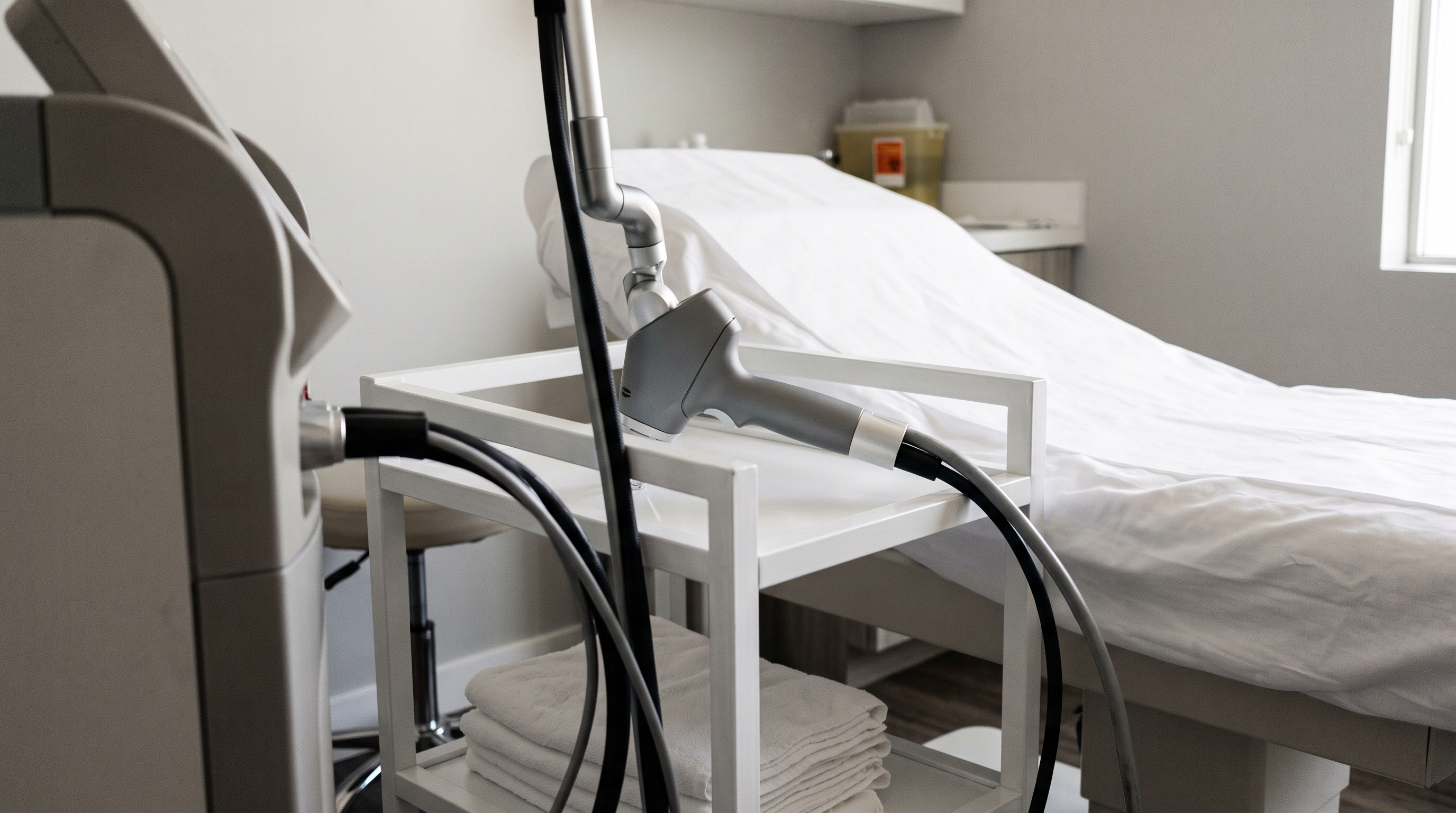
Tixel skips the conversion step. It presses a heated titanium tip — studded with 81 tiny pyramids — against the skin for a precisely controlled fraction of a second. The heat is the treatment. Think of it as a branding iron redesigned by engineers obsessed with restraint: contact times measured in milliseconds, depth controlled by how long the tip touches and how hard it presses.
The result is a grid of microscopic channels through the outer skin, surrounded by zones of heated tissue that trigger a repair response. A 2024 systematic review of 21 published articles described the microchannels as similar to those produced by a CO2 laser, but without the charring that light-based ablation leaves behind [1].
That distinction matters more than it sounds. Charred tissue is debris the skin has to clear before it can rebuild.
What the trials actually found
The original clinical and histological evaluation, published in 2016, treated 26 subjects with three facial sessions. Every subject showed improvement in complexion; 75% showed measurable wrinkle reduction. Average pain was 3.1 out of 10, downtime ran zero to one days, and redness cleared in about three and a half days. There were no cases of bleeding, scarring, or post-inflammatory hyperpigmentation. Histology confirmed the craters were shallow by resurfacing standards — 100 to 320 micrometers deep [2].
Mean improvement was 1.9 grades on the Fitzpatrick wrinkle scale, and 69.6% of subjects were rated as achieving substantial improvement at the three-month mark.
Two more recent prospective trials tested the harder targets.
For perioral wrinkles — the vertical lines above the lip that most devices struggle with — 23 women averaging 62.5 years received four monthly treatments. Mean improvement was 1.9 grades on the Fitzpatrick wrinkle scale, and 69.6% of subjects were rated as achieving substantial improvement at the three-month mark [3].
For the neck, a notoriously unforgiving area, 26 women averaging 58.4 years also received four monthly sessions. Investigators recorded a 1.5-grade improvement at one month and 1.4 grades at three months, both highly statistically significant. Every subject improved on the Global Aesthetic Improvement Scale, and no severe adverse events occurred [4].
Those are real numbers from real prospective trials, and they are genuinely encouraging. They also come with a caveat the reviewers themselves raised: the studies are small, most lack control groups, and larger randomized trials are still needed before Tixel can be called equivalent to established treatments [1].
”Tixel gone wrong” — the honest version
Search interest in Tixel complications is substantial, which deserves a straight answer. Across the published literature, the safety profile is one of this device’s genuine strengths. The 2024 review found a high degree of safety across all Fitzpatrick skin types — notable, because darker skin tones carry real post-inflammatory hyperpigmentation risk with light-based resurfacing [1]. The neck and perioral trials reported no severe adverse events and minimal pain [3][4].
What people are usually describing when they say a treatment “went wrong” is expectation failure rather than injury. Tixel is a resurfacing and remodeling device with modest, cumulative effects. It is not a facelift. Someone with significant skin laxity who expected tightening will be disappointed by a device that delivers texture and fine-line improvement — not because it malfunctioned, but because it was never the right tool. If sagging rather than texture is your concern, the honest comparison set is non-surgical skin tightening options, not resurfacing.
The part the before-and-afters leave out
Here is what no clinic photograph can show you: the clock starts again the moment you walk out.
The formula runs at 0.2% retinol, because when delivery is solved, concentration stops being the lever that matters.
Resurfacing devices work by injuring skin in a controlled way and letting the repair response rebuild what was damaged. That response is finite. Meanwhile, the underlying reason your skin developed those lines has not changed at all.
Research from the University of Michigan showed why. Fibroblasts — the cells that manufacture collagen — from donors over 80 produced substantially less type I procollagen than fibroblasts from donors aged 18 to 29. Aged skin also showed less of the fibroblast surface attached to collagen fibers, meaning the cells receive weaker mechanical signals telling them to build [5]. Aging skin is a factory running with both fewer workers and a broken intercom.
Four Tixel sessions do not fix the factory. They renovate the storefront. Which is worth doing — but it explains why the trials measured improvement at three months rather than three years, and why practitioners recommend maintenance sessions indefinitely.
What actually holds the line between sessions
This is where the conversation should turn to what you do the other 361 days of the year, and the evidence here is far older and far stronger than anything in the device literature.
In a randomized, vehicle-controlled trial at the University of Michigan, topical retinol applied to naturally aged skin over 24 weeks significantly reduced fine wrinkles compared with vehicle. More importantly, it worked at the level the device cannot reach: retinol significantly increased glycosaminoglycan expression and boosted type I collagen production in the treated tissue [6]. It addressed the factory, not the storefront.
That is the actual role of a retinoid in a plan that includes energy devices. Not competing with Tixel — extending it. The device delivers a step change; the retinoid changes the slope of the line between steps. If you want the deeper mechanism, our guide to how to boost collagen production covers the pathways in detail.
The catch is that retinol has always been a compromise. The molecule is unstable, and skin’s barrier is specifically evolved to keep foreign compounds out. Conventional formulas solve delivery by using solvents and penetration enhancers that disrupt the barrier’s lipid structure to force the active through — which is precisely why retinol earned its reputation for redness and peeling. You are damaging a barrier to deliver an ingredient meant to repair the skin beneath it.
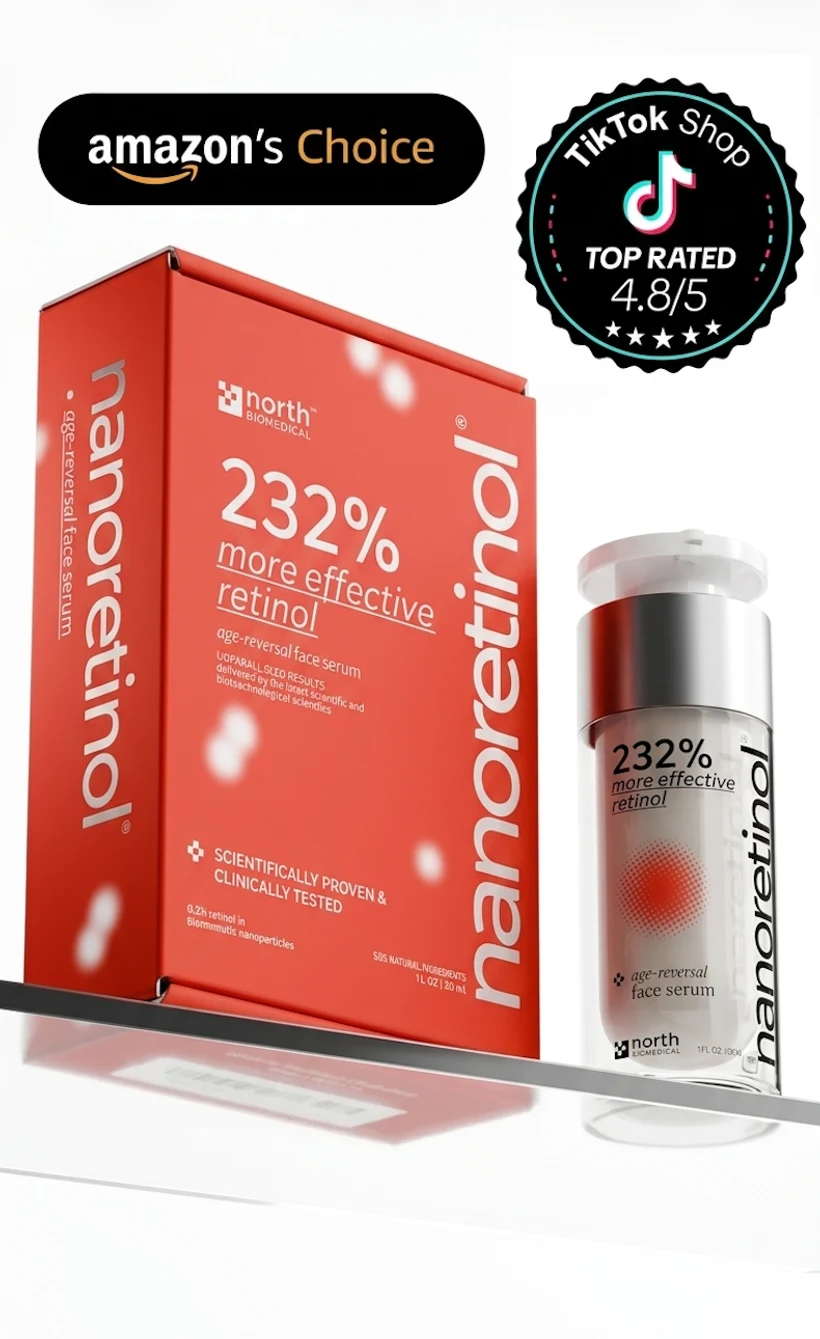
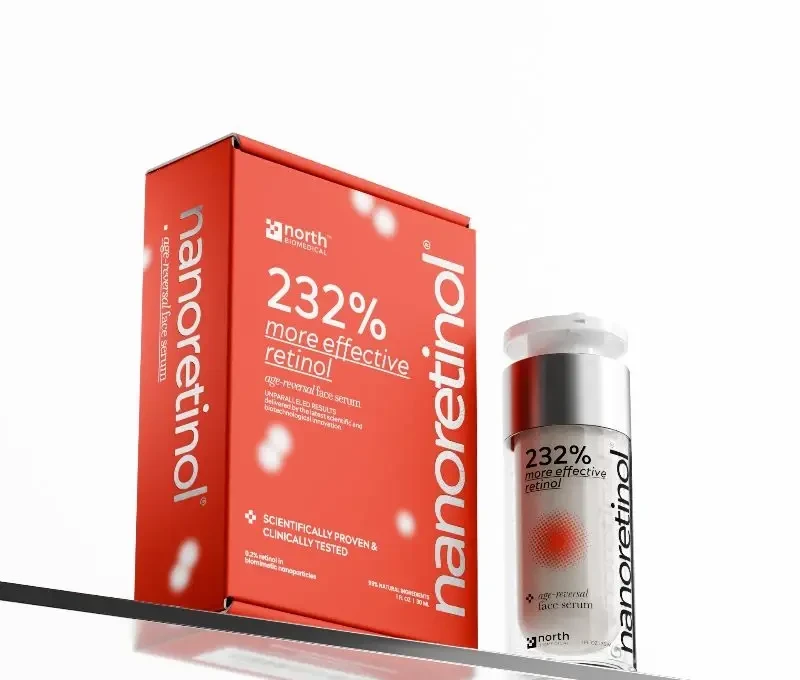
Nanoretinol takes a different route. It encapsulates retinol in biomimetic lipid nanoparticles that are externally similar to the skin’s own cells, so the barrier recognizes them as “self” and permits passage — no disruption required. It is the same class of nanotechnology used in modern drug delivery. In North Biomedical’s clinical study, this delivery approach proved 232% more effective than conventional retinol at collagen recovery and 73% more effective at elastin recovery, with clinical results showing a 61% increase in skin firmness over 56 days [7]. The formula runs at 0.2% retinol, because when delivery is solved, concentration stops being the lever that matters.
For anyone whose skin is already recovering from a resurfacing session, gentleness is not a luxury. A retinoid that reaches its target without picking a fight with the barrier is the one you will still be using next year — and next year is when it counts.
Where this leaves you
Tixel is a legitimate device with a real evidence base, an unusually good safety record across skin types, and modest, cumulative results on texture and fine lines. It is a reasonable choice if those are your concerns and your expectations are calibrated. It is the wrong choice if you are hoping to tighten a jawline.
But the deeper point is structural. Every energy device on the market is a series of interventions against a process that never pauses. The trials measure three months. You live in years. What determines where you land is not which device you chose — it is what you were doing to your skin on all the days you were not in a clinic chair.
References
- Estupiñan B, Souchik A, Kiszluk A, Desai S. “Comprehensive Review of Thermomechanical Fractional Injury Device: Applications in Medical and Cosmetic Dermatology.” Journal of Clinical and Aesthetic Dermatology. 2024;17(2):32-42. PMID: 38444425
- Elman M, Fournier N, Barnéon G, Bernstein EF, Lask G. “Fractional treatment of aging skin with Tixel, a clinical and histological evaluation.” Journal of Cosmetic and Laser Therapy. 2016;18(1):31-37. doi:10.3109/14764172.2015.1052513
- Wang JV, Bajaj S, Steuer A, Orbuch D, Geronemus RG. “Prospective Evaluation of the Safety and Efficacy of Thermomechanical Fractional Injury for Perioral Rhytides.” Dermatologic Surgery. 2023;49(6):566-569. doi:10.1097/DSS.0000000000003762
- Wang JV, Jairath N, Tao J, Hashemi DA, Bajaj S, Geronemus RG. “Clinical Efficacy and Safety of a Thermomechanical Fractional Injury Device for Neck Rejuvenation.” Dermatologic Surgery. 2025;51(2):175-178. doi:10.1097/DSS.0000000000004402
- Varani J, Dame MK, Rittié L, Fligiel SEG, Kang S, Fisher GJ, Voorhees JJ. “Decreased collagen production in chronologically aged skin: roles of age-dependent alteration in fibroblast function and defective mechanical stimulation.” American Journal of Pathology. 2006;168(6):1861-1868. doi:10.2353/ajpath.2006.051302
- Kafi R, Kwak HSR, Schumacher WE, Cho S, Hanft VN, Hamilton TA, King AL, Neal JD, Varani J, Fisher GJ, Voorhees JJ, Kang S. “Improvement of naturally aged skin with vitamin A (retinol).” Archives of Dermatology. 2007;143(5):606-612. doi:10.1001/archderm.143.5.606
- North Biomedical LLC. “Nanoretinol vs. Conventional Retinol: Efficacy in Collagen and Elastin Recovery.” Clinical Study Summary, 2024. Study summary