What Is Nanoretinol® by North Biomedical? Science and Evidence
How biomimetic lipid nanoparticles are solving retinol's oldest problems — instability, irritation, and poor absorption
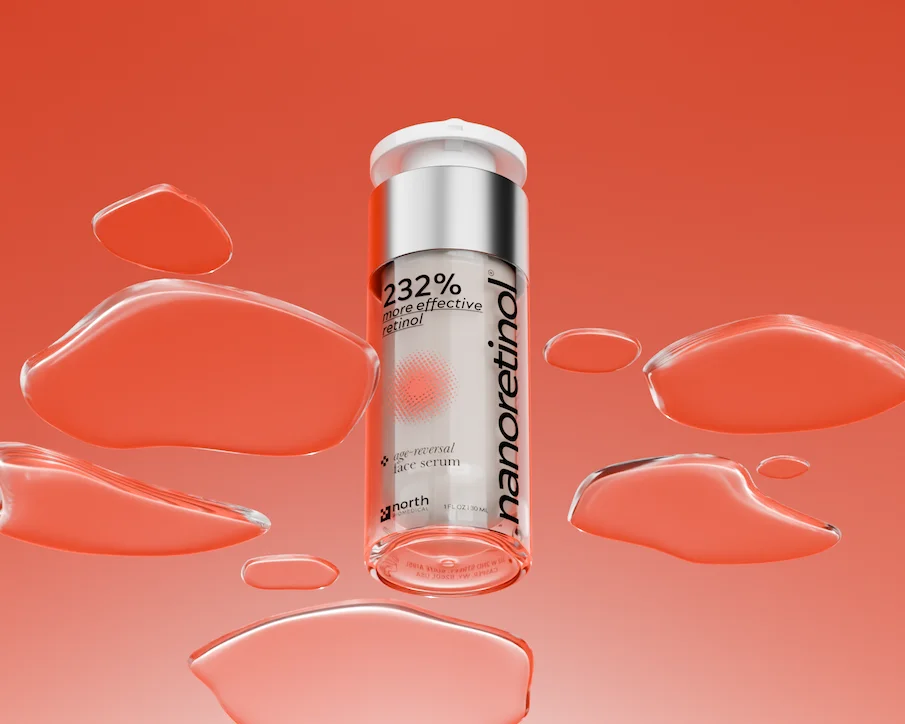
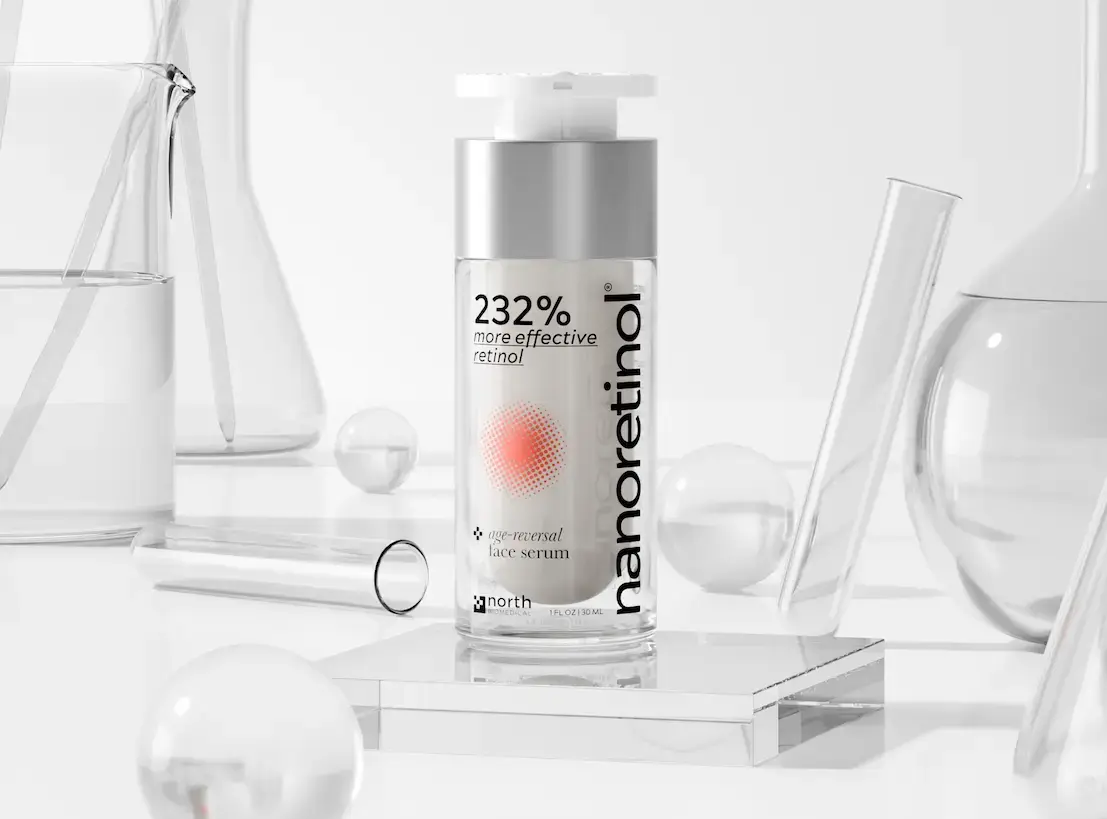
Nanoretinol® is North Biomedical’s 0.2% retinol serum built around biomimetic lipid nanoparticle delivery. This is the canonical explainer for branded questions about what Nanoretinol is, how its delivery system differs from conventional retinol, and what evidence supports the claims. For the broader technology category, see encapsulated retinol.
Retinol Has a Delivery Problem
Retinol is arguably the most studied anti-aging ingredient in dermatology. Decades of clinical research have demonstrated its ability to stimulate collagen synthesis, accelerate cellular turnover, and reduce the visible signs of photoaging [1]. It is, by nearly every measure, the gold standard of topical skincare actives.
But retinol has a fundamental flaw — and it has nothing to do with the molecule itself.
The problem is getting it where it needs to go. When you apply a conventional retinol serum, the vast majority of it never reaches the living cells in your dermis. The stratum corneum, your skin’s outermost barrier, is specifically designed to keep foreign molecules out. Traditional formulations attempt to force retinol past this barrier using chemical penetration enhancers — often petroleum derivatives that disrupt the lipid structure of the epithelial barrier through a destructive mechanism called lipid mobility [2].
The result is a painful trade-off: the same mechanism that pushes retinol into the skin also damages the barrier itself. This is why conventional retinol products are notorious for causing redness, peeling, and irritation — side effects that drive many users to abandon the ingredient entirely before ever seeing results.
What if there were a way to deliver retinol deep into the skin without breaking anything on the way in?
The Lipid Nanoparticle Revolution
The answer comes from an unlikely source: pharmaceutical drug delivery.
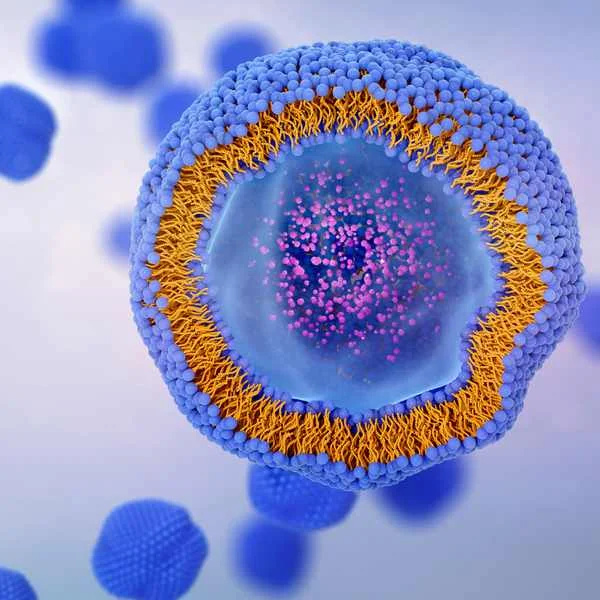
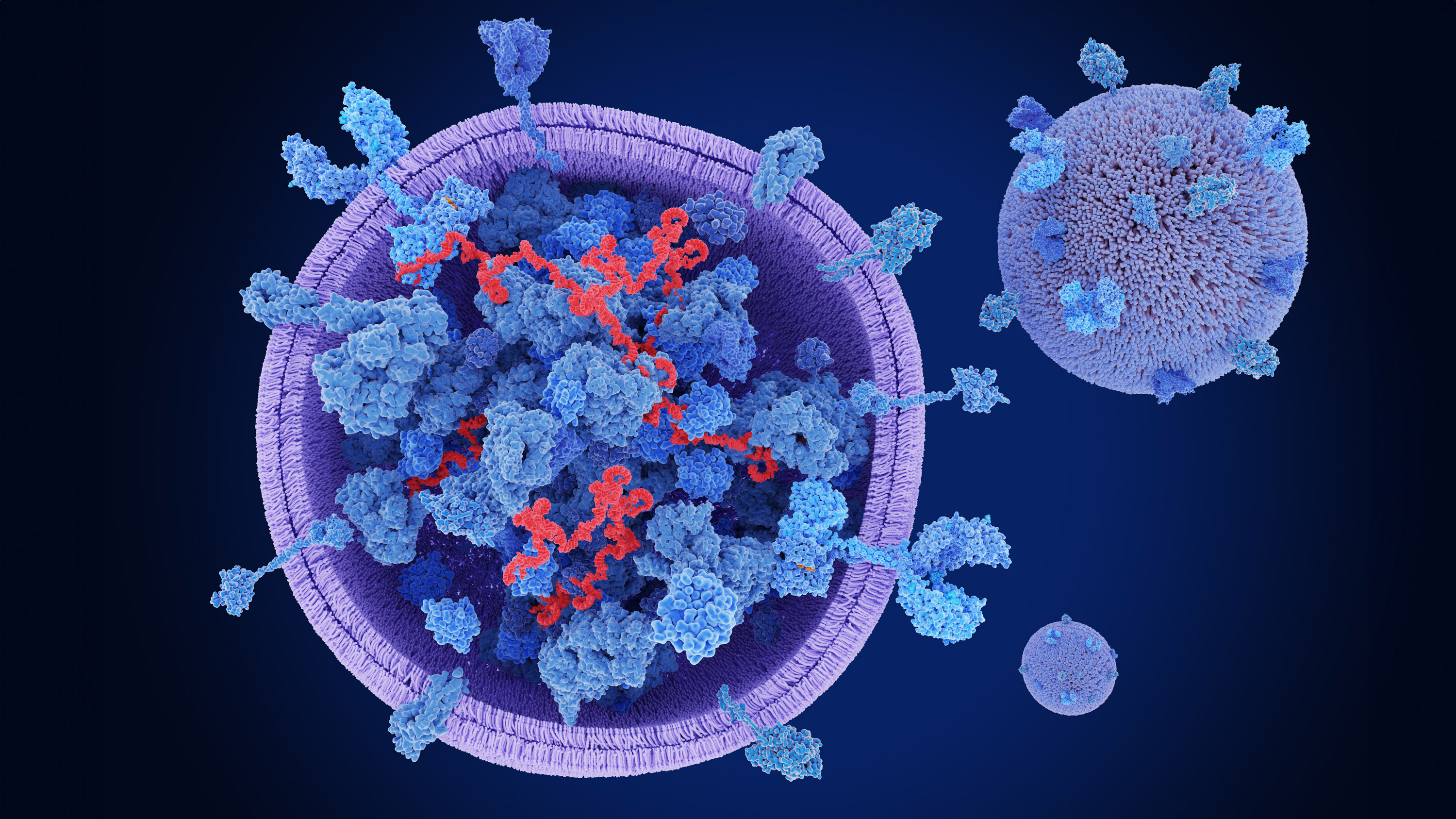
Lipid nanoparticles (LNPs) were originally developed for delivering medications to targeted tissues inside the body. You may recognize the technology — it’s the same platform that made mRNA vaccines possible. The core principle is elegant: encapsulate an active molecule inside a tiny sphere made of lipids that the body recognizes as biological material rather than a foreign invader [3].
When you apply a conventional retinol serum, the vast majority of it never reaches the living cells in your dermis.
In skincare, this principle translates to something remarkable. When retinol is encapsulated within biomimetic lipid nanoparticles — nanoparticles whose outer membrane is structurally similar to human cell membranes — the skin’s barrier doesn’t resist them. Instead, it recognizes them as “self” and allows passage through the epithelial barrier without any need for chemical disruption.
Think of it as the difference between breaking down a locked door and walking through it with the right key.
Research has consistently shown that lipid nanoparticle encapsulation enhances the dermal delivery of vitamin A compounds while simultaneously reducing irritation. A 2021 study published in Advanced Pharmaceutical Bulletin demonstrated that solid lipid nanoparticles loaded with vitamin A showed zero skin irritation in animal models while achieving effective dermal delivery [4]. A 2024 review in the Journal of Cosmetic Dermatology confirmed that nano lipid-based carriers represent one of the most promising approaches to improving retinoid stability and reducing cutaneous irritation [2].
What Makes Nanoretinol® Different
Nanoretinol® is North Biomedical®‘s implementation of this science. Developed over two years by a multidisciplinary team of PhD-level scientists, it encapsulates retinol within biomimetic lipid nanoparticles designed specifically for cutaneous delivery. The key word is biomimetic. The nanoparticles that protect and deliver the retinol in Nanoretinol® are composed of phospholipids — the same class of molecules that form human cell membranes. Externally, they are virtually identical to the body’s own cells. This biomimicry is what enables them to cross the epithelial barrier without triggering the inflammatory response that conventional retinol formulations produce.
Here is what happens when you apply Nanoretinol® to your skin:
Step 1: Barrier passage. The biomimetic nanoparticles pass through the stratum corneum, recognized by the skin as biological material rather than a chemical intruder.
Step 2: Controlled release. Once past the barrier, the nanoparticles gradually release their retinol payload directly to the target cells in the deeper layers of the skin.
Step 3: Nourishment. As the nanoparticles release retinol, skin cells absorb the phospholipids from the nanoparticle membranes themselves — providing an additional layer of deep cellular nourishment without heavy or oily residue.
Nanoretinol® contains 0.2% retinol — fully stabilized and protected within its nanoparticle shell.
Step 4: Even distribution. The negatively charged nanoparticles naturally repel each other, forming a three-dimensional mesh across the application area. This ensures homogeneous distribution and consistent absorption — no hot spots, no missed patches.
The Numbers Behind the Science
North Biomedical® commissioned rigorous scientific testing to quantify the difference that nanoparticle delivery makes. The results were striking:
- +232% more effective in collagen recovery compared to conventional retinol
- +73% more effective in elastin recovery compared to conventional retinol
- +61% increase in skin firmness in clinical testing over 56 days
- +56% increase in skin elasticity in clinical testing over 56 days
Equally important: Nanoretinol® demonstrated significantly reduced cytotoxicity compared to conventional retinol, as confirmed by scientific assays measuring cellular health and metabolic activity. The formulation has a restorative effect at the cellular level — meaning it doesn’t just avoid damage, it actively supports cell health.
These findings align with broader research in the field. A 2024 study in International Journal of Pharmaceutics found that lipid-based nanovesicles loaded with retinol effectively upregulated collagen-related gene expression while suppressing metalloproteinases — the enzymes responsible for breaking down collagen — all while exhibiting significantly lower cytotoxicity than conventional delivery formats [5].
Why 0.2% Concentration Is More Than Enough
One of the most common misconceptions in skincare is that higher retinol concentrations automatically mean better results. In reality, concentration without delivery is largely wasted.
Nanoretinol® contains 0.2% retinol — fully stabilized and protected within its nanoparticle shell. Because the delivery system ensures that retinol actually reaches the target cells instead of degrading on the skin surface or being blocked by the barrier, this modest concentration delivers far more active retinol to the dermis than conventional formulations at significantly higher concentrations.
This is an important distinction. Conventional retinol products often compensate for poor delivery with higher concentrations, which in turn increases the risk of irritation. Nanoretinol® inverts this logic: optimize delivery, and you can use a gentler concentration that still outperforms.
The Formulation: Clean, Light, and Effective
Beyond the nanoparticle technology itself, the Nanoretinol® formulation was designed with modern skincare sensibilities in mind:
- 99% natural ingredients — the only water-based retinol on the market with this claim
- Water-based gel texture — light, non-greasy, with complete absorption and a smooth matte finish
- Suitable for all skin types — including oily, combination, and sensitive skin
- Safe for eye contour application
- Vegan formulation
- Made in the USA in FDA-inspected, GMP-certified pharmaceutical facilities
The December 2025 formulation update and current ingredient discussion explain the addition of sodium ascorbyl phosphate, the golden tint, and how the aqueous phase surrounds the retinol-containing nanoparticles. Linking to the dated formulation record prevents an older explainer from presenting a stale ingredient list as current.
A Broader Shift in Skincare Science
Nanoretinol® is part of a larger movement in cosmetic science. Researchers have increasingly recognized that the future of topical skincare lies not in discovering new active ingredients, but in dramatically improving how existing, proven ingredients are delivered to the skin [6][7].
As Müller et al. established in their foundational review of solid lipid nanoparticles in cosmetic applications, lipid nanocarrier systems offer advantages in compound stabilization, controlled release, and skin occlusion that are simply not achievable with conventional emulsion-based formulations [3]. More recent work by Pawłowska et al. has confirmed these advantages specifically for retinol, demonstrating that lipid nanoparticle encapsulation not only enhances efficacy but actively reduces the irritating effects of retinoid therapy [7].
The science is clear: the delivery system matters as much as the active ingredient. And in the case of retinol — an ingredient whose effectiveness has never been in doubt — smarter delivery changes everything.
References
- Mambwe B, Mellody KT, Kiss O, O’Connor C, Bell M, Watson REB, Langton AK. “Cosmetic retinoid use in photoaged skin: A review of the compounds, their use and mechanisms of action.” International Journal of Cosmetic Science. 2025;47(1):45-57. doi:10.1111/ics.13013
- Zhong J, Zhao N, Song Q, Du Z, Shu P. “Topical retinoids: Novel derivatives, nano lipid-based carriers, and combinations to improve chemical instability and skin irritation.” Journal of Cosmetic Dermatology. 2024;23(10):3102-3115. doi:10.1111/jocd.16415
- Müller RH, Radtke M, Wissing SA. “Solid lipid nanoparticles (SLN) and nanostructured lipid carriers (NLC) in cosmetic and dermatological preparations.” Advanced Drug Delivery Reviews. 2002;54(Suppl 1):S131-155. doi:10.1016/s0169-409x(02)00118-7
- Boskabadi M, Saeedi M, Akbari J, Morteza-Semnani K, Hashemi SMH, Babaei A. “Topical Gel of Vitamin A Solid Lipid Nanoparticles: A Hopeful Promise as a Dermal Delivery System.” Advanced Pharmaceutical Bulletin. 2021;11(4):663-674. doi:10.34172/apb.2021.075
- Rahman RT, et al. “Multilayered collagen-lipid hybrid nanovesicles for retinol stabilization and efficient skin delivery.” International Journal of Pharmaceutics. 2024;661:124409. doi:10.1016/j.ijpharm.2024.124409
- Pawłowska M, Marzec M, Jankowiak W, Nowak I. “Solid Lipid Nanoparticles Incorporated with Retinol and Pentapeptide-18 — Optimization, Characterization, and Cosmetic Application.” International Journal of Molecular Sciences. 2024;25(18):10078. doi:10.3390/ijms251810078
- Pawłowska M, Marzec M, Jankowiak W, Nowak I. “Retinol and Oligopeptide-Loaded Lipid Nanocarriers as Effective Raw Material in Anti-Acne and Anti-Aging Therapies.” Life. 2024;14(10):1212. doi:10.3390/life14101212