Anti Wrinkle Facial Serum: How to Choose One That Actually Works
A science-first guide to the ingredients, delivery systems, and claims worth paying attention to
The anti-wrinkle serum category is one of the most crowded in skincare — and one of the most poorly regulated. Claims range from plausible to extraordinary, prices from affordable to absurd, and the ingredients lists from genuinely evidence-backed to mostly decorative. Navigating it requires knowing what the science actually supports.
This guide ranks anti-wrinkle serum ingredients by the strength of the clinical evidence behind them, explains why delivery technology has become the most important variable most consumers ignore, and gives you a framework for evaluating any product claim before you spend money on it. If your skin reacts easily, the sensitive-skin version of that framework starts with the vehicle rather than the active.
What Wrinkles Actually Are (and Why It Matters for Ingredient Selection)
Wrinkles are not a single phenomenon. They develop through several overlapping mechanisms, and the most effective serums target more than one:
Collagen loss: The dermis — the deep structural layer of skin — is primarily composed of type I collagen. From around age 25, the body produces roughly 1% less collagen per year. By the forties, this cumulative loss produces the thickened, less resilient skin texture associated with aging [1].
Cross-linking and glycation: Collagen fibers lose elasticity as they cross-link with each other and undergo glycation — the spontaneous binding of sugars to proteins. This makes skin stiffer and less able to spring back from repeated facial expressions [2].
Epidermal thinning: The epidermis thins with age and with UV exposure, reducing the plumpness that smooths fine lines from the surface. Cell turnover slows from roughly 28 days in youth to 45–60 days by the fifties [3].
Volume loss: Fat compartments in the face redistribute and shrink over time, changing the architecture beneath the skin surface. This is largely not addressable with topical ingredients.
A serum targeting only collagen production addresses one of these mechanisms. The best formulations address multiple.
The Ingredients That Have Clinical Evidence
Retinoids (Strongest Evidence)
Retinol and its derivatives represent the most extensively studied topical anti-wrinkle category in dermatology. The mechanism is multi-pronged: retinoids accelerate epidermal cell turnover, stimulate fibroblast activity and collagen synthesis in the dermis, and inhibit the matrix metalloproteinases that break down existing collagen [4].
Clinical trials using topical retinol (not just prescription tretinoin) have documented measurable increases in skin thickness, reduction in fine line depth, and improvements in skin texture over treatment periods of 12–24 weeks in photoaged skin [5]. The effect is not immediate — most people see meaningful results only after 3–4 months of consistent use — but the evidence base is deep and spans decades.
From around age 25, the body produces roughly 1% less collagen per year.
The known limitation is tolerability during the adjustment phase: redness, peeling, and transient sensitivity are common, particularly in the first 4–8 weeks. These occur because conventional retinol formulations rely on chemical penetration enhancers that temporarily disrupt the skin barrier to push the active ingredient through. More on this later.
Vitamin C (L-Ascorbic Acid)
Vitamin C is a cofactor in collagen synthesis — the body cannot produce collagen without it — and also a potent antioxidant that neutralizes UV-induced reactive oxygen species before they can trigger collagen breakdown [6]. At concentrations of 10–20%, topical L-ascorbic acid has been shown to increase dermal collagen density and reduce hyperpigmentation in photoaged skin.
The limitation is formulation stability. L-ascorbic acid oxidizes rapidly on exposure to air and light, losing potency before it reaches target cells. This is why vitamin C serums in opaque, airless packaging with a pH below 3.5 outperform cheaper alternatives significantly — formulation quality is not cosmetic, it’s functional.
Peptides
Peptides are short amino acid chains that mimic fragments of collagen or other structural proteins, signaling to fibroblasts to increase collagen production. The mechanism is indirect — they act as messenger molecules rather than directly building tissue — but several peptides have documented efficacy in randomized controlled trials.
Palmitoyl pentapeptide-4 (sold as Matrixyl), in particular, has been shown to reduce wrinkle depth in clinical studies at concentrations as low as 3 parts per million [7]. The evidence is less extensive than for retinoids but meaningful enough to justify inclusion in a serious anti-wrinkle formula.
Hyaluronic Acid
Hyaluronic acid is frequently marketed as an anti-wrinkle ingredient, but the mechanism is surface hydration, not structural repair. High molecular weight HA sits on the skin surface and binds water, temporarily plumping fine lines. It does not penetrate to the dermis and does not stimulate collagen synthesis.
This does not make it worthless — hydrated skin looks visibly smoother — but it is a cosmetic benefit, not a structural one. Products that position HA as their primary anti-aging ingredient are selling hydration, not wrinkle treatment.
Niacinamide
Niacinamide inhibits non-enzymatic glycation of collagen — one of the mechanisms that yellows and stiffens collagen fibers with age — and also strengthens the skin barrier and inhibits melanin transfer. It is a valuable supporting ingredient in any anti-wrinkle formula, particularly for skin in the forties and beyond that is managing multiple concerns simultaneously [8].
Why Delivery Technology Is Now the Key Variable
Here is the uncomfortable reality about serum ingredients: the label tells you almost nothing about how much of the active reaches your skin. The same ingredient at the same concentration can produce meaningfully different results depending entirely on how it is formulated and delivered.
The skin’s epithelial barrier — specifically the stratum corneum — is designed to keep things out. Most topical actives, including retinol, vitamin C, and even many peptides, do not penetrate it efficiently. Conventional formulations deal with this in two ways: high concentrations (so enough gets through despite inefficient absorption) or chemical penetration enhancers (surfactants and solvents that temporarily disrupt the barrier to improve absorption). Both approaches have drawbacks: high concentrations of retinol cause barrier disruption and irritation; penetration enhancers damage the surface architecture of the skin in the process of increasing absorption.
Retinol at 0.01% in a formula is a label claim, not a treatment.
The advancement that is changing this is lipid nanoparticle encapsulation. Nanoparticles sized to mimic the biology of skin cells can carry active ingredients through the epithelial barrier via a different mechanism — not by disrupting the barrier, but by being recognized as biologically “self” and allowed through intact. This is the same delivery technology that has been used in targeted cancer drug delivery for decades, now applied to skincare actives.
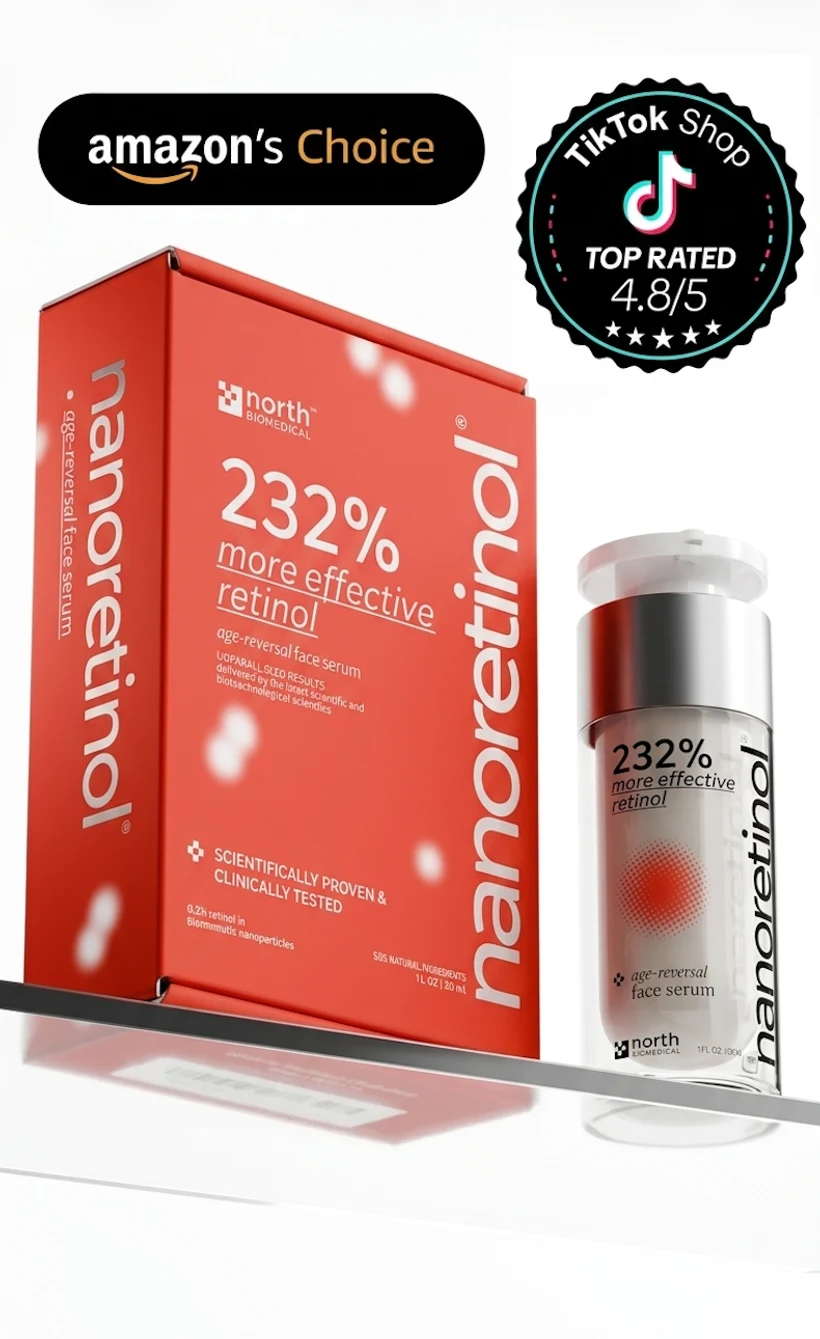
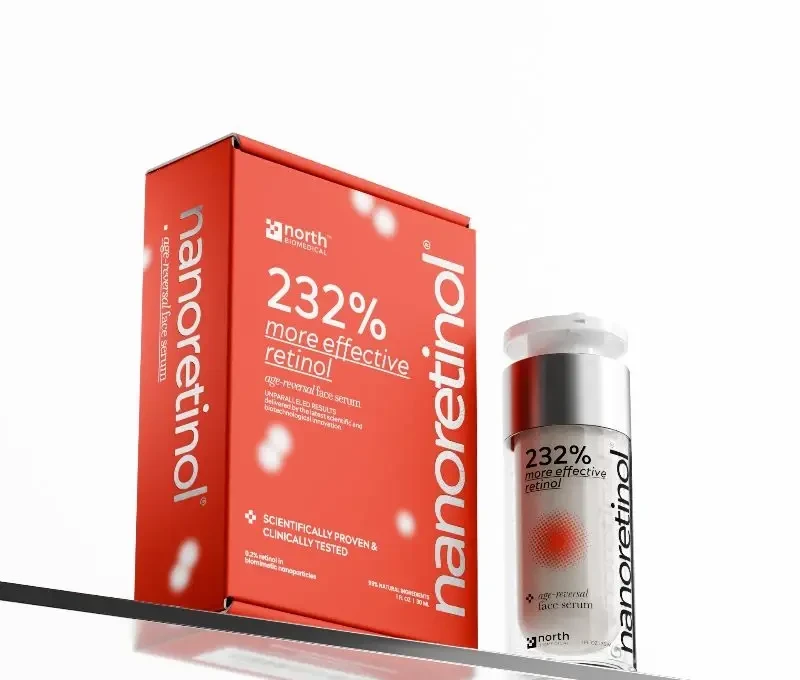
The clinical difference is measurable. Nanoretinol® — a retinol encapsulated in biomimetic lipid nanoparticles — produced 232% greater collagen recovery and 73% greater elastin recovery compared to conventional retinol in a head-to-head study, at a concentration of just 0.2%. The delivery efficiency, not the concentration, is the operative variable. In a 56-day clinical trial, users saw a 61% increase in skin firmness and 56% increase in skin elasticity [see the full study at northbiomedical.com/nanoretinol].
For a deeper look at how encapsulated retinol compares to conventional formats, see our article on encapsulated retinol.
A Framework for Evaluating Any Anti-Wrinkle Serum
When assessing a product, apply these questions:
1. Are the active ingredients present at clinical concentrations? Retinol at 0.01% in a formula is a label claim, not a treatment. Vitamin C below 10% produces limited efficacy. The concentration must match or approximate what was tested in the clinical literature.
2. How is the product packaged? Vitamin C requires airless, opaque packaging to maintain potency. Retinol degrades rapidly under light exposure. A serum in a clear glass bottle with a wide opening is likely to oxidize before you finish it.
3. What is the claimed delivery mechanism? Most serums are conventional emulsions. A serum that claims specific encapsulation technology should be able to cite supporting data — not anecdotal testimonials.
4. What is the evidence standard? Clinical studies on the final formulation are stronger evidence than studies on individual ingredients. In-vitro cell studies are weaker than in-vivo human trials.
5. Does it address multiple mechanisms? Retinol addresses cell turnover and collagen synthesis. Vitamin C addresses oxidative damage and collagen cofactor needs. Niacinamide addresses glycation and barrier function. A formula targeting multiple mechanisms is more likely to produce visible results than one targeting a single pathway.
The Role of Consistency
No anti-wrinkle serum works in isolation from consistency of use. The clinical timelines are not optional: retinol requires 12–24 weeks of regular application to produce meaningful structural changes. Most people assess products within days or weeks and abandon them before the biology has had time to respond.
The practical implication: choose a serum you can tolerate using every night, at the concentration and in the delivery format that produces results without forcing you to stop. An advanced delivery system that allows daily use is worth more than a high-concentration conventional formula you can only use twice a week because the irritation is too severe. See our complete guide on how retinol reduces wrinkles for the full clinical picture.
References
-
El-Domyati M, Attia S, Saleh F, et al. “Intrinsic aging vs. photoaging: a comparative histopathological, immunohistochemical, and ultrastructural study of skin.” Experimental Dermatology. 2002;11(5):398–405. doi:10.1034/j.1600-0625.2002.110502.x
-
Danby FW. “Nutrition and aging skin: sugar and glycation.” Clinics in Dermatology. 2010;28(4):409–411. doi:10.1016/j.clindermatol.2010.03.018
-
Ghadially R, Brown BE, Sequeira-Martin SM, Feingold KR, Elias PM. “The aged epidermal permeability barrier: structural, functional, and lipid biochemical abnormalities in humans and a senescent murine model.” Journal of Clinical Investigation. 1995;95(5):2281–2290. doi:10.1172/JCI117919
-
Fisher GJ, Datta SC, Talwar HS, et al. “Molecular basis of sun-induced premature skin ageing and retinoid antagonism.” Nature. 1996;379(6563):335–339. doi:10.1038/379335a0
-
Griffiths CE, Russman AN, Majmudar G, Singer RS, Hamilton TA, Voorhees JJ. “Restoration of collagen formation in photodamaged human skin by tretinoin (retinoic acid).” New England Journal of Medicine. 1993;329(8):530–535. doi:10.1056/NEJM199308193290803
-
Pinnell SR. “Cutaneous photodamage, oxidative stress, and topical antioxidant protection.” Journal of the American Academy of Dermatology. 2003;48(1):1–19. doi:10.1067/mjd.2003.16
-
Bissett DL, Robinson LR, Raleigh PS, et al. “Use of a facial moisturizer containing palmitoyl pentapeptide improves the appearance of aging skin.” Journal of the American Academy of Dermatology. 2005;52(3):P27. doi:10.1016/j.jaad.2004.10.390
-
Bissett DL, Miyamoto K, Sun P, Li J, Berge CA. “Topical niacinamide reduces yellowing, wrinkling, red blotchiness, and hyperpigmented spots in aging facial skin.” International Journal of Cosmetic Science. 2004;26(5):231–238. doi:10.1111/j.1467-2494.2004.00228.x