Encapsulated Retinol: Why Delivery Technology Matters More Than Concentration
The science of getting retinol past your skin barrier — and why most formulations fail at it
Here’s something the skincare industry doesn’t emphasize enough: the retinol molecule in a $15 drugstore cream and the retinol molecule in a $90 luxury serum are chemically identical. Same molecular structure. Same mechanism of action. Same potential.
So why do results vary so dramatically between products?
The answer isn’t the retinol itself — it’s what happens to it between the bottle and your cells. And this is where encapsulation technology changes everything.
This page explains encapsulated retinol as a technology category: solid lipid nanoparticles, nanostructured lipid carriers, liposomes, and biomimetic systems. If you searched specifically for North Biomedical’s product technology, the canonical brand explainer is What Is Nanoretinol®?; the December 2025 formulation update documents version-specific ingredient changes.
The Problem with Naked Retinol
Retinol has a fundamental delivery problem. For it to work, it needs to reach living cells in your epidermis and dermis, convert to retinoic acid, and bind to nuclear receptors that regulate collagen production and cell turnover [1]. But three obstacles stand in the way:
Obstacle 1: Retinol Self-Destructs
Retinol is one of the least stable active ingredients in skincare. It degrades when exposed to UV light, oxidizes on contact with air, and breaks down in the presence of heat and certain pH conditions. Studies show that unprotected retinol can lose up to 85% of its potency within hours of light exposure [2].
This degradation begins the moment you open the bottle and continues after application. By the time unencapsulated retinol reaches your skin cells, a significant portion has already converted to inactive breakdown products. The date you opened it therefore matters more than the one printed on the carton, as our guide to skincare shelf life explains.
Obstacle 2: The Skin Barrier Blocks Entry
Your skin is designed to keep things out. The stratum corneum — the outermost layer of tightly packed dead cells and lipid matrices — functions as an extraordinarily effective barrier. Most topically applied molecules, including retinol, struggle to penetrate it in meaningful quantities [3].
Conventional retinol formulations address this by including penetration enhancers — chemicals that disrupt the lipid structure of the skin barrier to create temporary pathways. While this increases retinol absorption, it comes at a cost: barrier disruption is the primary reason retinol causes redness, peeling, and sensitivity. You’re literally damaging your skin’s protective layer to get the active ingredient through [4].
Obstacle 3: Uncontrolled Release
When unencapsulated retinol does penetrate, it arrives all at once. This burst of retinoic acid conversion overwhelms local cells, triggering inflammatory responses — the burning, stinging, and irritation that give retinol its reputation for being “harsh.”
The ideal scenario is the opposite: a controlled, gradual release that maintains therapeutic levels without inflammatory spikes. But naked retinol has no mechanism for this.
What Encapsulated Retinol Actually Is
Encapsulation means wrapping retinol molecules inside a protective carrier — a microscopic shell that shields the active ingredient from degradation, controls its release rate, and facilitates delivery through the skin barrier.
Think of it as the difference between swallowing a vitamin and taking a time-release capsule. Same active ingredient, fundamentally different delivery.
Several encapsulation technologies exist in skincare, each with different advantages:
Solid Lipid Nanoparticles (SLNs)
SLNs are tiny particles (typically 50-500 nanometers) made from solid lipids that remain intact at body temperature. They protect retinol from oxidation and light degradation while offering sustained release. Research shows SLNs can improve retinol skin penetration by 2-3x compared to conventional emulsions [5].
Limitation: The rigid structure of solid lipids can limit the amount of retinol that can be incorporated, and stability over long shelf periods can be challenging.
The answer isn’t the retinol itself — it’s what happens to it between the bottle and your cells.
Nanostructured Lipid Carriers (NLCs)
NLCs improve on SLNs by using a mixture of solid and liquid lipids, creating an imperfect crystalline structure with more space for retinol molecules. AlZahabi et al. demonstrated that NLC-encapsulated vitamin A showed superior stability and skin permeation compared to both free retinol and SLN formulations [6].
Advantage: Higher drug loading capacity and better long-term stability than SLNs.
Liposomes
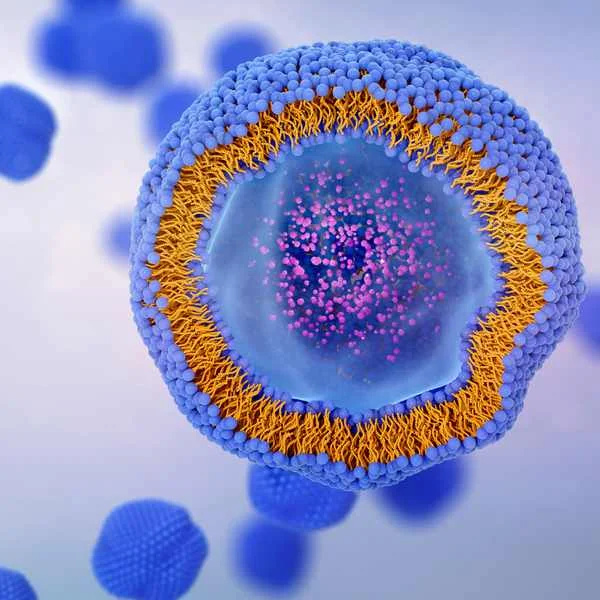
Liposomes are spherical vesicles with one or more phospholipid bilayers — essentially tiny bubbles with a structure similar to cell membranes. They can carry both water-soluble and fat-soluble actives, and their membrane-like composition gives them affinity for skin cells [3].
Limitation: Traditional liposomes can be unstable and may fuse prematurely, releasing their cargo before reaching target cells.
Biomimetic Lipid Nanoparticles
This is the most advanced approach — and the one with the most significant implications for retinol delivery.
Biomimetic nanoparticles are designed to mimic the composition and structure of natural cell membranes. Because the outer layer of these particles is compositionally similar to skin cell membranes, the body recognizes them as “self” rather than foreign material [7]. This biomimicry enables something the other technologies can’t achieve: passage through the epithelial barrier without disrupting it. Instead of breaking down the skin barrier (the conventional approach), biomimetic nanoparticles pass through it — the way a cell would naturally absorb a nutrient.
The Science: How Encapsulation Changes Retinol Performance
The clinical evidence for encapsulated retinol isn’t just about theoretical advantages. The performance differences are measurable:
Stability
Jun et al. (2021) developed retinol-loaded lipid nanocarriers using vacuum emulsification and found that encapsulation dramatically improved retinol stability. While free retinol showed significant degradation within days under standard storage conditions, nanocarrier-encapsulated retinol maintained its potency over extended periods [8].
Rahman et al. (2024) took this further with multilayered collagen-lipid hybrid nanovesicles, demonstrating that the multilamellar structure provided both stabilization and efficient skin delivery of retinol — a dual benefit that single-layer systems couldn’t match [9].
Penetration
Clares et al. compared three nanocarrier types (nanoemulsions, liposomes, and solid lipid nanoparticles) for retinyl palmitate delivery. All three outperformed conventional formulations for skin permeation, with SLNs showing the highest epidermal retention [5].
Liu et al. (2021) demonstrated that nanoparticle size directly affects penetration depth — particles in the 100-200nm range showed optimal stratum corneum penetration, with smaller particles achieving deeper delivery [10].
Reduced Irritation
This is perhaps the most practically significant benefit. Encapsulation provides controlled, sustained release rather than a burst of retinol that overwhelms skin cells. The gradual delivery means cells receive a steady, manageable dose of retinoic acid — enough to trigger beneficial gene expression without the inflammatory spike that causes redness and peeling [4].
For consumers, this translates to fewer side effects during the retinization period and the ability to use retinol consistently without the forced breaks that reduce efficacy.
A Product Example: Nanoretinol®
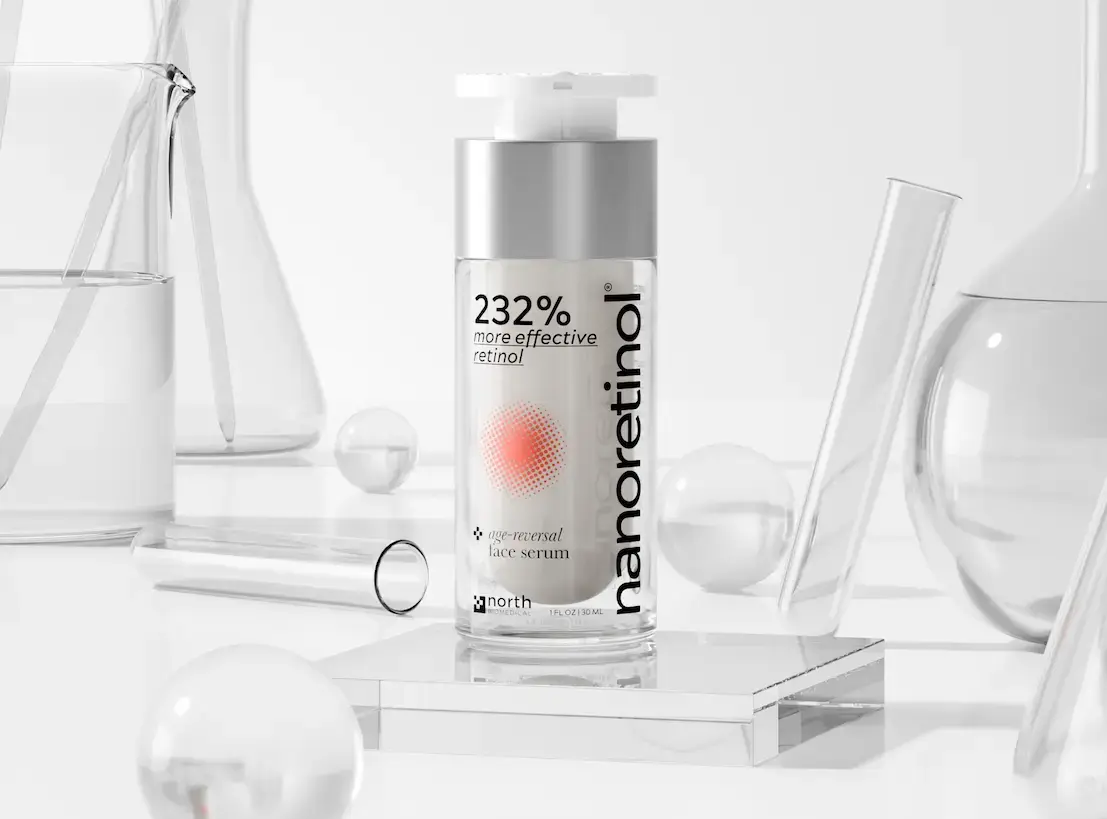
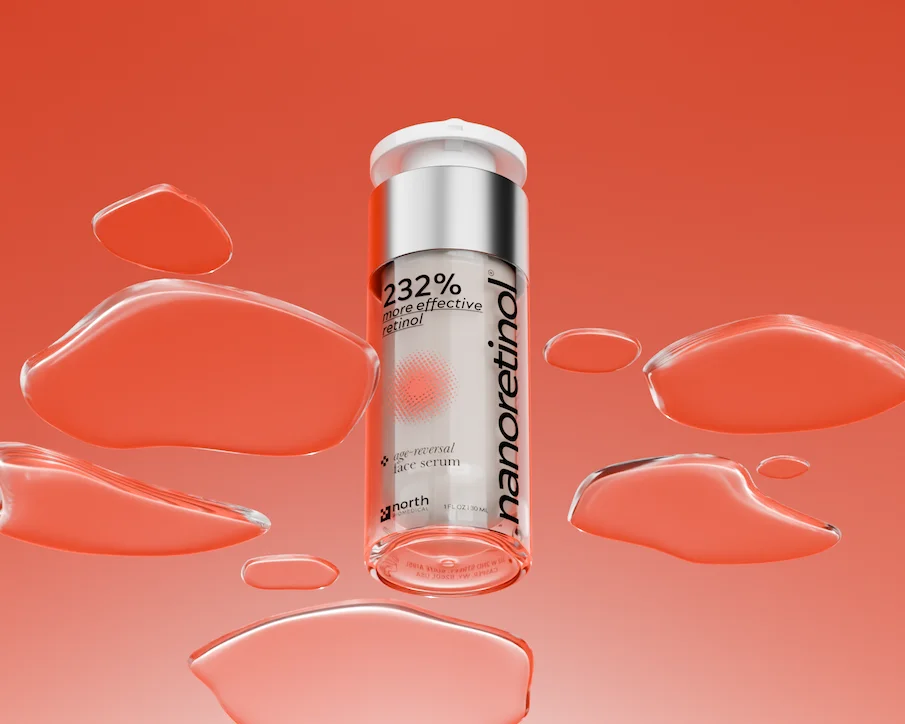
At North Biomedical, we spent two years developing Nanoretinol® — a retinol formulation built entirely around the biomimetic lipid nanoparticle approach.
The nanoparticles in Nanoretinol® are composed of phosphatidylcholine — the same phospholipid that makes up human cell membranes. This means the outer surface of each nanoparticle is structurally identical to the outer surface of your skin cells. When applied, your skin recognizes these particles as biological material rather than foreign chemicals.
The effective dose delivered to target cells may be a fraction of that 1%.
The result is a fundamentally different delivery mechanism:
No barrier disruption needed. Unlike conventional retinol formulations that rely on penetration enhancers (chemicals that break down the lipid matrix of your stratum corneum), Nanoretinol® nanoparticles pass through the barrier the way your own cells naturally absorb nutrients. No damage. No forced entry.
Controlled, sustained release. As nanoparticles are gradually absorbed by skin cells, they release their retinol payload in a controlled manner. Your cells get a steady, therapeutic dose rather than an overwhelming burst.
Deep nourishment as a bonus. As the nanoparticles release their retinol, the phospholipid membrane itself is absorbed by skin cells — providing deep lipid nourishment without heavy or greasy residue.
Even distribution. The negatively charged nanoparticles naturally repel each other, forming a three-dimensional mesh across the skin surface. This ensures uniform distribution and consistent absorption rather than concentrated hotspots.
The clinical results: +232% more effective collagen recovery and +73% more effective elastin recovery compared to conventional retinol, with significantly reduced cytotoxicity (meaning dramatically less cellular damage and irritation).
Why Concentration Isn’t What You Think
This brings us to the most misunderstood number in skincare: retinol percentage.
Nanoretinol® contains 0.2% retinol. Many conventional products boast 0.5%, 1%, or even higher. On paper, more should mean better. In practice, it’s the opposite.
What matters isn’t how much retinol is in the bottle — it’s how much reaches your cells in active form.
A 1% retinol in a conventional base faces degradation (losing potency before application), barrier resistance (most molecules bouncing off the stratum corneum), and uncontrolled delivery (the fraction that does penetrate arriving all at once, triggering irritation). The effective dose delivered to target cells may be a fraction of that 1%. A 0.2% retinol in biomimetic nanoparticles is protected from degradation, passes through the barrier efficiently, and releases in a controlled manner. The effective dose reaching target cells can actually exceed that of a higher-concentration conventional product [8].
This is why Nanoretinol® at 0.2% outperforms conventional retinol at higher concentrations. The delivery system is doing what the molecule alone cannot.
How to Evaluate Encapsulated Retinol Products
Not all encapsulation claims are equal. When evaluating products, look for:
Specific technology disclosure. Terms like “encapsulated” or “time-release” are vague. Quality products specify the technology: liposomal, solid lipid nanoparticles, nanostructured lipid carriers, or biomimetic nanoparticles. If the brand can’t tell you what the encapsulation actually is, it may not be meaningful.
Clinical data. Does the formulation have clinical or in-vitro testing demonstrating improved delivery, stability, or efficacy versus conventional retinol? Claims without supporting data are just marketing.
Appropriate packaging. Even encapsulated retinol benefits from airless pumps and opaque containers. If the product comes in a jar or clear bottle, the encapsulation may not be sufficient to protect against all degradation pathways.
Formulation coherence. Encapsulated retinol should be in a base that doesn’t compromise the encapsulation. Extreme pH, high alcohol content, or incompatible surfactants can damage nanoparticles before application.
What This Means for Your Routine
If you’ve tried retinol before and experienced excessive irritation, or if you’ve been using retinol for months without the results clinical studies describe, the delivery system may be the missing variable.
The basic principles of retinol use still apply — nighttime application, gradual frequency introduction, mandatory sunscreen. But encapsulated formulations can change the experience:
- Faster tolerance building (less irritation means fewer forced breaks)
- Earlier visible results (more active ingredient reaching cells from day one)
- Better long-term outcomes (sustained delivery supports consistent collagen signaling)
- Simpler routines (less need for buffering techniques or complicated layering to manage irritation)
The retinol molecule has been proven effective for over 50 years. What’s changed — and what continues to change — is our ability to deliver it to where it actually works. Encapsulation technology isn’t a gimmick or a marketing story. It’s the engineering solution to retinol’s oldest and most fundamental limitation.
References
-
Mukherjee S, Date A, Patravale V, et al. “Retinoids in the treatment of skin aging: an overview of clinical efficacy and safety.” Clinical Interventions in Aging. 2006;1(4):327-348. doi:10.2147/ciia.2006.1.4.327
-
Zasada M, Budzisz E. “Retinoids: active molecules influencing skin structure formation in cosmetic and dermatological treatments.” Postępy Dermatologii i Alergologii. 2019;36(4):392-397. doi:10.5114/ada.2019.87443
-
Milosheska D, Roškar R. “Use of Retinoids in Topical Antiaging Treatments: A Focused Review of Clinical Evidence for Conventional and Nanoformulations.” Advances in Therapy. 2022;39(12):5351-5375. doi:10.1007/s12325-022-02319-7
-
Kong R, Cui Y, Fisher GJ, et al. “A comparative study of the effects of retinol and retinoic acid on histological, molecular, and clinical properties of human skin.” Journal of Cosmetic Dermatology. 2016;15(1):49-57. doi:10.1111/jocd.12193
-
Clares B, Calpena AC, Parra A, et al. “Nanoemulsions (NEs), liposomes (LPs) and solid lipid nanoparticles (SLNs) for retinyl palmitate: effect on skin permeation.” International Journal of Pharmaceutics. 2014;473(1-2):591-598. doi:10.1016/j.ijpharm.2014.08.001
-
AlZahabi S, Sakr OS, Ramadan AA. “Nanostructured lipid carriers incorporating prickly pear seed oil for the encapsulation of vitamin A.” Journal of Cosmetic Dermatology. 2019;18(6):1875-1884. doi:10.1111/jocd.12891
-
Kafi R, Kwak HS, Schumacher WE, et al. “Improvement of naturally aged skin with vitamin A (retinol).” Archives of Dermatology. 2007;143(5):606-612. doi:10.1001/archderm.143.5.606
-
Jun SH, Kim H, Lee H, et al. “Synthesis of Retinol-Loaded Lipid Nanocarrier via Vacuum Emulsification to Improve Topical Skin Delivery.” Polymers. 2021;13(5):826. doi:10.3390/polym13050826
-
Rahman RT, Koo BI, Jang J, et al. “Multilayered collagen-lipid hybrid nanovesicles for retinol stabilization and efficient skin delivery.” International Journal of Pharmaceutics. 2024;661:124409. doi:10.1016/j.ijpharm.2024.124409
-
Liu J, Zheng A, Peng B, et al. “Size-Dependent Absorption through Stratum Corneum by Drug-Loaded Liposomes.” Pharmaceutical Research. 2021;38(8):1429-1437. doi:10.1007/s11095-021-03079-9