Best Foundation for Mature Skin: What Actually Looks Good After 40 (And What Settles Into Every Line)
The science of why most foundations cake, crease, and age your face — and the formulation choices that don't
A foundation that looked beautiful on you at thirty-five can look like a topographic map at fifty. Same product, same shade, same brush — but suddenly it’s settling into the crease of your smile, pooling around your nose, and emphasizing every dehydration line on your forehead. Most women blame the foundation. The foundation is usually not the problem.
What changed is the canvas. After 40, the surface of the skin behaves differently in ways that completely change how makeup sits on it. The good news: once you understand what’s actually happening, the foundation choice becomes obvious — and so does the prep that makes any formula wear better.
What Mature Skin Is Actually Doing Differently
Three measurable changes occur in aging skin that affect how foundation looks on it.
Stratum corneum changes. The outermost skin layer thins and becomes less uniform with age. In a foundational study published in Archives of Dermatology, researchers compared skin properties between young adults (average age 27) and older adults (average age 71) across eleven body sites. They found significant age-related changes in skin surface characteristics, with measurable differences in barrier function emerging by the fifth decade [1].
Sebum production drops sharply. The sebaceous glands continue producing oil in your twenties and thirties, then production declines steeply at perimenopause. Sebum forms a natural moisture seal on the skin surface — when it disappears, water evaporates faster, the surface roughens, and any film of product on top of it loses its anchor.
Collagen and elastin break down. The dermis loses roughly 1% of its collagen each year from age 25 onward. By 50, the structural matrix that kept skin taut and smooth has been depleted by a quarter. The fine lines this creates aren’t superficial — they’re permanent grooves in the dermis. Foundation pigment, suspended in liquid or powder, naturally migrates into these grooves when the face moves. Foundation is one category among several that changes with age, and our guide to the best makeup for mature skin sequences the rest.
These three changes together explain the entire foundation problem after 40. The skin is rougher (so coverage looks uneven), drier (so liquids absorb unevenly), and grooved (so pigment settles). Our guide to why makeup looks cakey turns those patterns into a quick cause-by-cause test.
Why “Full Coverage” Makes It Worse
The instinct, when skin starts looking imperfect, is to reach for more coverage. This is almost always the wrong move on mature skin.
The dermis loses roughly 1% of its collagen each year from age 25 onward.
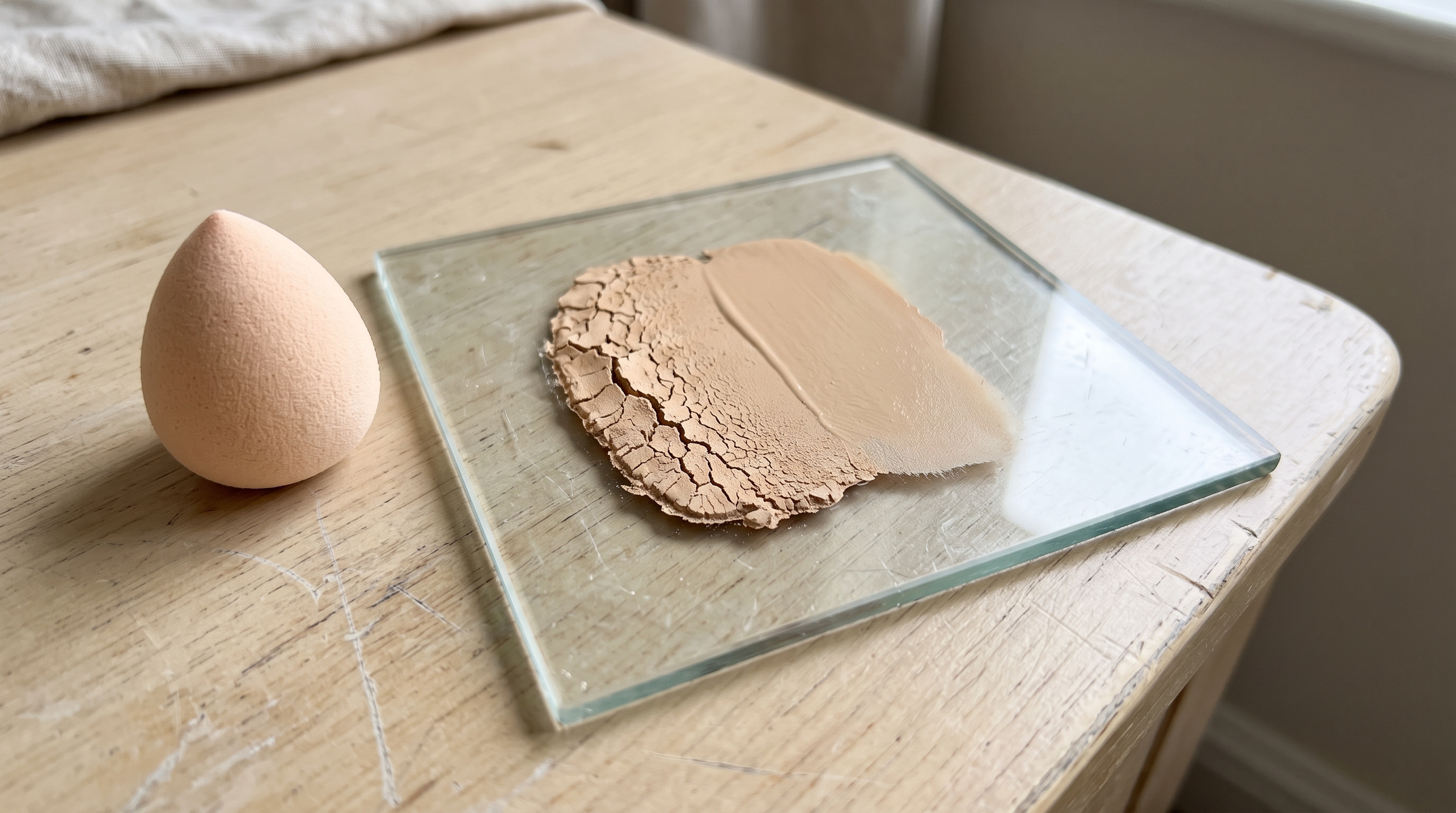
Heavy full-coverage foundations contain high pigment loads suspended in either silicone or oil-based emulsions. On younger, smoother skin, the surface tension and continuous lipid film hold that pigment in a flat, uniform layer. On mature skin, the same product encounters a rougher topography with deeper grooves. The pigment doesn’t sit flat — it sinks. The more pigment in the formula, the more visible that sinking becomes.
A 12-month double-blind randomized controlled trial in the British Journal of Dermatology compared a cosmetic anti-aging product to vehicle on 60 photoaged volunteers aged 45-80. After 12 months, 70% of the active-product users showed measurable wrinkle improvement, and biopsies revealed deposition of fibrillin-1 in treated skin — evidence that the right cosmetic chemistry can actually repair the dermal scaffolding that holds the surface smooth [2]. The implication is straightforward: the foundation issue is downstream of skin quality. Improve the skin, and any reasonable foundation looks better. It is also the case for stepping down a category altogether, which our guide to the best tinted moisturizer for mature skin makes in full.
What Formulations Actually Work After 40
The best foundation for mature skin is the one that respects three principles:
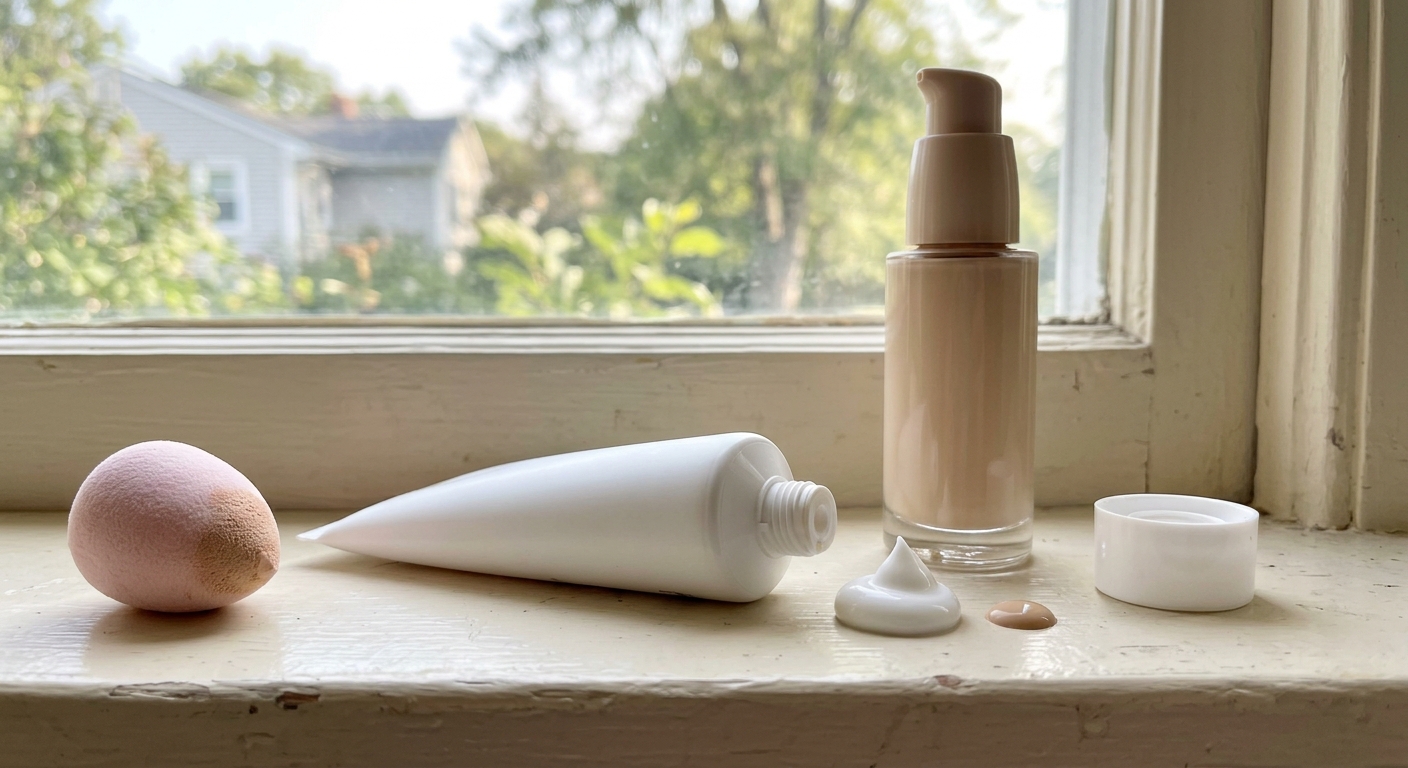
Water-based or hybrid emulsions over heavy silicone or oil bases. Lightweight emulsions with hyaluronic acid, glycerin, or other humectants in the vehicle keep the film flexible. Silicone elastomers are useful in small amounts (they smooth surface topography optically) but at high concentrations they can emphasize dehydration by creating a film that sits on the skin rather than working with it. If full foundation feels like too much, the same principle decides which CC cream for mature skin wears well and which one creases by midday.
Light-to-medium buildable coverage instead of heavy one-step coverage. Two thin layers settle better than one thick layer. Pigment in moderation reflects light back in a more skin-like way.
Demi-matte or satin finish, not flat matte and not high shimmer. Flat matte foundations highlight texture by absorbing all reflected light unevenly. High shimmer emphasizes pores and elevations. A satin finish with subtle, evenly distributed micas mimics how healthy skin reflects light.
The Prep That Matters More Than the Foundation
A 12-week clinical trial published in Clinical, Cosmetic and Investigational Dermatology tested a facial primer with broad-spectrum SPF 50 on 28 women aged 40-64 with mild-to-moderate photoaging. After a single application, hyperpigmentation grading improved by 38.4%; by 12 weeks, the improvement reached 43.9% versus baseline, and 96.4% of subjects reported visible improvement in age spots [3]. The study illustrates an underappreciated point: the product underneath the foundation can do more for the finished look than the foundation itself. What you set it with matters as well, and our guide to the best setting powder for mature skin explains why powder creases and which formulas avoid it. The same logic applies under the eye, where our guide to the best concealer for mature skin covers the coverage-versus-flexibility trade. And if the finished face breaks up by midday, our guide to the best setting spray for mature skin explains why most sprays sold for older skin contain no film former at all.
Effective prep for mature skin involves three layers, applied in this order:
If you want a separate primer on top, a hydrating one (not a heavy silicone blur) generally outperforms on dehydrated mature skin.
1. A humectant serum — hyaluronic acid, glycerin, or sodium PCA — applied to damp skin. This rehydrates the stratum corneum so it doesn’t pull water out of your foundation as the day progresses.
2. A moisturizer with barrier lipids — ceramides, fatty acids, cholesterol. This restores the natural lipid film that aging skin has lost, preventing the dehydration-driven creasing that mature foundations are blamed for.
3. SPF 30+ broad-spectrum sunscreen. A landmark RCT published in Annals of Internal Medicine followed 903 adults assigned to either daily or discretionary sunscreen use over 4.5 years. The daily-use group showed 24% less skin aging — measured by skin-surface micro-topography — than the discretionary group [4]. Sunscreen isn’t optional under mature-skin makeup; it’s the single most evidence-backed intervention for keeping the canvas smooth. Choosing the SPF that has to sit under all of it is its own decision, and our guide to the best SPF for under makeup covers which textures survive a foundation pass.
If you want a separate primer on top, a hydrating one (not a heavy silicone blur) generally outperforms on dehydrated mature skin. Heavy blur primers are designed for the topography of younger, oilier skin; they tend to pill or grab on aging skin. Application method matters as much as formula here, and our guide to makeup for wrinkles covers the pressing technique that keeps pigment out of a crease.
Why Most “Anti-Aging” Foundations Don’t Live Up to the Claim
Foundations labeled “anti-aging” usually contain trace amounts of actives — peptides, antioxidants, occasionally retinyl palmitate. The concentrations are too low and the formulation chemistry too compromised by pigment dispersion to deliver any measurable improvement.
The actives in a foundation cannot be the active treatment. They’re cosmetic chemistry trying to sell two things in one jar. If you want functional skincare ingredients, they belong in your serum and night routine — where the concentrations are high enough, the formulation is optimized for penetration, and the actives aren’t competing with pigment, silicones, and emulsifiers for stability.
This is why the biggest improvement in how foundation looks usually doesn’t come from changing foundation. It comes from changing the skincare routine for mature skin underneath. When the surface is hydrated, the lines are softened, and the skin barrier is intact, even a drugstore foundation can look like a couture finish.
The Single Ingredient That Most Improves How Foundation Wears
Retinol, applied at night over weeks to months, does something no foundation can: it accelerates skin cell turnover, stimulates dermal collagen synthesis, and thickens the epidermis. The result is a smoother, denser surface that makeup adheres to evenly.
The problem with conventional retinol on mature skin is that the formulations are often poorly tolerated. Skin already prone to dryness, redness, and barrier compromise can’t handle the irritation that comes with cheap retinol vehicles — flaking, peeling, and visible inflammation that make foundation look worse during the adjustment period.
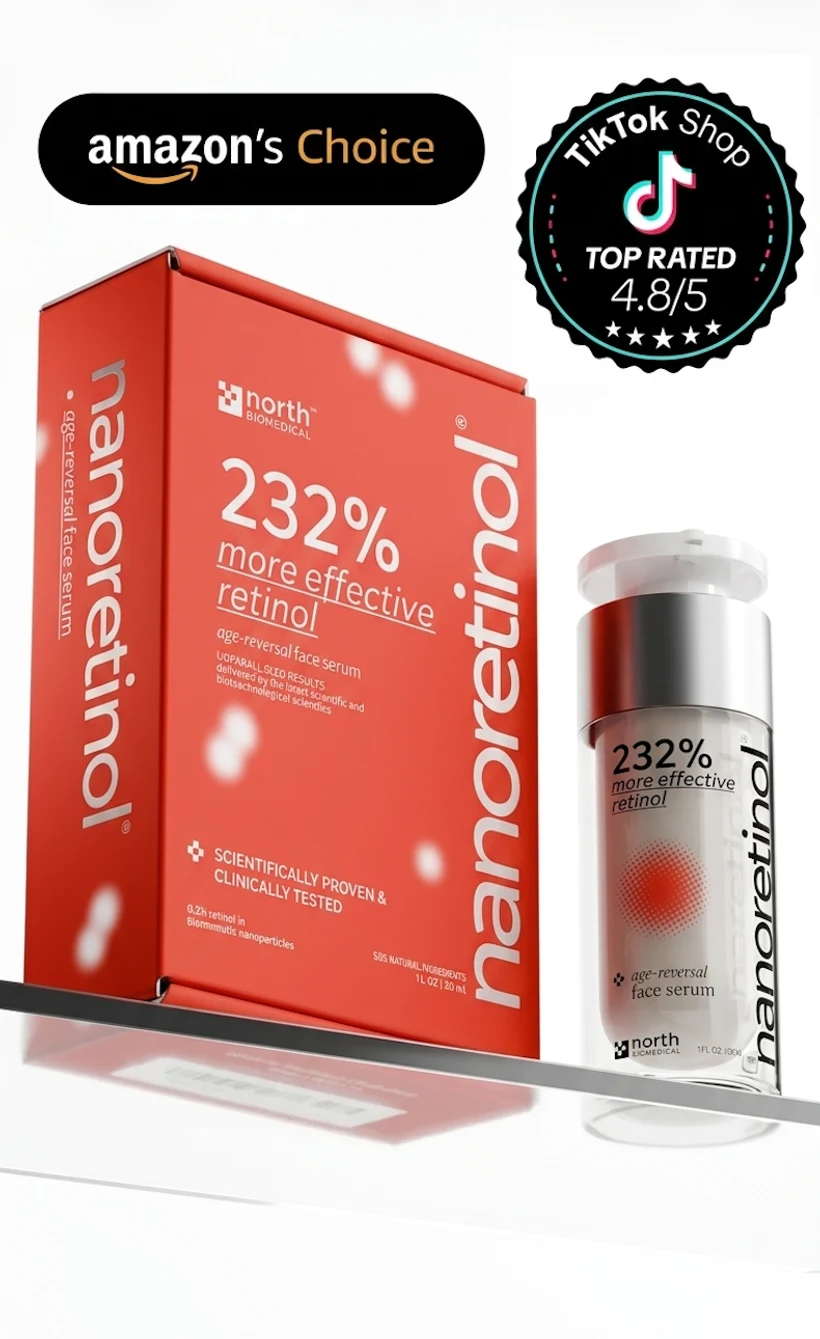
This is where Nanoretinol differs structurally. Conventional retinol formulations rely on petroleum-derivative penetration enhancers that disrupt the lipid mobility of the skin barrier to push retinol through — a destructive mechanism that contributes to the irritation profile mature skin can’t afford. Nanoretinol is encapsulated in biomimetic lipid nanoparticles that the body recognizes as “self” and admits through the barrier without disrupting it. The lipid nanoparticles themselves contain phosphatidylcholine and tocopheryl acetate — barrier-supporting compounds that aging skin already benefits from.
In the clinical study, Nanoretinol delivered a +232% improvement in collagen recovery and +61% increase in skin firmness over 56 days, with minimal side effects — a profile that conventional 1% retinol formulations rarely achieve. For mature skin trying to wear foundation well, the relevant outcome is a thicker, smoother, more reflective epidermis. The makeup, after that, almost picks itself.
A Quick Sanity Check Before Buying
Before committing to a new foundation, ask three questions:
- Is my current foundation actually the problem, or is my skin? Try a single week of doubled hydration and SPF without changing makeup. If the foundation suddenly behaves, the foundation wasn’t broken.
- Am I matching the formula to my skin, not my preferences? Mature skin needs hydration. Even if you historically wore matte foundation, your skin doesn’t.
- Have I tested it in real light, after eight hours? Counter samples in store lighting tell you almost nothing. The eight-hour wear test is the only one that matters.
The best foundation for mature skin is rarely the most expensive one or the one with the most aggressive marketing. It’s the lightest, most hydrating formula your skin will tolerate, applied over a canvas that has been treated like the structural priority it is. The same formula-before-shade logic decides which blush works on mature skin, where a cream almost always outlasts a pressed powder.
References
- Wilhelm KP, Cua AB, Maibach HI. “Skin aging. Effect on transepidermal water loss, stratum corneum hydration, skin surface pH, and casual sebum content.” Archives of Dermatology. 1991;127(12):1806-1809. doi:10.1001/archderm.127.12.1806
- Watson REB, Ogden S, Cotterell LF, et al. “A cosmetic ‘anti-ageing’ product improves photoaged skin: a double-blind, randomized controlled trial.” British Journal of Dermatology. 2009;161(2):419-426. doi:10.1111/j.1365-2133.2009.09216.x
- Roberts WE, Jiang LI, Herndon JH Jr. “Facial primer provides immediate and long-term improvements in mild-to-moderate facial hyperpigmentation and fine lines associated with photoaging.” Clinical, Cosmetic and Investigational Dermatology. 2015;8:471-477. doi:10.2147/CCID.S88443
- Hughes MC, Williams GM, Baker P, Green AC. “Sunscreen and prevention of skin aging: A randomized trial.” Annals of Internal Medicine. 2013;158(11):781-790. doi:10.7326/0003-4819-158-11-201306040-00002