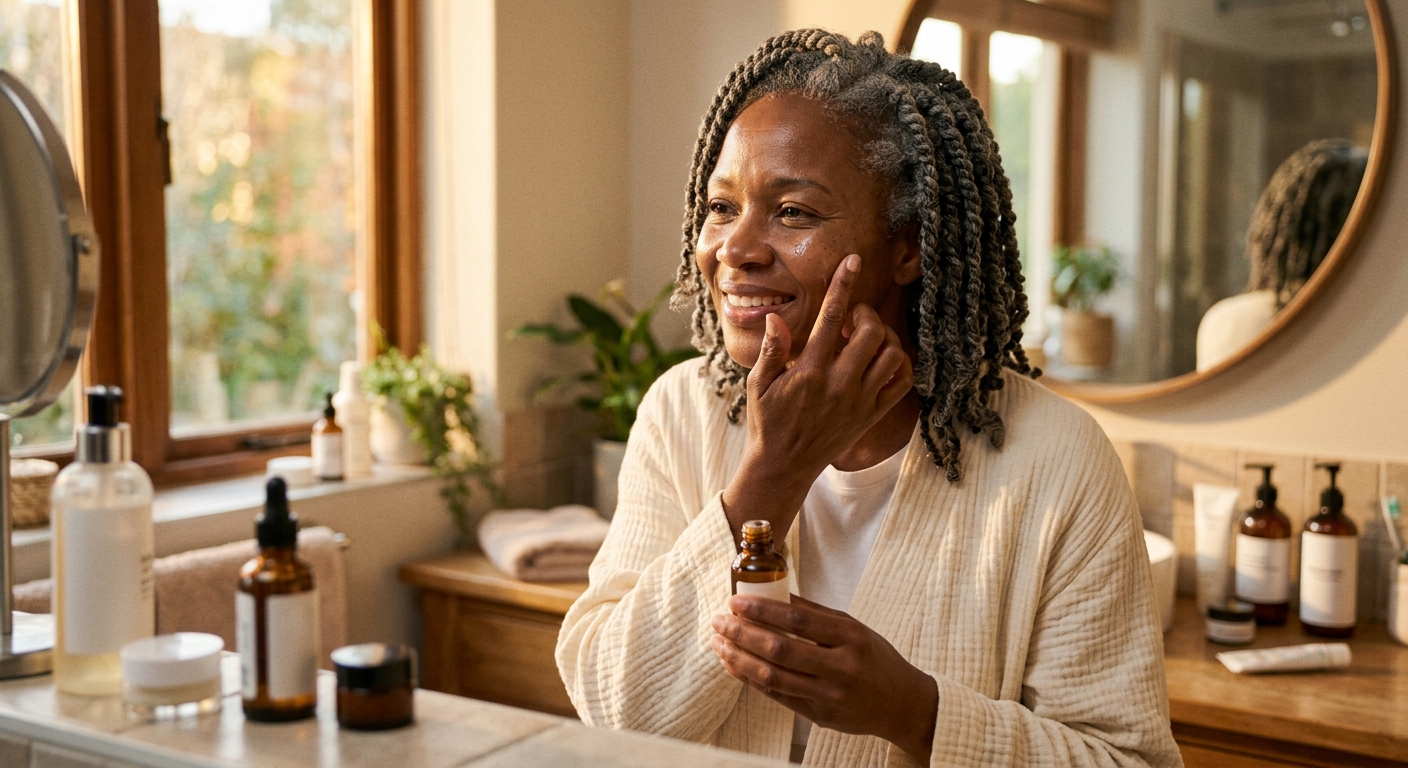
The Complete Skincare Routine for Mature Skin After 40
An evidence-based protocol built around the biological changes that happen in your 40s, 50s, and beyond
There’s a moment in your 40s when your old skincare routine quietly stops working. The moisturizer that kept your skin balanced for a decade suddenly feels insufficient. Products that never caused irritation now leave your skin tight and reactive. Fine lines that were only visible in harsh lighting begin showing up in bathroom mirrors.
This isn’t your imagination, and it isn’t simply “aging.” Specific biological shifts — declining estrogen, slower cellular turnover, reduced sebum production, and accelerating collagen loss — fundamentally change what your skin needs [1]. A routine designed for 30-year-old skin isn’t failing because it was bad. It’s failing because it was built for a different biology. If you are at the start of that shift, the skin care routine for your 40s covers the decade in more detail.
What Changes After 40
Before selecting products, you need to understand what’s actually happening beneath the surface.
Cell turnover slows dramatically. In your 20s, your skin replaces its outer layer every 28 days. By your 40s, that cycle stretches to 45-60 days [2]. Dead cells accumulate on the surface longer, creating dullness, rough texture, and a sallow tone that no amount of moisturizer can fix because the problem isn’t dehydration — it’s accumulation.
Collagen production declines steadily. You’re losing roughly 1% of your collagen per year, and the collagen that remains becomes more rigid and fragmented [3]. This manifests as loss of firmness, deeper expression lines, and skin that doesn’t bounce back the way it once did.
Sebum production drops. Your skin’s natural oil production decreases, especially after menopause, which is why skin that was once oily or combination may suddenly feel dry. The lipid barrier thins, transepidermal water loss increases, and sensitivity rises [1]. Those same changes decide what your makeup does, as our guide to the best makeup for mature skin explains.
Estrogen decline accelerates everything. During perimenopause and menopause, falling estrogen levels can cause the skin to lose up to 30% of its collagen in five years — a rate of decline that dwarfs the gradual 1% annual loss that preceded it [4].
Understanding these shifts isn’t academic. Each one points to a specific category of ingredient or intervention that addresses the underlying mechanism, not just the visible symptom.
The Morning Routine
Step 1: Gentle Cleanser
Abandon anything that foams aggressively or leaves skin feeling “squeaky clean.” That sensation means you’ve stripped the already-thin lipid barrier, which takes hours to rebuild — hours during which your skin is vulnerable to moisture loss and irritant penetration.
Choose a cream or oil-based cleanser with a pH between 4.5 and 5.5 (matching skin’s natural acidity). Look for ingredients like ceramides, glycerin, or squalane that clean without depleting.
In your 20s, your skin replaces its outer layer every 28 days.
Step 2: Antioxidant Serum (Vitamin C)
Morning is when your skin faces its greatest oxidative threat — UV radiation, pollution, environmental stress. A well-formulated vitamin C serum at 10-15% concentration serves double duty: it neutralizes free radicals before they can damage collagen, and it directly supports new collagen synthesis as a required enzymatic cofactor [5]. For the daylight-versus-night reasoning behind that placement, see our morning skincare routine guide.
L-ascorbic acid is the most researched form, but it’s unstable. If you find it irritating (common in mature, thinner skin), look for ascorbyl glucoside or magnesium ascorbyl phosphate — gentler derivatives with good evidence behind them.
Step 3: Hydrating Serum
Hyaluronic acid has earned its reputation. A single molecule can hold up to 1,000 times its weight in water, and topical application has been clinically shown to improve skin hydration, reduce wrinkle depth, and enhance elasticity [6]. Look for formulations with multiple molecular weights — high molecular weight hydrates the surface, low molecular weight penetrates deeper to plump from within.
Layer this over your vitamin C while skin is still slightly damp to maximize absorption.
Step 4: Moisturizer
For mature skin, your moisturizer needs to do more than sit on the surface — though it remains a retention layer rather than a delivery vehicle. Look for three categories of ingredients working together:
- Humectants (glycerin, hyaluronic acid) — pull water into skin
- Emollients (squalane, jojoba oil) — fill gaps between cells for smoothness
- Occlusives (ceramides, shea butter) — seal moisture in and reinforce the barrier
Niacinamide at 2-5% is a particularly valuable addition in a mature-skin moisturizer. Clinical studies show it improves skin barrier function, reduces fine lines, decreases hyperpigmentation, and reduces yellowing (sallowness) — all without irritation [7].
Step 5: Sunscreen (SPF 30+)
This is the non-negotiable. UV radiation accounts for up to 80% of visible facial aging — more than genetics, more than every other environmental factor combined [5]. It degrades collagen, fragments elastin, triggers hyperpigmentation, and stimulates the MMPs that actively break down your skin’s structural proteins.
Mineral sunscreens (zinc oxide, titanium dioxide) tend to be better tolerated by mature skin, which is often more sensitive. Apply generously — most people use less than half the amount needed for the SPF rating on the label.
It degrades collagen, fragments elastin, triggers hyperpigmentation, and stimulates the MMPs that actively break down your skin’s structural proteins.
The Evening Routine
Step 1: Double Cleanse
If you wear sunscreen (and you should), a single cleanse often isn’t enough to remove it fully. Start with a cleansing balm or micellar water to dissolve sunscreen and makeup, then follow with your gentle water-based cleanser. This “double cleanse” ensures a clean canvas for your evening actives, the full order of which is in our night skincare routine guide.
Step 2: Retinoid Treatment
Retinoids are the single most evidence-backed ingredient for addressing multiple aspects of skin aging simultaneously. They increase collagen production, speed cellular turnover, reduce hyperpigmentation, improve texture, and inhibit the enzymes that degrade structural proteins [2][8].
For mature skin, the key is choosing the right form and concentration. Start low and build gradually — begin with retinol at 0.25-0.3% two to three nights per week, then increase frequency as your skin acclimates.
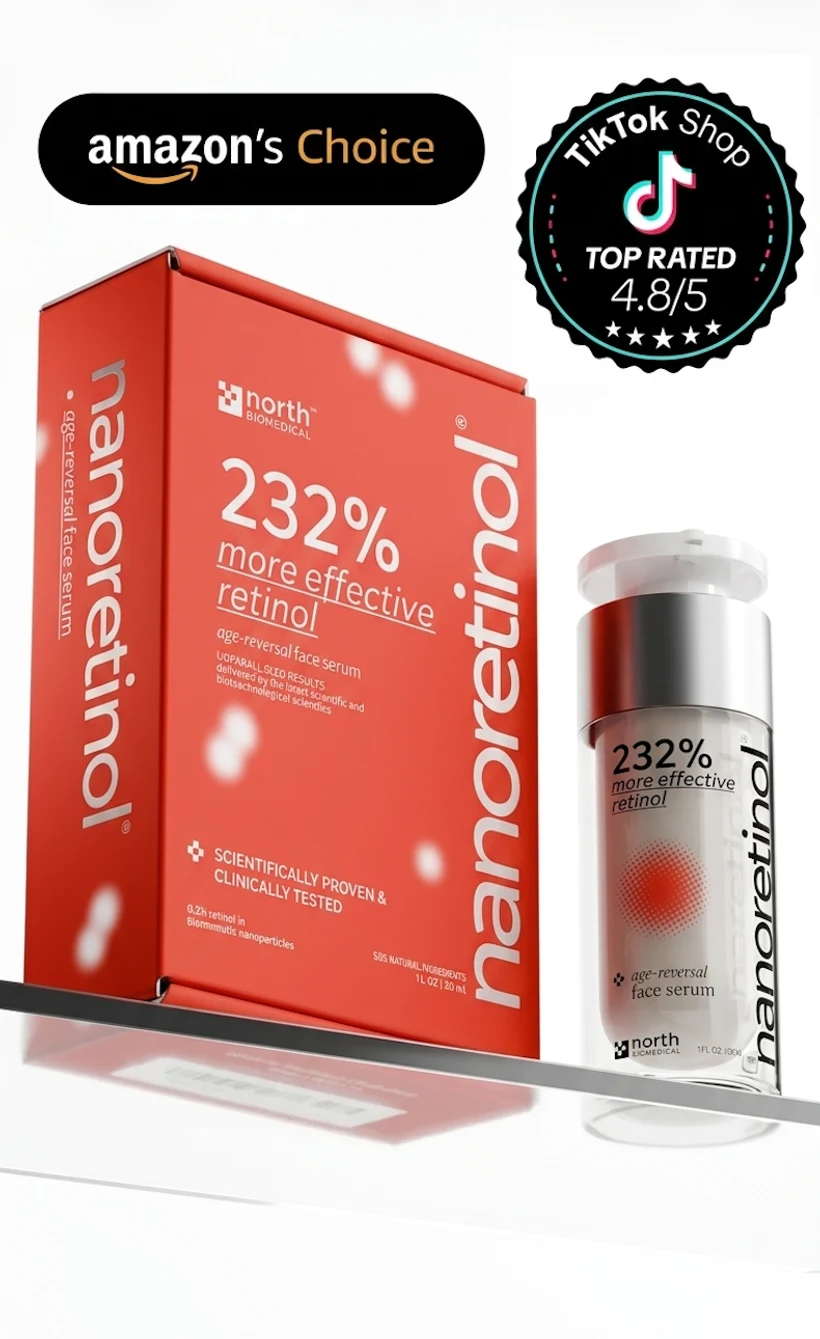
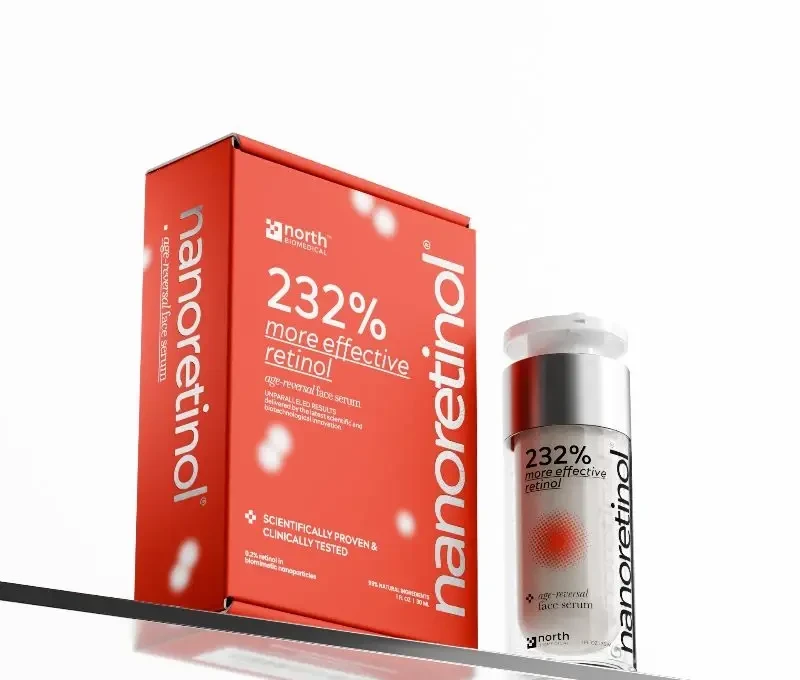
Conventional retinol formulations can be particularly challenging for mature skin because the barrier is already compromised. This is where delivery technology makes a meaningful difference. Nanoretinol® by North Biomedical® encapsulates retinol in biomimetic lipid nanoparticles that pass through the skin barrier without disrupting it — achieving 232% greater collagen recovery than conventional retinol with significantly reduced irritation. For skin that’s already thinner, drier, and more reactive, that gentler delivery isn’t a luxury — it’s a practical necessity.
Step 3: Peptide or Growth Factor Serum
On nights when you’re not using your retinoid (especially during the initial adjustment period), peptide serums offer complementary benefits. Matrixyl and copper peptides signal fibroblasts to produce more collagen, while neuropeptides like Argireline can reduce the depth of expression lines.
These aren’t replacements for retinoids — they work through different pathways and can be used in combination once your skin tolerates nightly retinoid use.
Step 4: Rich Night Cream or Facial Oil
Night is when your skin’s repair mechanisms are most active. Support this process with a heavier moisturizer than you’d use during the day — something with ceramides, fatty acids, and cholesterol to rebuild the lipid barrier overnight.
Squalane is an excellent choice for mature skin: it mirrors a component of your skin’s natural sebum that declines with age, and it absorbs without the greasy residue of heavier oils.
Weekly Additions
Chemical Exfoliation (1-2 Times Per Week)
Since cell turnover has slowed, gentle chemical exfoliation helps clear the accumulated dead cells that cause dullness. Glycolic acid at 5-10% or lactic acid at 5% are effective without being overly aggressive on mature skin. Use on non-retinoid nights to avoid over-exfoliation.
Hydrating Mask
A weekly sheet mask or overnight hydrating mask gives skin an intensive moisture boost. Look for ingredients like hyaluronic acid, ceramides, or centella asiatica — especially during winter months when environmental humidity drops.
Common Mistakes to Avoid
Over-exfoliation. The impulse to “scrub away” dullness is strong. Resist it. Physical scrubs and aggressive chemical peels damage an already-fragile barrier. Gentle, consistent exfoliation beats aggressive, occasional exfoliation every time.
Too many actives at once. Introducing retinoids, vitamin C, AHAs, and peptides simultaneously overwhelms mature skin. Add one new active every 2-4 weeks. Monitor for irritation before layering another.
Skipping moisturizer because your skin “doesn’t feel dry.” Transepidermal water loss can be significant even when skin doesn’t feel parched. Mature skin needs consistent barrier support regardless of sensation.
Neglecting the neck and décolletage. These areas age just as fast as your face but rarely receive the same care. Extend every step of your routine — including retinoid and sunscreen — to your neck and chest.
This routine is built around female skin and the collagen drop that follows menopause. Male skin declines on a steadier slope and tolerates lighter textures, so the skin care routine for men sequences things differently.
The Patience Factor
Here’s the part nobody wants to hear: meaningful results take 8-12 weeks minimum. Collagen remodeling is a slow biological process. Texture improvement from accelerated turnover takes at least two full skin cycles (8-10 weeks). Hyperpigmentation fading can take 3-6 months.
The routine above works because each step addresses a specific mechanism of aging — not because any single product delivers a miracle. Consistency, appropriate ingredients, and realistic timelines are what separate effective skincare from expensive disappointment. If you are specifically in your fifties, the skin care routine for your 50s adjusts this for post-menopausal skin. If you prefer a hydration-led structure, Japanese skincare for aging skin reaches the same mechanisms in a gentler sequence.
References
- Cao C, Xiao Z, Wu Y, Ge C. “Fighting against Skin Aging: The Way from Bench to Bedside.” Cell Transplantation. 2018;27(5):729-738. doi:10.1177/0963689717725755
- Mukherjee S, Date A, Patravale V, et al. “Retinoids in the treatment of skin aging: an overview of clinical efficacy and safety.” Clinical Interventions in Aging. 2006;1(4):327-348. doi:10.2147/ciia.2006.1.4.327
- Varani J, Dame MK, Rittie L, et al. “Decreased Collagen Production in Chronologically Aged Skin: Roles of Age-Dependent Alteration in Fibroblast Function and Defective Mechanical Stimulation.” American Journal of Pathology. 2006;168(6):1861-1868. doi:10.2353/ajpath.2006.051302
- Ryu YS, Kang KA, Piao MJ, et al. “Human Skin Aging and the Anti-Aging Properties of Retinol.” Biomolecules. 2023;13(11):1614. doi:10.3390/biom13111614
- Zasada M, Budzisz E. “Retinoids: active molecules influencing skin structure formation in cosmetic and dermatological treatments.” Postepy Dermatologii i Alergologii. 2019;36(4):392-397. doi:10.5114/ada.2019.87443
- Pavicic T, Gauglitz GG, Lersch P, et al. “Efficacy of cream-based novel formulations of hyaluronic acid of different molecular weights in anti-wrinkle treatment.” Journal of Drugs in Dermatology. 2011;10(9):990-1000. PMID: 22052267
- Bissett DL, Oblong JE, Berge CA. “Niacinamide: A B vitamin that improves aging facial skin appearance.” Dermatologic Surgery. 2005;31(7 Pt 2):860-865. doi:10.1111/j.1524-4725.2005.31732
- Zasada M, Budzisz E. “Retinoids: active molecules influencing skin structure formation in cosmetic and dermatological treatments.” Postepy Dermatologii i Alergologii. 2019;36(4):392-397. doi:10.5114/ada.2019.87443