Why Most Anti-Aging Night Creams Underdeliver—And What Works Instead
The one ingredient most night creams underuse—and why how it's delivered matters as much as whether it's there
The Night Cream Paradox
Walk into any pharmacy or department store, and the anti-aging night cream shelf stretches on. Peptide complexes. Marine collagen. “Bio-regenerating” formulas. Proprietary “youth complexes” with names designed to sound scientific. The price points range from $15 to $300. The language on the packaging is almost uniformly confident.
And yet: most of them won’t move the needle on how your skin ages.
This isn’t cynicism. It’s a clinical observation. A systematic review evaluating nine randomized, double-blind trials of over-the-counter anti-aging products found that four reported no statistically significant benefit compared to vehicle—basically moisturizer—while the five that did show improvements had significant methodological limitations [3]. The results weren’t dramatically bad. They were dramatically mediocre.
Understanding why night creams so often underperform requires understanding what they are actually supposed to do—and which ingredients have the evidence to do it.
What the Skin Actually Does at Night
Your skin is more receptive to treatment during sleep than during the day. The reasons are physiological, not marketing.
At night, cortisol levels drop. Cortisol is a catabolic stress hormone; when elevated, it suppresses the fibroblast activity responsible for collagen production. In the evening, as cortisol recedes, skin cells shift into repair and renewal mode. Cell turnover is measurably higher between approximately 11 p.m. and 4 a.m. Blood flow to the skin increases. Transepidermal water loss rises slightly—meaning the skin is more permeable, and topical ingredients have a better opportunity to penetrate. (See: The Science of Circadian Rhythm Skincare.)
This is the biological logic behind night creams. If you’re going to apply an active ingredient that drives cellular change, whether in a cream or a night serum, applying it when the skin’s repair machinery is already running gives you a biological tailwind.
The problem is that most night creams are formulated to capitalize on the concept of nighttime repair without delivering an ingredient that actually drives it.
Your skin is more receptive to treatment during sleep than during the day.
What Works—and What Doesn’t
The ingredient with the strongest clinical evidence for reversing visible skin aging is retinol. Not peptides. Not retinol “boosters.” Not plant-derived retinol “alternatives.” Retinol and its derivatives.
A 2023 review in Biomolecules provided a comprehensive analysis of retinol’s molecular mechanisms, establishing that it works through two confirmed pathways: stimulating collagen I and III production by activating fibroblasts, and downregulating the MMP enzymes that break down existing collagen and elastin [1]. This isn’t about temporary plumping. It’s structural change in the dermis.
Critically, retinol also operates at the level of the gene. It binds to nuclear retinoic acid receptors (RARs) and regulates gene expression related to collagen synthesis, epidermal turnover, and anti-inflammatory response. No other over-the-counter ingredient works through this mechanism. Peptides may temporarily signal collagen production. Antioxidants may reduce oxidative damage. But only retinol acts as a direct regulatory signal at the genomic level.
The clinical data backs this up. A randomized, controlled trial comparing 0.3% and 0.5% retinol serums found that both concentrations produced statistically significant improvements in fine lines, skin roughness, and overall appearance after 24 weeks of use—with the 0.5% formulation showing greater improvement in deeper wrinkles [2]. (See: How Retinol Works: The Mechanism Behind the Results.)
Why Most Night Creams Get This Wrong
If retinol is the star ingredient, why don’t most anti-aging night creams simply use it at an effective concentration?
Some do—but in amounts too low to be clinically meaningful. A comprehensive review in Clinical Interventions in Aging found that the effective range for over-the-counter retinol begins at approximately 0.3% and produces more consistent results at 0.5% and above [3]. Many night creams list retinol on the label at concentrations well below this threshold—a marketing strategy rather than a formulation choice.
The other problem is stability. Retinol is notoriously unstable: it oxidizes on exposure to air and light, degrading into inactive compounds before it even reaches skin cells. A night cream that sits open on a bathroom shelf in an unsealed jar loses meaningful retinol potency over weeks, regardless of the stated concentration.
Look for retinol at a stated concentration of at least 0.3%, from a brand transparent about its formulation.
A 2023 paper in Pharmaceutics examined supramolecular nanoparticle formulations for retinol delivery and found that encapsulation not only dramatically increased skin penetration—up to 3.57 times that of free retinol—but also significantly reduced the irritation associated with conventional retinoid application [4]. The delivery system, in other words, is not a secondary consideration to the active ingredient. It is the active ingredient strategy.
The Inflammation Problem
There is a specific irony in the skin aging context that most night cream conversations miss.
Conventional retinol formulations—including many in popular night creams—create their delivery pathway in part by disrupting the skin barrier. Traditional retinoids use chemical carrier systems that mobilize skin lipids to gain entry into the epidermis. This mechanism works for delivery, but the disruption triggers a local inflammatory response: the burning, redness, and peeling that many retinol users experience.
The problem is that chronic low-grade inflammation in the skin—known as inflammaging—is itself a primary driver of structural skin aging [5]. Triggering an inflammatory response to deliver an anti-aging ingredient is a bit like watering a plant with salt water: the delivery works, but you’re also causing a problem you’ll need to address separately.
This is a clinically meaningful distinction when choosing a night cream. If the formulation is irritating your skin, it is likely adding to the inflammatory burden, not reducing it. A gentler delivery mechanism is not a trade-off in efficacy—it’s a prerequisite for the ingredient to work without creating a secondary problem.
What to Look for in an Effective Anti-Aging Night Cream
Based on the evidence, here is what separates a night cream that works from one that doesn’t:
Confirmed retinol at meaningful concentration. Look for retinol at a stated concentration of at least 0.3%, from a brand transparent about its formulation.
Stabilized, protected delivery. Open-jar packaging exposes retinol to air and light. Airless pumps, sealed capsules, or encapsulated delivery systems preserve potency and extend active shelf life.
Barrier-compatible vehicle. The ingredients carrying the retinol to the skin cells should support the barrier—not disrupt it. Oil-based and chemical carrier systems that create irritation are adding inflammation, not reducing aging.
Clean formulation. Fragrance, alcohol denat., and high-concentration exfoliants in the same product as retinol is a formulation red flag. They increase irritation without improving efficacy.
The Night Cream Your Skin Actually Needs
The science is clear on what reverses skin aging at the structural level: retinol, consistently delivered at effective concentrations, with sufficient bioavailability to reach dermal fibroblasts.
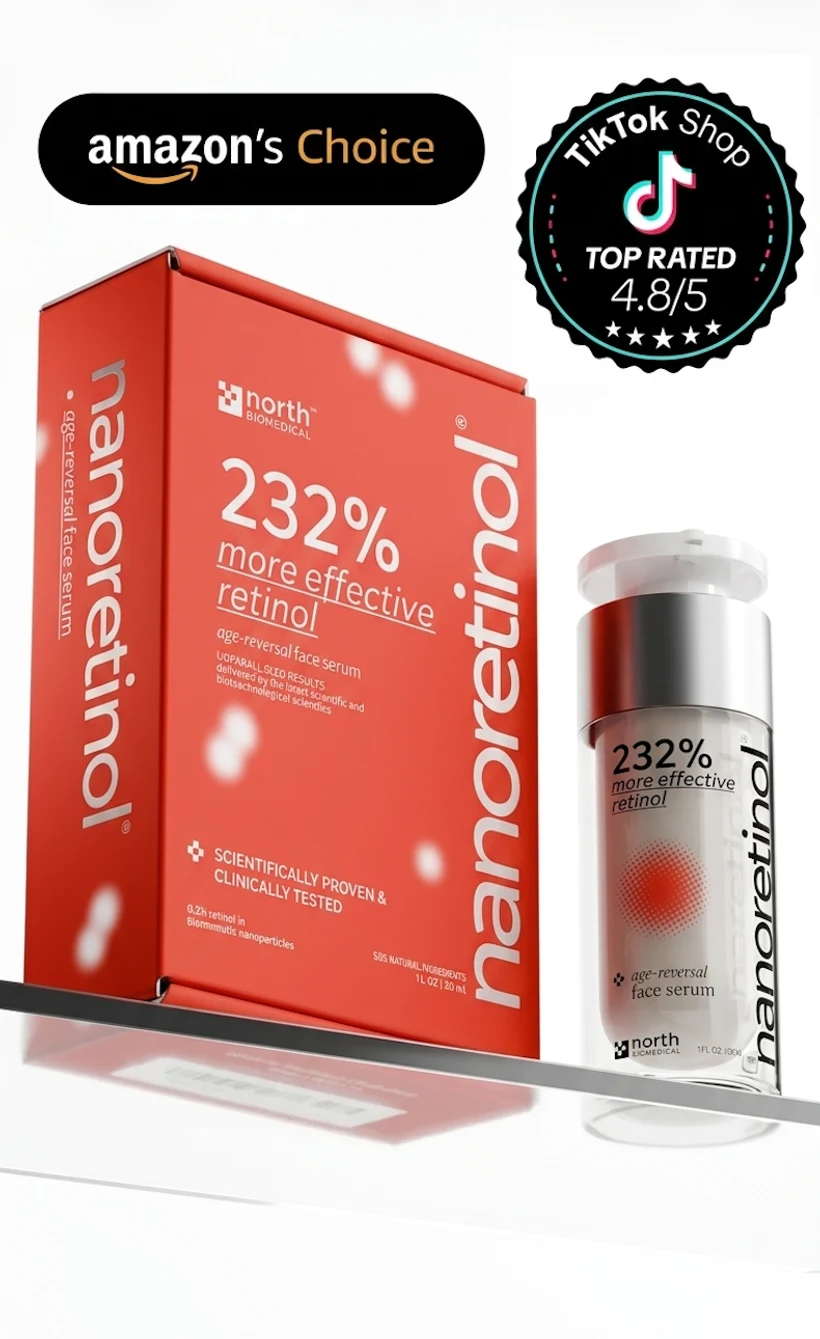
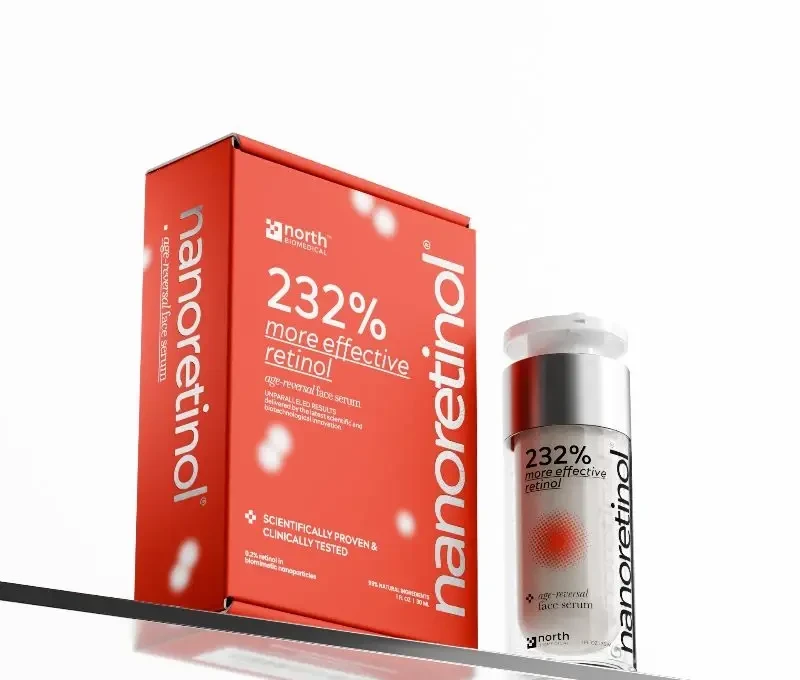
Nanoretinol addresses the delivery problem directly. Using biomimetic lipid nanoparticles that the skin biologically recognizes as “self,” it transports retinol through the epithelial barrier without triggering the inflammatory response that undermines conventional formulations. Clinical results show a +61% increase in skin firmness and +56% increase in elasticity after 56 days of use—outcomes that reflect structural change, not temporary surface hydration.
For nighttime use, the formulation logic is particularly strong: apply when the skin’s repair cycle is active, using an ingredient that directly stimulates those repair mechanisms, via a delivery system that doesn’t generate its own inflammatory disruption. The right night cream doesn’t have to be complicated. It just has to be honest about what it’s doing—and have the ingredient science to back it up.
References
- Quan T. “Human Skin Aging and the Anti-Aging Properties of Retinol.” Biomolecules. 2023;13(11):1614. doi:10.3390/biom13111614
- Zasada M, Budzisz E, Erkiert-Polguj A. “A Clinical Anti-Ageing Comparative Study of 0.3 and 0.5% Retinol Serums: A Clinically Controlled Trial.” Skin Pharmacology and Physiology. 2020;33(2):102-116. doi:10.1159/000508168
- Mukherjee S, Date A, Patravale V, Korting HC, Roeder A, Weindl G. “Retinoids in the treatment of skin aging: an overview of clinical efficacy and safety.” Clinical Interventions in Aging. 2006;1(4):327-348. doi:10.2147/ciia.2006.1.4.327
- Bai D, Hu F, Xu H, Huang J, Wu C, Zhang J, Ye R. “High Stability and Low Irritation of Retinol Propionate and Hydroxypinacolone Retinoate Supramolecular Nanoparticles with Effective Anti-Wrinkle Efficacy.” Pharmaceutics. 2023;15(3):731. doi:10.3390/pharmaceutics15030731
- Pilkington SM, Bulfone-Paus S, Griffiths CEM, Watson REB. “Inflammaging and the Skin.” Journal of Investigative Dermatology. 2021;141(4S):1087-1095. doi:10.1016/j.jid.2020.11.006