Downturned Mouth Corners: Why They Develop and What Actually Lifts Them
The combination of muscle pull, fat loss, and skin laxity that turns a neutral expression into a perpetual frown — and what the research says about reversing it
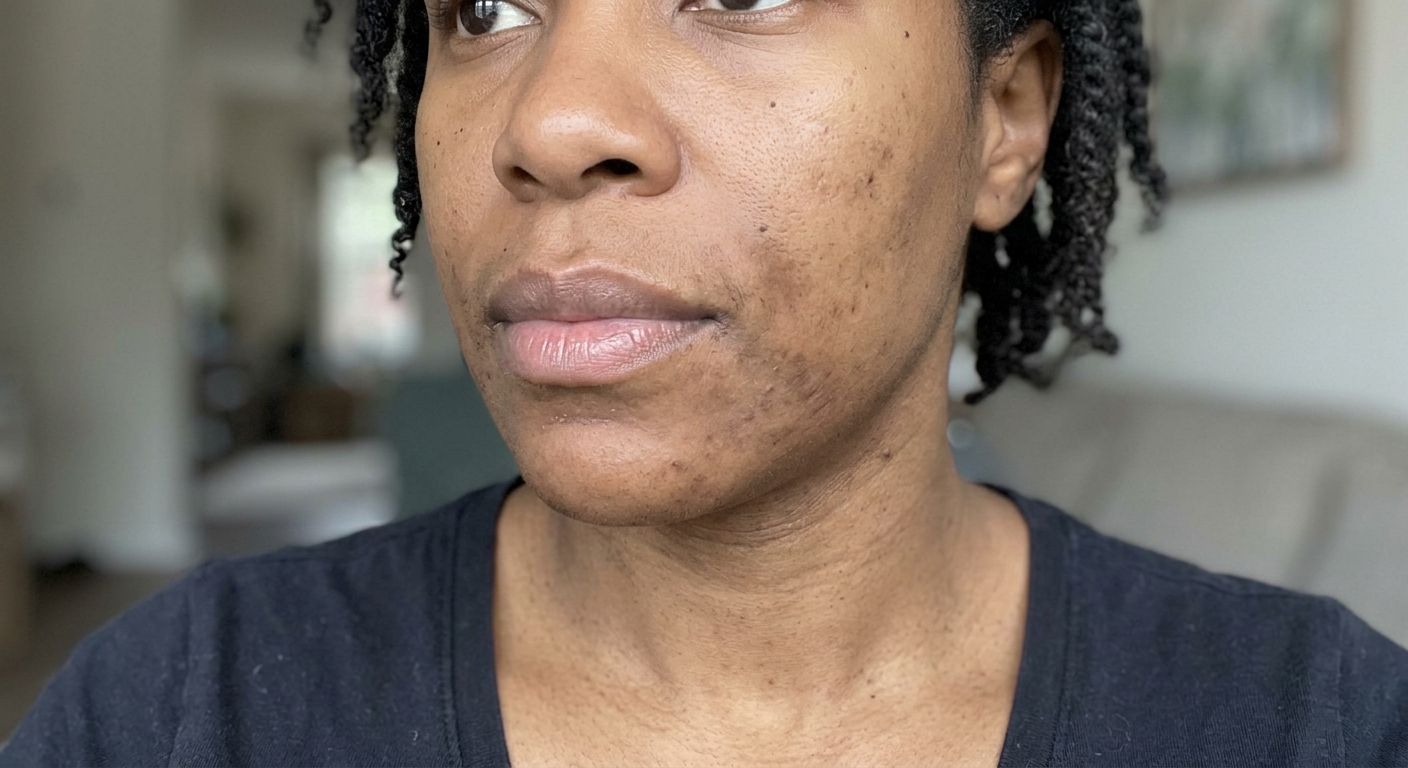
You catch your reflection in a window and wonder when your face started looking sad. Your mouth is closed. You’re not frowning. You’re not annoyed. But the corners of your lips are pulling downward, and the whole lower third of your face reads as displeased even when you feel perfectly fine.
This is the downturned mouth — and it’s one of the most psychologically loaded signs of facial aging. Unlike a wrinkle that announces itself only when you smile, the downturned mouth follows you everywhere. It changes how strangers read your mood, how photos of you look, and how you feel about your own face in the mirror.
It’s also one of the most misunderstood. The downturned mouth is not a single problem with a single fix. It’s the visible result of three separate changes happening simultaneously beneath the surface — and addressing only one of them is why so many treatments disappoint.
The Three Layers of the Problem
Look at a young face in repose: the corners of the mouth sit slightly above the lower lip line, and the whole perioral area looks supported from below. Look at the same person 30 years later, and the geometry has inverted. The corners now sit below the lower lip line. The skin between the chin and mouth corner runs at an obvious downward angle. Something has fundamentally changed in how the tissue is arranged.
Three things, actually.
The muscle pull becomes asymmetric. Every face has a small triangular muscle called the depressor anguli oris (DAO), which runs from the lower jawline up to the corner of the mouth. Its job is to pull the mouth corner down — that’s how you make a frown, or express disgust. The opposing muscles, like the zygomaticus major, pull the corners up when you smile. In youth, these muscle systems balance out at rest.
With age and repeated use, the DAO can become hypertonic — chronically more active than its antagonists [1]. The result is that even when your face is relaxed, the DAO is still doing some of its downward pulling, while the lifting muscles have nothing to push against.
The fat that propped up the corners disappears. In 2007, Rohrich and Pessa published a landmark anatomical study showing that the subcutaneous fat of the face is not a single continuous mass — it’s divided into discrete compartments, separated by septal walls [2]. Specific compartments hold up specific parts of the face.
The compartments around the mouth — including a structure they identified as the perioral mound — provide the volumetric scaffold that keeps the lower face looking full and the mouth corners elevated. As we age, these compartments don’t atrophy uniformly. Some lose volume faster than others, and the deep medial fat that supports the corners of the mouth is one of the earliest to thin [3].
When that deep support disappears, the mouth corner has nothing pushing it up from below. Gravity and the DAO’s downward pull now meet less and less resistance.
You catch your reflection in a window and wonder when your face started looking sad.
The skin itself loses its scaffolding. This is the layer most people focus on, and rightly so — it’s the one you can actually treat with skincare. Starting in the mid-20s, dermal collagen begins to decline. By the time you’re in your 50s, the collagen content of the dermis can be reduced substantially in both quantity and quality, with collagen bundles becoming thinner, more fragmented, and less organized [4]. UV exposure accelerates the process dramatically through matrix metalloproteinase (MMP) enzymes that break down structural proteins [5].
Around the mouth, where the skin is thin and constantly mobile from talking, eating, and expression, collagen decline shows up faster than elsewhere on the face. The skin becomes laxer, less elastic, and less able to resist being pulled downward by the DAO.
Why “Just Treat the Muscle” Isn’t Enough
The simplest theory of the downturned mouth is muscular, and the simplest treatment follows: weaken the DAO with botulinum toxin and the corners will lift back up. In practice, this works partially and temporarily. Without correcting the underlying tissue laxity and volume loss, the lift is modest and lasts only as long as the neuromodulator is active [6].
The same logic applies to dermal fillers, the other dominant clinical treatment. Fillers can rebuild some of the lost volume in the deep compartments and along the mandibular border, which physically pushes the corners back upward. But fillers can’t restore the structural quality of the overlying skin — they prop up a sagging fabric without thickening the fabric itself.
The most effective clinical approach to the downturned mouth combines all three corrections: neuromodulator to reduce the muscle’s downward pull, filler to restore lost volume, and topical or procedural treatments to rebuild the dermal scaffolding [6]. Skincare can’t replace the first two, but it can address the third — the part of the problem that the other treatments leave untouched.
What Topical Treatment Can Actually Do
Here’s the part most articles get wrong: they describe the downturned mouth as a “wrinkle problem” and recommend a long list of moisturizing ingredients that have no mechanism to address structural skin laxity. Hydration makes skin look better in the short term, but it doesn’t rebuild collagen.
The ingredient class with the strongest evidence for actually thickening the dermis and rebuilding lost collagen is retinoids. A 2007 randomized, double-blind, vehicle-controlled study by Kafi and colleagues at the University of Michigan applied 0.4% retinol versus placebo to the skin of subjects with a mean age of 87 — among the most photodamaged skin tested in any clinical trial. After 24 weeks, the retinol-treated skin showed significant increases in collagen production and glycosaminoglycan synthesis, with visible reduction in fine wrinkles [7].
A 2022 systematic review of randomized controlled trials confirmed that topical retinoids produce reliable, dose-dependent improvements in fine and coarse facial wrinkles across diverse populations [8]. A separate 2022 clinical imaging study using high-resolution skin assessment technology found that 12 weeks of a topical retinoid produced measurable improvements specifically in the perioral region — alongside the forehead, periocular area, and cheeks [9].
A delivery system that minimizes inflammation lets you stay consistent — and consistency, over 12 to 24 weeks, is what drives measurable dermal remodeling.
The mechanism is well understood: retinoids bind to retinoic acid receptors (RARs) on fibroblasts, which upregulates collagen I and III synthesis, suppresses collagen-degrading MMPs, and increases epidermal thickness. Over weeks to months of consistent application, the dermal collagen matrix thickens — providing more structural resistance to mechanical creasing from DAO contractions.
The Delivery Problem Conventional Retinol Can’t Solve
There’s a reason most people quit retinol within a few months. Conventional retinol formulations rely on chemical penetration enhancers — petroleum derivatives and solvents that temporarily disrupt the skin barrier to push the active ingredient through. The perioral area, with its thin and constantly mobile skin, is particularly prone to redness, peeling, and stinging from these formulas. Many people abandon retinol before they ever see the dermal remodeling it can produce.
Concentration on the label tells you less than you’d think. Clinical research has demonstrated that the vehicle — the delivery system carrying the retinol — is at least as important as the percentage [10]. A high-percentage retinol in a poor vehicle may deliver less active ingredient to target fibroblasts than a low-percentage retinol in a system designed to actually reach the dermis.
This is the specific gap Nanoretinol® was engineered to address. The retinol is encapsulated in biomimetic lipid nanoparticles — structurally similar to the membranes of the skin’s own cells — so it passes through the epithelial barrier without the chemical disruption that drives conventional retinol irritation. In clinical testing, the formulation produced 232% more effective collagen recovery and 73% greater elastin recovery compared to conventional retinol delivery — improvements that translate directly to thicker, firmer skin around the mouth.
At 0.2% retinol, the concentration is gentle enough for the delicate perioral region while the delivery system means the amount actually reaching collagen-producing fibroblasts is substantially higher than the percentage on the label would suggest.
Building a Realistic Perioral Routine
If downturned mouth corners are your concern, the most useful framing is this: skincare addresses the skin layer of a three-layer problem. It works alongside, not instead of, the structural interventions that target muscle and volume.
The ingredients with the most evidence for the skin layer are:
-
Daily broad-spectrum sunscreen. The cheek and perioral region accumulate UV damage from every conversation, drive, and lunch outside. Consistent SPF use is the single most impactful step for slowing further collagen degradation in this area — more impactful, over years, than any active ingredient applied at night.
-
A retinoid suited to the area. The perioral skin tolerates retinol poorly when irritation is high. A delivery system that minimizes inflammation lets you stay consistent — and consistency, over 12 to 24 weeks, is what drives measurable dermal remodeling [9].
-
An antioxidant in the morning. Vitamin C supports collagen synthesis and quenches the UV-generated free radicals that activate MMPs. It complements retinol by addressing photoaging at the oxidative-damage step.
-
Peptide support, optionally. Signal peptides like palmitoyl pentapeptide-4 have data supporting collagen stimulation and can layer with retinol for additional dermal remodeling.
If you’re also dealing with marionette lines — the deeper folds running from the mouth corners to the jaw — the strategy is similar but the structural component (filler or volumizing procedures) becomes more important. If sagging cheeks are part of the picture, midfacial volume restoration also helps lift the perioral region indirectly.
What to Expect
Skincare won’t reverse downturned mouth corners on its own. Anyone telling you otherwise is selling something. What it can do is meaningful: rebuild the structural scaffolding of the skin, slow the rate of new collagen loss, and provide a foundation that makes any clinical procedure you eventually choose — neuromodulator, filler, or otherwise — both more effective and longer-lasting.
The realistic timeline is months, not weeks. Visible firmness improvements from retinol typically begin around week 8 and continue accumulating through at least 6 months of consistent use [7]. Combined with daily sun protection and the structural interventions appropriate to your situation, the trajectory of the lower face can be meaningfully changed.
The mouth corners don’t have to keep falling. They just need the right scaffolding underneath them.
References
- Grewal SK, Ortiz A. “Perioral Rejuvenation in Aesthetics: Review and Debate.” Clinics in Dermatology. 2022;40(3):265-273. doi:10.1016/j.clindermatol.2021.11.010
- Rohrich RJ, Pessa JE. “The Fat Compartments of the Face: Anatomy and Clinical Implications for Cosmetic Surgery.” Plastic and Reconstructive Surgery. 2007;119(7):2219-2227. doi:10.1097/01.prs.0000265403.66886.54
- Wan D, Amirlak B, Rohrich R, Davis K. “The Clinical Importance of the Fat Compartments in Midfacial Aging.” Plastic and Reconstructive Surgery Global Open. 2014;1(9):e92. doi:10.1097/GOX.0000000000000035
- Marcos-Garcés V, Molina Aguilar P, Bea Serrano C, et al. “Age-Related Dermal Collagen Changes During Development, Maturation and Ageing — a Morphometric and Comparative Study.” Journal of Anatomy. 2014;225(1):98-108. doi:10.1111/joa.12186
- Quan T, Qin Z, Xia W, Shao Y, Voorhees JJ, Fisher GJ. “Matrix-degrading Metalloproteinases in Photoaging.” Journal of Investigative Dermatology Symposium Proceedings. 2009;14(1):20-24. doi:10.1038/jidsymp.2009.8
- Sitohang IBS, Makes WI, Sandora N, Suryanegara J. “Topical Tretinoin for Treating Photoaging: A Systematic Review of Randomized Controlled Trials.” International Journal of Women’s Dermatology. 2022;8(1):e003. doi:10.1097/JW9.0000000000000003
- Kafi R, Kwak HSR, Schumacher WE, et al. “Improvement of Naturally Aged Skin With Vitamin A (Retinol).” Archives of Dermatology. 2007;143(5):606-612. doi:10.1001/archderm.143.5.606
- Shao Y, He T, Fisher GJ, Voorhees JJ, Quan T. “Molecular Basis of Retinol Anti-Ageing Properties in Naturally Aged Human Skin in Vivo.” International Journal of Cosmetic Science. 2017;39(1):56-65. doi:10.1111/ics.12348
- Goberdhan LT, Pellacani G, Ardigo M, Schneider K, Makino ET, Mehta RC. “Assessing Changes in Facial Skin Quality Using Noninvasive In Vivo Clinical Skin Imaging Techniques After Use of a Topical Retinoid Product in Subjects With Moderate-to-Severe Photodamage.” Skin Research and Technology. 2022;28(4):604-613. doi:10.1111/srt.13172
- North Biomedical LLC. “Nanoretinol vs. Conventional Retinol: Efficacy in Collagen and Elastin Recovery.” Clinical Study Summary, 2024.