How to Use Retinol — The Step-by-Step Method Dermatologists Actually Recommend
The practical guide to starting retinol safely, building tolerance, and avoiding the mistakes that sabotage results
Retinol is the most studied anti-aging ingredient in dermatology. It’s also one of the most commonly misused.
The difference between someone who loves retinol and someone who quits after two weeks usually isn’t the product — it’s the method. Apply too much too soon, and you get redness, peeling, and the conviction that “retinol doesn’t work for me.” Follow the right protocol, and you get results that genuinely change how your skin looks and feels.
Here’s the method, from cleanser to sunscreen, in the order your skin needs it.
When to Apply: Night, Always Night
Retinol is photosensitive — ultraviolet light breaks it down into inactive compounds within hours [1]. Applying it in the morning means most of the active ingredient degrades before it can convert to retinoic acid (the form that actually works in your skin). The same fragility applies inside the bottle, which is why it is worth knowing whether your skincare has expired.
But that’s only half the reason. Your skin’s repair mechanisms peak between roughly 11 PM and 4 AM. Cell division, DNA repair, and collagen synthesis all accelerate during sleep [2]. Retinol applied before bed works with your skin’s natural circadian rhythm, not against it.
The rule is simple: retinol goes on at night. Sunscreen goes on in the morning. No exceptions.
The Complete Evening Routine
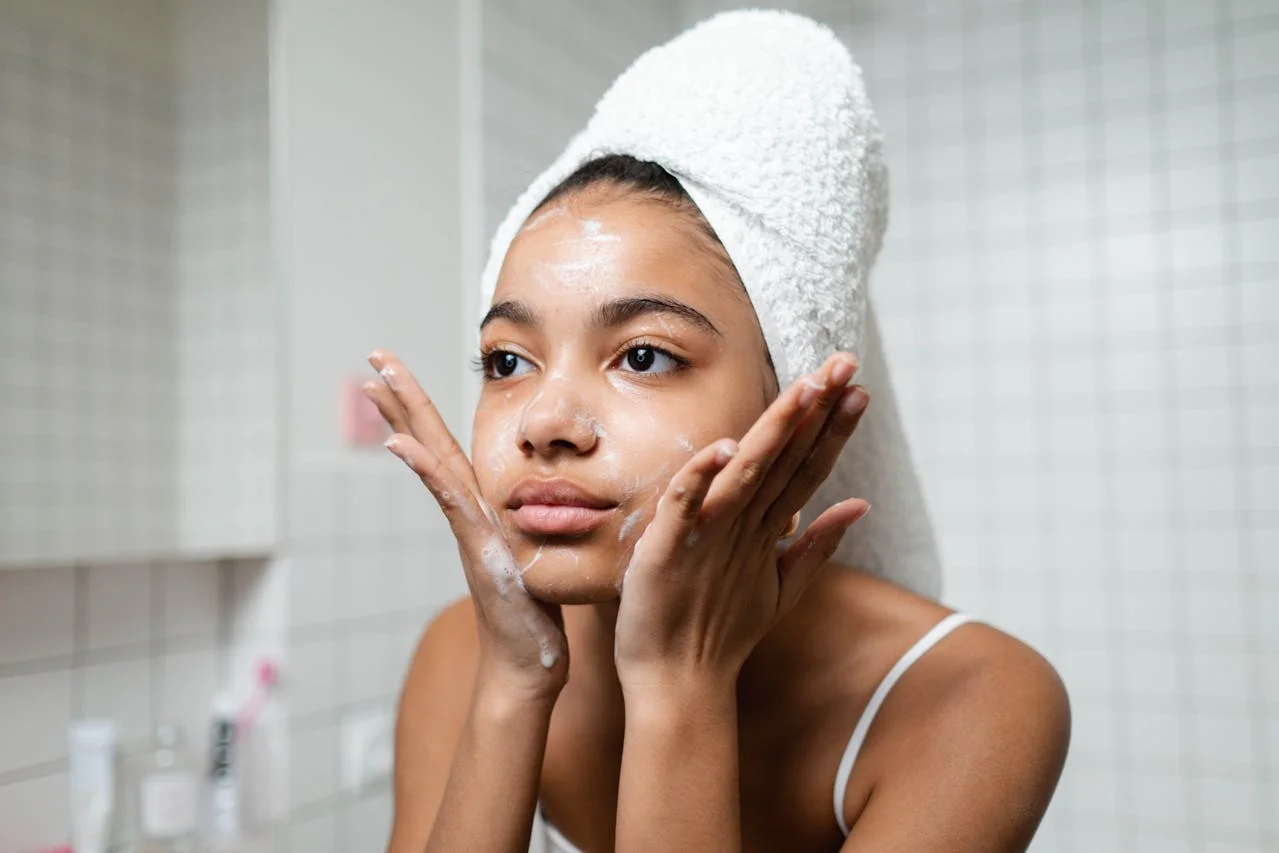
Step 1: Cleanse Thoroughly
Remove makeup, sunscreen, and the day’s accumulated sebum and pollution. Double cleansing (an oil-based cleanser followed by a water-based one) is ideal if you wear SPF or makeup — it ensures nothing remains on the skin that could interfere with retinol absorption.
Step 2: Wait Until Your Skin Is Completely Dry
This step matters more than most people realize. Damp skin has a temporarily compromised barrier that allows retinol to penetrate too deeply, too quickly — the result is irritation without improved efficacy [3].
After cleansing, wait 10-15 minutes. Your skin should feel fully dry to the touch, not just towel-dried. If you’re short on time, 5 minutes minimum.
Step 3: Apply Retinol — Less Than You Think
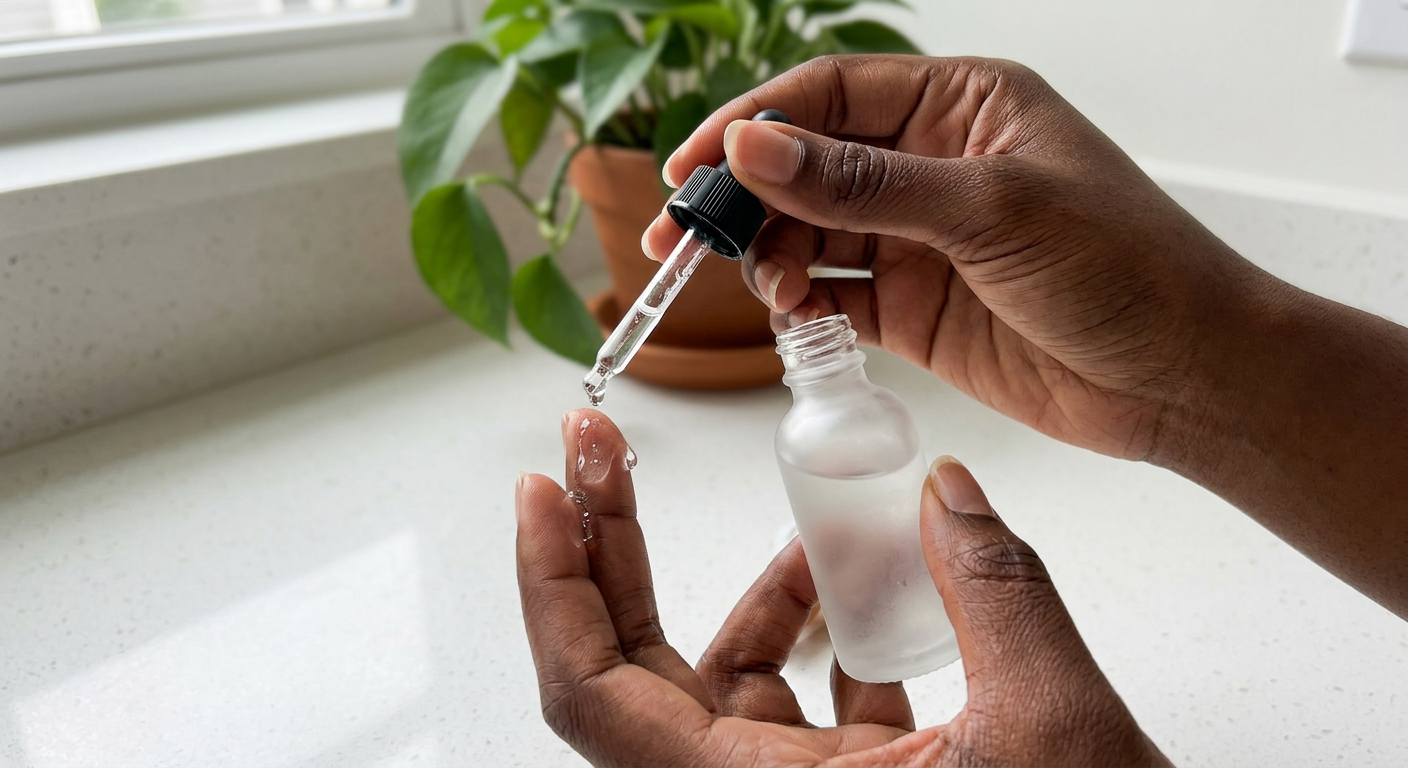
Amount: A pea-sized amount for your entire face. That’s roughly the size of a green pea, not a chickpea. More product doesn’t mean faster results — it means faster irritation.
Technique: Dot small amounts on your forehead, each cheek, chin, and nose, then gently spread outward in thin, even strokes. Avoid:
- The eyelids and lip corners (too thin and sensitive)
- Broken skin, active eczema patches, or open wounds
- Nostrils and the area directly beside them
Neck and décolletage: If you want to treat these areas, use a separate pea-sized amount. These regions are often more sensitive than the face, so introduce retinol there even more gradually.
Step 4: Wait Before Moisturizing
Give retinol 10-15 minutes to absorb before applying anything else. This ensures the active ingredient makes direct contact with your skin rather than being diluted by subsequent products.
Step 5: Apply Moisturizer
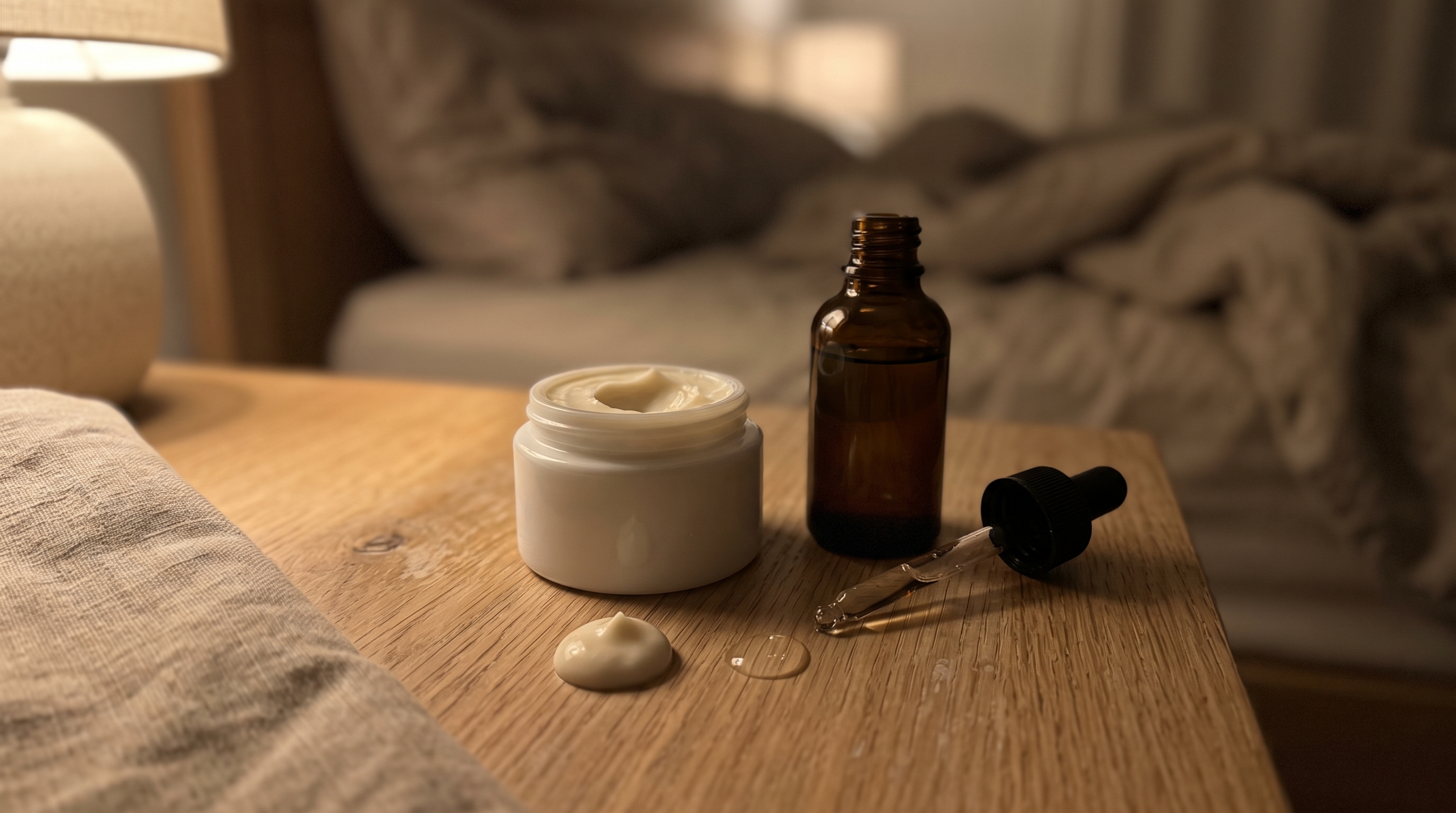
A quality moisturizer after retinol serves two purposes: it locks in hydration (counteracting retinol’s potential drying effect) and it creates an occlusive layer that supports the skin barrier during the renewal process.
Look for moisturizers containing ceramides, hyaluronic acid, or niacinamide — all of which complement retinol’s effects [4]. Heavy fragrances or exfoliating acids in your moisturizer can increase irritation, so keep it simple.
The Frequency Schedule: How to Build Tolerance
This is where most people go wrong. They start using retinol every night and wonder why their skin is angry by day three.
Your skin needs time to upregulate the enzymes that metabolize retinol and to adapt to accelerated cell turnover. This adaptation period — sometimes called “retinization” — typically takes 4-8 weeks [5].
If you notice tightness or dryness, this frequency is correct — your skin is adjusting.
Weeks 1-2: Twice Per Week
Apply retinol on two non-consecutive nights (e.g., Monday and Thursday). On other nights, follow your normal routine without retinol.
What to expect: Minimal to no irritation if you’re starting at an appropriate concentration (0.1-0.3%). If you notice tightness or dryness, this frequency is correct — your skin is adjusting.
Weeks 3-4: Three Times Per Week
Increase to every other night (e.g., Monday, Wednesday, Friday). Watch for persistent redness or excessive peeling.
What to expect: Mild flaking is normal and actually indicates the product is working — cell turnover is accelerating. Significant redness or stinging means you should stay at twice weekly for another week or two.
Weeks 5-8: Every Other Night
By now your skin should tolerate alternate-night application comfortably. Some people find this frequency delivers excellent results long-term without needing to increase further.
Week 8+: Nightly (If Tolerated)
If every-other-night use produces no persistent irritation, you can try nightly application. Many dermatologists consider this the optimal frequency for maximum anti-aging benefit [6].
Important: Not everyone needs or tolerates nightly use. If your skin is happy at 4-5 nights per week, that’s perfectly effective. Chasing nightly application at the cost of chronic irritation is counterproductive — inflammation damages the very collagen you’re trying to build.
The Sandwich Method (For Sensitive Skin)
If you’ve tried retinol before and found it too irritating, or if you have naturally reactive skin, the “sandwich” or “buffering” method can help:
- Apply a thin layer of moisturizer
- Wait 5 minutes
- Apply retinol over the moisturizer
- Wait 10 minutes
- Apply a second layer of moisturizer
The first moisturizer layer acts as a buffer, slightly slowing retinol absorption and reducing the concentration that reaches your skin at any one time. Research suggests this approach reduces irritation without significantly diminishing long-term efficacy [3].
As your skin builds tolerance over 6-8 weeks, you can gradually transition to applying retinol directly on bare skin.
The Morning After: Sunscreen Is Non-Negotiable
Retinol accelerates cell turnover, which temporarily thins the outermost protective layer of your skin. It also reduces melanin production — your skin’s natural UV shield [7]. The result: increased sun sensitivity.
Every single morning after using retinol, you must apply broad-spectrum SPF 30 or higher. This isn’t a suggestion. It’s the single most important factor determining whether retinol delivers results or causes net damage.
UV radiation activates collagen-destroying enzymes (MMPs) in your skin — the same enzymes retinol is working to suppress [8]. Skipping sunscreen while using retinol is like spending the night rebuilding a wall and then knocking it down every morning.
Reapply every two hours if you’re outdoors. Use a minimum SPF 30 that protects against both UVA and UVB.
What to Pair With Retinol (And What to Avoid)
Great Partners
Hyaluronic acid: Hydrates without interfering with retinol. Apply before retinol (water-based serums go first) or in your morning routine.
As your skin builds tolerance over 6-8 weeks, you can gradually transition to applying retinol directly on bare skin.
Niacinamide: Strengthens the skin barrier and reduces inflammation — the perfect complement to retinol’s renewal effects [4]. Can be used in the same routine.
Ceramides: Lipid molecules that repair and reinforce the skin barrier. Essential during the retinization period.
Peptides: Support collagen synthesis through different pathways than retinol, creating a synergistic anti-aging effect.
Avoid Combining (Same Routine)
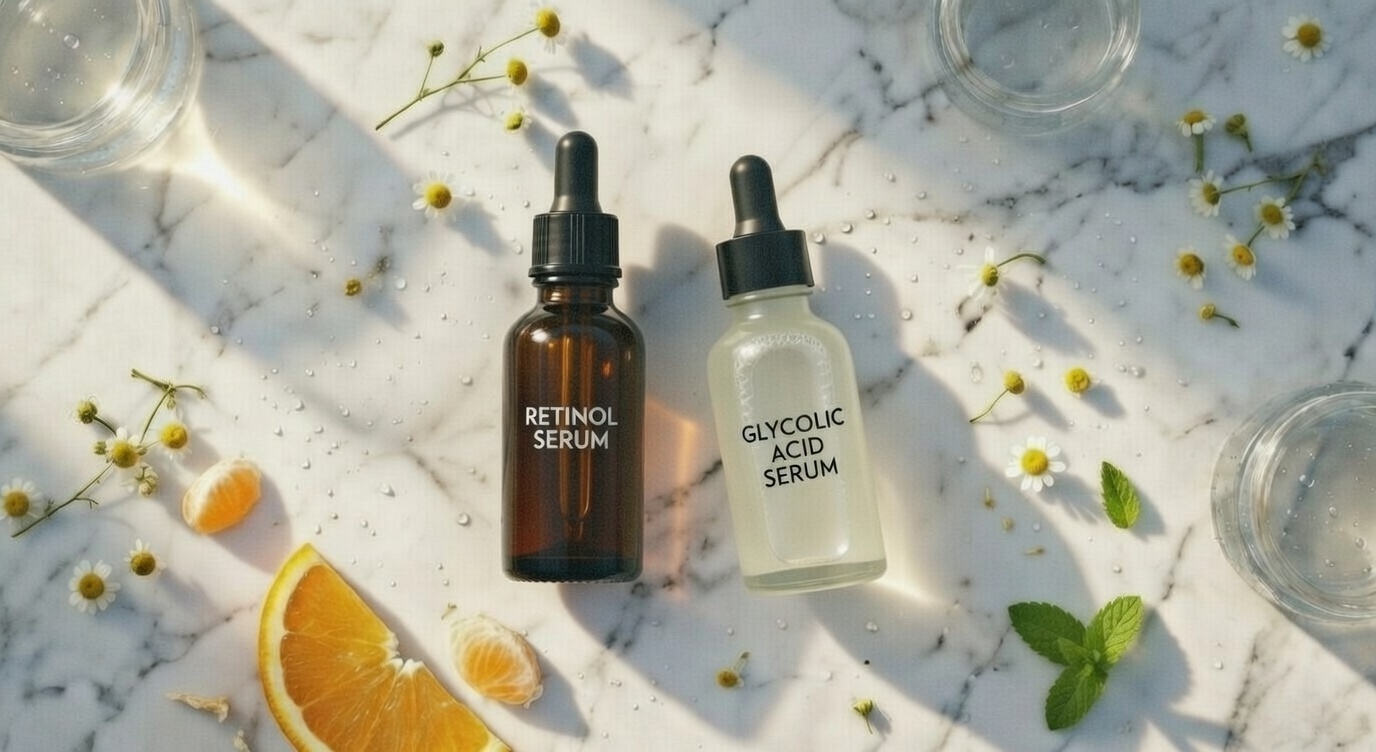
AHAs/BHAs (glycolic acid, salicylic acid, lactic acid): Both exfoliate, and combining them with retinol in the same evening can overwhelm the skin barrier. Use exfoliating acids on non-retinol nights instead.
Vitamin C (L-ascorbic acid): At low pH, vitamin C can destabilize retinol. Most dermatologists recommend vitamin C in the morning, retinol at night — you get the benefits of both without the conflict [9].
Benzoyl peroxide: Directly degrades retinol, rendering it inactive. If you use benzoyl peroxide for acne, apply it in the morning and retinol at night.
Concentration: Where to Start
Not all retinol products are equal in strength. Here’s how to match concentration to experience:
First time using retinol: 0.1-0.3%. Build tolerance before considering higher concentrations.
Experienced (6+ months of consistent use): 0.3-0.5%. The sweet spot for most people — strong enough for meaningful results, tolerable enough for long-term use.
Advanced users (1+ year, well-tolerized): 0.5-1.0%. Produces faster visible improvement but requires established tolerance. A note on delivery: Concentration is only part of the equation. A 0.2% retinol in an advanced delivery system can outperform a 1% retinol in a basic cream if the delivery system gets more active ingredient to your cells. Nanoretinol® uses biomimetic lipid nanoparticles to deliver retinol directly through the skin barrier, achieving +232% more effective collagen recovery than conventional retinol — at just 0.2% concentration. The delivery technology, not the percentage on the label, determines what your skin actually receives.
Troubleshooting Common Problems
”My Skin Is Peeling and Red”
Likely cause: Too much product, too frequent application, or applying to damp skin.
Fix: Drop back to once or twice weekly. Use the sandwich method. Ensure skin is fully dry before application. Increase moisturizer use on non-retinol nights.
”I’m Breaking Out More Than Before”
Likely cause: The retinol purge — retinol accelerates the lifecycle of existing microcomedones (early-stage blemishes already forming beneath the skin). They surface faster, creating a temporary increase in breakouts.
Fix: Continue use at current frequency. A purge typically resolves within 4-6 weeks. If breakouts worsen after 8 weeks or involve deep cystic acne, consult a dermatologist.
”I Don’t See Any Results”
Likely cause: Insufficient time, inconsistent use, inadequate sun protection, or degraded product.
Fix: Give it a minimum of 12 weeks of consistent use. Check your sunscreen habits. Ensure your retinol product is stored away from light and heat, and hasn’t expired.
”The Skin Around My Eyes Is Irritated”
Likely cause: Retinol migration during sleep — even if you didn’t apply near your eyes, it can spread.
Fix: Apply a thick barrier cream (like an eye cream with ceramides or petrolatum) around your orbital bone before applying retinol. This creates a physical barrier that prevents migration.
Signs It’s Working (Before You See Wrinkle Improvement)
Results unfold in a predictable sequence:
First: Skin feels smoother to the touch (weeks 2-4) Second: A subtle “glow” — fresher, more luminous appearance (weeks 4-6) Third: Pores appear smaller and less congested (weeks 6-8) Fourth: Fine lines begin softening, especially around eyes (weeks 8-12) Fifth: Pigmentation starts fading, tone evens out (weeks 10-16) Sixth: Measurable firmness improvement (months 4-6)
If you’re experiencing the early signs, the deeper benefits are already building beneath the surface. Stay the course.
Your Retinol Cheat Sheet
| Question | Answer |
|---|---|
| When? | Every night (work up to it) |
| How much? | Pea-sized for entire face |
| On dry or damp skin? | Completely dry |
| Before or after moisturizer? | Before (unless buffering) |
| How long until results? | 8-12 weeks minimum |
| Can I use it with vitamin C? | Yes — vitamin C AM, retinol PM |
| Must I use sunscreen? | Absolutely, every morning |
The method matters as much as the molecule. Follow the protocol, be patient through the adjustment period, and protect your skin from UV exposure every single day. The science is clear: consistent, correct retinol use produces real, measurable improvement in skin quality. The only variable is whether you’ll stick with it long enough to see it. For the prior question of timing, when to start using retinol sets out the signal to watch for.
References
-
Zasada M, Budzisz E. “Retinoids: active molecules influencing skin structure formation in cosmetic and dermatological treatments.” Postępy Dermatologii i Alergologii. 2019;36(4):392-397. doi:10.5114/ada.2019.87443
-
Yosipovitch G, Xiong GL, Haus E, et al. “Time-dependent variations of the skin barrier function in humans.” Journal of Investigative Dermatology. 1998;110(1):20-23. doi:10.1046/j.1523-1747.1998.00069.x
-
Mukherjee S, Date A, Patravale V, et al. “Retinoids in the treatment of skin aging: an overview of clinical efficacy and safety.” Clinical Interventions in Aging. 2006;1(4):327-348. doi:10.2147/ciia.2006.1.4.327
-
Draelos ZD, Ertel K, Berge C. “Niacinamide-containing facial moisturizer improves skin barrier and benefits subjects with rosacea.” Cutis. 2005;76(2):135-141. PMID: 16209160.
-
Kong R, Cui Y, Fisher GJ, et al. “A comparative study of the effects of retinol and retinoic acid on histological, molecular, and clinical properties of human skin.” Journal of Cosmetic Dermatology. 2016;15(1):49-57. doi:10.1111/jocd.12193
-
Kafi R, Kwak HS, Schumacher WE, et al. “Improvement of naturally aged skin with vitamin A (retinol).” Archives of Dermatology. 2007;143(5):606-612. doi:10.1001/archderm.143.5.606
-
Yoshimura K, Tsukamoto K, Okazaki M, et al. “Effects of all-trans retinoic acid on melanogenesis in pigmented skin equivalents.” Journal of Dermatological Science. 2001;27(Suppl 1):S68-S75. PMID: 11514127
-
Fisher GJ, Kang S, Varani J, et al. “Mechanisms of photoaging and chronological skin aging.” Archives of Dermatology. 2002;138(11):1462-1470. doi:10.1001/archderm.138.11.1462
-
Farris PK. “Topical vitamin C: a useful agent for treating photoaging and other dermatologic conditions.” Dermatologic Surgery. 2005;31(s1):814-818. doi:10.1111/j.1524-4725.2005.31725