
Jessner Peel: The Gentle Layered Peel for Tone and Texture
A century-old combination peel that brightens pigmentation and smooths texture with surprisingly little downtime.
Some skincare treatments are prized for their brute force. The Jessner peel is prized for its diplomacy. Formulated more than a century ago by the German-American dermatologist Max Jessner, it takes a very different approach from the aggressive single-acid peels that promise dramatic overnight change. Instead, it combines several mild acids that work as a team, coaxing brighter, smoother skin out of a gentle, controllable process. For anyone nervous about downtime — or about pushing pigment-prone skin too hard — it remains one of the most reliable superficial peels in a dermatologist’s cabinet.
The Three-Ingredient Logic
Traditional Jessner’s solution is a blend of three ingredients dissolved in ethanol: salicylic acid, lactic acid, and resorcinol. Each does a different job. Salicylic acid is oil-soluble, so it slips into pores and loosens the “glue” between dead surface cells. Lactic acid, an alpha-hydroxy acid, exfoliates the very top layer while drawing in moisture and helping to disperse excess pigment. Resorcinol enhances penetration and adds its own keratolytic (skin-shedding) effect. Many modern “modified” Jessner formulas swap resorcinol for citric acid to reduce the risk of irritation, but the principle is identical.
What makes the peel so controllable is that its depth is built up in layers. The clinician paints on one coat, watches how the skin responds, and decides whether to add another. More coats mean a deeper effect. This puts a Jessner peel firmly in the superficial-to-light category on the standard classification of chemical peels — enough to make a visible difference, not enough to require a week of hiding indoors [1].
What It Actually Treats
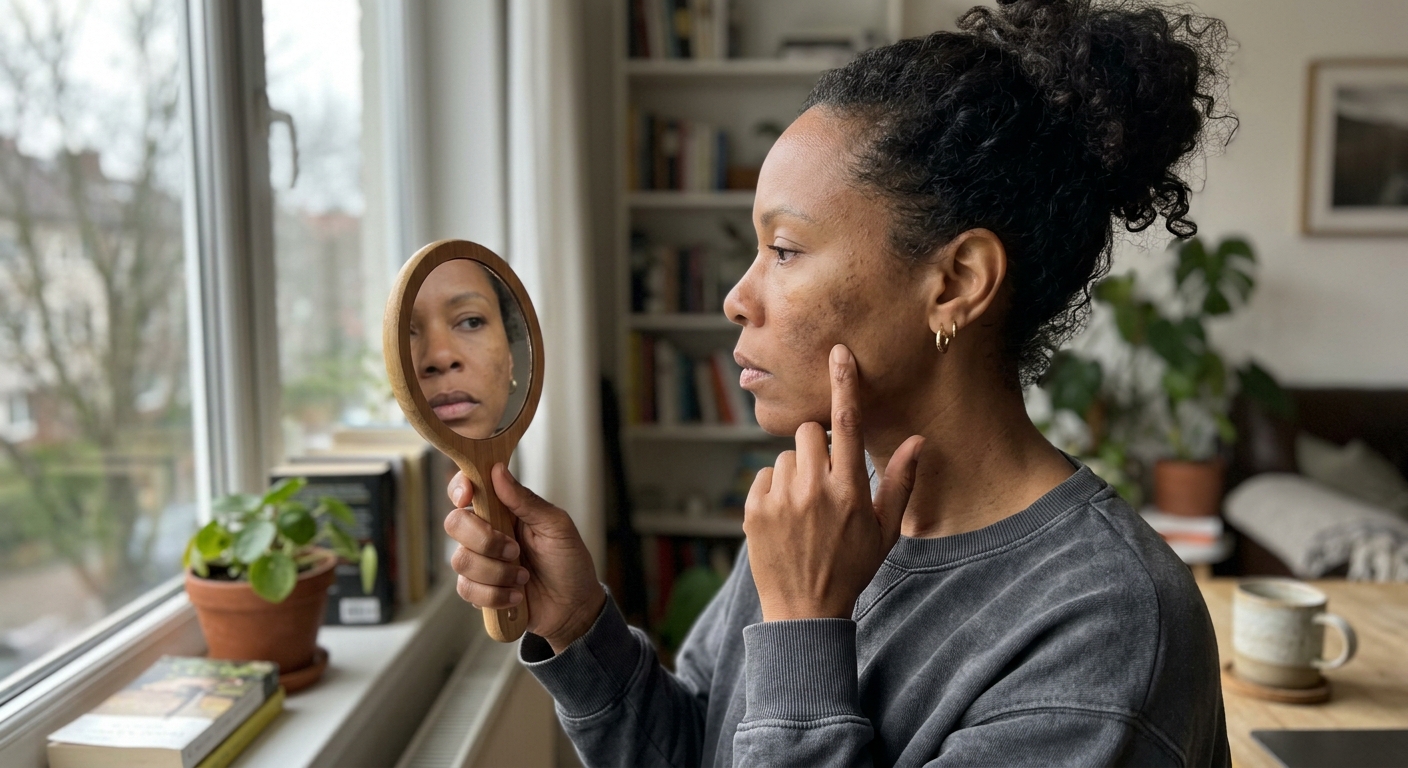
The Jessner peel earns its keep on problems of tone and texture: dullness, rough patches, clogged and enlarged pores, uneven pigmentation, and the aftermath of breakouts. Its track record in melasma and other stubborn discoloration is well documented. In a classic split-face trial, Jessner’s solution and glycolic acid produced statistically indistinguishable lightening of melasma — both meaningfully improved the pigment, with neither pulling ahead [2]. A later comparison found Jessner’s solution and lactic acid equally effective at reducing melasma severity scores as well [3].
Instead, it combines several mild acids that work as a team, coaxing brighter, smoother skin out of a gentle, controllable process.
It is also a workhorse for post-inflammatory hyperpigmentation, the brown marks left behind after acne or irritation. In a randomized, double-blind, split-face trial in patients with richer skin tones, a Jessner peel matched 30% salicylic acid in clearing both acne lesions and the dark marks they leave behind, with a comparable safety profile [4]. For people whose main complaint is tone rather than deep wrinkles, that combination of efficacy and gentleness is exactly the point.
The honest caveat: because it is superficial, a Jessner peel rarely transforms skin in one session. Results build over a series — typically several treatments spaced a few weeks apart. It is a program, not a magic wand.
A Team Player as Much as a Solo Act
One of the Jessner peel’s most useful roles is as a primer. Applied first, it removes the outer barrier evenly, so a stronger agent layered on top penetrates uniformly rather than patchily. This is why it is frequently paired with trichloroacetic acid. When researchers added modified Jessner’s solution beneath a 15% TCA peel for melasma, the combination outperformed TCA alone — improving results while actually reducing the risk of rebound hyperpigmentation, because the more even penetration meant less unpredictable injury [5]. In practice, Jessner’s is often the quiet foundation that makes a medium-depth peel safer and more effective.
Applied first, it removes the outer barrier evenly, so a stronger agent layered on top penetrates uniformly rather than patchily.
Downtime, Safety, and Skin of Color
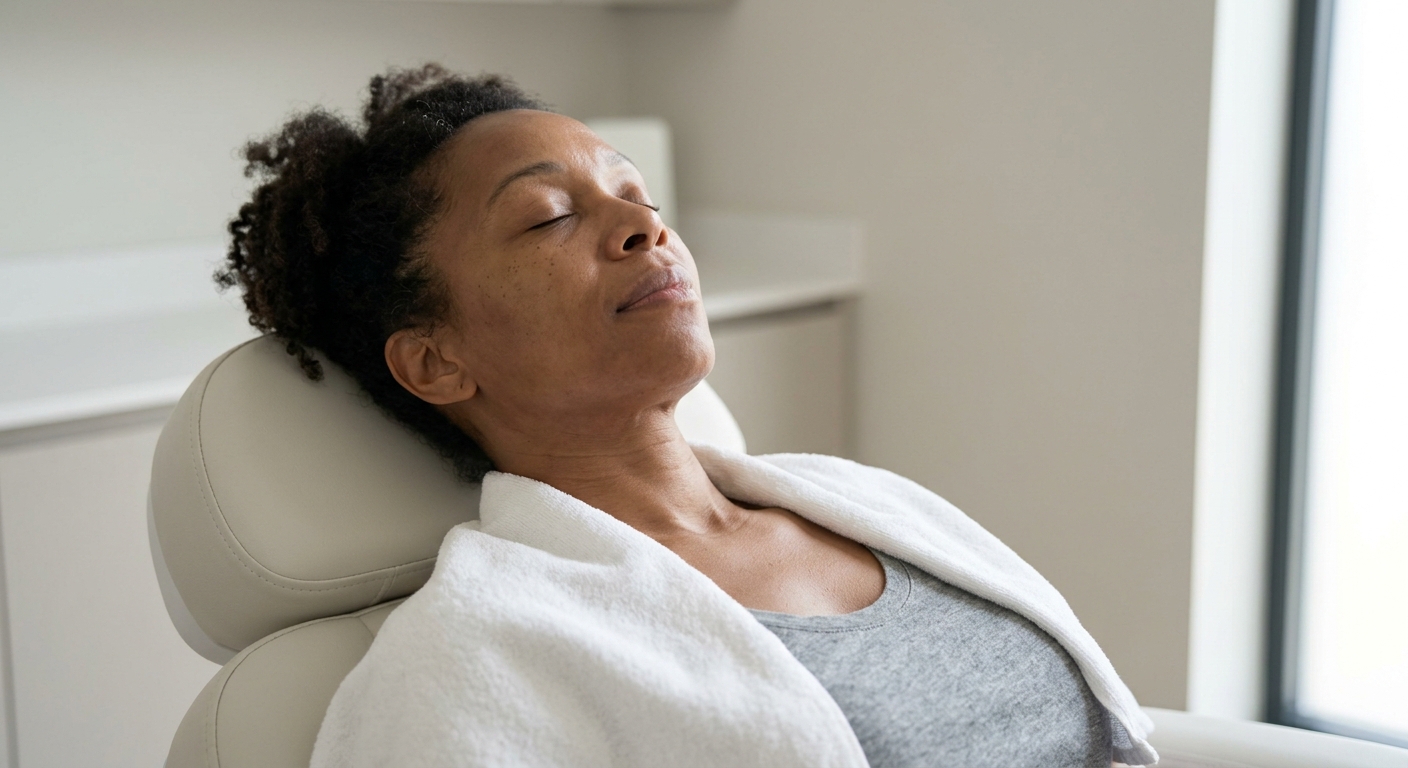
Recovery from a Jessner peel is mild by peel standards: some redness, tightness, and light flaking that typically peels over three to five days, a bit like a mild sunburn shedding. Because the treatment is superficial and layered, it is generally considered a reasonable option for deeper skin tones — but “reasonable” is not “risk-free.” Any peel can trigger post-inflammatory pigmentation if the skin is pushed too far, so appropriate priming, sun avoidance afterward, and a conservative number of coats matter enormously. Resorcinol-containing formulas also warrant caution over large areas. As with any peel, this is a treatment for trained hands and clean medical products, not a kitchen-counter project. For a broader comparison of your options, see our guide to chemical peels for anti-aging.
Making the Brightness Last
A Jessner peel resets the surface, but it does not change the biology underneath that keeps producing uneven pigment and losing firmness with age. That is the job of your daily routine. The most evidence-backed at-home ingredient for holding onto a peel’s brightness is a retinoid: it keeps cell turnover steady so pigment does not re-accumulate, and it steadily rebuilds the collagen that superficial peels only lightly touch.
The difficulty is that peeled skin is temporarily fragile, and conventional retinol is famous for stinging and flaking already-sensitized skin. Nanoretinol was engineered around that exact problem. By carrying retinol inside biomimetic lipid nanoparticles that the skin accepts as its own and lets through the barrier — instead of forcing the active in by disrupting that barrier — it delivers the benefits of a retinoid with far less of the irritation. In clinical testing over 56 days of use, it produced a 61% increase in skin firmness and a 56% increase in elasticity, in a light, water-based, 99%-natural formula gentle enough to layer into a post-peel routine. It is a way to keep working on tone and firmness in the long stretches between appointments, without picking a fight with freshly resurfaced skin.
The Bigger Picture
The Jessner peel has survived a hundred years of skincare fashions for a simple reason: it delivers steady, low-drama improvement in tone and texture, and it plays well with others. It will not erase deep wrinkles on its own, and it rewards patience over a series rather than a single visit. But paired with sun protection and a gentle, well-delivered retinoid to maintain the gains, it remains one of the most sensible entry points into professional resurfacing — especially for skin that does better with a light touch.
References
- Soleymani T, Lanoue J, Rahman Z. “A Practical Approach to Chemical Peels: A Review of Fundamentals and Step-by-step Algorithmic Protocol for Treatment.” Journal of Clinical and Aesthetic Dermatology. 2018;11(8):21-28. PMID: 30214663
- Lawrence N, Cox SE, Brody HJ. “Treatment of melasma with Jessner’s solution versus glycolic acid: a comparison of clinical efficacy and evaluation of the predictive ability of Wood’s light examination.” Journal of the American Academy of Dermatology. 1997;36(4):589-593. PMID: 9092746
- Sharquie KE, Al-Tikreety MM, Al-Mashhadani SA. “Lactic acid chemical peels as a new therapeutic modality in melasma in comparison to Jessner’s solution chemical peels.” Dermatologic Surgery. 2006;32(12):1429-1436. PMID: 17199649
- How KN, Lim PY, Wan Ahmad Kammal WSL, Shamsudin N. “Efficacy and safety of Jessner’s solution peel in comparison with salicylic acid 30% peel in the management of patients with acne vulgaris and postacne hyperpigmentation with skin of color: a randomized, double-blinded, split-face, controlled trial.” International Journal of Dermatology. 2020;59(7):804-812. PMID: 32447767
- Safoury OS, Zaki NM, El Nabarawy EA, Farag EA. “A study comparing chemical peeling using modified Jessner’s solution and 15% trichloroacetic acid versus 15% trichloroacetic acid in the treatment of melasma.” Indian Journal of Dermatology. 2009;54(1):41-45. PMID: 20049268