Mandelic Acid for Anti-Aging: The Gentle AHA That Actually Works After 40
Why this large-molecule exfoliant is the safest path to smoother, firmer, more even-toned skin — especially for sensitive complexions
What Makes Mandelic Acid Different From Other AHAs
Alpha hydroxy acids have been a cornerstone of dermatological skincare for decades. Glycolic acid, lactic acid, citric acid — they all work by dissolving the bonds between dead skin cells, accelerating the natural shedding process that slows dramatically after 40. But there is one AHA that plays by slightly different rules, and it is increasingly the first recommendation dermatologists reach for when a patient’s skin cannot tolerate the classics.
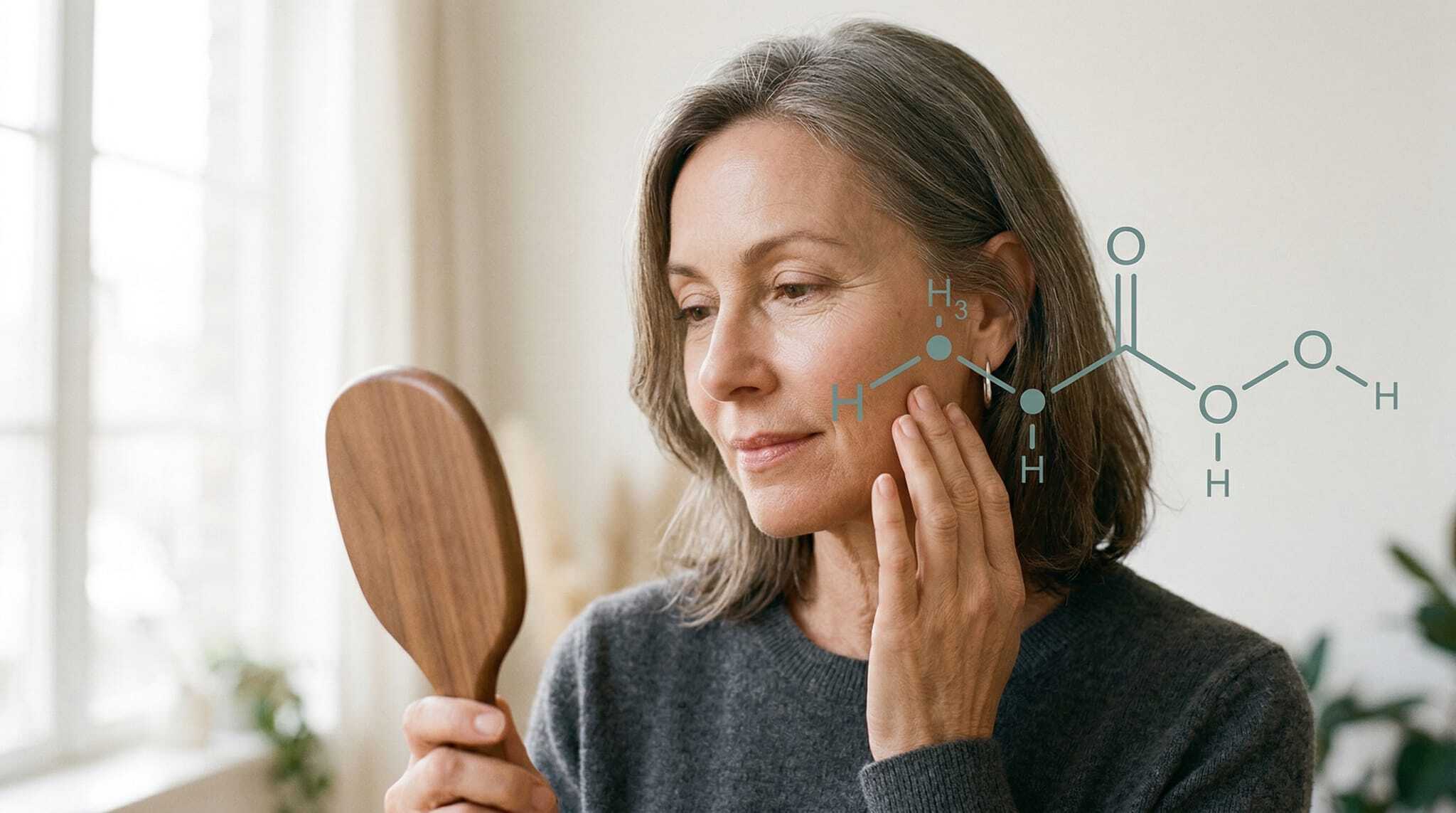
Mandelic acid is derived from bitter almonds (its name comes from the German word Mandel, meaning almond). Chemically, it belongs to the same family as glycolic acid. Functionally, it behaves like a gentler cousin — and the reason is molecular size.
Glycolic acid has a molecular weight of 76 daltons. Mandelic acid comes in at 152 daltons — exactly double [1]. That size difference dictates how quickly each molecule penetrates the stratum corneum. Glycolic acid is small enough to rush through, which is why it delivers fast results but also fast irritation: redness, stinging, flaking. Mandelic acid moves more slowly and more evenly across the skin surface, producing comparable exfoliation with significantly less inflammation [2].
For anyone over 40, this distinction matters more than it might seem. Mature skin is already thinner, drier, and slower to recover from barrier disruption. An exfoliant that delivers results without triggering a week of recovery is not a luxury — it is a prerequisite. Where mandelic acid sits against PHAs, enzymes and the stronger AHAs is mapped out in our guide to a gentle exfoliator for sensitive skin.
How Mandelic Acid Works on Aging Skin
The anti-aging benefits of mandelic acid operate on multiple levels simultaneously.
Surface-level exfoliation. Like all AHAs, mandelic acid loosens the intercellular cement (desmosomes) that holds dead corneocytes together. This accelerates cell turnover, which naturally declines from roughly 28 days in your twenties to 40–50 days by your fifties [1]. Faster turnover means fresher, more radiant skin reaches the surface sooner — reducing that dull, uneven texture that characterizes photoaged skin.
Elasticity and firmness. A 2018 clinical study measured the viscoelastic properties of facial skin after four weeks of twice-daily mandelic acid application. The results were striking: lower eyelid skin elasticity increased by 25.4%, and firmness increased by 23.8% — both statistically significant [2]. These improvements were measurable by Cutometer, meaning they were not subjective impressions but objective changes in the skin’s mechanical properties.
This accelerates cell turnover, which naturally declines from roughly 28 days in your twenties to 40–50 days by your fifties.
Hyperpigmentation. Mandelic acid inhibits melanin transfer by disrupting tyrosinase activity, the enzyme responsible for pigment production. Clinical observations have documented its efficacy against melasma, post-inflammatory hyperpigmentation, and solar lentigines — even in darker skin types where glycolic acid carries a higher risk of paradoxical darkening [3]. A comparative study of chemical peels in 90 melasma patients found that mandelic acid combinations achieved significant improvement with notably better tolerability than glycolic acid peels [4].
Antibacterial properties. Unlike most AHAs, mandelic acid also has inherent antibacterial activity — originally studied in urinary tract infections, this property translates to acne-prone skin. It is one of the few exfoliants that can address both acne and aging simultaneously, which matters for women in perimenopause who may experience hormonal breakouts alongside collagen loss [3].
Why Sensitive Skin Tolerates Mandelic Acid Better
The reason mandelic acid causes less irritation is not just about speed of penetration. Its larger molecular structure also means it interacts with fewer nerve endings per unit area as it crosses the stratum corneum. The result is a lower incidence of stinging, burning, and erythema compared to glycolic acid at equivalent pH levels [1].
This tolerance profile opens doors for skin types that were previously locked out of chemical exfoliation entirely. Rosacea-prone skin, reactive skin, post-procedure skin — mandelic acid provides an exfoliation pathway that other AHAs cannot safely offer.
Clinical reports have consistently noted that mandelic acid products are well tolerated by patients across all Fitzpatrick skin types, including types IV through VI, where the risk of post-inflammatory hyperpigmentation from aggressive exfoliation is highest [3]. This safety in diverse skin tones is a significant differentiator.
Building a Mandelic Acid Routine After 40
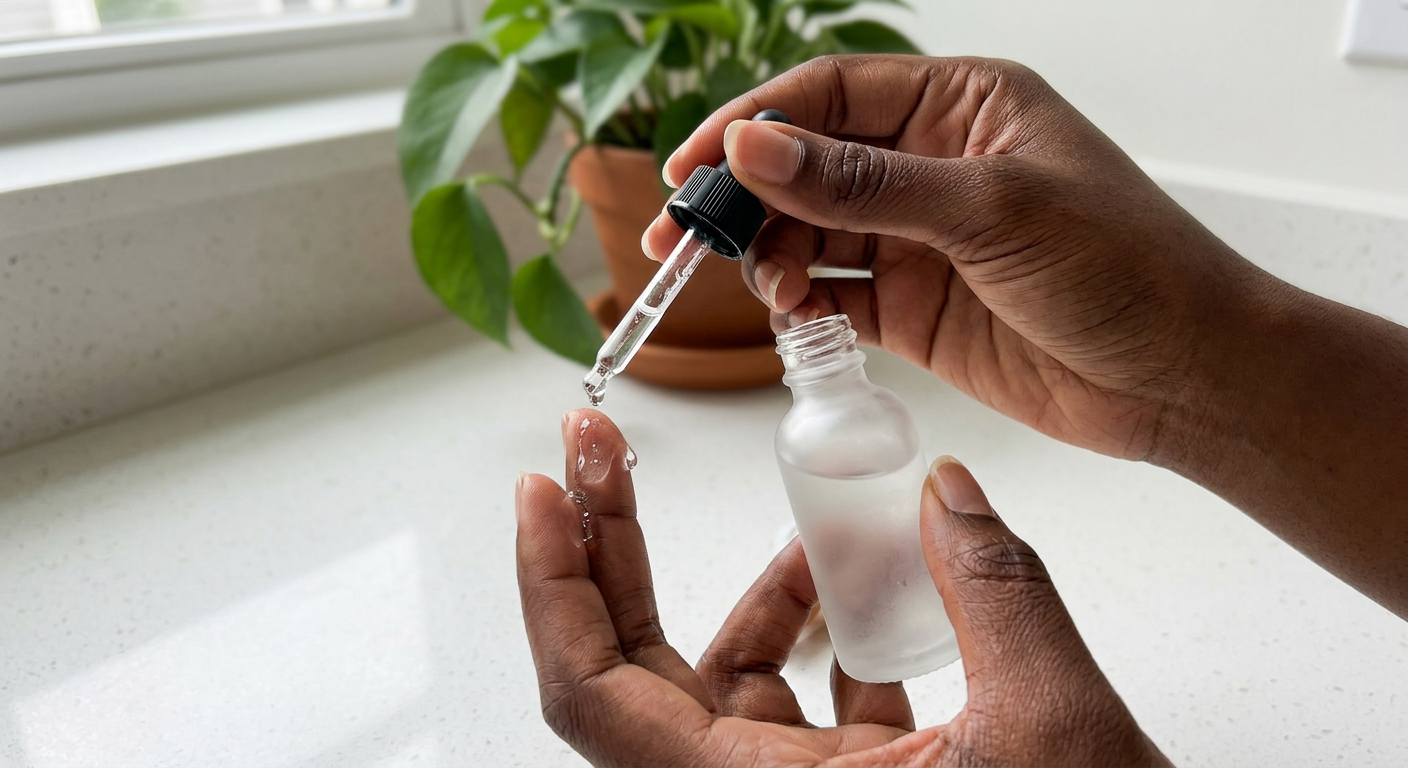
Mandelic acid is available in cleansers (our mandelic acid cleanser guide explains how little a rinse-off wash delivers), gentle mandelic acid toners, leave-on serums, and professional peels. For daily anti-aging use, a leave-on serum or treatment at 5–10% concentration is the most practical option.
Start slowly. Even though mandelic acid is the gentlest AHA, any chemical exfoliant should be introduced gradually — two to three nights per week for the first two weeks, then every other night, then nightly if tolerated. This cadence allows the skin barrier to adapt without overexfoliation.
For daily anti-aging use, a leave-on serum or treatment at 5–10% concentration is the most practical option.
Layer intelligently. Mandelic acid pairs well with hydrating ingredients like hyaluronic acid and niacinamide. Apply the mandelic acid product first (after cleansing, on dry skin), wait a few minutes, then layer hydration on top. If you use retinol in your routine, alternate nights — there is no clinical benefit to stacking an AHA and retinol on the same evening, and the combined irritation potential outweighs any theoretical synergy.
Always use sunscreen. AHAs increase photosensitivity by thinning the stratum corneum, exposing newer skin cells to UV radiation. A broad-spectrum SPF 30+ every morning is non-negotiable when using any hydroxy acid.
Know when to level up. If you have been using mandelic acid for 8–12 weeks and want deeper results — particularly for stubborn pigmentation or textural concerns — professional peels at 20–40% concentrations offer a controlled intensification under dermatological supervision [4].
Combining Mandelic Acid With Retinol for Compounded Results
The most effective anti-aging routines rarely rely on a single active ingredient. Mandelic acid excels at surface-level renewal — clearing dead cells, evening tone, refining texture. Retinol works deeper, stimulating collagen synthesis in the dermis, activating fibroblast activity, and regulating gene expression related to photoaging.
Together, they address the full depth of skin aging: mandelic acid renews the top, retinol rebuilds the bottom.
The challenge has always been tolerability. Layering a traditional retinol with any AHA increases the risk of barrier disruption — dryness, peeling, and irritation that force many people to abandon one or both ingredients. This is where delivery technology becomes decisive.
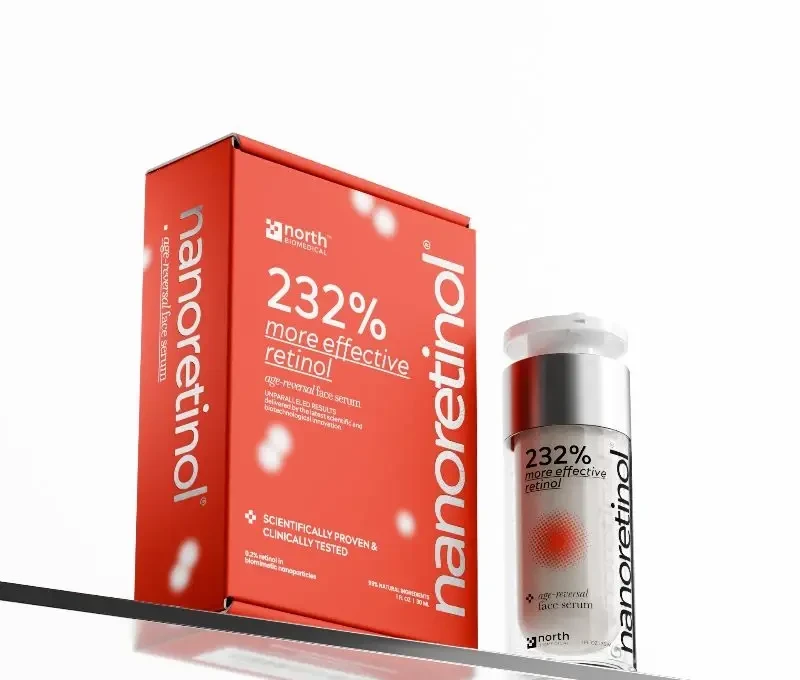
Nanoretinol® solves this compatibility problem through lipid nanoparticle encapsulation. Because the retinol is enclosed in biomimetic nanoparticles that the skin recognizes as its own, it bypasses the epithelial barrier without the chemical disruption caused by conventional formulations [5]. The result: +232% more effective collagen recovery than conventional retinol, with drastically reduced irritation — making it safe to alternate with mandelic acid on adjacent nights without overwhelming the skin barrier.
For women over 40 who want to combine surface exfoliation with deep collagen stimulation, this pairing — mandelic acid for renewal, Nanoretinol® for reconstruction — represents one of the most evidence-backed approaches available.
Who Should Consider Mandelic Acid
Mandelic acid is not the strongest AHA. It is not the fastest. But for skin over 40 — particularly skin that is sensitive, reactive, prone to hyperpigmentation, or has struggled with other exfoliants — it is often the smartest choice.
If a glycolic acid serum has always felt too harsh, if retinoid purging has derailed your routine, or if you are managing both hormonal acne and fine lines simultaneously, mandelic acid offers a way forward that does not force you to choose between progress and comfort.
The best anti-aging routine is the one you can sustain. And sustainability, for most women over 40, starts with gentleness.
References
- Almeman AA. “Evaluating the Efficacy and Safety of Alpha-Hydroxy Acids in Dermatological Practice: A Comprehensive Clinical and Legal Review.” Clin Cosmet Investig Dermatol. 2024;17:1661-1685. doi:10.2147/CCID.S453243
- Jacobs SW, Culbertson EJ. “Effects of Topical Mandelic Acid Treatment on Facial Skin Viscoelasticity.” Facial Plast Surg. 2018;34(6):651-656. doi:10.1055/s-0038-1676048
- Kontochristopoulos G, Platsidaki E. “Chemical Peels in Active Acne and Acne Scars.” Clin Dermatol. 2017;35(2):179-182. doi:10.1016/j.clindermatol.2016.10.011
- Sarkar R, Garg V, Bansal S, et al. “Comparative Evaluation of Efficacy and Tolerability of Glycolic Acid, Salicylic Mandelic Acid, and Phytic Acid Combination Peels in Melasma.” Dermatol Surg. 2016;42(3):384-391. doi:10.1097/DSS.0000000000000642
- North Biomedical LLC. “Nanoretinol® vs. Conventional Retinol: Efficacy in Collagen and Elastin Recovery.” Clinical Study Summary, 2024. View Study