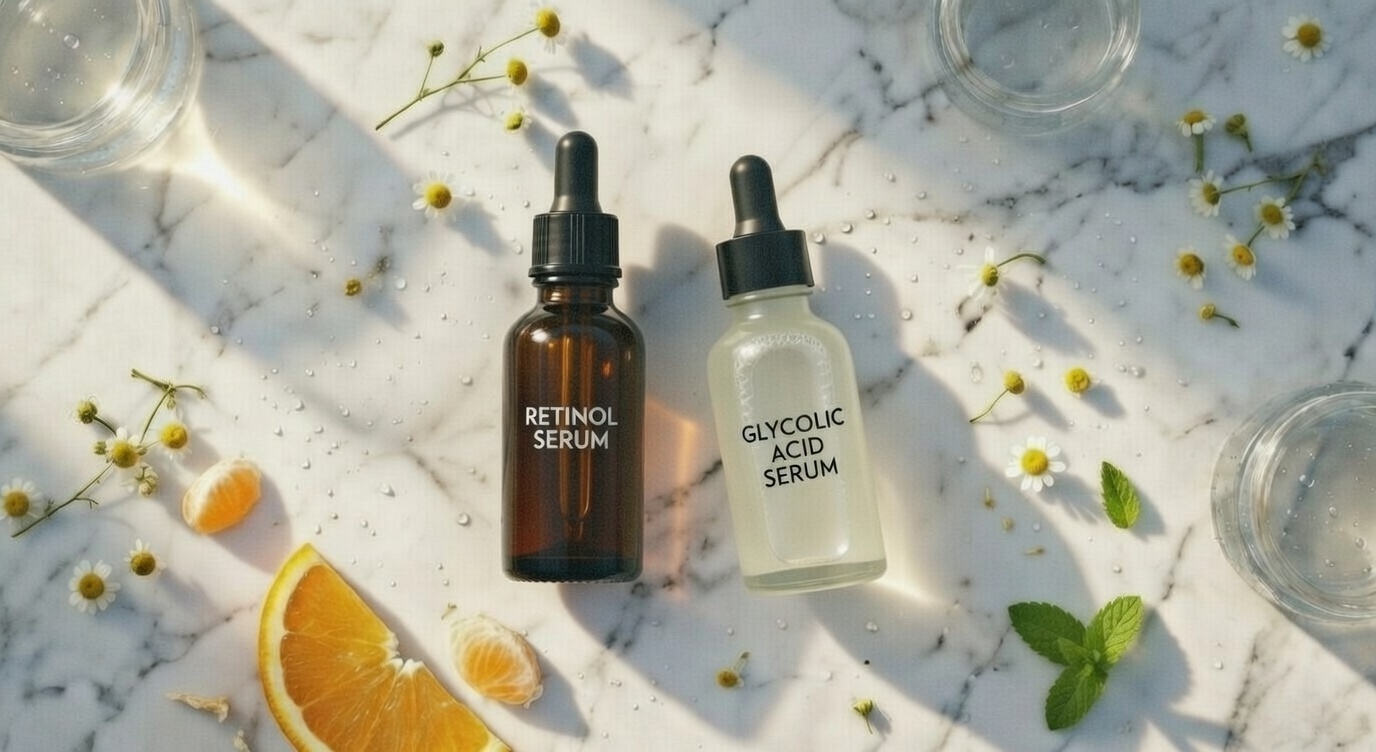
Can You Use Retinol with Glycolic Acid? What Dermatologists Actually Say
The conventional warning is incomplete — here's what the research reveals about combining these two powerhouse ingredients
The Warning You’ve Heard — and Why It’s Only Half Right
“Don’t use retinol and glycolic acid together” is one of the most widely repeated pieces of skincare advice online. The concern makes intuitive sense: both ingredients are active, both accelerate cell turnover, and using two irritants together seems like a recipe for redness, peeling, and a compromised skin barrier.
That warning isn’t entirely wrong. But it’s incomplete — and the science behind it is more interesting than most people realize.
Used carelessly, retinol and glycolic acid together can cause cumulative irritation. Used strategically, they’re complementary ingredients addressing adjacent mechanisms. And in properly engineered formulations, the combination has been shown to enhance retinoid delivery rather than undermining it.
Here’s what you need to know to make an informed decision.
What Glycolic Acid Does (and Why It Works)
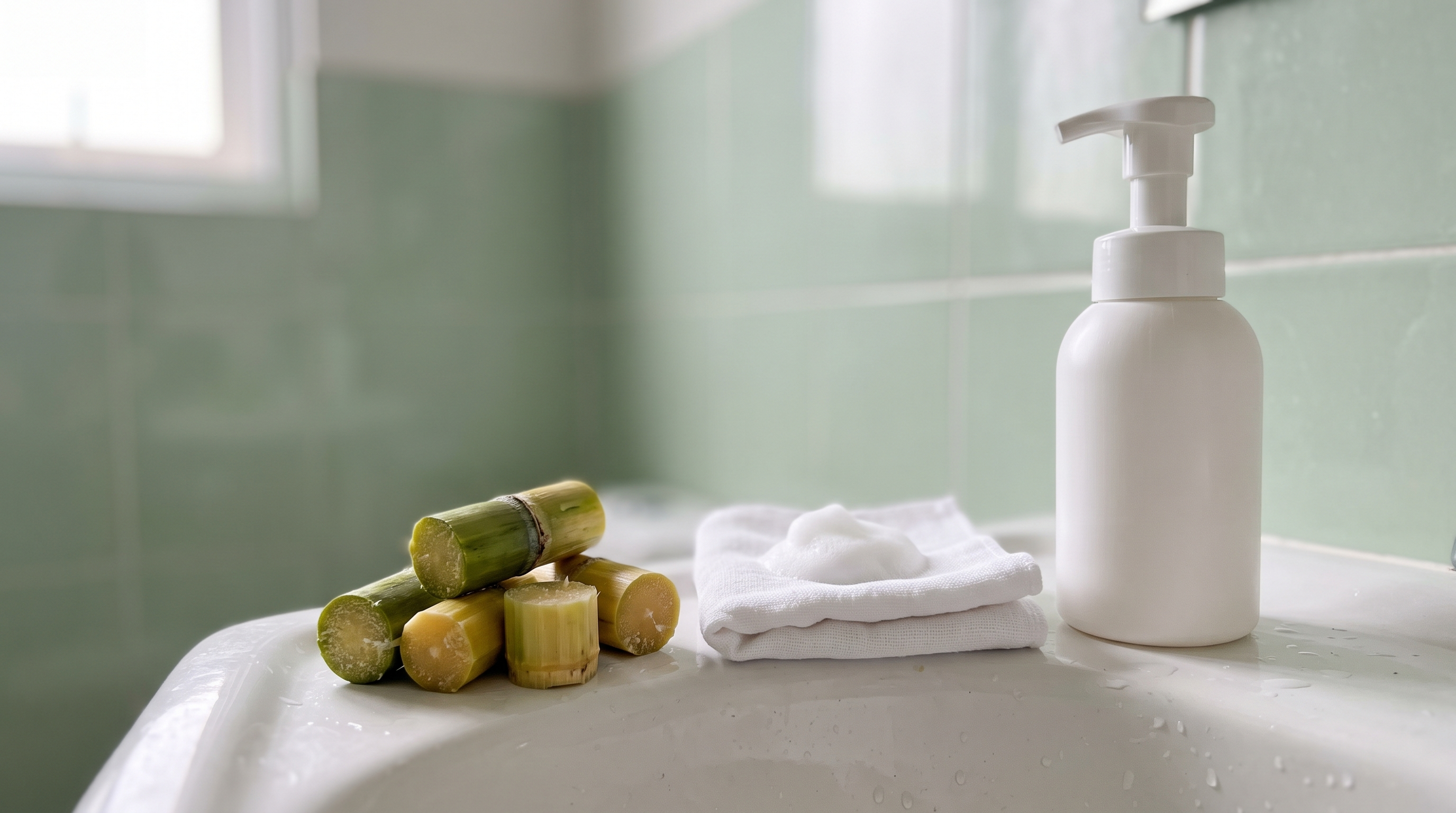
Glycolic acid is an alpha-hydroxy acid (AHA) derived from sugar cane — the smallest AHA molecule by molecular weight, which gives it the deepest penetration of the AHA class. Its mechanism is well-characterized: at concentrations above approximately 8-10%, it breaks down the ionic bonds holding dead keratinocytes together in the stratum corneum, accelerating desquamation [1]. Leave-on formats deliver that at lower strengths and higher frequency, a trade-off our glycolic acid toner guide works through.
The results:
- Smoother, more even skin texture as dead cell accumulation clears
- Brighter appearance as fresher cells surface
- Improved absorption of subsequent ingredients
- At higher concentrations and long-term use: stimulation of collagen and elastin synthesis, demonstrated in clinical studies
A 2024 comprehensive review confirmed that AHAs “enhance skin rejuvenation by promoting apoptosis in skin cells, boosting collagen and elastin synthesis, and improving skin texture and luminosity” — making them genuinely anti-aging as well as exfoliating agents [1].
What Retinol Does (and Why It Works)
Retinol (vitamin A) operates through a completely different mechanism. After penetrating the epidermis, it undergoes enzymatic conversion to retinoic acid — the biologically active form — which binds to nuclear retinoic acid receptors (RARs) and modulates the expression of hundreds of genes involved in cell proliferation, collagen synthesis, and matrix remodeling [2].
The outcomes are structural, not just surface-level:
- Increased procollagen I and III production by dermal fibroblasts
- Accelerated epidermal cell turnover through keratinocyte stimulation
- Suppression of matrix metalloproteinases (MMPs) that degrade collagen
- Improved glycosaminoglycan content in the dermis [3]
The mechanisms of glycolic acid and retinol are distinct but complementary. One exfoliates and provides surface renewal; the other drives structural remodeling in the dermis. In theory, combining them should deliver both benefits simultaneously.
Using both on the same night doesn’t simply add the risk — it compounds it.
Why They’re Typically Separated
The reason dermatologists often advise using retinol and glycolic acid on different nights comes down to three practical concerns:
pH incompatibility. Glycolic acid works best at pH 3.5–4.0. Retinol is most stable at higher pH levels (around 5.5–6.5). Applying a low-pH AHA product immediately before retinol can temporarily lower skin surface pH, affecting retinol’s stability and irritation profile when used together in quick succession.
Cumulative barrier stress. Glycolic acid loosens the stratum corneum while retinol accelerates cell turnover from below. Both create controlled stress on the skin barrier. When applied on the same night, the combined inflammatory load is higher than either ingredient alone — particularly problematic for beginners or those with sensitive skin. Amplified sun sensitivity. Both ingredients increase photosensitivity. Using both on the same night doesn’t simply add the risk — it compounds it. Diligent morning SPF use becomes even more important [2].
The Research Surprise: AHA Can Enhance Retinoid Delivery
Here’s the part the conventional warning misses: in a properly engineered combination, glycolic acid doesn’t just coexist with retinoids — it can improve their performance.
A 2005 comparative study by Tran et al. examined the pharmacology of RALGA — a formulated combination of retinaldehyde (a retinoid precursor) and glycolic acid. The results were striking: “epidermal and dermal concentrations of RAL and RA were higher after RALGA treatment, as compared to both RAL 0.1% alone and RA 0.05% alone; this indicates that the presence of GA favours the bioavailability and biotransformation of RAL into RA” [4].
In other words, glycolic acid’s exfoliating action removed the dead cell barrier that retinoid molecules would otherwise need to penetrate — increasing the amount of active retinoid actually reaching the living cells below. The combination also “allows delivery of high amounts of RA in the skin while preventing the side-effects usually observed with high concentrations of topical RA” [4].
A separate randomized controlled trial by Rouvrais et al. compared a retinaldehyde-based antiaging cream against sequential glycolic acid peel sessions. The conclusion: both treatments produced equivalent reductions in crow’s feet wrinkle depth, but the retinaldehyde cream showed superior skin texture refinement and had a 12-fold lower incidence of adverse events than the glycolic peels [5].
These findings don’t mean you should start layering glycolic acid on top of retinol every night. They mean the “don’t ever combine them” rule is an oversimplification — and that the ingredients can work synergistically when the delivery and timing are right.
Three Practical Approaches That Work
Approach 1: Alternating Nights (Most Recommended)
Here’s the part the conventional warning misses: in a properly engineered combination, glycolic acid doesn’t just coexist with retinoids — it can improve their performance.
Use glycolic acid on one night, retinol the next, with recovery nights built in. This is the core logic behind skin cycling: glycolic acid clears the stratum corneum on Night 1, creating the exfoliated surface that retinol can penetrate more efficiently on Night 2. Each ingredient works optimally, the barrier gets recovery time, and cumulative irritation is minimized.
This is the right starting point for most people, especially beginners and anyone with sensitive skin.
Approach 2: Morning/Evening Split
Use glycolic acid in the morning (with mandatory SPF 30+ applied after), and retinol at night. This avoids the pH layering issue entirely, gives the skin 12+ hours between exposures, and lets each ingredient work in its optimal window: glycolic acid in the daytime exfoliates while you’re active, retinol at night works during the skin’s natural repair cycle.
The trade-off: morning glycolic acid increases daytime UV sensitivity significantly — broad-spectrum SPF is non-negotiable with this approach.
Approach 3: Full Separation for Sensitive Skin
For skin that reacts strongly to either ingredient individually, keep them on completely separate nights with recovery nights in between. Build tolerance to each independently before combining. There’s no performance advantage to combining too soon — patience yields better long-term outcomes than aggressive early use.
What to Avoid
Regardless of approach, a few combinations consistently cause problems:
-
Same product, same night, high concentrations. A 10%+ glycolic acid serum followed immediately by a high-percentage retinol on the same night is the scenario most likely to cause barrier damage. Even experienced users should test this approach cautiously.
-
Skipping SPF. With either ingredient active in your routine, morning SPF isn’t optional. Both glycolic acid and retinol increase photosensitivity. Sun protection is foundational to any anti-aging protocol, but especially when exfoliants and retinoids are in the stack.
-
Ignoring adjustment. If you’re new to retinol, establish your retinol tolerance before adding glycolic acid. Introducing both simultaneously makes it harder to identify which is causing any irritation — and creates unnecessary adjustment burden.
Where Nanoretinol® Changes the Equation
The conventional concern about combining retinol with glycolic acid partly stems from conventional retinol’s delivery method: it relies on disrupting the barrier to penetrate, generating inflammatory byproducts that compound the irritation from AHAs.
Nanoretinol® by North Biomedical® uses lipid nanoparticle encapsulation to deliver retinol through the epithelial barrier via physiological lipid exchange rather than chemical disruption. The biomimetic particles bypass the barrier without damaging it — which means significantly lower inflammatory toll per dose.
When your retinol isn’t disrupting the barrier on its own, using glycolic acid in a strategic rotation becomes significantly more tolerable. The barrier disruption concern that drives the “don’t combine” advice is reduced at the source. You get the enhanced penetration benefit that the RALGA research pointed toward — without paying the irritation price of conventional retinol + AHA routines.
The result: smarter routine architecture, better ingredient synergy, and a cleaner path to the results both ingredients are capable of delivering.
References
-
Almeman AA. “Evaluating the Efficacy and Safety of Alpha-Hydroxy Acids in Dermatological Practice: A Comprehensive Clinical and Legal Review.” Clin Cosmet Investig Dermatol. 2024;17:1861-1874. PMID:39050562
-
Quan T. “Human Skin Aging and the Anti-Aging Properties of Retinol.” Biomolecules. 2023;13(11):1614. doi:10.3390/biom13111614
-
Kafi R, Kwak HSR, Schumacher WE, et al. “Improvement of naturally aged skin with vitamin A (retinol).” Arch Dermatol. 2007;143(5):606-612. doi:10.1001/archderm.143.5.606
-
Tran C, Kasraee B, Grand D, et al. “Pharmacology of RALGA, a mixture of retinaldehyde and glycolic acid.” Dermatology. 2005;210 Suppl 1:6-13. doi:10.1159/000082542
-
Rouvrais C, Thibaut S, Vicic M, et al. “Antiaging efficacy of a retinaldehyde-based cream compared with glycolic acid peel sessions: A randomized controlled study.” J Cosmet Dermatol. 2018;17(6):1136-1143. doi:10.1111/jocd.12511