Mineral vs. Chemical Sunscreen: Which Is Better for Aging Skin After 40?
Both block UV, but they work differently—and for mature skin and retinol users, that difference matters more than most people realize
The Basic Difference
Mineral sunscreens use zinc oxide, titanium dioxide, or a combination of both as their active ingredients. Chemical sunscreens use organic UV-absorbing compounds—avobenzone, oxybenzone, octinoxate, octocrylene, homosalate, and others—often in combinations of four to six different filters.
The popular shorthand is that minerals “sit on top of skin” and chemicals “absorb into skin,” but this is not accurate. Both types of sunscreen actually work primarily through UV light absorption—the mineral particles absorb UV radiation and dissipate it as heat, rather than reflecting it [1]. The real differences lie elsewhere: in which wavelengths each covers, how stable each is under sun exposure, and how the ingredients interact with your skin over time.
For someone in their forties using a retinol-based anti-aging routine, these differences are not academic.
UV Coverage: Minerals Win on Breadth
UV radiation comes in two relevant forms: UVB (responsible for sunburns, shorter wavelength) and UVA (responsible for photoaging and deeper tissue damage, longer wavelength). Comprehensive protection requires addressing both. If that distinction is new to you, our guide to UVA vs UVB rays covers how deep each one reaches.
Zinc oxide is the standout ingredient for full-spectrum coverage. It absorbs strongly across both the UVB range and the full UVA spectrum [2]. Titanium dioxide covers UVB and short-wave UVA well, but has weaker coverage in the long-wave UVA range. Used together, the combination provides the most complete mineral protection currently available. For reactive skin specifically, our guide to the best sunscreen for sensitive skin narrows the shortlist further.
Chemical sunscreens often combine multiple filters specifically to patch the coverage gaps that individual chemical compounds leave. Avobenzone, for example, covers long-wave UVA but is photounstable without a stabilizer; oxybenzone covers mid-range UV but has raised systemic absorption concerns. The result is formulations that can achieve broad-spectrum protection but require careful stabilization to maintain it.
The Photodegradation Problem
Avobenzone is the most commonly used UVA filter in chemical sunscreens—and it has a documented stability problem. Repeated UV exposure causes it to degrade through a photochemical process that reduces its UV-absorbing capacity [3]. The degradation byproducts can cause skin irritation and photoallergic reactions. This is why avobenzone is almost always stabilized with other agents in modern formulations, but the stabilizers add formulation complexity and their own potential irritation profiles. Formulators outside the US have a third option, because several filters cleared in Korea and Europe photostabilize avobenzone directly, as our guide to the best Korean sunscreen explains.
Zinc oxide and titanium dioxide do not photodegrade. They remain chemically stable under UV exposure, which means the protection you apply in the morning is the same protection you have hours later—before reapplication. For real-world use, this stability advantage is meaningful, and it is one reason our best mineral sunscreen criteria start with the filter rather than with the SPF.
Chemical Sunscreens and Systemic Absorption
A 2019 FDA-sponsored trial found that four commonly used chemical UV filters—oxybenzone, avobenzone, octocrylene, and ecamsule—exceeded the FDA’s threshold for systemic absorption (0.5 ng/mL) after a single day of sunscreen application under real-world conditions. Oxybenzone showed particularly high plasma concentrations.
For someone in their forties using a retinol-based anti-aging routine, these differences are not academic.
The FDA’s position is that exceeding this threshold triggers additional safety evaluation requirements, not that the ingredients are proven harmful. But for women over 40 who are applying sunscreen daily, often to large areas including neck and chest, the question of cumulative systemic exposure is legitimate. Our guide to non-toxic skincare puts this and other ingredient worries into perspective.
Zinc oxide and titanium dioxide used in sunscreen are not meaningfully absorbed through intact skin. They remain on the surface, do their work, and wash off. This is a straightforward advantage for anyone who prefers to minimize systemic ingredient exposure.
Anti-Aging Properties of Mineral Filters
Recent research has found that titanium dioxide and zinc oxide do more than simply block UV radiation—they actively attenuate the cellular signaling pathways triggered by UV exposure that lead to premature aging [4]. Specifically, they minimize UV-induced expression of matrix metalloproteinases (the enzymes that break down collagen) and help protect cell cycle integrity in irradiated skin.
This research supports zinc oxide and titanium dioxide not as passive blockers but as ingredients with active anti-photoaging effects at the molecular level—relevant for anyone prioritizing long-term skin health.
The White Cast Problem: Solved or Overstated?
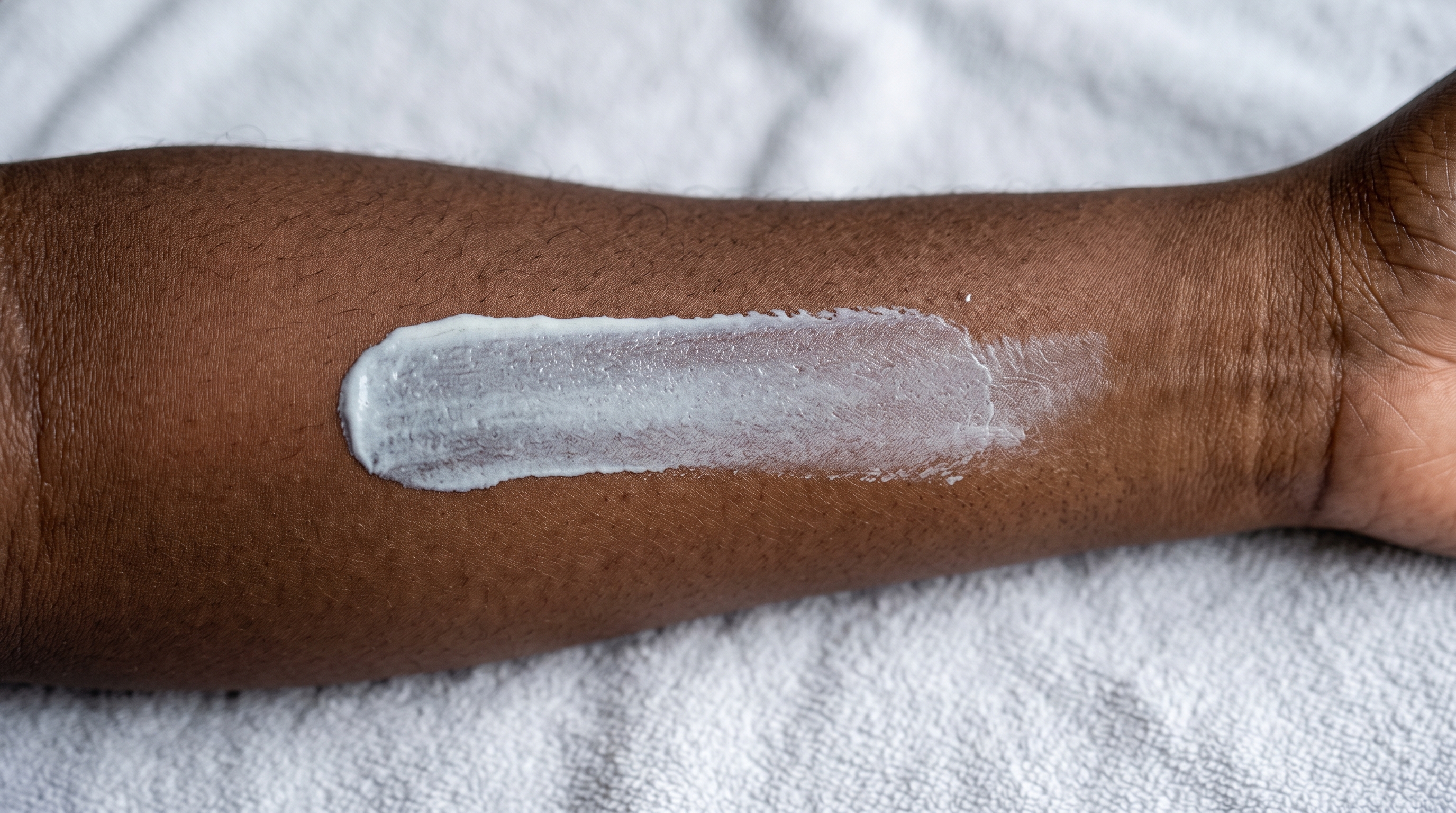
The historical objection to mineral sunscreens is white cast—the chalky residue that earlier zinc oxide and titanium dioxide formulations left on dark and medium skin tones. This was a legitimate issue with first-generation products and remains a concern with some formulations.
However, the past decade has seen substantial advances in particle technology. Micronized and nano-sized mineral particles are much less prone to visible white cast while maintaining effective UV protection. Tinted formulations, which add iron oxide pigments, both reduce white cast and extend protection into the visible light range—relevant for melasma and post-inflammatory hyperpigmentation. We work through that visible light evidence in our guide to tinted sunscreen.
If white cast has been your reason for avoiding mineral sunscreen, it is worth revisiting newer formulations. The problem is much less universal than it once was, and the optics behind it are explained in mineral sunscreen with no white cast.
Which Is Better for Aging Skin?
For most people over 40 with skin health and anti-aging as priorities, mineral sunscreen—particularly zinc oxide–based formulations—offers a better overall package:
- Broader UV coverage from a single ingredient (zinc oxide)
- No photodegradation: consistent protection throughout wear time
- Lower systemic absorption: no significant skin penetration
- Better compatibility with active ingredients: no chemical interactions with retinol or vitamin C
- Anti-photoaging molecular effects at the cellular level
For more on how UV damage accumulates and why consistent protection matters so much in your forties, see sun damage and how to reverse it, and for the broader science of SPF in anti-aging, see sunscreen for aging skin.
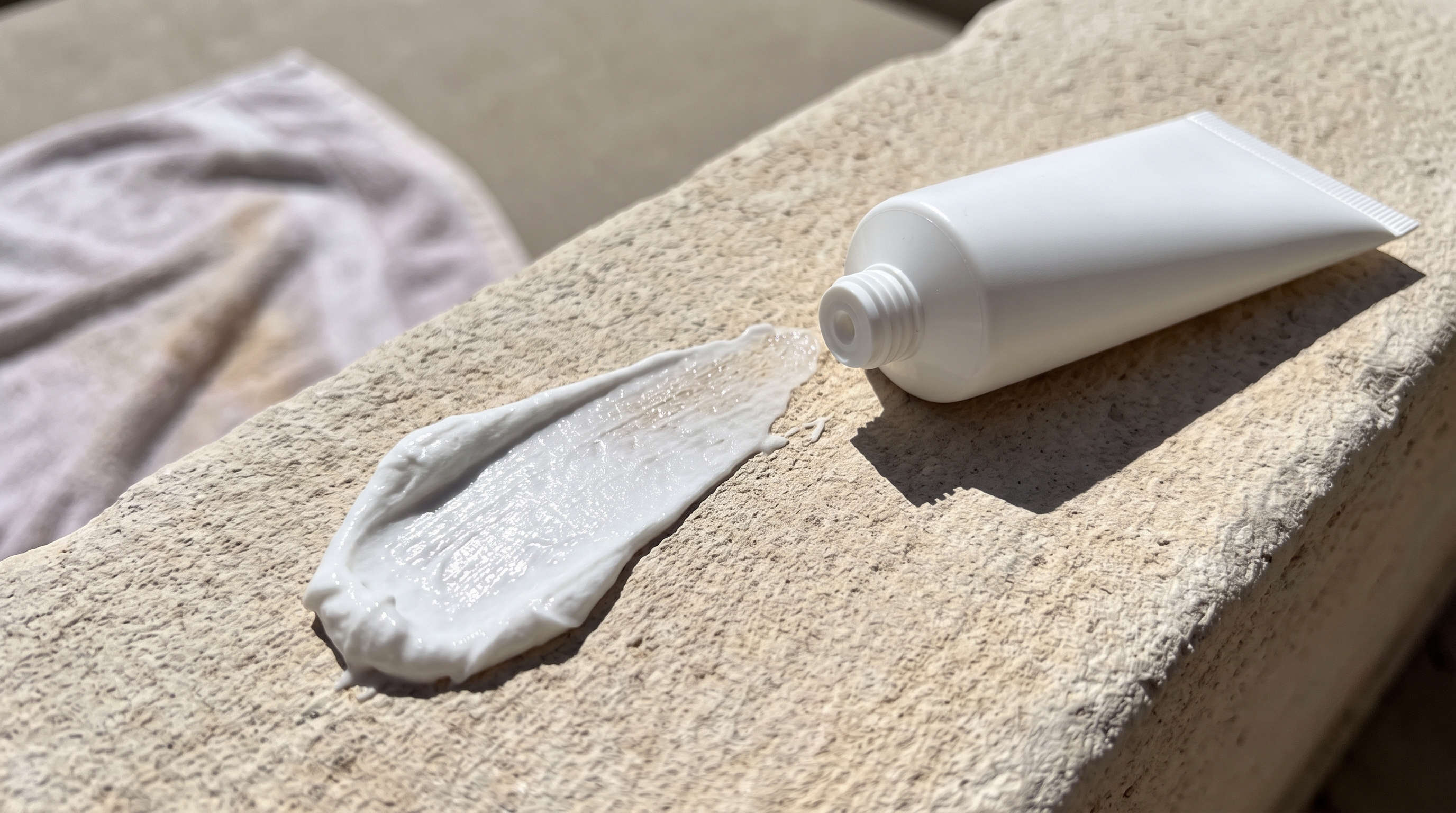
The main practical limitation is formulation elegance. Many mineral sunscreens are thicker and require more blending than chemical counterparts. The best approach is to try several and find a formulation you’ll actually use consistently—because the best sunscreen is always the one you apply every day. A badge on the front is a weaker guide than the three tested phrases on the back, which our guide to dermatologist recommended sunscreen works through.
Mineral Sunscreen and Retinol: Why Compatibility Matters
For anyone using retinol as part of their anti-aging routine, sunscreen compatibility is not a secondary concern. Retinol increases photosensitivity during treatment, making consistent and effective UV protection essential. And certain chemical UV filters can potentially interact with retinol molecules in formulations or on skin, affecting stability.
Zinc oxide and titanium dioxide have no known interaction with retinol. They provide protection at the skin surface without creating the chemical environment that can degrade or destabilize actives in your routine. For users of Nanoretinol or any retinol preparation, a well-formulated zinc oxide sunscreen makes a logical daily partner—protecting skin that is actively undergoing collagen rebuilding from the UV damage that would undo that progress.
For more on how UV damage accumulates and why consistent protection matters so much in your forties, see sun damage and how to reverse it, and for the broader science of SPF in anti-aging, see sunscreen for aging skin.
Practical Recommendations
For most people: A zinc oxide–based broad-spectrum mineral SPF 30+ applied every morning to face, neck, chest, and hands. Reapply every 90–120 minutes during extended outdoor exposure. Whether that 30 should be a 50 is a separate decision, weighed in our comparison of SPF 30 vs 50.
For sensitive skin or retinol users: Mineral-only formulations avoid the potential irritants in chemical sunscreen blends. Fragrance-free, minimal-ingredient formulations are preferable.
For oily and shine-prone skin: the finish decides adherence far more than the filter class does, and a mineral base that greys out over sebum will be worn less often than a fluid that does not — our guide to the best sunscreen for oily skin covers which vehicles survive a full day of oil.
For dry and flaking skin: the same logic runs in reverse. A low-emollient mineral base spread over dehydrated corneocytes is the most reliable source of pilling on the shelf, and our guide to the best sunscreen for dry skin covers which vehicles stay comfortable all day.
For deeper skin tones: Look for tinted mineral formulations or newer micronized/nano-particle formulas tested for reduced white cast.
For men and freshly shaved skin: a razor strips part of the stratum corneum hours before sun exposure, which changes how a filter feels going on, and our guide to the best sunscreen for men covers the formats that suit a shaving routine, a larger face, and an exposed scalp.
For drier, mature skin: filter class matters less than the vehicle carrying it. A hydrating base and a texture you will apply generously beat a technically superior formula you use sparingly, and how much sunscreen you use on your face decides more of your real protection than the filter class does — our guide to the best sunscreen for mature skin covers that trade-off.
For daily driving and incidental sun exposure: Any SPF—mineral or chemical—is vastly better than no SPF. The comparison here is primarily for daily users who want to optimize. Whether a two-in-one product is enough on its own is weighed in our look at moisturizer with SPF. The midday top-up is its own decision, and powder sunscreen explains why a brush works far better over an existing layer than as one. And if a foundation follows it, the best SPF for under makeup covers which textures survive that second layer. The stick format solves the same midday problem a third way, and our guide to the sunscreen stick covers what it does and does not deposit per pass.
References
-
Schneider SL, Lim HW. “A review of inorganic UV filters zinc oxide and titanium dioxide.” Photodermatol Photoimmunol Photomed. 2019;35(6):442-446. doi:10.1111/phpp.12439
-
Smijs TG, Pavel S. “Titanium dioxide and zinc oxide nanoparticles in sunscreens: focus on their safety and effectiveness.” Nanotechnol Sci Appl. 2011;4:95-112. doi:10.2147/NSA.S19419
-
Afonso S, Horita K, Sousa e Silva JP, Almeida IF, Amaral MH, Lobão PA, Costa PC, Miranda MS, Esteves da Silva JCG, Sousa Lobo JM. “Photodegradation of avobenzone: stabilization effect of antioxidants.” J Photochem Photobiol B. 2014;140:36-40. doi:10.1016/j.jphotobiol.2014.07.004
-
Pangilinan NDT, Shalbaf M, Souza A, Chavan B, Bonn C, Birch-Machin MA. “Profiling the Anti-Photoaging Impact of Titanium Dioxide and Zinc Oxide Nanoparticles: A Focus on Signaling Pathways.” FASEB J. 2025;39(9):e70568. doi:10.1096/fj.202500342R
-
Brar G, Dhaliwal A, Brar AS, Sreedevi M, Ahmadi Y, Irfan M, Golbari R, Zumárraga D, Yateem D, Lysak Y, Abarca-Pineda YA. “A Comprehensive Review of the Role of UV Radiation in Photoaging Processes Between Different Types of Skin.” Cureus. 2025;17(3):e81109. doi:10.7759/cureus.81109