Perioral Dermatitis: Why That Stubborn Rash Around Your Mouth Keeps Coming Back
The inflammatory rash that worsens when you treat it like dryness—and the counterintuitive approach that actually clears it
What Perioral Dermatitis Looks Like
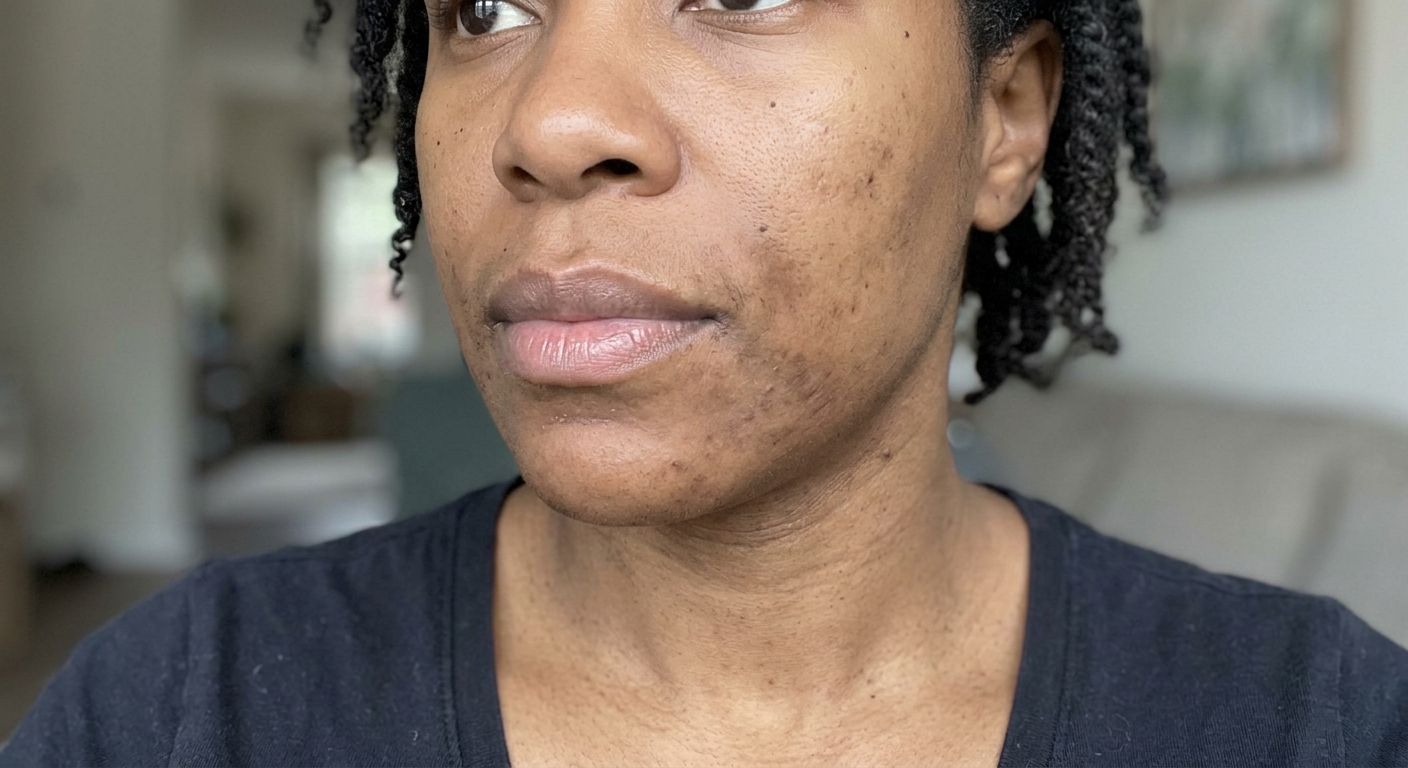
Perioral dermatitis presents as a cluster of small papules, pustules, and redness concentrated around the mouth—particularly in the nasolabial folds, above the upper lip, and on the chin. It often leaves a narrow ring of clear skin directly around the lip border, which is one of the hallmarks that distinguishes it from other rashes.
It can resemble rosacea, acne, or simple dryness—which is part of why it’s so often misdiagnosed and mistreated for months before anyone gets it right. Unlike acne, perioral dermatitis tends to be finer in texture, with very small, almost uniform bumps. Unlike rosacea, it’s concentrated around the mouth rather than spreading across the cheeks and nose. Unlike dry skin, it doesn’t respond to moisturizer—in fact, moisturizer usually makes it worse.
This last point is where most people make their first significant mistake.
Why Moisturizing Makes It Worse
The paradox of perioral dermatitis is that it presents as irritated, inflamed skin—and the instinctive response is to add more product. More barrier cream, more soothing moisturizer, more heavy ointments. This is almost always counterproductive.
Research consistently identifies heavy moisturizing products as one of the most common triggers and perpetuators of perioral dermatitis [1]. The proposed mechanism involves persistent hydration of the stratum corneum: when the outer skin layer becomes chronically overhydrated from occlusive products, the skin barrier is altered in ways that impair its normal function and promote microbial overgrowth. Rather than repairing the barrier, heavy moisturizers can trap the inflammatory cycle in place.
This is the defining clinical behavior that separates perioral dermatitis from dry skin or eczema: it improves with less product, not more.
The Full List of Triggers
Identifying what caused your perioral dermatitis matters both for treatment and for preventing recurrence. The most consistently implicated factors [1, 2]:
Topical corticosteroids — This is the single strongest risk factor in the literature. Using prescription or OTC steroid creams on the face—even briefly—substantially increases perioral dermatitis risk. Many patients report that their rash began during or shortly after steroid use, and that it returned worse every time the steroid was stopped (a phenomenon called “rebound flare”). If you’ve been using hydrocortisone on your face, this is the first thing to discontinue.
Heavy moisturizers and occlusives — Products with petrolatum, mineral oil, silicones, lanolin, and similar occlusive ingredients are the most commonly associated skincare triggers [3]. These create the chronic skin surface occlusion that alters barrier function.
If you’ve been using hydrocortisone on your face, this is the first thing to discontinue.
Fluorinated toothpaste — The relationship between fluoride toothpaste and perioral dermatitis is well-documented in the literature. Switching to non-fluorinated toothpaste is a standard recommendation in management protocols.
Hormonal factors — Perioral dermatitis disproportionately affects women, and it often worsens during hormonal fluctuations—around menstruation, during pregnancy, or with oral contraceptive use. The mechanism is not fully elucidated but may involve hormonal effects on skin barrier function.
Other potential triggers — Some patients identify sunscreen, makeup foundations, or inhaled corticosteroids (nasal sprays, asthma inhalers used near the face) as contributors.
The Treatment That Actually Works
Step 1: Zero Therapy
The cornerstone of perioral dermatitis treatment is called “zero therapy”—stopping all topical skincare products on the face, as completely as possible [2]. No moisturizer, no SPF, no makeup, no cleanser beyond gentle water washing. This sounds extreme, but it is the first-line recommendation in most evidence-based treatment reviews because the skin’s recovery requires removing all potential perpetuating products simultaneously.
This phase is uncomfortable. The skin typically flares in the first week as it adjusts to the absence of product, and many patients interpret this initial worsening as evidence that stopping was the wrong move. It was not. The worsening is temporary. Most patients begin to see clear improvement within 2–4 weeks of true product cessation.
If your occupation or personal situation makes zero therapy impractical, simplify as much as possible: water-only cleansing, minimal or no moisturizer (or a very simple one without occlusive ingredients), no steroids.
Step 2: Prescription Treatment for Moderate to Severe Cases
For moderate or severe perioral dermatitis, topical antibiotics and oral antibiotics are the treatments with the strongest clinical evidence [4].
Topical options:
- Metronidazole 0.75–1% gel or cream — first choice for mild-to-moderate cases
- Erythromycin 2% solution — alternative first-line topical
- Azelaic acid 15–20% — particularly useful for those who want to avoid antibiotic resistance
Most patients begin to see clear improvement within 2–4 weeks of true product cessation.
Oral options:
- Tetracycline antibiotics (doxycycline or minocycline) — for moderate-to-severe or treatment-resistant cases, typically taken for 6–12 weeks
- These aren’t used because the condition is bacterial in origin, but because tetracyclines have significant anti-inflammatory properties
Systemic isotretinoin is reserved for cases refractory to all standard therapies.
What Not to Use During Active Perioral Dermatitis
- Topical steroids: Will cause short-term improvement followed by significant rebound. Do not use.
- Heavy occlusive moisturizers: Perpetuate the condition.
- Retinoids: Generally avoided during active flares, as additional irritation can worsen the inflammatory cycle.
Rebuilding Your Skincare Routine After Clearance
Once perioral dermatitis has fully cleared—which typically takes 6–12 weeks with appropriate treatment—the question becomes how to rebuild a skincare routine without triggering another episode.
The guiding principle is simplicity and light formulations. Serums tend to be better tolerated than creams. Gel-based products outperform heavy occlusive formulas. Avoid petrolatum-based products around the mouth area.
For those who want to reintroduce retinol for anti-aging—which is entirely appropriate once the skin is stable—the choice of formulation matters more than for the average person. Conventional retinol preparations use solvents and penetration enhancers that can tax a recently compromised skin barrier. A water-based, encapsulated formulation may be significantly better tolerated. Nanoretinol uses biomimetic lipid nanoparticles that bypass the need for chemical penetration enhancement entirely, delivering retinol through the skin without the barrier disruption associated with conventional preparations—which is exactly the mechanism most likely to provoke sensitive skin near the mouth.
Start retinol slowly after clearance (two to three times per week maximum initially) and monitor for any early signs of returning redness around the perioral area.
For more on managing retinol-sensitive skin, see retinol for sensitive skin and our overview of how to use retinol.
Prevention
The most reliable prevention strategy is avoiding the triggers that caused the original episode. Specifically:
- Never apply topical corticosteroids to the face without a clear dermatological indication
- Avoid heavy occlusive moisturizers around the mouth—lightweight, non-comedogenic options if you use one at all
- Switch to non-fluorinated toothpaste if the condition has appeared before
- Keep your face-touching habits low; repeated physical trauma to the perioral area can be a contributing factor in some patients
For some people, perioral dermatitis becomes a recurring chronic condition that flares seasonally or hormonally. Understanding your individual pattern of triggers—and simplifying your routine before and during vulnerable periods—is the most effective long-term management strategy.
References
-
Searle T, Ali FR, Al-Niaimi F. “Perioral dermatitis: Diagnosis, proposed etiologies, and management.” J Cosmet Dermatol. 2021;20(12):3839-3848. doi:10.1111/jocd.14060
-
Tempark T, Shwayder TA. “Perioral dermatitis: a review of the condition with special attention to treatment options.” Am J Clin Dermatol. 2014;15(2):101-13. doi:10.1007/s40257-014-0067-7
-
Dirschka T, Weber K, Tronnier H. “Topical cosmetics and perioral dermatitis.” J Dtsch Dermatol Ges. 2004;2(3):194-199. doi:10.1046/j.1439-0353.2004.04764.x
-
Hall CS, Reichenberg J. “Evidence based review of perioral dermatitis therapy.” G Ital Dermatol Venereol. 2010;145(4):433-44. PMID: 20823788
-
Fang Y, Ying Y, Xiaolan W, Lin S, Chenlan X, Caixia W, Dingqiao L, Yanan L. “Mitigation of retinol-induced skin irritation by physiologic lipids: Evidence from patch testing.” J Cosmet Dermatol. 2024;23(8):2743-2749. doi:10.1111/jocd.16330