Probiotics for Skin Health: What the Gut-Skin Axis Means for Aging
How the bacteria in your gut may be shaping the wrinkles on your face
Your Skin Has Its Own Ecosystem
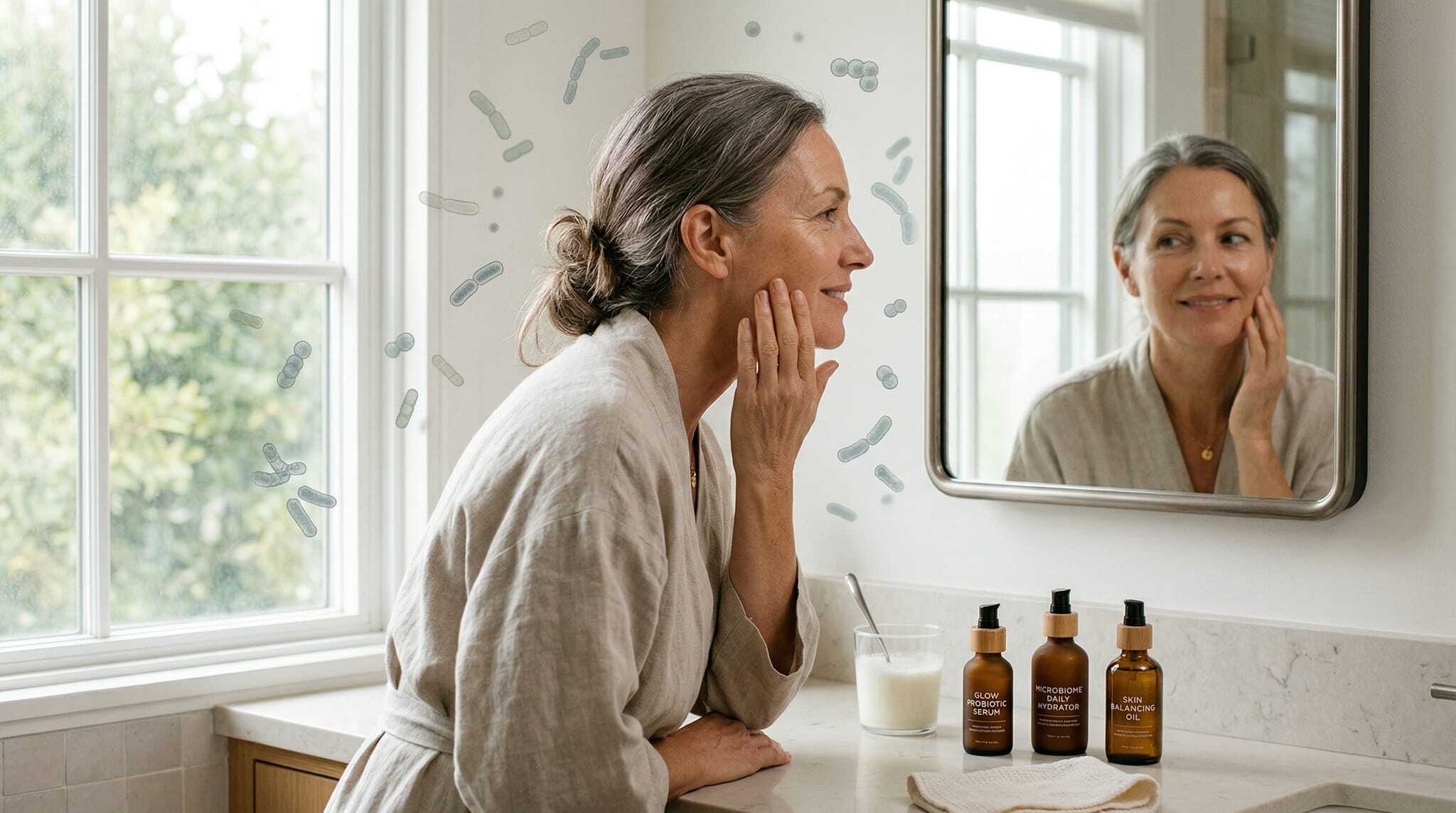
There are roughly as many microorganisms living on your skin as there are cells in your body. These aren’t hitchhikers — they’re residents. Bacteria, fungi, and viruses form an intricate community called the skin microbiome, and this ecosystem does far more than passively exist on your surface.
Your skin microbiome actively defends against pathogens, modulates inflammation, and helps maintain the physical barrier that keeps moisture in and irritants out [1]. When that community falls out of balance — a state scientists call dysbiosis — the consequences show up as dryness, sensitivity, accelerated aging, and chronic conditions like eczema and rosacea.
But here’s where it gets interesting: your skin’s microbial community doesn’t operate in isolation. It’s intimately connected to the microbial ecosystem in your gut through what researchers now call the gut-skin axis.
The Gut-Skin Axis: A Two-Way Conversation
The idea that gut health affects skin isn’t new — dermatologists John Stokes and Donald Pillsbury proposed a gut-brain-skin connection back in 1930. What’s new is the molecular evidence supporting it.
Your gut microbiome influences skin health through several mechanisms. First, gut bacteria produce short-chain fatty acids (SCFAs) like butyrate and propionate that regulate systemic inflammation [2]. When gut bacteria are depleted or imbalanced, inflammatory cytokines circulate more freely, and your skin bears the visible consequences.
Second, the gut microbiome shapes immune function. Approximately 70% of your immune cells reside in the gut-associated lymphoid tissue. When gut microbial diversity drops — as it does with age, poor diet, or antibiotic use — the immune system shifts toward a pro-inflammatory state that dermatologists call “inflammaging” [3]. This chronic, low-grade inflammation accelerates the breakdown of collagen and elastin in the dermis.
Third, gut microbes regulate the production of metabolites that directly affect skin cells. Certain bacterial strains produce vitamins (B2, B9, K), conjugated linoleic acid, and other bioactive compounds that support keratinocyte function and barrier integrity from the inside out [1].
What Happens to the Microbiome as You Age
Both the gut and skin microbiomes shift composition with age — and not in helpful directions.
In the gut, microbial diversity declines. The ratio of beneficial Bifidobacterium and Lactobacillus species drops, while opportunistic and inflammatory species increase [3]. These shifts are associated with increased intestinal permeability (sometimes called “leaky gut”), which allows bacterial fragments and endotoxins to enter the bloodstream and trigger systemic inflammation.
There are roughly as many microorganisms living on your skin as there are cells in your body.
On the skin, the picture mirrors the gut. Sebum production decreases after age 40, altering the lipid environment that supports certain protective species. The skin’s pH rises, favoring different microbial populations. The stratum corneum structure changes, with reduced ceramide content and impaired moisture retention — partly because the microbiome that helps maintain these functions is itself changing [4].
This creates a feedback loop: aging disrupts microbial balance, microbial imbalance accelerates aging, and both gut and skin ecosystems influence each other through the circulatory and immune systems.
Can Probiotics Actually Help Your Skin?
The clinical evidence is still emerging, but several studies point to real, measurable effects.
A 2021 randomized controlled trial found that Lactobacillus plantarum GMNL6 enhanced collagen synthesis and increased expression of serine palmitoyltransferase — an enzyme critical for ceramide production and skin barrier function. The same strain reduced melanin synthesis and inhibited Staphylococcus aureus biofilm formation on skin [5].
In a 2023 exploratory clinical trial, topical application of Lactiplantibacillus plantarum LB244R ointment for 56 days reduced sub-epidermal low echogenic band thickness (a marker of photoaging), improved skin elasticity and hydration, and showed visible improvements in wrinkle depth and skin smoothness [6].
Another 2022 clinical trial demonstrated that oral Streptococcus thermophilus (TCI633) improved serum hyaluronic acid and superoxide dismutase levels over 8 weeks while reducing skin aging markers [7].
These aren’t magic bullets. Sample sizes are small, mechanisms are still being mapped, and the field is young. But the direction is consistent: specific probiotic strains appear to support skin health through measurable biological pathways.
Topical vs. Oral: Two Routes, Different Mechanisms
There’s an important distinction between probiotic skincare products (topical) and probiotic supplements (oral), because they work through different mechanisms.
Probiotics aren’t a replacement for proven topical actives like retinol, vitamin C, or sunscreen.
Oral probiotics influence skin primarily through the gut-skin axis — by modulating gut microbial balance, reducing systemic inflammation, supporting immune regulation, and producing beneficial metabolites that reach the skin through circulation [1]. The effects are systemic and gradual.
Topical probiotics interact directly with the skin’s resident microbiome, competing with pathogenic bacteria for space and resources, producing antimicrobial peptides, and strengthening the skin barrier through local signaling [5]. Some research suggests topical probiotic lysates (dead bacteria and their metabolic products) may be as effective as live cultures for certain skin benefits, with fewer stability concerns.
Neither approach replaces the other. They address different parts of the same system.
The Delivery Problem
Here’s the honest limitation: whether you’re taking probiotics orally or applying them topically, getting the right strains to the right place in the right quantities is a delivery challenge.
Oral probiotics must survive stomach acid, reach the intestines, and colonize (or at least transiently populate) the gut in sufficient numbers to shift the microbial balance. Many commercial probiotic supplements contain strains that are poorly characterized, inadequately dosed, or unable to survive transit.
Topical probiotic skincare faces its own hurdles. Live bacteria are difficult to stabilize in a cream or serum. The skin’s acid mantle and antimicrobial defenses can neutralize applied organisms before they take hold. And the regulatory landscape for live microbial skincare products remains murky.
This is actually the same fundamental challenge that exists across skincare science: getting active ingredients past biological barriers to where they need to work. It’s the reason why delivery technology matters more than concentration for ingredients like retinol — and why innovations in lipid nanoparticle encapsulation have proven so transformative for active ingredient efficacy.
What This Means for Your Anti-Aging Routine
Probiotics aren’t a replacement for proven topical actives like retinol, vitamin C, or sunscreen. They’re a complementary layer — one that addresses aging from the inside out rather than the outside in.
If you’re interested in exploring probiotics for skin health, the evidence-supported approach includes:
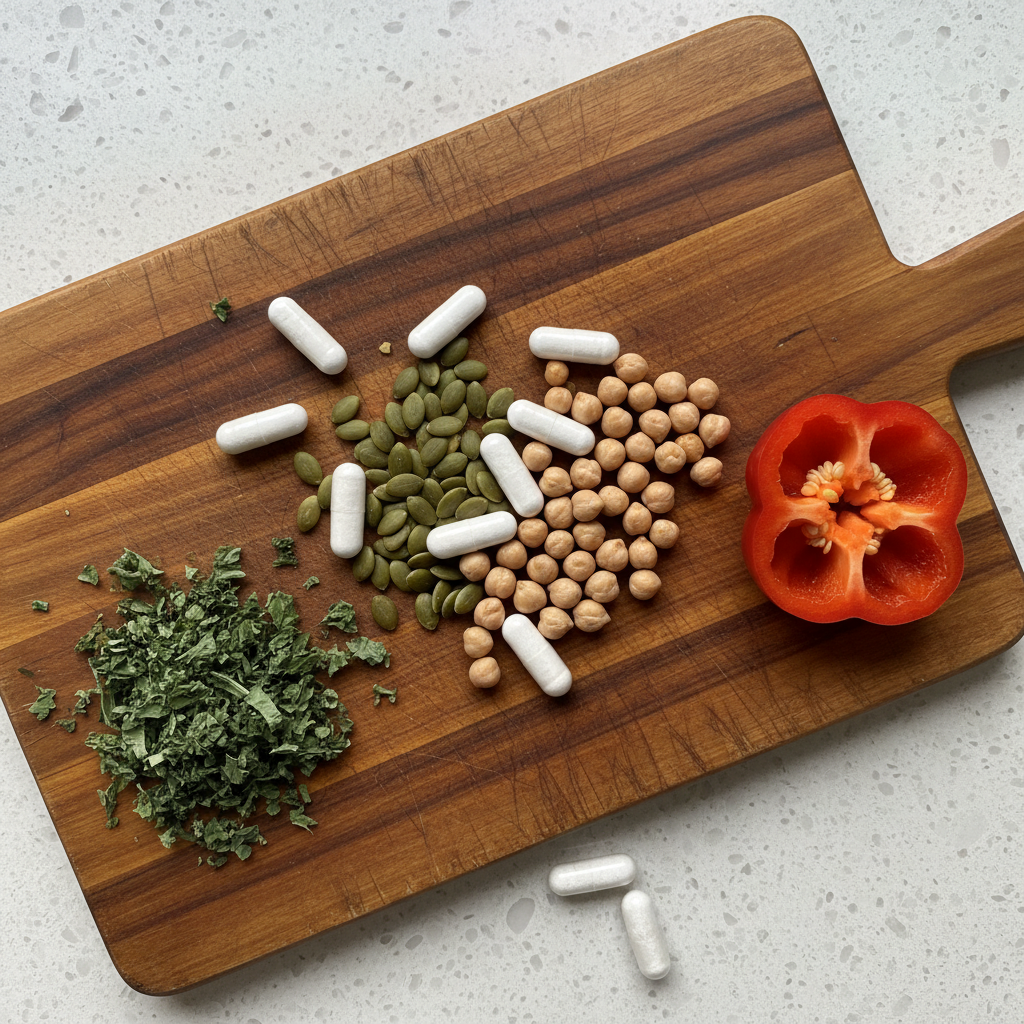
Support your gut microbiome through diet. Fermented foods (yogurt, kefir, kimchi, sauerkraut), prebiotic fiber (onions, garlic, asparagus, oats), and diverse plant-based foods all support microbial diversity [2].
Consider strain-specific probiotic supplements. Not all probiotics are equal. Look for products that specify the strain (not just the species), list CFU counts, and cite clinical evidence for their specific claims.
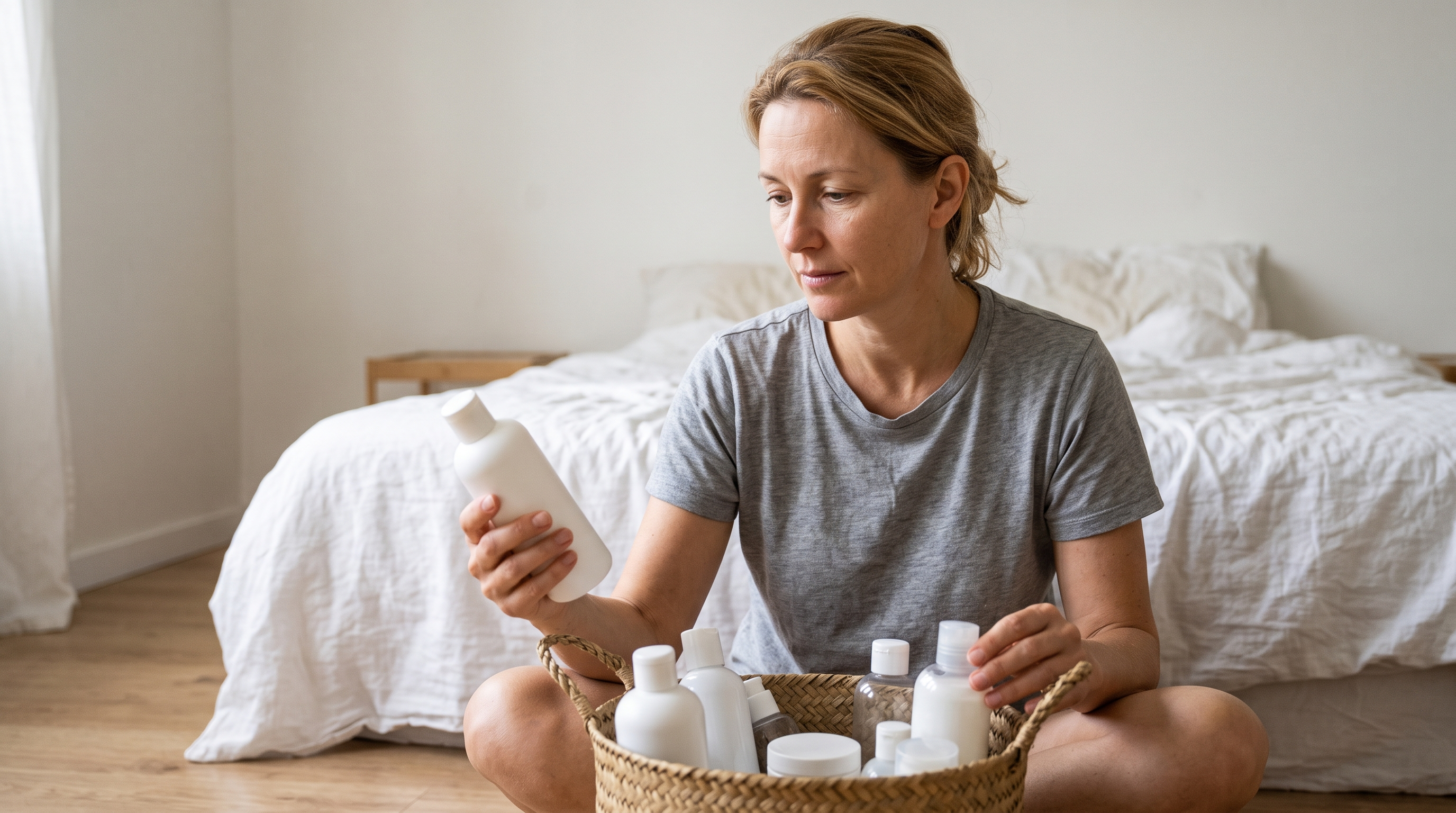
Don’t neglect your skin’s microbiome. Avoid over-cleansing, harsh surfactants, and broad-spectrum antibacterials that strip away beneficial skin bacteria along with harmful ones. Your skin barrier depends on its microbial residents.
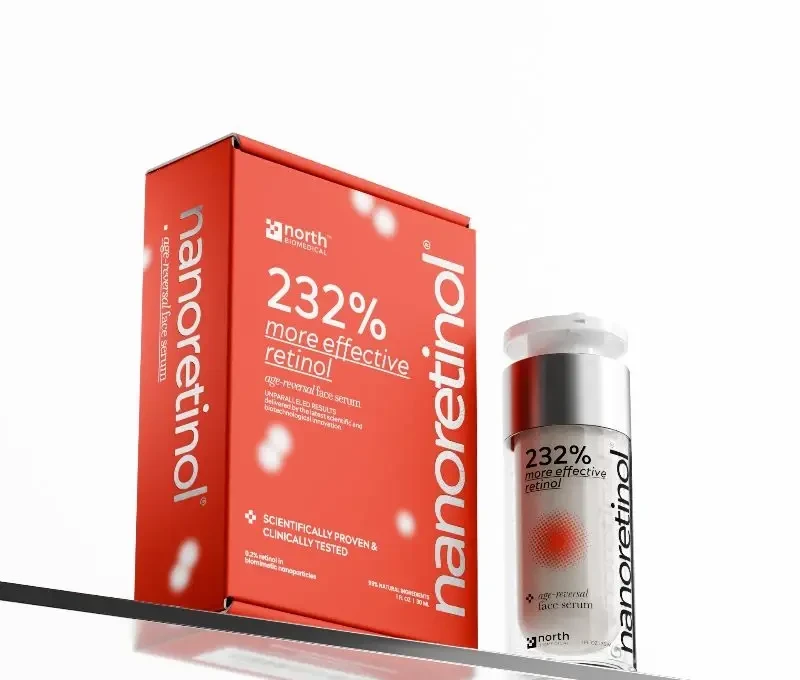
Combine strategies. The most effective anti-aging approach targets multiple pathways simultaneously. Probiotics may help reduce the chronic inflammation that degrades collagen, while topical retinoids like Nanoretinol® actively stimulate new collagen and elastin synthesis — addressing both the destruction and the rebuilding sides of the equation.
The Science Is Early, But the Direction Is Clear
The gut-skin axis is one of the most exciting frontiers in dermatological science. The evidence that microbial health directly impacts skin aging is robust and growing. What remains to be fully mapped is which specific interventions — which strains, which delivery methods, which combinations — yield the most reliable clinical outcomes.
For now, the practical takeaway is straightforward: your skin doesn’t exist in isolation from the rest of your body. The health of your gut microbiome shapes the health of your skin through inflammation, immunity, and metabolite production. Supporting that microbial ecosystem — through diet, targeted supplementation, and gentle skincare practices — is a science-backed strategy for healthier aging skin.
References
- Gao T, Wang X, Li Y, Ren F. “The Role of Probiotics in Skin Health and Related Gut-Skin Axis: A Review.” Nutrients. 2023;15(14):3123. doi:10.3390/nu15143123
- Boyajian JL, Ghebretatios M, Schaly S, Islam P, Prakash S. “Microbiome and Human Aging: Probiotic and Prebiotic Potentials in Longevity, Skin Health and Cellular Senescence.” Nutrients. 2021;13(12):4550. doi:10.3390/nu13124550
- Woo YR, Kim HS. “Interaction between the microbiota and the skin barrier in aging skin: a comprehensive review.” Frontiers in Physiology. 2024;15:1322205. doi:10.3389/fphys.2024.1322205
- Boxberger M, Cenizo V, Cassir N, La Scola B. “Challenges in exploring and manipulating the human skin microbiome.” Microbiome. 2021;9(1):125. doi:10.1186/s40168-021-01062-5
- Tsai WH, et al. “Regulatory effects of Lactobacillus plantarum-GMNL6 on human skin health by improving skin microbiome.” International Journal of Medical Sciences. 2021;18(5):1114-1120. doi:10.7150/ijms.51545
- Falholt Elvebakken H, Bruntse AB, Vedel C, Kjaerulff S. “Topical Lactiplantibacillus plantarum LB244R ointment alleviates skin aging: An exploratory trial.” Journal of Cosmetic Dermatology. 2023;22(6):1911-1918. doi:10.1111/jocd.15657
- Liu C, Tseng YP, Chan LP, Liang CH. “The potential of Streptococcus thermophilus (TCI633) in the anti-aging.” Journal of Cosmetic Dermatology. 2022;21(6):2635-2647. doi:10.1111/jocd.14445