Best Face Mask for Aging Skin: What a Mask Can (and Can't) Do for Wrinkles
How to choose a face mask that genuinely helps mature skin — and why the glow it gives you is only half the story.
There is a particular kind of magic to a good face mask. You peel it off, look in the mirror, and your skin looks plumper, dewier, and undeniably younger than it did twenty minutes ago. For anyone with aging skin, that instant payoff is intoxicating — and it is completely real. The question worth asking, before you build a whole routine around it, is what kind of real it is, and how long it lasts.
Understanding that distinction is the key to choosing the best face mask for aging skin. Get it right and a mask becomes a genuinely useful tool. Get it wrong and you spend years chasing an effect that resets every morning.
What a Face Mask Is Actually Doing
Most masks work through a combination of two mechanisms: they flood the outermost layer of skin with water-binding humectants, and they briefly seal that moisture in. The result is measurable. In a 28-day clinical evaluation of a multi-component facial mask, researchers recorded significant gains in skin hydration and reductions in water loss, along with a 17% improvement in elasticity and visible reductions in crow’s-feet wrinkle length and width [1]. A separate multicenter study of a topical hyaluronic acid treatment likewise found statistically significant improvements in hydration, fine lines, and texture over eight weeks [2].
So the plumping is not an illusion — well-hydrated skin genuinely swells slightly, which softens the appearance of fine lines and lends that lit-from-within look. The important caveat lives in how long that state holds.
The Hydration Ceiling
Here is where honesty matters. When researchers studied prolonged occlusion of the skin, they found that trapping moisture raised the skin’s surface water content temporarily, but the skin’s underlying water-holding capacity did not durably change once the occlusion ended [3]. Translated into everyday terms: a mask tops up the reservoir, but it does not enlarge the tank. The glow fades over the following hours and day as normal water loss resumes, which is exactly why a mask feels like something you need to repeat two or three times a week to sustain.
In a 12-week split-face study, 5% niacinamide significantly reduced fine lines and wrinkles, red blotchiness, and hyperpigmented spots while improving elasticity.
That is not a flaw — it is simply the nature of surface hydration. A mask is a fast, pleasant, effective way to make dehydrated skin look and feel better right now. It is not a way to change the skin’s architecture. Leave-on formats work through the same mechanism, as our guide to the overnight face mask explains. The same ceiling applies to homemade options like the egg white face mask. The single-use format has its own duration evidence, including the point at which longer wear starts working against you, covered in our guide to sheet masks.
Ingredients Worth Looking For
Not all masks are created equal, and for mature skin the formula matters more than the format. Prioritize:
- Hyaluronic acid and glycerin — the humectants responsible for that immediate plumping and hydration [1][2].
- Niacinamide — a form of vitamin B3 with real staying power. In a 12-week split-face study, 5% niacinamide significantly reduced fine lines and wrinkles, red blotchiness, and hyperpigmented spots while improving elasticity [4]. Unlike pure hydration, several of niacinamide’s benefits accumulate. Our guide to niacinamide’s benefits covers why it belongs in nearly every mature-skin routine.
- Antioxidants such as vitamin C — in a six-month double-blind study, topical vitamin C improved skin microrelief and reduced deep furrows on photoaged skin, with ultrastructural evidence of elastic-tissue repair [5]. In a mask, antioxidants offer daily defense against the free radicals that drive aging.
Sheet masks, cream or overnight masks, and clay masks each suit different needs — overnight and cream masks lean into occlusion and hydration for dry mature skin, while clay masks manage congestion. But the active ingredients, not the delivery theatrics, decide whether a mask does anything beyond a temporary glow.
If you want the deeper picture on that structural side, our overview of how to boost collagen production lays out what genuinely moves the needle.
Why a Mask Alone Will Never Be Enough
The visible signs of aging — the settled lines, the loss of firmness, the thinning — trace back to one root cause: the slow decline of collagen and elastin in the dermis, the living layer beneath the surface. A humectant mask never reaches that layer. It works on the top film of skin, which is precisely why its results are so immediate and so fleeting. That includes the viral overnight collagen mask, which hydrates beautifully but cannot deliver collagen into the dermis.
Rebuilding what has been lost requires a fundamentally different mechanism. In a controlled study published in the New England Journal of Medicine, topical retinoic acid increased new collagen formation in photodamaged skin by roughly 80%, while untreated skin continued to lose collagen [6]. That is structural remodeling — the skin manufacturing new scaffolding from within — and it is a categorically different result than trapping water at the surface. A mask hydrates tonight; a retinoid rebuilds over months.
The most effective anti-aging routine uses both, and understands the division of labor. Masks deliver comfort, radiance, and short-term smoothing. A retinoid does the slow structural work underneath. If you want the deeper picture on that structural side, our overview of how to boost collagen production lays out what genuinely moves the needle. For where a mask sits among the other steps, see our at-home facial sequence.
The Delivery Problem — and Where It Leads
If a retinoid is the ingredient that actually remodels skin, the obvious question is why everyone does not simply use one. The answer is delivery. Conventional retinol is unstable and penetrates the skin barrier inconsistently, and the usual workaround — formulations that use chemicals and petroleum derivatives to breach the barrier — causes the redness, peeling, and irritation that drive so many people to quit.
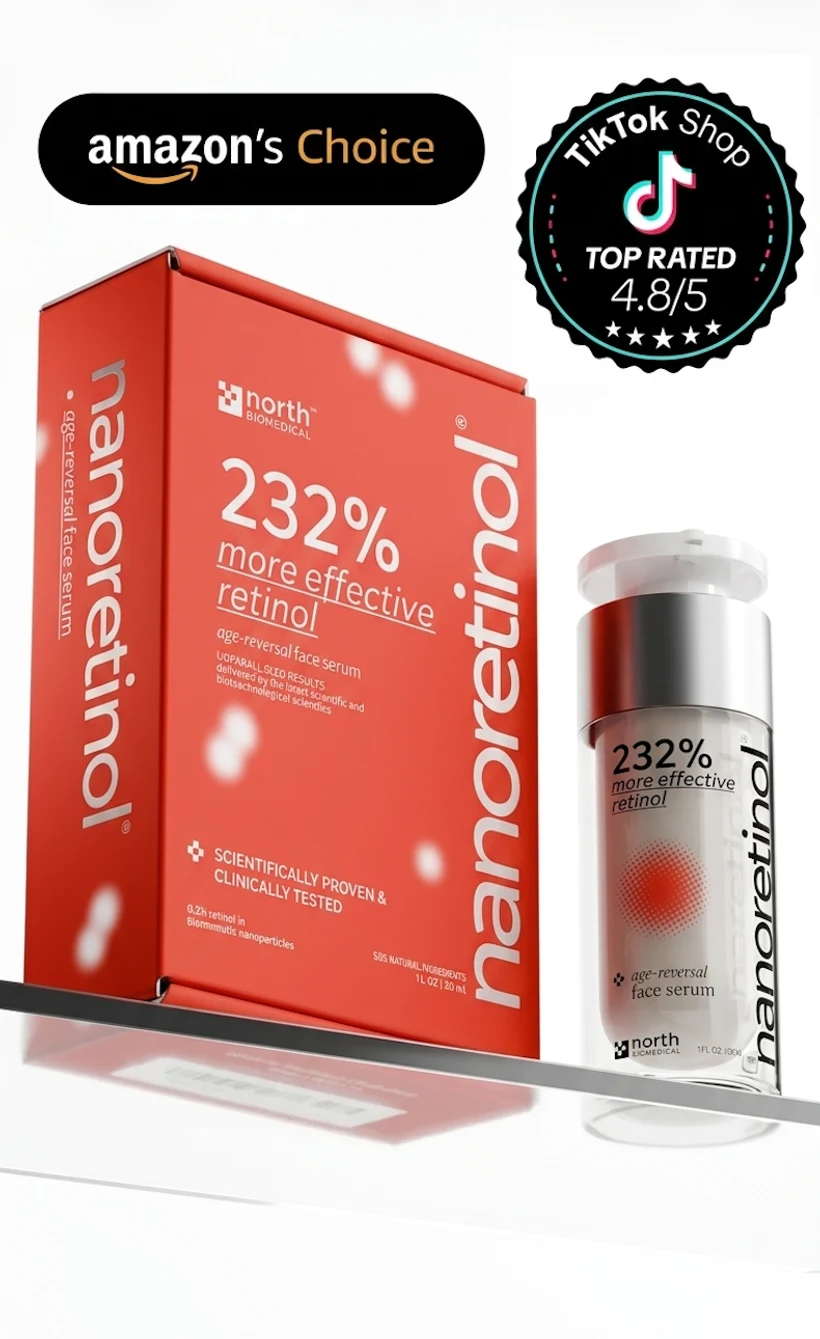
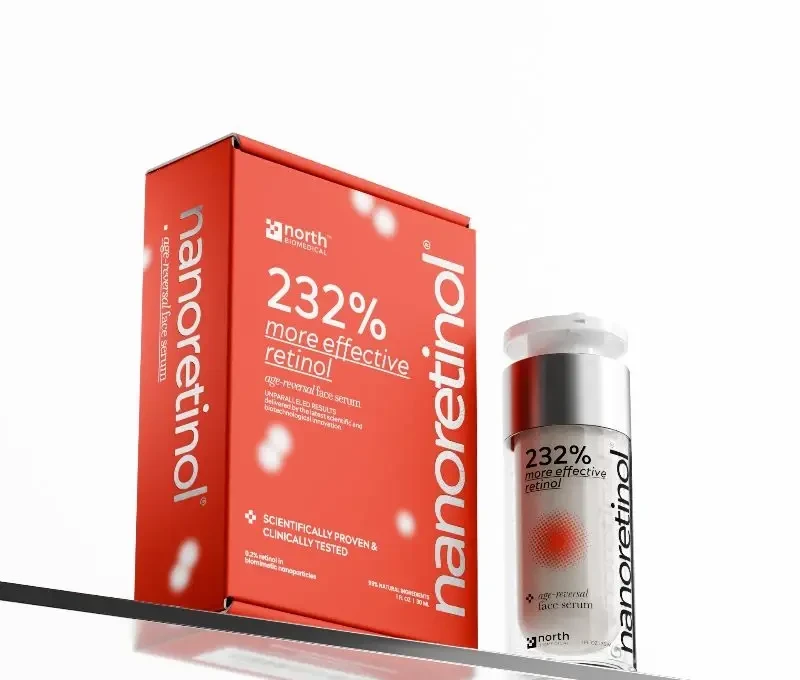
Nanoretinol was engineered to solve exactly that. It encapsulates retinol inside biomimetic lipid nanoparticles that the skin recognizes as “self” and admits through the barrier intact — no barrier-stripping chemistry, no forcing. In North Biomedical’s testing, that delivery made the same active far more effective than conventional retinol: 232% more collagen recovery and 73% more elastin recovery, translating to a 61% increase in firmness and a 56% increase in elasticity over 56 days. It is water-based, 99% natural, and gentle enough for all skin types — a nightly structural treatment to pair with the hydrating mask you already enjoy.
The Smart Way to Use a Mask
Choose your face mask for what it does well: fast, feel-good hydration and radiance from humectants, with niacinamide and antioxidants for benefits that build over time. Enjoy the instant glow without expecting it to erase a wrinkle permanently. Then let the real remodeling happen at night, with a well-delivered retinol doing the deeper work a mask was never designed to do. The mask is the moment; the active is the investment — and mature skin rewards you most when you use each one for the job it is actually good at.
References
- Yang F, Guo M, Zhu J, Wang H. “Clinical Evaluation of a Multi-Component Facial Mask for Moisturizing, Repairing, and Anti-Aging Effects.” Journal of Cosmetic Dermatology. 2025;24(8):e70355. doi:10.1111/jocd.70355
- Robinson DM, Vega J, Palm MD, Bell M, Widgerow AD, Giannini A. “Multicenter evaluation of a topical hyaluronic acid serum.” Journal of Cosmetic Dermatology. 2022;21(9):3848–3858. doi:10.1111/jocd.15241
- Fluhr JW, Lazzerini S, Distante F, Gloor M, Berardesca E. “Effects of prolonged occlusion on stratum corneum barrier function and water holding capacity.” Skin Pharmacology and Applied Skin Physiology. 1999;12(4):193–198. doi:10.1159/000066243
- Bissett DL, Oblong JE, Berge CA. “Niacinamide: A B vitamin that improves aging facial skin appearance.” Dermatologic Surgery. 2005;31(7 Pt 2):860–865. PubMed: 16029679
- Humbert PG, Haftek M, Creidi P, et al. “Topical ascorbic acid on photoaged skin. Clinical, topographical and ultrastructural evaluation: double-blind study vs. placebo.” Experimental Dermatology. 2003;12(3):237–244. doi:10.1034/j.1600-0625.2003.00008.x
- Griffiths CE, Russman AN, Majmudar G, Singer RS, Hamilton TA, Voorhees JJ. “Restoration of Collagen Formation in Photodamaged Human Skin by Tretinoin (Retinoic Acid).” New England Journal of Medicine. 1993;329(8):530–535. doi:10.1056/NEJM199308193290803