Best Face Oil for Aging Skin: What Actually Penetrates and What Just Sits on Top
Argan, rosehip, jojoba, squalane — which oils have real clinical evidence for aging skin, and which ones are just expensive shine
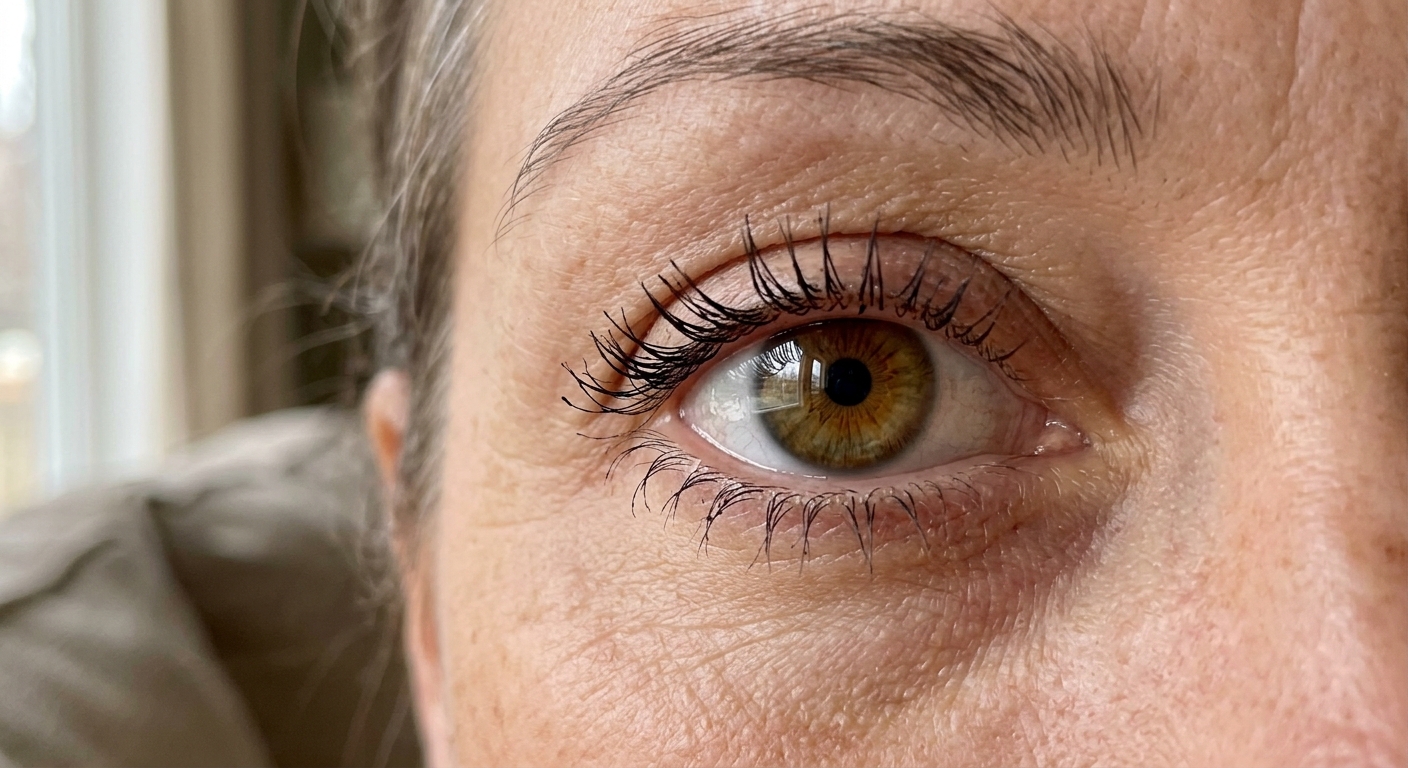
By 50, the sebaceous glands that kept your face naturally oily through your twenties are producing a fraction of what they used to. The matter-of-fact result is that aging skin is, on average, drier — not because you’ve done anything wrong, but because the body’s own moisturizing system is winding down. Face oils have become the default fix.
The question is which face oil. Walk through any beauty aisle and you’ll see argan, rosehip, marula, squalane, jojoba, prickly pear, sea buckthorn, tamanu, baobab — each marketed as the answer to aging skin. Most of them have at least some clinical evidence. A few have evidence specifically for measurable improvements in aging skin parameters. And some of the most popular oils have almost no rigorous data behind them at all.
This is what the actual studies show — and where face oils stop being enough.
Why Oil Behaves Differently on Aging Skin
Younger skin has its own oil layer — sebum — that does three things: traps water in the stratum corneum, fills micro-grooves on the surface to scatter light evenly (the “glow”), and provides a substrate for the skin barrier’s lipid film. When sebum production drops at perimenopause, all three functions decline together.
A foundational 1991 study in Archives of Dermatology documented measurable changes in skin surface properties between young adults (mean age 27) and older adults (mean age 71), with transepidermal water loss and sebum production both shifting significantly with age [1]. The mechanism is straightforward: less sebum means more water evaporates from the skin, which means a rougher, more fragile surface — exactly the texture that makes fine lines look deeper than they are.
A topical oil, applied correctly, can partially replace the missing sebum. It can fill the micro-grooves on the surface, slow water evaporation, and supplement the lipid layer that aging skin has lost. What it cannot do is rebuild the dermis underneath. That distinction matters when you’re deciding what to expect from any face oil.
The Oils with Real Clinical Evidence
Four oils have published randomized trials specifically on aging skin parameters. The evidence quality varies, but each has shown measurable effects on at least one skin metric in a controlled study.
Argan Oil
The strongest oil-specific evidence for aging skin comes from argan. A 2015 randomized trial published in Clinical Interventions in Aging studied 60 postmenopausal women over 60 days. Both groups applied cosmetic argan oil topically; one group also consumed dietary argan oil. The results showed significant improvements in skin elasticity parameters across both groups, with the dietary-plus-topical combination showing the strongest effects [2].
Argan’s bioactive profile is rich in tocopherols (vitamin E), squalene, and polyphenols — three antioxidant classes with independent skin-aging evidence. For aging skin, it’s a defensible first choice: well-studied, well-tolerated, and broadly available.
By 50, the sebaceous glands that kept your face naturally oily through your twenties are producing a fraction of what they used to.
Rosehip Oil
Rosehip oil has been the subject of a frequently cited 2015 double-blind clinical trial in Clinical Interventions in Aging on 34 participants with crow’s feet, aged 35-65. After 8 weeks, the rosehip group showed statistically significant improvements in crow’s-feet wrinkles, skin moisture, and elasticity [3]. The study used a standardized rose hip powder rather than oil specifically, but the active fractions overlap substantially with rosehip seed oil’s composition.
Rosehip oil contains naturally occurring trans-retinoic acid in small amounts — the same molecule that prescription tretinoin delivers, at vastly lower concentration. The retinoid content is partly why rosehip shows wrinkle effects that pure emollient oils don’t.
Jojoba Oil
Jojoba is structurally not an oil — it’s a liquid wax ester. That structural difference matters: jojoba’s fatty acid composition closely mimics human sebum, which is why it behaves on skin the way sebum does, rather than the way most plant oils do.
A 2024 study in Frontiers in Pharmacology used an ex-vivo human skin organ culture model to show that topical jojoba wax increased pro-collagen III synthesis, boosted hyaluronic acid production (with a measured 2-fold increase in collagen mRNA), and reduced inflammatory cytokine secretion [4]. The collagen-stimulating effect was unexpected for what was assumed to be a passive emollient. The mechanism appears to involve TGF-β3 signaling.
Squalane
Squalane is the hydrogenated form of squalene, a lipid your sebum naturally contains. It’s not strictly a “natural” oil — most squalane in skincare is derived from olives, sugarcane, or shark liver and then hydrogenated for stability. But it sits closer to native human skin lipid than any plant oil.
Squalane’s evidence is more about barrier function than dramatic wrinkle reduction. It penetrates the upper stratum corneum, fills gaps in the intercellular lipid structure, and reduces transepidermal water loss — the measurable form of barrier-function repair that aging skin needs.
Extra Virgin Olive Oil (with a caveat)
A 2025 study in the Journal of Clinical Medicine compared extra virgin olive oil to petrolatum on skin barrier function. EVOO uniquely promoted epidermal renewal by increasing epidermal turnover — particularly by boosting early-stage corneocyte formation — while petrolatum was more effective as a pure occlusive [5]. The caveat: olive oil’s high oleic acid content can disrupt the skin barrier in some users, particularly on already-compromised or eczema-prone skin. Use it cautiously on aging skin that has any barrier sensitivity. If barrier sensitivity is a concern, a linoleic-rich, barrier-friendly oil such as sunflower oil is a gentler alternative. Hemp seed oil sits further toward the linoleic end of that same scale. The same oleic-acid caveat applies to almond oil and to avocado oil, both of which fall on the same side of that divide.
What Face Oils Cannot Do
A face oil sits on the skin and, at most, integrates into the upper layers of the stratum corneum. That’s where its mechanism stops. It cannot reach the dermis where collagen, elastin, and the deep structural matrix of aging skin live. It cannot stimulate fibroblasts to produce new collagen. It cannot reverse the photoaging accumulated over decades.
Even rosehip oil’s tiny retinoid content is delivering trace doses that can’t compete with a properly formulated retinol product.
This is the honest limit on every face oil regardless of marketing. Even rosehip oil’s tiny retinoid content is delivering trace doses that can’t compete with a properly formulated retinol product.
The oils that do show wrinkle improvements in clinical trials are showing modest, surface-level effects — fine line softening through hydration, light reflection improvements, occasional collagen stimulation in cell-culture conditions. These are real benefits and worth pursuing. They are not substitutes for the structural skincare work that aging skin requires.
How to Layer Oils Correctly
If face oils don’t penetrate to the dermis, they still have to be applied correctly to deliver the surface benefits they’re capable of.
Damp skin, not dry. Apply oils to skin that’s still damp from a hydrating serum, toner, or essence. Water provides the bulk hydration; the oil locks it in. Oils on bone-dry skin sit on the surface and absorb minimally.
After water-based actives, before sleep. Water-based actives (vitamin C, peptides, hyaluronic acid serums) need to reach the skin first. Oils applied first create a barrier that blocks subsequent water-based products. The order is: serum, moisturizer, oil — or in a minimalist routine, serum, oil.
Three to five drops, not more. More oil doesn’t mean more benefit. Excess oil pools on the surface, can clog pores, and creates a heavy feel that interferes with sleep comfort and pillow contact.
Combine, don’t switch. Layering argan and squalane (or rosehip and jojoba) often outperforms either alone. The fatty acid and tocopherol profiles complement each other.
For deeper context on individual oils, see our breakdowns of rosehip oil benefits, argan oil for skin, squalane oil for skin, and grapeseed oil for skin.
Where the Real Anti-Aging Work Happens
Face oils improve the surface. Retinol restructures the dermis. These are not competing — they’re sequential. A face oil layered over a retinol serum is one of the most evidence-backed combinations for aging skin: the retinol stimulates collagen synthesis underneath, while the oil maintains the barrier and visible smoothness on top.
The trouble with most retinol formulations on mature skin is that they’re hard to tolerate exactly when aging skin needs them most. Conventional retinol products rely on chemicals and petroleum-derived solvents that push retinol through the skin barrier by disrupting its lipid mobility — a mechanism that contributes to redness, peeling, and the dry skin that makes face oils a necessary fix in the first place.
Nanoretinol uses a fundamentally different delivery system. The retinol is encapsulated in biomimetic lipid nanoparticles externally identical to skin cells, which the body recognizes as “self” and allows through the epithelial barrier without disrupting it. The nanoparticle membrane itself is built from phosphatidylcholine and tocopheryl acetate — barrier-supportive lipids similar to those in the best face oils. As the nanoparticles release retinol to target cells, the skin gradually absorbs the membrane lipids themselves.
The clinical results — +232% collagen recovery and +73% elastin recovery versus conventional retinol — are about structural restoration, the layer face oils can’t reach. Paired with a well-chosen oil on top, the combination addresses both the surface and the substructure of aging skin in a way neither can do alone.
A Final Thought
The best face oil for aging skin isn’t the most expensive bottle or the one with the most exotic provenance. It’s the one with clinical evidence for the specific outcome you want, applied correctly, in a routine that also addresses the deeper skin changes oils can’t fix.
For most women over 40, that means starting with argan, rosehip, jojoba, or squalane — choosing based on skin type and tolerance — and using them to complement, not replace, the structural skincare that actually rebuilds the canvas underneath.
References
- Wilhelm KP, Cua AB, Maibach HI. “Skin aging. Effect on transepidermal water loss, stratum corneum hydration, skin surface pH, and casual sebum content.” Archives of Dermatology. 1991;127(12):1806-1809. doi:10.1001/archderm.127.12.1806
- Boucetta KQ, Charrouf Z, Aguenaou H, Derouiche A, Bensouda Y. “The effect of dietary and/or cosmetic argan oil on postmenopausal skin elasticity.” Clinical Interventions in Aging. 2015;10:339-349. doi:10.2147/CIA.S71684
- Phetcharat L, Wongsuphasawat K, Winther K. “The effectiveness of a standardized rose hip powder, containing seeds and shells of Rosa canina, on cell longevity, skin wrinkles, moisture, and elasticity.” Clinical Interventions in Aging. 2015;10:1849-1856. doi:10.2147/CIA.S90092
- Tietel Z, Melamed S, Ogen-Shtern N, et al. “Topical application of jojoba (Simmondsia chinensis L.) wax enhances the synthesis of pro-collagen III and hyaluronic acid and reduces inflammation in the ex-vivo human skin organ culture model.” Frontiers in Pharmacology. 2024;15:1333085. doi:10.3389/fphar.2024.1333085
- Rubio-Santoyo A, Sanabria-de la Torre R, Montero-Vílchez T, et al. “Effects of Extra Virgin Olive Oil and Petrolatum on Skin Barrier Function and Microtopography.” Journal of Clinical Medicine. 2025;14(13):4675. doi:10.3390/jcm14134675