Rosehip Oil Benefits for Skin: What Science Says About This Botanical Powerhouse
From fatty acid composition to clinical trials — the evidence behind rosehip oil's skin benefits
What Makes Rosehip Oil Different From Other Face Oils
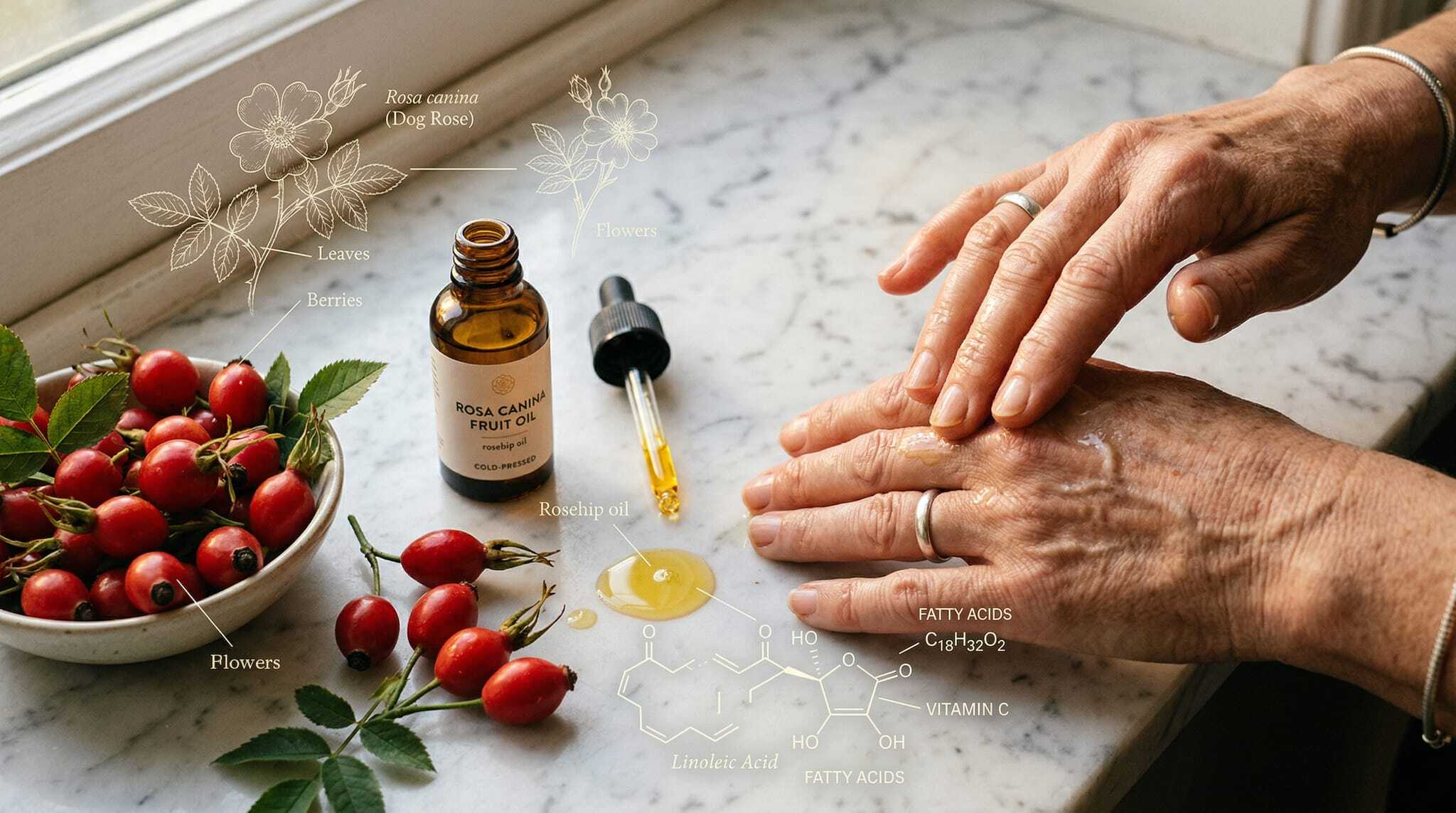
Walk into any skincare aisle and you’ll find dozens of facial oils — jojoba, argan, marula, squalane. Most are occlusive moisturizers that sit on the skin’s surface. Rosehip oil is something different. Extracted from the seeds of the Rosa canina plant (commonly called dog rose), it carries a unique fatty acid profile and a concentration of bioactive compounds that give it genuine therapeutic properties beyond simple hydration.
What separates rosehip seed oil from the pack isn’t marketing — it’s chemistry. The oil contains a rare combination of polyunsaturated fatty acids, natural trans-retinoic acid (a form of vitamin A), and exceptionally high levels of vitamin C precursors that make it one of the few botanical oils with credible anti-aging evidence behind it [1].
The Fatty Acid Profile: Why Composition Matters
The biological activity of any facial oil depends entirely on its fatty acid composition. Rosehip seed oil’s profile is dominated by polyunsaturated fatty acids (PUFAs), which distinguishes it sharply from the monounsaturated-heavy oils like olive or argan.
Analysis of Rosa canina seed oil reveals the following typical composition: linoleic acid (48–54%), alpha-linolenic acid (16–18%), oleic acid (14–19%), palmitic acid (2–3%), and stearic acid (1.5–2.5%) [2]. That’s roughly 70% polyunsaturated content — one of the highest ratios among commonly used facial oils.
Why does this matter for your skin? Linoleic acid is a precursor to ceramide 1 — one of the essential lipids in the stratum corneum that forms the skin’s waterproof barrier. Women with linoleic acid-deficient skin (which becomes more common with age and hormonal changes) show increased transepidermal water loss, barrier dysfunction, and inflammatory scaling [3]. Topical linoleic acid application has been shown to improve barrier function and reduce comedone size in clinical studies. Hemp seed oil runs higher still in linoleic acid than rosehip does. Evening primrose oil works on the same principle and goes one step further, supplying gamma-linolenic acid that the skin would otherwise have to synthesize for itself.
Alpha-linolenic acid (an omega-3 fatty acid) adds anti-inflammatory properties. It inhibits the production of pro-inflammatory eicosanoids and may help modulate UV-induced inflammation — a contributing factor to photoaging and collagen breakdown.
Vitamin C and Antioxidant Capacity
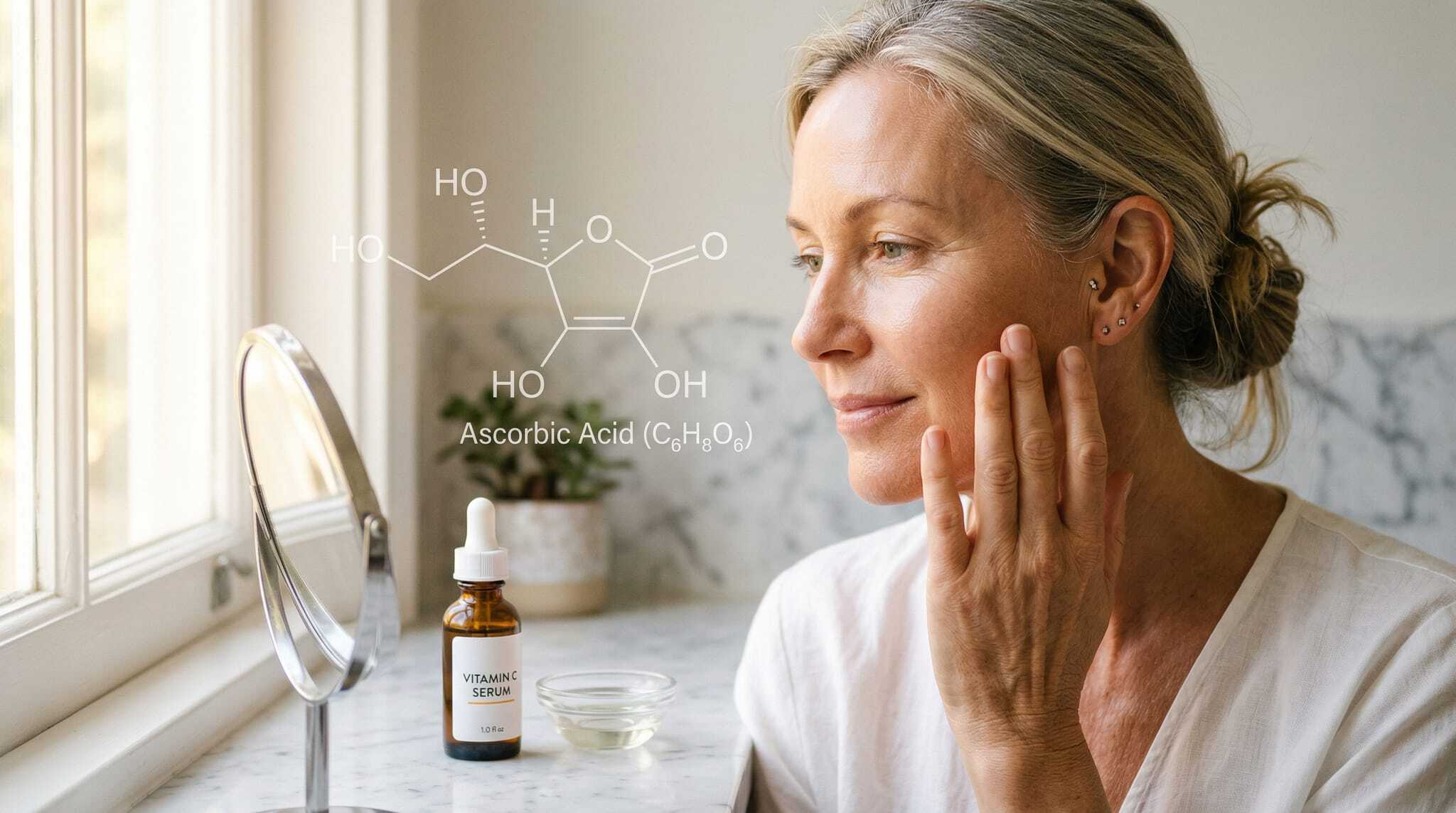
Rosehip fruit is one of the richest plant sources of vitamin C — fresh rosehips contain 426 mg per 100g, roughly ten times the concentration found in oranges. While the cold-pressing process for seed oil extraction reduces vitamin C content compared to the whole fruit, rosehip oil retains meaningful levels of ascorbic acid alongside other antioxidants including tocopherols (vitamin E), beta-carotene, and lycopene [1].
That’s roughly 70% polyunsaturated content — one of the highest ratios among commonly used facial oils.
This antioxidant cocktail serves a dual purpose in skincare. Externally, antioxidants neutralize reactive oxygen species (ROS) generated by UV exposure, pollution, and metabolic processes — the same free radicals that drive collagen degradation and premature aging. Internally, they protect the oil’s own polyunsaturated fatty acids from oxidative degradation, which is why cold-pressed, minimally processed rosehip oil retains its potency while refined versions lose much of their biological activity.
The Clinical Evidence: Wrinkles, Scars, and Hydration
The most cited clinical study on rosehip and skin aging is a 2015 randomized, double-blind trial comparing standardized rose hip powder to astaxanthin over 8 weeks. The rose hip group showed statistically significant improvements in crow’s feet wrinkle depth, skin moisture, and elasticity as measured by Visioscan, Corneometer, and Cutometer instruments [4].
For scar healing, a systematic review published in the Journal of Cosmetic Dermatology analyzed the clinical literature on rosehip extract and wound repair. The evidence consistently showed accelerated healing, reduced scar pigmentation, and improved scar texture when rosehip oil was applied to post-surgical and post-inflammatory scars [5]. The mechanism appears to involve linoleic acid-mediated barrier repair combined with the anti-inflammatory activity of alpha-linolenic acid.
More recently, a 2024 comprehensive review in Frontiers in Pharmacology catalogued the dermatological applications of rosehip-based products across multiple Rosa species. The review confirmed that Rosa canina is the most extensively studied species and highlighted its efficacy in treating scarring, hyperpigmentation, wrinkles, and atopic dermatitis — with vitamin C content and fatty acid composition identified as the primary active mechanisms [1].
How Rosehip Oil Compares to Retinol
Rosehip oil is sometimes marketed as a “natural retinol alternative,” and this claim deserves scrutiny.
The connection isn’t entirely fabricated. Rosehip oil does contain small amounts of all-trans retinoic acid (tretinoin) — the active metabolite of vitamin A that retinol must convert to before it can affect skin cells. However, the concentrations are trace-level, orders of magnitude below what clinical retinol or tretinoin formulations deliver.
In practical terms, rosehip oil cannot replicate the gene-expression changes that retinol drives. It doesn’t bind retinoic acid receptors at meaningful levels, doesn’t accelerate cell turnover the way retinol does, and doesn’t stimulate the fibroblast collagen synthesis that makes retinol the gold standard for anti-aging.
If you use retinol at night, rosehip oil can be applied 15–20 minutes after your retinol to support barrier recovery.
What rosehip oil can do — and where it genuinely complements retinol — is support the skin environment that retinol needs to work effectively:
- Barrier support. Linoleic acid feeds ceramide production, strengthening the skin barrier that retinol can temporarily compromise during the adjustment period.
- Anti-inflammatory action. Omega-3 fatty acids calm the inflammation that drives retinol irritation in sensitive users.
- Antioxidant protection. Vitamin C and tocopherols protect against the oxidative stress that retinol can transiently increase.
The honest comparison: rosehip oil is a excellent supporting ingredient, not a retinol replacement.
How to Use Rosehip Oil Effectively
Choose cold-pressed, unrefined oil. Refining strips out much of the vitamin C, beta-carotene, and phenolic compounds that give rosehip oil its therapeutic edge. The oil should be golden-orange in color — if it’s clear or very pale, it’s been over-processed.
Store it properly. The high PUFA content that makes rosehip oil biologically active also makes it vulnerable to oxidative rancidity. Keep it in a dark glass bottle, refrigerate after opening, and use within 3–6 months. Rancid oil doesn’t just lose efficacy — it generates free radicals that actively damage skin.
Apply to damp skin. Rosehip oil is not an occlusive — it absorbs relatively quickly due to its high linoleic acid content. Applying to slightly damp skin after a water-based serum improves absorption and helps lock in hydration.
Layer it correctly in your routine. Use rosehip oil after water-based serums (like hyaluronic acid or niacinamide) but before heavy creams or occlusives. If you use retinol at night, rosehip oil can be applied 15–20 minutes after your retinol to support barrier recovery.
Be realistic about concentrations. A few drops of rosehip oil deliver meaningful amounts of linoleic acid and antioxidants. But the trace retinoic acid content is not sufficient for anti-aging purposes. For clinically proven collagen stimulation, you still need a dedicated retinol or retinoid product — ideally one with advanced delivery technology like lipid nanoparticle encapsulation that maximizes the amount of active ingredient reaching your dermal fibroblasts.
The Bigger Picture: Botanical Oils in Evidence-Based Skincare
Rosehip oil represents the best of what botanical ingredients can offer: a complex matrix of bioactive compounds with measurable effects on skin biology, supported by clinical evidence rather than anecdote.
But it’s important to maintain perspective. The clinical trials on rosehip are small and few compared to the thousands of studies backing retinoids. The anti-aging effects are real but modest — improvements in hydration, barrier function, and surface texture rather than the deep dermal remodeling that retinol produces. The same caution applies to newer botanical favourites, as our review of rosemary oil for skin sets out.
The smart approach isn’t choosing between botanical oils and clinical actives. It’s using them together — letting each ingredient do what it does best. Rosehip oil excels at barrier support, anti-inflammatory protection, and antioxidant defense. Retinol — particularly in advanced delivery systems like Nanoretinol® that bypass the skin barrier without damaging it — excels at the collagen synthesis, cell turnover, and gene-expression changes that reverse structural aging.
Together, they address more pathways of skin aging than either could alone.
References
- Oargă Porumb DP, Cornea-Cipcigan M, Cordea MI. “Unveiling the mechanisms for the development of rosehip-based dermatological products: an updated review.” Frontiers in Pharmacology. 2024;15:1390419. doi:10.3389/fphar.2024.1390419
- Ozcan M. “Nutrient composition of rose (Rosa canina L.) seed and oils.” Journal of Medicinal Food. 2002;5(3):137-140. doi:10.1089/10966200260398161
- Ziboh VA, Miller CC, Cho Y. “Metabolism of polyunsaturated fatty acids by skin epidermal enzymes: generation of antiinflammatory and antiproliferative metabolites.” American Journal of Clinical Nutrition. 2000;71(1 Suppl):361S-366S. doi:10.1093/ajcn/71.1.361s
- Phetcharat L, Wongsuphasawat K, Winther K. “The effectiveness of a standardized rose hip powder, containing seeds and shells of Rosa canina, on cell longevity, skin wrinkles, moisture, and elasticity.” Clinical Interventions in Aging. 2015;10:1849-1856. doi:10.2147/CIA.S90092
- Belkhelladi M, Bougrine A. “Rosehip extract and wound healing: A review.” Journal of Cosmetic Dermatology. 2024;23(1):62-67. doi:10.1111/jocd.15971
- Grajzer M, Szmalcel K, Kuźmiński Ł, Witkowski M, Kulma A, Prescha A. “Characteristics and Antioxidant Potential of Cold-Pressed Oils—Possible Strategies to Improve Oil Stability.” Foods. 2020;9(11):1630. doi:10.3390/foods9111630