Squalane Oil for Skin: What This Lipid Actually Does and Why Your Skin Already Makes It
The science behind squalane — your skin's own emollient, and why replenishing it matters after 40
Your Skin Already Produces Squalene — So Why Does It Need More?
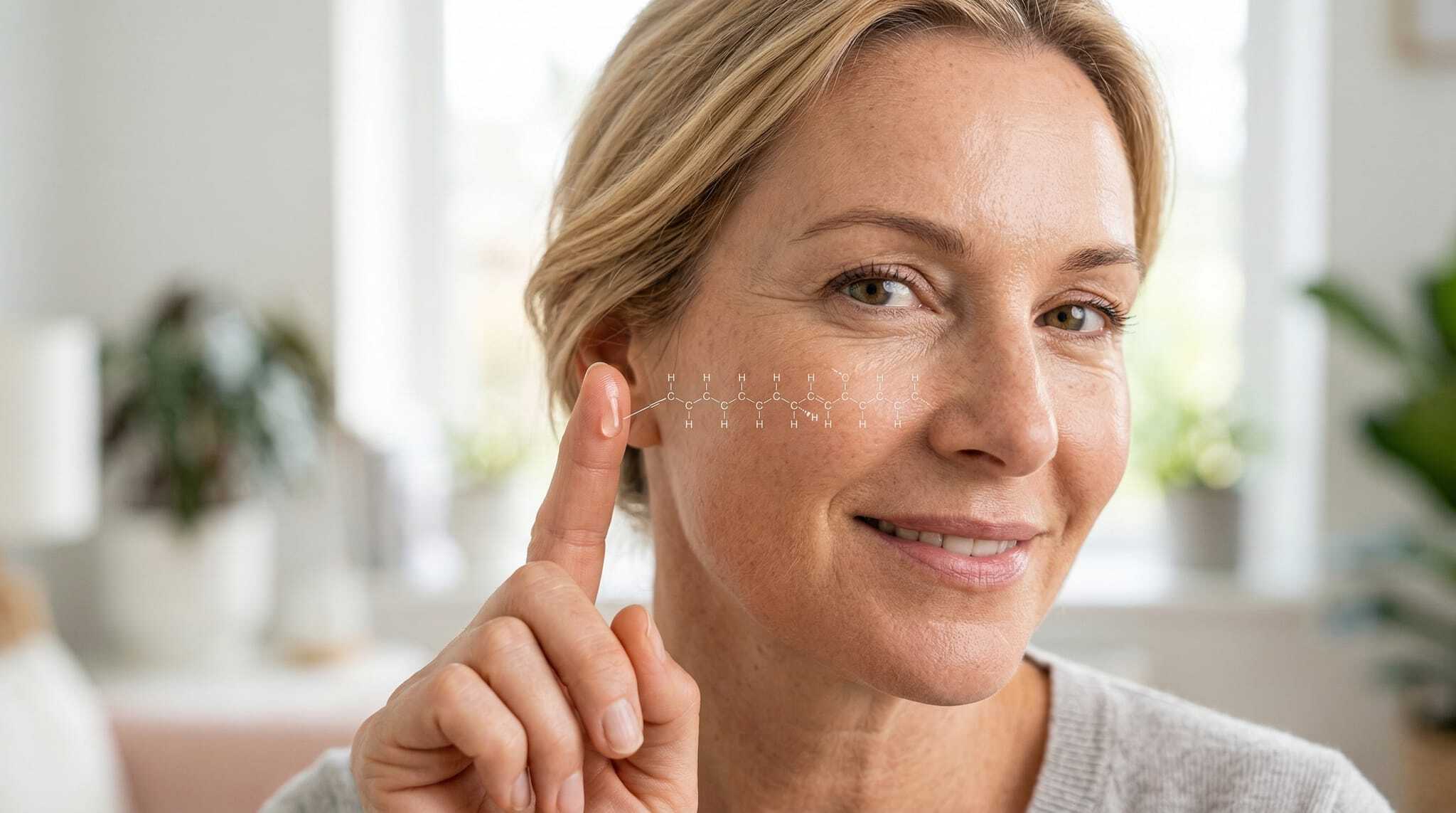
Squalene is a triterpene compound that makes up roughly 13% of the lipids on the surface of human skin [1]. It is one of the primary components of sebum — the oily substance produced by your sebaceous glands that keeps skin supple, protected, and hydrated. In practical terms, squalene is your body’s built-in emollient. That places it in a different category from the triglyceride plant oils weighed up in our guide to choosing a body oil for dry skin.
But here is the catch: squalene is chemically unstable. It contains six double bonds that make it highly susceptible to oxidation from UV light and environmental pollutants [1]. When squalene oxidizes on the skin surface, the resulting byproducts — squalene monohydroperoxide (SQOOH) being the most studied — can actually contribute to skin damage, comedogenicity, and inflammation [2].
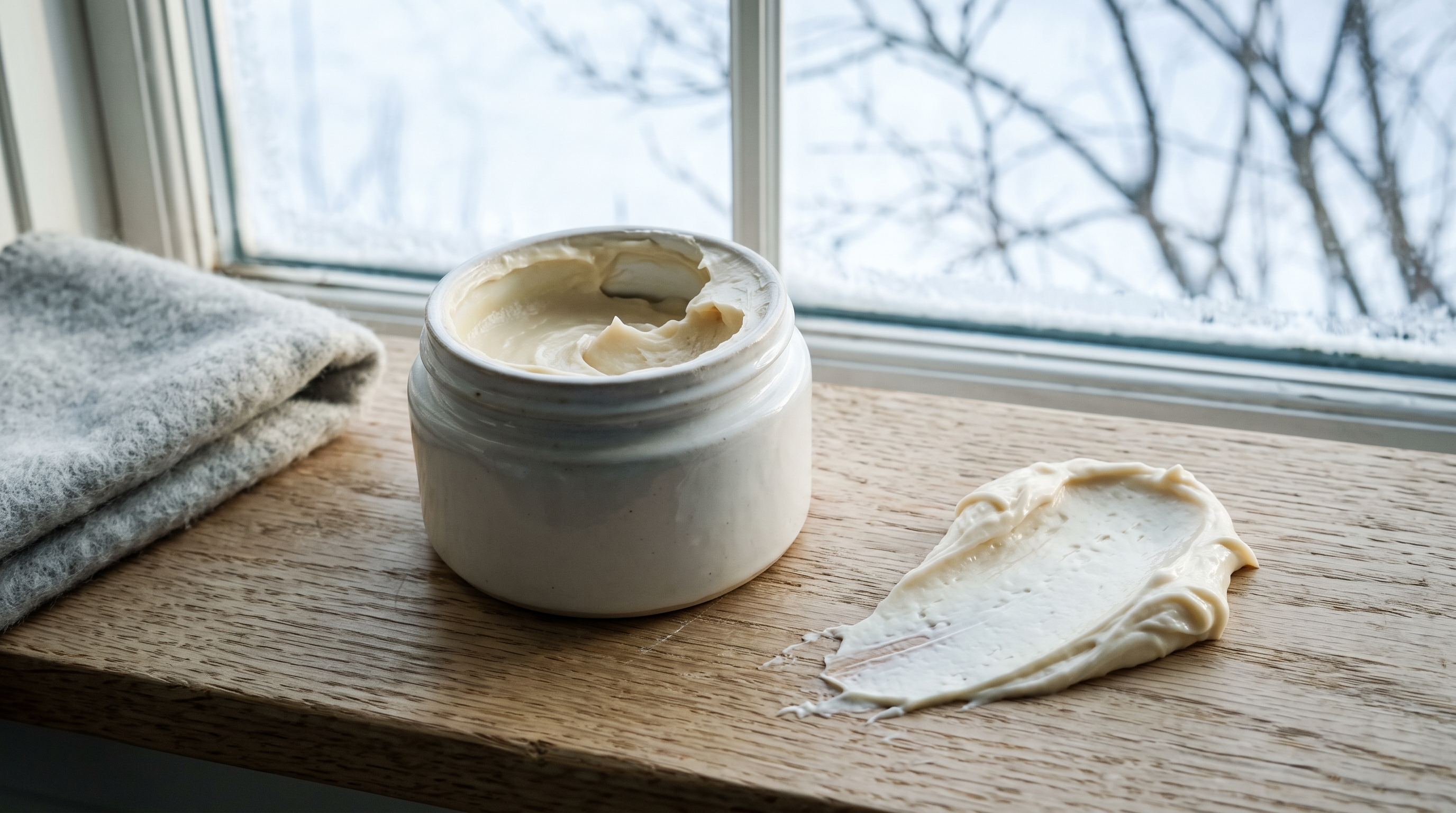
This is where squalane (with an “a”) comes in. Squalane is the hydrogenated, fully saturated form of squalene. By eliminating those vulnerable double bonds, manufacturers create a shelf-stable molecule that retains all the emollient properties of the original but cannot oxidize on the skin. The result is a lightweight, non-comedogenic oil that your skin recognizes as its own.
What Squalane Actually Does at the Skin Barrier
The stratum corneum — the outermost layer of your epidermis — functions like a brick-and-mortar wall. Corneocytes (the “bricks”) are surrounded by a lipid matrix (the “mortar”) composed primarily of ceramides, cholesterol, and free fatty acids [3]. This lipid matrix controls transepidermal water loss (TEWL), the rate at which moisture evaporates through the skin.
Squalane works as an emollient by integrating into this lipid matrix. Unlike occlusives that sit on top of the skin (petrolatum, for example), squalane’s molecular weight and structure allow it to penetrate the outer layers and fill gaps in the intercellular lipid structure. The practical effect is twofold: it reduces TEWL by reinforcing the barrier, and it softens the skin by maintaining hydration in the corneocyte layers [1]. That is a meaningful advantage over oleic-rich plant oils such as almond oil, which can loosen the same lipid matrix rather than reinforce it. Linoleic-rich oils such as hemp seed oil fall on the supportive side of that divide.
Research on squalane-based emulsions has demonstrated that the molecule also improves the dermal retention of other active ingredients. In an ex vivo skin study, squalane-based formulations increased the skin retention time of polyphenols compared to standard vehicles, suggesting it may function as a delivery-enhancing carrier [4].
The Sebum Decline Problem After 40
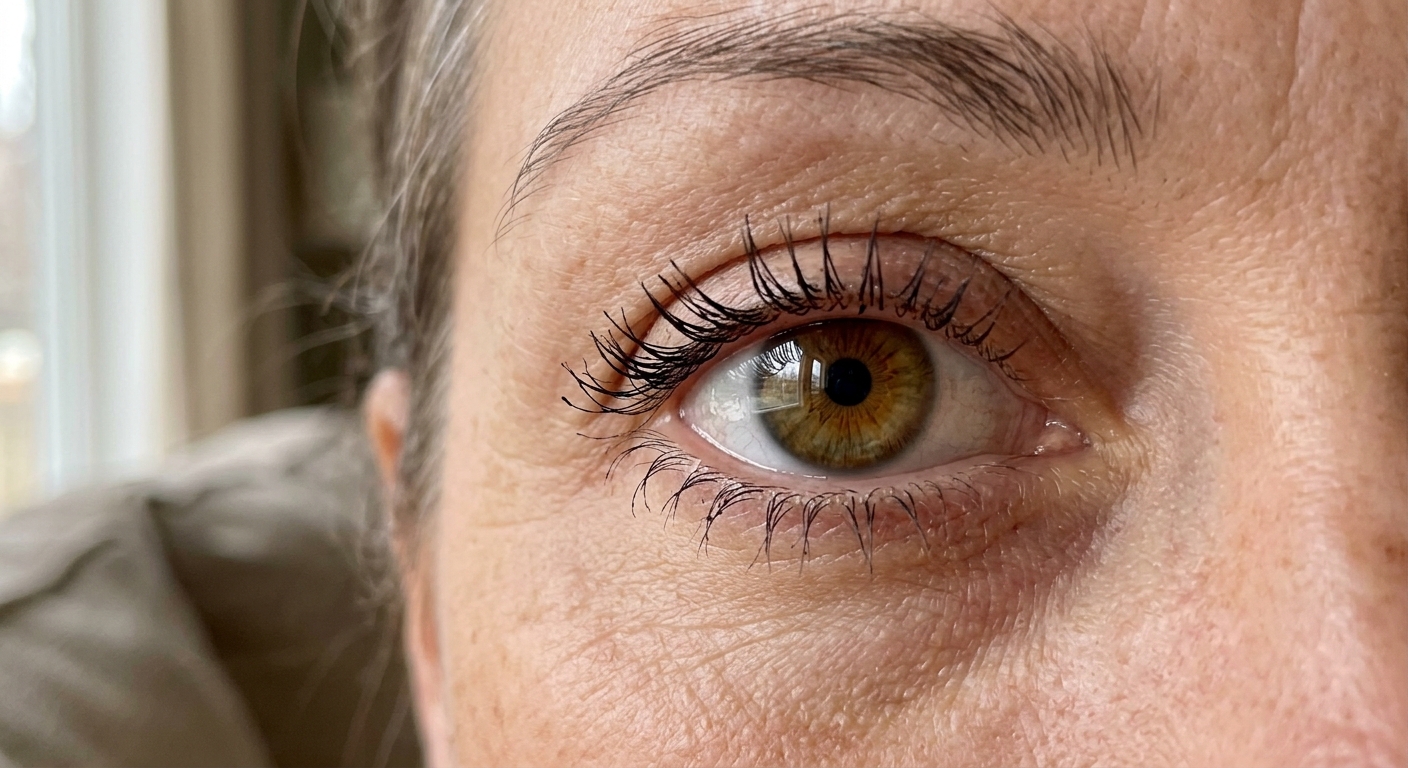
Sebum production is not constant throughout life. It peaks during adolescence and early adulthood — which is why teenagers deal with excess oil — and then gradually declines. By the time women reach perimenopause, sebum output drops significantly, partly driven by falling estrogen and androgen levels [5].
The result is a lightweight, non-comedogenic oil that your skin recognizes as its own.
Since squalene constitutes a major fraction of sebum, this decline means less natural emollient protection on the skin surface. The visible consequences are familiar: increased dryness, rough texture, tightness after cleansing, and a compromised barrier that is slower to recover from irritants.
Topical squalane replenishes what the skin is producing less of. Unlike many plant oils that contain fatty acid profiles different from human sebum, squalane is identical to the hydrogenated form of a molecule your skin already synthesizes. This biocompatibility is the reason squalane rarely causes irritation or allergic reactions — your skin treats it as self, not foreign [1].
Squalane and Retinol: A Complementary Pair
Retinol accelerates cell turnover and stimulates collagen synthesis, but it can also temporarily impair the skin barrier — particularly during the retinol purge phase. This is one reason why dermatologists recommend pairing retinol with barrier-supportive ingredients.
Squalane is an ideal companion. Its emollient properties counteract the dryness and flaking that often accompany early retinol use, while its non-comedogenic profile means it will not contribute to the congestion some users experience during adjustment. And because squalane improves the retention of active ingredients in the skin, it may actually help retinol stay where it needs to be — in the viable epidermis — rather than evaporating or being wiped away [4].
For those with sensitive skin who struggle to tolerate retinol, the combination of squalane with a gentler retinol delivery system — such as lipid nanoparticle encapsulation — can make the difference between abandoning retinol entirely and getting consistent results. Nanoretinol® uses biomimetic lipid nanoparticles to deliver retinol directly through the skin barrier without the harsh chemical penetration enhancers that cause most retinol side effects.
Where Squalane Comes From: Shark Liver vs. Olives
Historically, squalene was sourced from deep-sea shark liver oil — hence the name (Squalus is the genus of several shark species). Shark liver is exceptionally rich in squalene, which made it the default source for decades.
Today, the majority of cosmetic-grade squalane is derived from plant sources, primarily olives. The hydrogenation process is identical regardless of source, and the final squalane molecule is chemically indistinguishable. Olive-derived squalane has become the industry standard for both ethical and supply-chain reasons [1].
For dark spots, you need actives like retinol, tranexamic acid, or azelaic acid.
Sugarcane-derived squalane is also available. Some brands market the source as a differentiator, but from a biochemical standpoint, squalane is squalane. The molecule does not retain any signature of its origin once hydrogenated.
What Squalane Will Not Do
It is worth being direct about limitations. Squalane is an emollient, not an active. It does not:
- Stimulate collagen synthesis. It protects the barrier, but it does not signal fibroblasts to produce more collagen the way retinol does [6].
- Fade hyperpigmentation. Squalane has no effect on melanin production. For dark spots, you need actives like retinol, tranexamic acid, or azelaic acid.
- Exfoliate. It will not accelerate cell turnover or refine texture on its own.
- Replace sunscreen. Squalene has mild antioxidant properties in its unsaturated form, but squalane offers no meaningful UV protection [1].
Think of squalane as infrastructure. It keeps the system running smoothly — hydrated, flexible, and able to respond to other treatments — but it is not the treatment itself.
How to Use Squalane in Your Routine
Squalane is one of the most forgiving ingredients in skincare. It layers well, absorbs quickly, and plays nicely with virtually every active ingredient. A few practical notes:
When to apply: After water-based serums (hyaluronic acid, niacinamide, vitamin C) and before heavier creams or occlusives. Squalane’s lightweight texture means it should go in the middle of your routine, not at the end.
How much: Two to three drops for the full face. Squalane absorbs fast and leaves a matte finish — if your face feels greasy, you are using too much.
With retinol: Apply squalane before or after your retinol, depending on your tolerance. If you are in the early stages of retinol use and experiencing dryness, applying squalane first creates a buffering layer. Once your skin has adapted, you can apply retinol first and follow with squalane to seal it in.
Morning or night: Both. Squalane has no photosensitivity issues and works well under sunscreen.
The Bottom Line on Squalane
Squalane is not revolutionary, and that is precisely why it works. It is a molecule your skin already knows how to use — one that replenishes what aging, environmental damage, and hormonal shifts gradually strip away. It will not replace your retinol, your sunscreen, or your actives. But it creates the stable, hydrated foundation that allows those actives to do their jobs better.
For women over 40 dealing with dryness, barrier sensitivity, or difficulty tolerating retinol, squalane is one of the simplest and most evidence-supported additions you can make.
References
- Huang ZR, Lin YK, Fang JY. “Biological and Pharmacological Activities of Squalene and Related Compounds: Potential Uses in Cosmetic Dermatology.” Molecules. 2009;14(1):540-554. doi:10.3390/molecules14010540
- Pham DM, Boussouira B, Mober D, et al. “Oxidization of Squalene, a Human Skin Lipid: a New and Reliable Marker of Environmental Pollution Studies.” International Journal of Cosmetic Science. 2015;37(4):357-365. doi:10.1111/ics.12208
- Mijaljica D, Spada F, Harrison IP. “The Heterogeneity and Complexity of Skin Surface Lipids in Human Skin Health and Disease.” Progress in Lipid Research. 2024;93:101264. doi:10.1016/j.plipres.2023.101264
- Oliveira ALS, Gondim S, Gómez-García R, et al. “Effect of Squalane-Based Emulsion on Polyphenols Skin Penetration: Ex Vivo Skin Study.” Colloids and Surfaces B: Biointerfaces. 2022;218:112754. doi:10.1016/j.colsurfb.2022.112754
- Pappas A. “Epidermal Surface Lipids.” Dermatoendocrinology. 2009;1(2):72-76. doi:10.4161/derm.1.2.7811
- Shao Y, He T, Fisher GJ, Voorhees JJ, Quan T. “Molecular Basis of Retinol Anti-Ageing Properties in Naturally Aged Human Skin In Vivo.” International Journal of Cosmetic Science. 2017;39(1):56-65. doi:10.1111/ics.12348