
Buccal Fat Removal: The Cheek-Slimming Surgery and the Aging Risk No One Warns You About
The trend promises a sculpted, snatched jawline — but the deep-cheek fat it removes is exactly what a face spends decades losing on its own.
Scroll through any beauty feed and you will find it: the before-and-after of a round, soft face transformed into something sharper, with hollows beneath the cheekbones and a jawline that seems to catch the light. The procedure behind that look is buccal fat removal, and over the past few years it has become one of the most-searched cosmetic surgeries in the world. The pitch is simple and seductive — remove a small pad of cheek fat, and gain a permanently slimmer, more sculpted face.
What the pitch rarely mentions is what that pad of fat actually does, why your face was designed to keep it, and what tends to happen to a hollowed cheek two decades down the road. Before you book a consultation, it is worth understanding the anatomy — and the caution coming from the very surgeons who know it best.
What Buccal Fat Removal Actually Removes
The buccal fat pad — also called Bichat’s fat pad — is a discrete pocket of deep fat that sits in the mid-cheek, between the facial muscles. It is not the same as the superficial fat just under your skin. It is a structural cushion that gives the middle of the face its natural fullness [1]. During buccal fat removal (sometimes called a bichectomy), a surgeon makes a small incision inside the mouth, teases out a portion of this pad, and removes it. With the deep fullness gone, the cheekbone above it reads as more prominent, and the lower face tapers into the “inverted triangle” shape that photographs so well [1].
That is the appeal, and in the right patient — typically someone young with a genuinely round, heavy lower face — the result can look striking. But the operation is not as minor as its quick recovery suggests. The buccal fat pad sits close to the parotid duct and branches of the facial nerve, and a pooled analysis of the published studies found a minor complication rate of roughly 8 to 9 percent, including swelling, difficulty opening the mouth, and asymmetry, with rarer serious injuries when those nearby structures are involved [2].
Remove it surgically at 30, and you have front-loaded a loss that would otherwise have arrived slowly, if at all.
The Trend Runs Straight Into How Faces Age
Here is the part that gets left out of the highlight reels. A face does not age simply by sagging — it ages by deflating. Landmark anatomical work established that facial fat is not one confluent blanket but a mosaic of independent compartments, and as the years pass, the deep compartments atrophy while the superficial ones slide downward [3]. The plump, well-supported mid-face of your twenties gradually gives way to flatter, more hollow contours. Fullness reads as youth; hollowing reads as age.
Now put those two facts side by side. Buccal fat removal deliberately subtracts deep mid-cheek volume — the same volume that time was already going to take. Remove it surgically at 30, and you have front-loaded a loss that would otherwise have arrived slowly, if at all. This is not a fringe worry. In a 2021 paper, one of the most-cited facial-anatomy teams in plastic surgery wrote that with buccal fat removal, “the possibility of causing premature aging and midface distortion in the long run is disconcerting,” and pointed out that we still do not fully understand how the buccal fat pad naturally changes with age [1].
The evidence gap is real. A systematic review found that no published study has evaluated the procedure’s effect on facial aging over time, and none of the underlying studies were randomized trials [2]. In other words, the long-term safety of the most permanent decision you can make about your cheeks has never actually been tested.
What Truly Drives a Younger-Looking Face
If volume is only half the story, the other half lives in your skin itself — specifically in its collagen scaffold. Collagen is the protein mesh that keeps skin firm, thick, and resilient. And it degrades on its own timetable, independent of fat. A 2023 analysis of skin across ages 22 to 89 found that dermal collagen progressively fragments, disorganizes, and stiffens with age, driven by rising levels of the collagen-cutting enzyme MMP-1 and by sugar-related crosslinking [4]. The authors called fragmentation and disorganization of the collagen fibrils “the hallmarks of the aged human skin dermis.”
In other words, the long-term safety of the most permanent decision you can make about your cheeks has never actually been tested.
This is why two people can have identical facial volume and look a decade apart in age: one has firm, collagen-rich skin draped over that structure, and the other does not. Surgery that removes fat does nothing for this layer. If anything, thinner skin over a hollowed contour makes the loss of collagen more visible, not less. The smarter long game is not to subtract structure you cannot easily get back — it is to protect and rebuild the skin that covers it.
A Lower-Risk Way to Protect Your Face
This is where topical retinoids have decades of hard evidence behind them. In a controlled study published in the New England Journal of Medicine, photodamaged skin was found to contain 56 percent less type I collagen than sun-protected skin — and topical tretinoin drove an 80 percent increase in new collagen formation, versus a 14 percent decrease with placebo [5]. A modern systematic review of randomized trials confirmed the pattern holds up: retinoids reliably raise procollagen and visibly soften wrinkles over months of consistent use [6]. Unlike a surgical fat pad, collagen is something your skin can be coaxed into making more of.
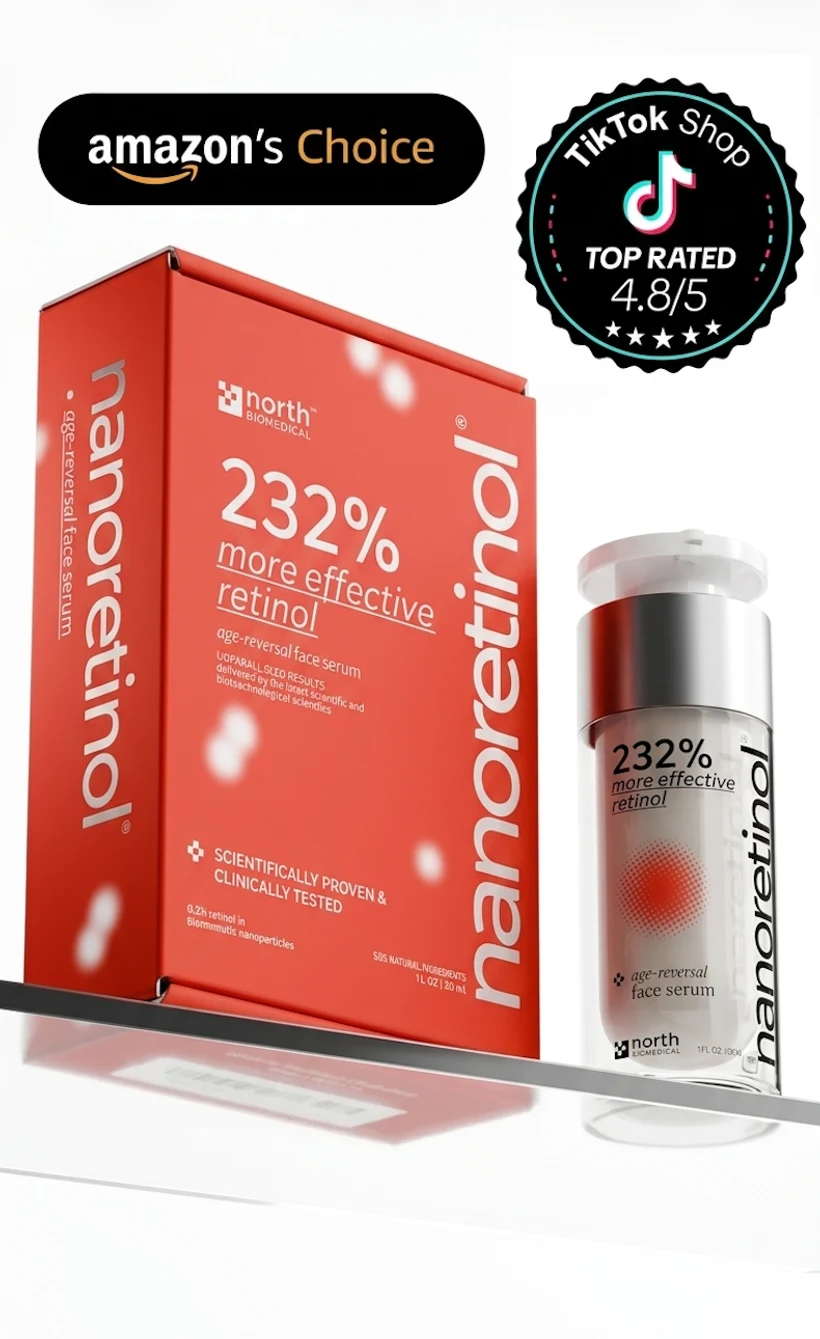
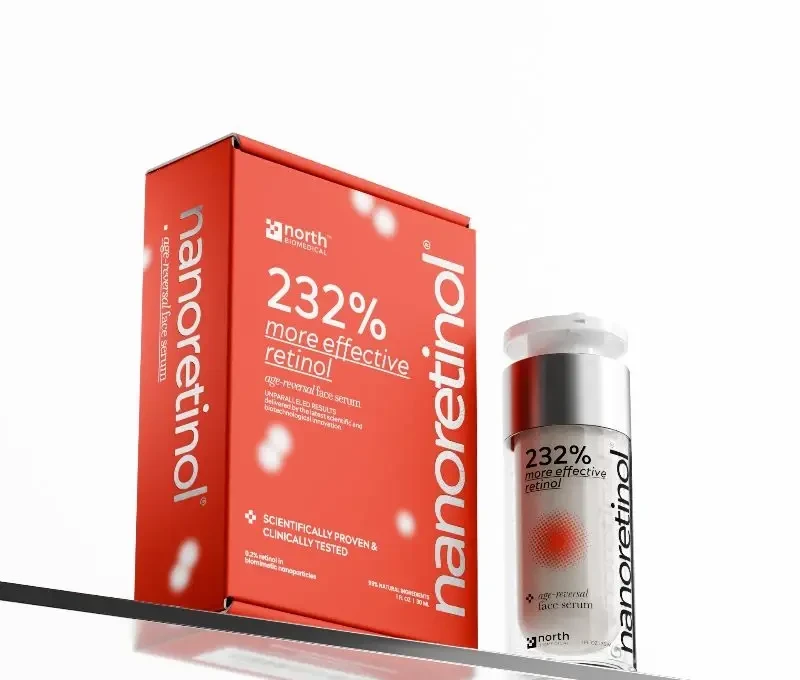
The historical catch with retinol has been tolerance. Traditional formulas disrupt the skin barrier to force the active through, which is why redness and peeling scare so many people off. Nanoretinol was engineered to sidestep that trade-off: it encapsulates retinol inside biomimetic lipid nanoparticles that the skin recognizes as “self” and allows through the barrier intact — no chemical demolition required. In North Biomedical’s testing, this delivery approach proved 232 percent more effective at collagen recovery than conventional retinol, while remaining gentle enough for sensitive skin. It is the opposite philosophy to buccal fat removal: instead of permanently removing what makes a face look young, it works with the biology that keeps it that way.
If you want to understand the volume side of the equation more deeply, our guides to facial volume loss and how to boost collagen production go further. And if the goal is contour rather than a permanent change, reversible options like fillers are worth reading about before anything irreversible.
Before You Commit to Permanent
Buccal fat removal can deliver a genuinely slimmer face — that part is not hype. But it is a permanent subtraction of the exact tissue that aging already erodes, performed with a weak long-term evidence base and an explicit warning from top surgeons about premature aging [1][2]. For most people, and especially anyone over 35, the better investment is in the layer you can rebuild: firm, collagen-rich skin. A well-delivered retinoid asks your face to make more of what youth is made of, rather than cutting away what you will spend the next thirty years wishing you had kept.
References
- Rohrich RJ, Stuzin JM, Savetsky IL, Avashia YJ, Agrawal NA, Prada M. “The Role of the Buccal Fat Pad in Facial Aesthetic Surgery.” Plastic and Reconstructive Surgery. 2021;148(2):334-338. doi:10.1097/PRS.0000000000008230
- Moura LB, Spin JR, Spin-Neto R, Pereira-Filho VA. “Buccal fat pad removal to improve facial aesthetics: an established technique?” Medicina Oral, Patología Oral y Cirugía Bucal. 2018;23(4):e478-e484. doi:10.4317/medoral.22449
- Rohrich RJ, Pessa JE. “The fat compartments of the face: anatomy and clinical implications for cosmetic surgery.” Plastic and Reconstructive Surgery. 2007;119(7):2219-2227. doi:10.1097/01.prs.0000265403.66886.54
- He T, Fisher GJ, Kim AJ, Quan T. “Age-related changes in dermal collagen physical properties in human skin.” PLoS One. 2023;18(12):e0292791. doi:10.1371/journal.pone.0292791
- Griffiths CE, Russman AN, Majmudar G, Singer RS, Hamilton TA, Voorhees JJ. “Restoration of collagen formation in photodamaged human skin by tretinoin (retinoic acid).” New England Journal of Medicine. 1993;329(8):530-535. doi:10.1056/NEJM199308193290803
- Sitohang IBS, Makes WI, Sandora N, Suryanegara J. “Topical tretinoin for treating photoaging: A systematic review of randomized controlled trials.” International Journal of Women’s Dermatology. 2022;8(1):e003. doi:10.1097/JW9.0000000000000003