Facial Volume Loss: Why Your Face Is 'Sinking' — and What Actually Restores It
It isn't just sagging. It's deflation — of fat, bone, and skin. Here's the science of midface volume loss and the treatments that genuinely help.
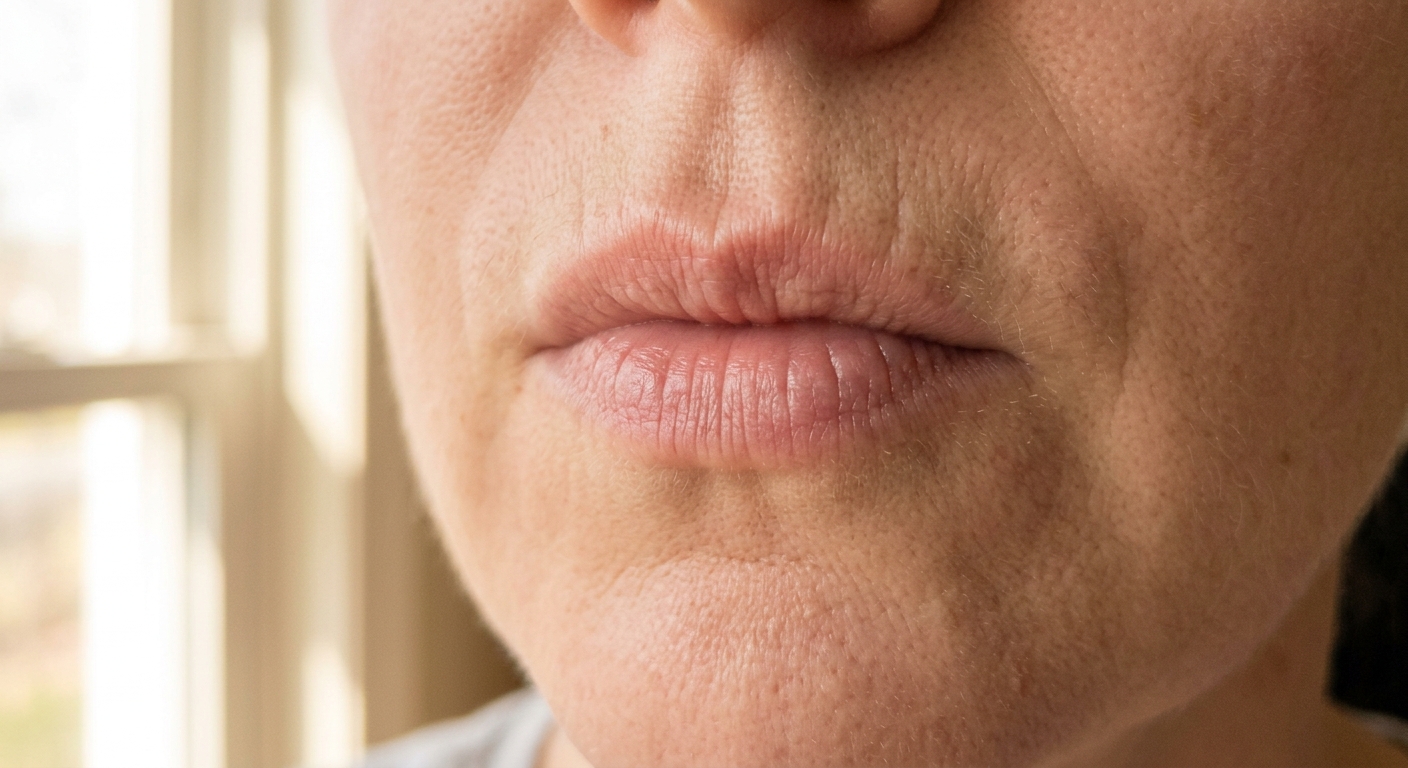
There is a moment, usually in your mid-40s, when you catch your reflection in a different light and realize something is off. The lines aren’t the issue. It’s that your face looks emptier — flatter at the cheekbones, slightly hollow under the eyes, with a softness around the jaw that wasn’t there a year ago.
You haven’t lost weight. You haven’t done anything wrong. What you’re seeing is facial volume loss — one of the most universal and least understood drivers of how a face ages. And the reason most anti-aging products don’t fix it is simple: they were never designed for the right problem.
”Sagging” Is Often the Wrong Word
The aesthetics industry has trained us to call what happens after 40 “sagging skin.” It implies gravity pulling tissue downward over time. The reality is more interesting — and explains why skin-tightening products often disappoint.
What we read as sagging is, in most cases, deflation. A balloon that’s slowly losing air doesn’t get “pulled down” by gravity in the same way a fully inflated one does — it loses internal pressure first, then folds in on itself. The face is the same: the underlying volume goes first, and the overlying skin then drapes over a smaller foundation. The face hasn’t grown extra skin. It has shrunk underneath it.
Imaging studies make this very clear. CT analyses of midfacial fat compartments show distinct, age-dependent volume losses in specific deep fat pads, with inferior migration of remaining tissue [1]. The face is changing shape from the inside.
The Three Layers That Deflate
Facial volume loss isn’t one process. It’s three, happening at different rates in different layers.
Layer 1: Fat compartments. Your face is partitioned into discrete fat compartments — superficial and deep — separated by fascial barriers. Each compartment ages independently. The deep medial cheek fat and the deep temporal compartments are particularly prone to atrophy with age, while superficial compartments sometimes hypertrophy, which is why the lower face can look heavier even as the midface looks emptier [2]. This redistribution is the structural origin of the “tired” look people complain about — the cheek hollowing, the deepening of nasolabial folds, the appearance of jowls.
Layer 2: Bone. This is the part most women don’t realize is happening. The facial skeleton is not a fixed scaffold — it remodels throughout life. Studies measuring facial bone density and morphology with age show that the maxilla recedes, the orbital aperture widens, and the mandibular angle opens [3]. The supporting structure your soft tissue rests on literally gets smaller. By the seventh decade, the orbital opening has enlarged by 15–20%. Bone resorption is most pronounced in the midface, in the orbital rim, and in the pre-jowl region of the jaw [4].
Layer 3: Skin. As the dermis loses collagen and elastin, the skin envelope can’t conform tightly to the now-smaller underlying tissue. The result is the characteristic crepiness, loose drape, and shadow patterns of an aging face. Even if fat and bone were perfectly preserved, age-related dermal thinning alone would create visible volume loss in the form of textural deflation.
There is a moment, usually in your mid-40s, when you catch your reflection in a different light and realize something is off.
Why Weight Loss Makes It Worse
If you’ve lost weight in your 40s or 50s and noticed your face looks older, you’re not imagining it. The face is one of the first places the body draws down fat reserves — and because the deep, structurally important compartments are already atrophying with age, weight loss hits an already-shrinking foundation. The result is the so-called “Ozempic face” phenomenon, though the same effect happens with any rapid weight loss in midlife.
This is also why thinner women often look older for their age than slightly heavier women. A small amount of preserved facial fullness in midlife reads as youthful. We aren’t conditioned to admit this, but it’s anatomically accurate. The same mechanism explains runner’s face, where sustained low body fat, rather than the impact of running itself, does most of the hollowing.
What Actually Restores Volume
There is no topical product that adds new fat to your face. Anyone who tells you their cream “plumps” volume back is selling a hydration effect, not a structural one. That said, several interventions genuinely address the underlying drivers.
Hyaluronic acid fillers. These remain the most direct intervention for visible volume loss. A two-year randomized controlled study of a volumizing HA filler showed sustained correction of midface volume deficit, with patients reporting they looked five years younger at six months and three years younger at two years [5]. Fillers don’t replace lost fat — they occupy the same anatomical compartments and restore projection. They are the only treatment that addresses structural deficit directly.
Topical retinoids — for the skin envelope. While retinol can’t restore deep fat or bone, it does what nothing else does topically: it stimulates dermal fibroblasts to produce new collagen, improving the quality of the overlying skin. A controlled trial of 0.4% retinol applied three times weekly to elderly subjects showed measurable increases in dermal collagen production and reduction in fine wrinkling [6]. Tighter, denser skin makes any underlying volume look better.
Collagen support — oral and topical. A randomized controlled trial of oral collagen peptides (2.5 g daily for eight weeks) showed significant improvements in skin elasticity, particularly in older women [7]. The effect is modest, but compounded with topical actives and consistent SPF, it contributes to a denser, more resilient skin envelope.
Avoiding aggressive weight loss in midlife. This is uncomfortable advice in a thin-obsessed culture, but it’s anatomically defensible. Maintaining a stable, modest body weight after 45 is one of the most volume-protective decisions you can make.
What Doesn’t Work (And Why)
A lot of marketing dollars are spent convincing women that creams, serums, and devices can “restore facial volume.” Here’s the honest accounting:
Collagen creams don’t add volume. Collagen molecules are too large to penetrate the dermis topically. Topical “collagen” formulations work as humectants on the surface — pleasant, but not structural.
Anyone who tells you their cream “plumps” volume back is selling a hydration effect, not a structural one.
Facial exercises don’t add volume. They can hypertrophy facial muscles slightly, but the volume problem is fat and bone, not muscle. Aggressive facial exercise may even accelerate sagging by repeatedly creasing already-fragile skin.
Most “skin tightening” devices show modest results. Radiofrequency and ultrasound devices can produce small improvements in skin laxity by creating controlled thermal injury that stimulates fibroblasts. They do not restore lost fat or bone — they only tighten the envelope. Useful as part of a strategy, oversold as a standalone solution.
For more on related concerns, see sunken cheeks, sagging face skin, and skin firmness loss — each covers a specific aspect of the volume-loss cascade.
A Realistic Strategy for Volume Loss
If you’re seeing volume loss starting in your 40s or 50s, here’s a sequence of interventions ordered by leverage:
- Protect what you have. Daily SPF prevents further collagen breakdown. Avoid yo-yo weight loss. Get enough sleep — barrier recovery happens overnight.
- Build skin density. Topical retinoids, vitamin C, and a barrier-supporting moisturizer make the skin envelope itself denser and more reflective of any underlying volume.
- Consider HA fillers for structural correction. When done conservatively by a skilled injector, fillers placed in the deep fat compartments restore projection without distorting the face. Resist the urge to overfill the cheeks — the natural pattern of facial fat is irregular, not balloon-round.
- Maintain a stable weight. A modest amount of preserved facial fullness is one of the most reliably youth-signaling features in midlife.
Where Nanoretinol Fits
The skin envelope component of volume loss is the part you can address at home, every day, without injections. Retinol drives dermal remodeling — it increases collagen, thickens the dermis, and improves the reflectivity and resilience of the skin draping the underlying tissue. The denser that envelope, the better any preserved volume reads visually.
The challenge has always been that conventional retinol formulations either don’t penetrate well enough to drive real dermal changes (the cheap, unstable versions) or they shred the barrier on the way in (the high-percentage prescription versions). Both fail for women over 40 whose skin is already thinning.
Nanoretinol uses lipid nanoparticles — the same delivery technology used in modern pharmaceutical drug delivery — to carry retinol through the epithelial barrier without breaking it. The 0.2% concentration is intentional: in our clinical study, it produced 232% greater collagen recovery and 73% greater elastin recovery than conventional retinol, while being significantly gentler on cellular health. For aging skin where the priority is rebuilding the dermal envelope without compromising barrier function, that combination matters.
The Honest Conclusion
Facial volume loss is real, structural, and largely inevitable. It is not a personal failure or evidence that you’ve “let yourself go.” It is anatomy doing what anatomy does over decades. The interventions that actually help are unglamorous: protect the skin you have, build the skin envelope through proven topicals, consider strategic filler placement if it matters to you, and don’t fight your body’s small reserve of facial fullness. The women who age most gracefully are the ones who understand what’s actually happening — and stop spending money on products that were never designed for the right problem. That includes makeup: as the midface deflates, blush placement on mature skin has to move up onto the cheekbone to keep working.
References
-
Gierloff M, Stöhring C, Buder T, Gassling V, Açil Y, Wiltfang J. “Aging changes of the midfacial fat compartments: a computed tomographic study.” Plastic and Reconstructive Surgery. 2012;129(1):263-273. doi:10.1097/PRS.0b013e3182362b96
-
Sadick NS, Dorizas AS, Krueger N, Nassar AH. “The Facial Adipose System: Its Role in Facial Aging and Approaches to Volume Restoration.” Dermatologic Surgery. 2015;41 Suppl 1:S333-S339. doi:10.1097/DSS.0000000000000494
-
Shaw RB Jr, Katzel EB, Koltz PF, Kahn DM, Puzas EJ, Langstein HN. “Facial bone density: effects of aging and impact on facial rejuvenation.” Aesthetic Surgery Journal. 2012;32(8):937-942. doi:10.1177/1090820X12462865
-
Mendelson BC, Wong CH. “Changes in the Facial Skeleton with Aging: Implications and Clinical Applications in Facial Rejuvenation.” Aesthetic Plastic Surgery. 2020;44(4):1159-1161. doi:10.1007/s00266-020-01785-0
-
Jones D, Murphy DK. “Volumizing hyaluronic acid filler for midface volume deficit: 2-year results from a pivotal single-blind randomized controlled study.” Dermatologic Surgery. 2013;39(11):1602-1612. doi:10.1111/dsu.12343
-
Kafi R, Kwak HSR, Schumacher WE, et al. “Improvement of naturally aged skin with vitamin A (retinol).” Archives of Dermatology. 2007;143(5):606-612. doi:10.1001/archderm.143.5.606
-
Proksch E, Segger D, Degwert J, Schunck M, Zague V, Oesser S. “Oral supplementation of specific collagen peptides has beneficial effects on human skin physiology: a double-blind, placebo-controlled study.” Skin Pharmacology and Physiology. 2014;27(1):47-55. doi:10.1159/000351376
-
North Biomedical LLC. “Nanoretinol vs. Conventional Retinol: Efficacy in Collagen and Elastin Recovery.” Clinical Study Summary, 2024. northbiomedical.com/documents/Nanoretinol-Study_Summary.pdf