Centella Asiatica for Skin: The Ancient Herb With Modern Clinical Evidence
Why dermatologists are paying attention to this centuries-old wound healer — and what the research actually shows
The Plant That Heals Itself — And Your Skin
In the world of skincare ingredients, trends come and go with the speed of a TikTok scroll. But every so often, an ingredient emerges that has something most trends lack: centuries of traditional use backed by legitimate clinical research.
Centella asiatica is that ingredient.
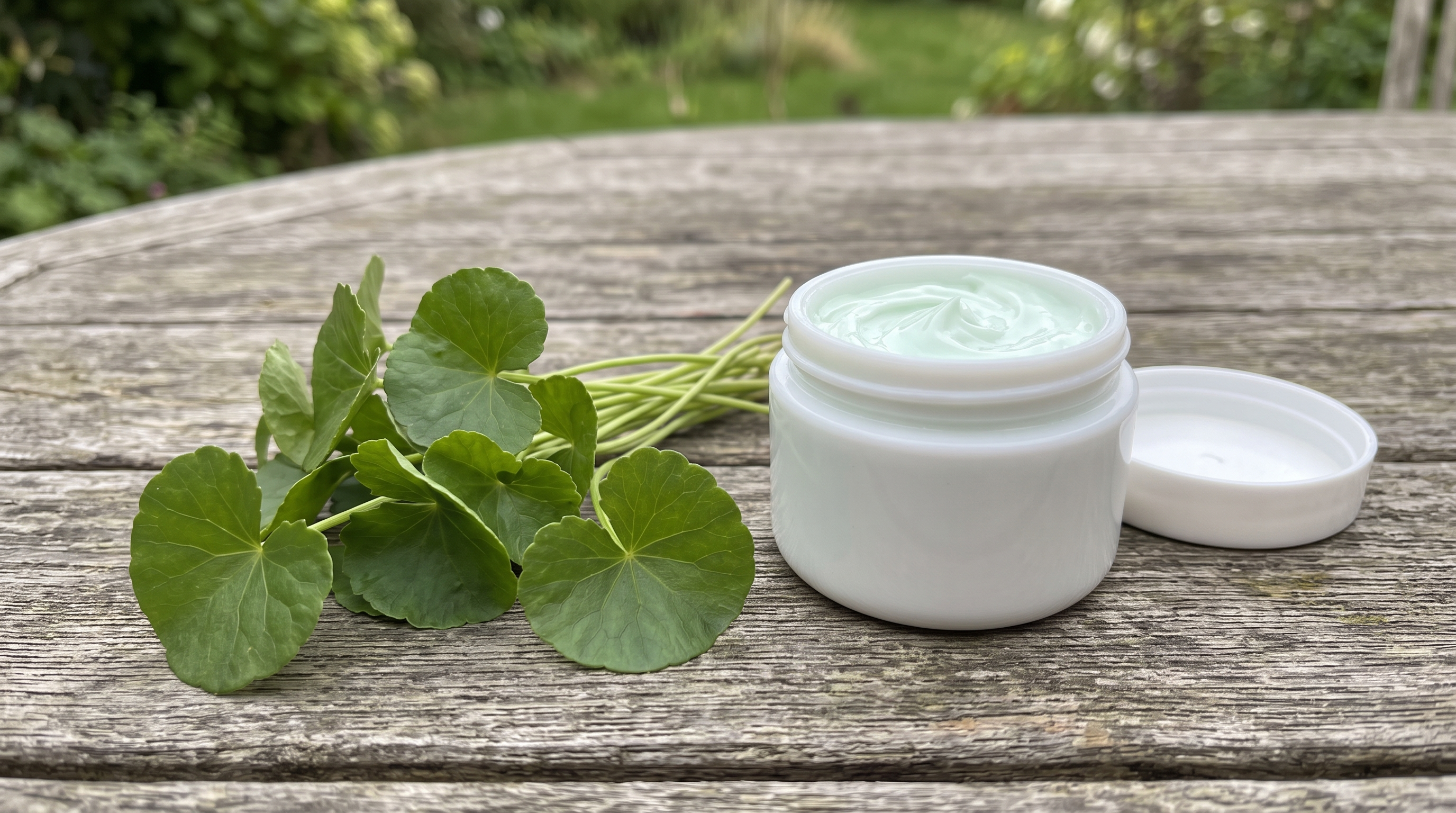
Known by many names — gotu kola, tiger grass, cica — this small, creeping herb has been used in Ayurvedic and traditional Chinese medicine for thousands of years to heal wounds and reduce scarring. The legend behind the name “tiger grass” is that wounded tigers were observed rolling in the plant to help heal their injuries.
Modern dermatology has moved well beyond folklore. A growing body of peer-reviewed research has confirmed that Centella asiatica’s active compounds can stimulate collagen synthesis, reduce inflammation, accelerate wound healing, and protect skin from oxidative stress [1]. For women over 40 who are navigating the intersection of aging skin and increased sensitivity, centella asiatica may be one of the most valuable — and underappreciated — additions to a science-based skincare routine.
The Science: Four Compounds That Matter
What makes Centella asiatica effective isn’t the whole plant extract alone — it’s four specific triterpene compounds found within it [2]:
Asiaticoside
The most abundant active compound. Asiaticoside has been shown to stimulate collagen I synthesis and promote angiogenesis (new blood vessel formation), both critical processes for wound healing and skin renewal [3].
Madecassoside
A powerful anti-inflammatory that works by suppressing pro-inflammatory cytokines including IL-1β, IL-6, and TNFα [1]. Madecassoside also helps facilitate burn wound healing by promoting cell proliferation [4].
Asiatic Acid
An aglycone (non-sugar form) of asiaticoside. Research shows asiatic acid directly influences human collagen I synthesis in fibroblasts — the cells responsible for producing the structural proteins that keep skin firm [5].
Madecassic Acid
Works alongside asiatic acid to modulate the TGF-β/Smad signaling pathway — the same pathway that retinoids use to stimulate collagen production [2]. This biochemical overlap is significant: it means centella asiatica and retinol may activate complementary mechanisms for skin rejuvenation.
What Clinical Studies Actually Show
Wound Healing and Skin Repair
A systematic review published in the International Journal of Environmental Research and Public Health analyzed four clinical trials on Centella asiatica and wound healing. The findings revealed that C. asiatica promotes faster wound contraction through stimulation of fibronectin and collagen I synthesis, along with beneficial effects on angiogenesis via increased VEGF and FGF production [1].
One particularly notable finding: in a clinical trial of a standardized centella extract gel (ECa 233, containing 51% madecassoside and 38% asiaticoside), the extract significantly reduced post-laser skin redness, with erythema subsiding by day 7 versus day 28 in the placebo group [6]. This has direct relevance for anyone using active ingredients like retinol that can cause temporary irritation and redness.
Collagen Synthesis
The landmark study by Bonté et al. (1994) demonstrated that asiatic acid, madecassic acid, and asiaticoside all promote human collagen I synthesis in vitro — with asiaticoside showing the most potent effect [5]. This was one of the first studies to provide a mechanistic explanation for centella’s traditional wound-healing reputation.
More recent research confirms the mechanism: centella’s triterpenes activate the TGF-β/Smad signaling pathway, the principal regulator of extracellular matrix production in human skin [2]. By upregulating TGF-β while modulating inflammatory Smad proteins, centella creates conditions favorable for collagen deposition without excessive scarring.
Skin Hydration and Barrier Function
A clinical study evaluating centella-containing cosmetic formulations found that a 5% C. asiatica extract in an oil-in-water emulsion significantly improved hydration of the stratum corneum [6]. This barrier-supporting effect makes centella an ideal companion ingredient for potent actives that can compromise the skin barrier, including retinoids and chemical exfoliants, and a watery centella toner is the lightest way to add it before those steps.
What makes Centella asiatica effective isn’t the whole plant extract alone — it’s four specific triterpene compounds found within it :
Anti-Inflammatory and Anti-Redness
Centella’s anti-inflammatory properties work through multiple pathways. The triterpene compounds inhibit NF-κB activation — the master switch for inflammatory gene expression — and suppress the production of COX-2, prostaglandin E2, and multiple pro-inflammatory interleukins [2]. In practical terms, this translates to reduced redness, less sensitivity, and a calmer complexion.
Centella Asiatica and Retinol: A Strategic Pairing
Here’s where centella asiatica becomes particularly interesting for anti-aging: it complements retinol through distinct but synergistic mechanisms.
Retinol stimulates collagen by activating retinoic acid receptors (RARs), which in turn upregulate collagen gene expression. But retinol can also cause irritation, dryness, and barrier disruption — side effects that lead many people to abandon their retinol routine before seeing results.
Centella asiatica stimulates collagen through a different pathway (TGF-β/Smad) while simultaneously providing anti-inflammatory protection and barrier support. Using centella alongside retinol can potentially:
- Reduce retinol-induced irritation and redness
- Support skin barrier integrity during the retinol adjustment period
- Provide additive collagen-stimulating effects through complementary pathways
- Create a more tolerable experience that encourages long-term adherence
This pairing strategy aligns with the modern approach to skin cycling — alternating between active and recovery nights to maximize results while minimizing side effects.
How to Incorporate Centella Asiatica Into Your Routine
For Retinol Users (Recovery Support)
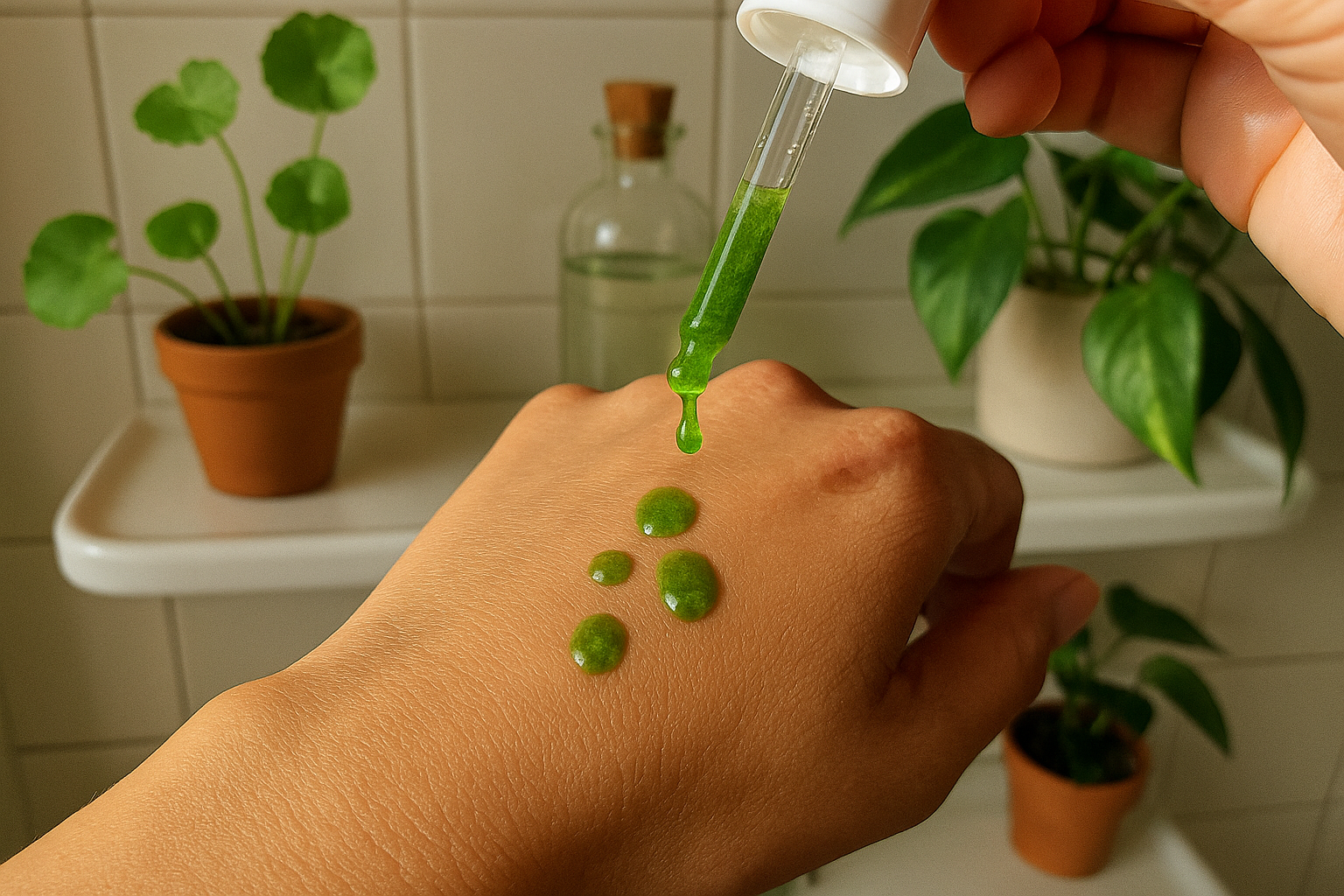
If you’re using retinol (especially in its more advanced delivery systems like Nanoretinol®), consider applying a centella serum or a centella-based moisturizer on alternate nights or layered after retinol application. The anti-inflammatory and barrier-supporting properties can help manage the adjustment period and support the collagen-building effects you’re aiming for. Centella is also one of the few K-beauty hero ingredients with human hydration data, which is why it features in our guide to choosing a Korean moisturizer.
For Sensitive Skin Types
If your skin is too reactive for retinol, centella asiatica offers a gentler entry point into collagen stimulation. While not as potent as retinol, centella’s ability to activate collagen production through the TGF-β/Smad pathway makes it a meaningful — not just soothing — active ingredient.
For Post-Procedure Recovery
After chemical peels, microneedling, or laser treatments, centella-based products can accelerate healing and reduce recovery time. The clinical evidence for post-laser erythema reduction is particularly compelling [6].
If your skin is too reactive for retinol, centella asiatica offers a gentler entry point into collagen stimulation.
What to Look For
Key identifiers on ingredient labels:
- Centella asiatica extract
- Madecassoside
- Asiaticoside
- Asiatic acid
- Madecassic acid
Concentration matters: Look for products, including any cica cream, that specify a standardized extract. The ECa 233 used in clinical trials contained a defined ratio of madecassoside to asiaticoside. Products that list “centella asiatica extract” without specifying concentration or standardization may contain too little of the active compounds to deliver meaningful results, and the same caution applies even more to a centella cleanser, which is rinsed off within a minute.
The Nanodelivery Advantage
One of the challenges with centella asiatica — like many botanical actives — is skin penetration. The active triterpenes are relatively large molecules that don’t easily cross the stratum corneum on their own.
Research has shown that advanced delivery systems including nanoencapsulation, liposomes, transfersomes, and nanoemulsions can significantly enhance the bioavailability of centella’s active compounds in the dermis [7]. This is the same principle behind Nanoretinol® technology — using nanoparticle encapsulation to deliver active ingredients precisely where they need to go while improving stability and reducing irritation.
The future of centella skincare likely lies in these advanced formulations that combine the right standardized extract with delivery technology capable of getting the active compounds past the skin’s natural barriers.
What Centella Won’t Do
To be clear about the evidence: while centella asiatica has genuine pharmacological activity and clinical support, it is not a replacement for retinol in an anti-aging routine. The collagen-stimulating effects of retinoids remain more extensively documented and more potent [8].
Think of centella as a strategic teammate, not a substitute. It excels at barrier support, inflammation control, and complementary collagen stimulation. Paired with a well-formulated retinol product, it helps create the conditions under which retinol can work most effectively.
The research is also still evolving. While the preclinical and mechanistic data are strong, dermatologists note that additional rigorously controlled, long-term clinical trials are needed to fully establish the anti-aging potential of topical centella asiatica in human skin [2].
References
-
Azis HA, Tahergorabi R, Carthy JM. A systematic review of the effect of Centella asiatica on wound healing. International Journal of Environmental Research and Public Health. 2022;19(6):3266. doi:10.3390/ijerph19063266
-
Sun B, Wu L, Wu Y, et al. Therapeutic potential of Centella asiatica and its triterpenes: a review. Frontiers in Pharmacology. 2020;11:568032. doi:10.3389/fphar.2020.568032
-
Shukla A, Rasik AM, Jain GK, et al. In vitro and in vivo wound healing activity of asiaticoside isolated from Centella asiatica. Journal of Ethnopharmacology. 1999;65(1):1-11. doi:10.1016/S0378-8741(98)00141-X
-
Liu M, Dai Y, Li Y, et al. Madecassoside isolated from Centella asiatica herbs facilitates burn wound healing in mice. Planta Medica. 2008;74(8):809-815. doi:10.1055/s-2008-1074533
-
Bonté F, Dumas M, Chaudagne C, Meybeck A. Influence of asiatic acid, madecassic acid, and asiaticoside on human collagen I synthesis. Planta Medica. 1994;60(2):133-135. doi:10.1055/s-2006-959434
-
Damkerngsuntorn W, Rerknimitr P, Panchaprateep R, et al. ECa 233 gel promotes wound healing after fractional ablative carbon dioxide laser resurfacing for atrophic acne scars. Journal of Cosmetic Dermatology. 2022;21(10):4716-4723. doi:10.1111/jocd.14802
-
Handayani R, Febriyanti RM, Muhaimin M, Chearunisaa AY. Centella asiatica (L.) Urb. in skin health and cosmeceuticals. Fitoterapia. 2025;182:106452. doi:10.1016/j.fitote.2025.106452
-
Park J, Han S, Park H. Pharmacological effects of Centella asiatica on skin diseases: evidence from in vitro, in vivo, and clinical studies. Evidence-Based Complementary and Alternative Medicine. 2021;2021:7462633. doi:10.1155/2021/5462633