Why Your Concealer Creases Under Your Eyes (And How to Actually Stop It)
The fix isn't a different concealer — it's a different canvas. The dermatology of under-eye creasing, explained.
You spend ten minutes on your eye makeup. By lunch, your concealer has pooled into a tight little wrinkle right under your lash line and a few longer ones radiating toward your temple. It looks worse than if you hadn’t used concealer at all. The same thing happens on the upper lid with shadow and liner, which we cover in eye makeup for mature women. Formula choice matters too, and our guide to the best concealer for mature skin covers what to look for.
If this happens to you, you’ve probably tried a half-dozen “creaseless” concealers. New formulas. Different brushes. Setting powder, no setting powder. Eye cream first, primer first, neither first. The result is the same. The concealer always finds the lines. Which powder you reach for does change how quickly it gets there, and our guide to the best setting powder for mature skin covers the particle physics behind it. Whether a spray does better than powder depends entirely on what is in it, which our guide to the best setting spray for mature skin breaks down.
The reason is simple and stubborn: concealer doesn’t create the crease. The crease is already there. What creasing reveals is that the under-eye skin underneath is thinner, drier, or more lined than the makeup can flatter. Fix the canvas, and the concealer behaves. The same principle applies across the rest of the routine, which our guide to the best makeup for mature skin covers product by product.
The under-eye region is built differently — and ages faster than the rest of your face
Periorbital skin is the thinnest skin on the face. Histological studies show the epidermis and stratum corneum around the eyes are measurably thinner than on the cheek or forehead, with less subcutaneous fat to cushion them [1]. The orbicularis oculi muscle underneath contracts thousands of times a day — every blink, every smile, every squint. That repetitive folding drives the formation of fine lines along the natural skin tension lines.
On top of the structural disadvantage, the under-eye area has fewer sebaceous glands than the rest of the face. Less oil means less natural moisture barrier, which means dehydration shows up here first. Aging-associated alterations in epidermal function include delayed barrier recovery, reduced stratum corneum hydration, and elevated stratum corneum pH — all of which worsen the appearance of fine lines [2].
So by your late thirties, even before “deep wrinkles” arrive, the under-eye skin has three things working against it: it’s thin, it’s mobile, and it’s chronically drier than the skin a centimeter away.
Why concealer settles into the lines
Concealer is a pigment suspended in a base of oils, waxes, and polymers. When you spread that base across a smooth surface, it forms a continuous, thin film. When you spread it across a surface that already has fine grooves, the base flows into the grooves under capillary action and stays there as the volatile components evaporate.
When you spread that base across a smooth surface, it forms a continuous, thin film.
The grooves get more visible, not less. The pigment is now concentrated in the wrinkle rather than masking it.
Three skin conditions make this worse:
- Dehydration. Dehydrated skin sits in a slightly contracted state. Fine lines are more pronounced. Add product and they fill in like riverbeds. A randomized double-blind trial of oral hyaluronic acid found that hydration improved significantly in both younger and older participants within 2–8 weeks, with epidermal thickness measurably increasing by week 12 [3].
- Loss of dermal collagen. As type I collagen fragments and fibroblasts shift toward producing matrix metalloproteinases instead of new collagen, the dermal scaffold thins. Lines that used to require a smile to appear now sit at rest [1].
- Surface texture. Sun damage, residual makeup, and a buildup of dead corneocytes create an irregular topology that catches and holds product unevenly.
Notice that none of these is “the wrong concealer.”
What “creaseless” concealers actually do — and where they hit a wall
Modern concealers use silicone elastomers, film-forming acrylates, and finely-milled pigments to resist settling. They work — to a point. On smooth, hydrated skin, they hold their finish for hours. On dehydrated, lined skin, they buy you maybe two extra hours before the underlying texture pulls the product into the grooves.
A 12-week clinical trial of a retinoid eye cream in subjects aged 35–65 with periorbital wrinkles showed that improving the skin itself reduced wrinkle measurements by week 8, with the effect compounding through week 12 — without changing the makeup [4]. The same anti-aging product evaluation using three-dimensional periorbital imaging found that topical treatments measurably reduced crow’s feet wrinkle volume after consistent use [5].
The takeaway: every concealer has a ceiling determined by the skin underneath. You can pick a better concealer, or you can raise the ceiling. The second strategy compounds.
Around the eyes, that disruption shows up as redness, stinging, and flaking — and the irritation often outpaces any benefit you can see.
The fix, in order of leverage
1. Hydrate from inside the corneocyte, not just on top
A humectant like hyaluronic acid pulls water into the upper layers of skin. Apply on damp skin in the morning and at night before any oil-based product. Within two to four weeks, the surface plumps enough that fine lines visibly soften.
2. Rebuild the dermal scaffold over months, not days
This is where topical retinoids do their structural work. A systematic review of randomized controlled trials of topical tretinoin for photoaging concluded that consistent use, in concentrations from 0.025% to 0.1%, improved wrinkles, pigmentation, and skin texture across studies running from 3 to 24 months [6]. The mechanism is unglamorous: retinoids signal fibroblasts to lay down new collagen and elastin, thicken the viable epidermis, and accelerate cell turnover so the stratum corneum stays smoother.
Retinol, the over-the-counter version, follows the same pathway at lower potency. The catch around the eyes is irritation. Conventional retinol formulations rely on petroleum-derived penetration enhancers that disrupt the skin barrier to get the active across — exactly what already-fragile periorbital skin doesn’t need. Many people give up before the benefit shows.
3. Treat texture, gently
Mild exfoliation — a lactic acid product two or three nights per week — keeps dead cells from building into the irregular surface that catches product. For periorbital skin, lactic acid is preferable to glycolic; the larger molecule penetrates less aggressively. See our retinol for dark spots guide for how acids and retinoids fit together in a routine.
4. For deep grooves, consider in-office options
A non-randomized clinical trial of radiofrequency microneedling specifically for periorbital wrinkles showed an average 49% reduction in wrinkle severity over four treatments spaced eight weeks apart, with no post-inflammatory hyperpigmentation even in darker skin types [7]. These devices stimulate dermal remodeling in a way that topical products can’t fully replicate, though the topical work still maintains the result.
5. Application order matters
Apply hydrating products, wait two to three minutes for them to absorb fully, then apply makeup. A surface that still has free water on it dilutes concealer pigment unevenly and accelerates settling. If you use eye cream, choose one without heavy occlusives in the morning — they create a slippery layer that destabilizes the concealer film. The wider set of application rules, including why pressing beats dragging, is in our guide to makeup for wrinkles.
Where Nanoretinol fits in
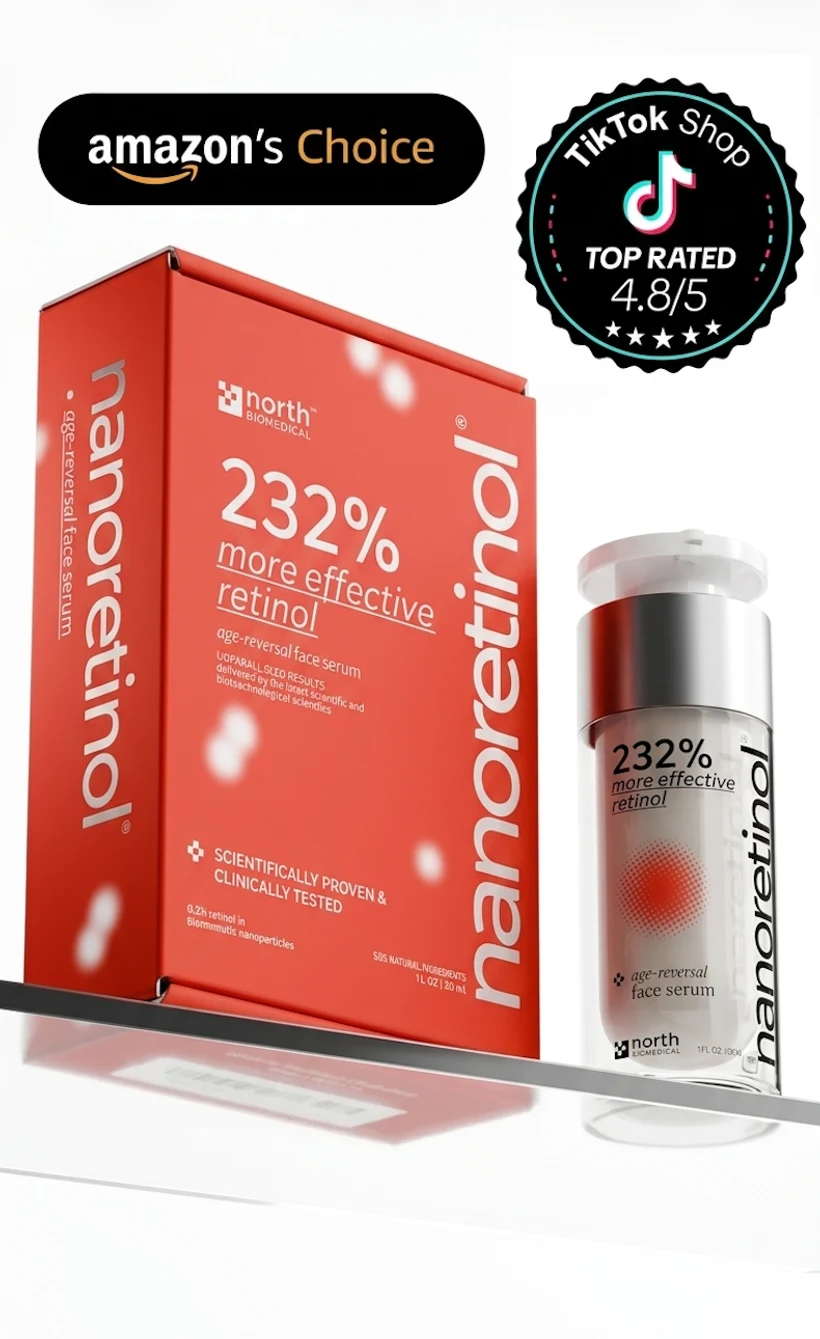
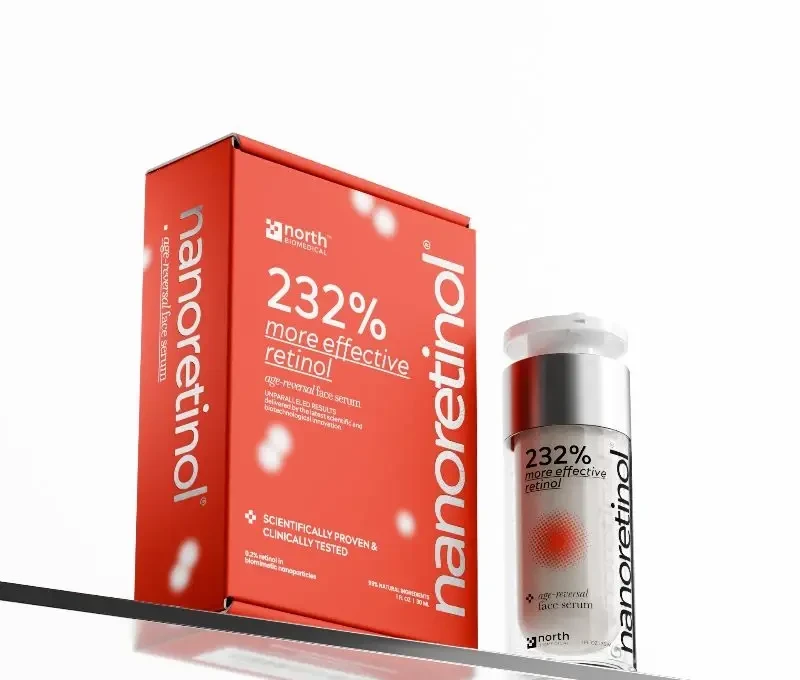
The reason most people fail to stick with retinol around their eyes is the same reason most retinol formulations don’t work well there: the delivery system fights the skin instead of cooperating with it. Conventional retinol depends on barrier-disrupting solvents to push the active across the epithelium. Around the eyes, that disruption shows up as redness, stinging, and flaking — and the irritation often outpaces any benefit you can see.
Nanoretinol encapsulates retinol in biomimetic lipid nanoparticles that pass through the epithelial barrier because the body recognizes them as “self.” Same delivery principle used in pharmaceutical drug carriers. The retinol arrives intact at the fibroblasts that need to make new collagen — without the barrier damage that conventional formulas cause. In the 56-day clinical evaluation, Nanoretinol produced a 61% increase in skin firmness and a 56% increase in elasticity at 0.2% concentration — a concentration that would be a starter dose in conventional retinol but is producing prescription-tier numbers because of the delivery.
For people whose under-eye skin reacts to everything, a 0.2% water-based gel that doesn’t depend on petroleum-derived penetration enhancers is materially different from anything else on a drugstore shelf. The kit it changes isn’t the concealer — it’s the surface under it.
Why this is a multi-month project, not a Sunday-night fix
Skin turnover takes 28 days at age 30 and closer to 50 days at age 60. Whatever you start today, you’re going to see visible change at the four-to-six-week mark, with the larger structural improvement at three to six months. That timeline matches the histological reality: fibroblasts laying down collagen, new elastin fibers organizing, stratum corneum re-equilibrating. A two-week experiment will not catch any of it.
In the meantime: hydrate aggressively, exfoliate gently, treat consistently, and let the makeup do its job once the canvas is ready.
References
- Pilkington SJ, Belden S, Miller RA. “The Tricky Tear Trough: A Review of Topical Cosmeceuticals for Periorbital Skin Rejuvenation.” Journal of Clinical and Aesthetic Dermatology. 2015;8(9):39–47. PMC4587894
- Wang Z, Man MQ, Li T, Elias PM, Mauro TM. “Aging-associated alterations in epidermal function and their clinical significance.” Aging (Albany NY). 2020;12(6):5551–5565. doi:10.18632/aging.102946
- Gao YR, Wang RP, Zhang L, Fan Y, Luan J, Liu Z, Yuan C. “Oral administration of hyaluronic acid to improve skin conditions via a randomized double-blind clinical test.” Skin Research and Technology. 2023;29(11):e13531. doi:10.1111/srt.13531
- Sitohang IBS, Makes WI, Sandora N, Suryanegara J. “Topical tretinoin for treating photoaging: A systematic review of randomized controlled trials.” International Journal of Women’s Dermatology. 2022;8(1):e003. doi:10.1097/JW9.0000000000000003
- Kaczvinsky JR, Griffiths CEM, Schnicker MS, Li J. “Efficacy of anti-aging products for periorbital wrinkles as measured by 3-D imaging.” Journal of Cosmetic Dermatology. 2009;8(3):228–233. doi:10.1111/j.1473-2165.2009.00444.x
- Cheles D, Vinshtok Y, Gershonowitz A. “Microneedling With RF-Assisted Skin Penetration Improves the Hard-to-Treat Periorbital Wrinkles: Nonrandomized Clinical Trial.” Journal of Cosmetic Dermatology. 2024;23(12):3999–4006. doi:10.1111/jocd.16559
- North Biomedical LLC. “Nanoretinol vs. Conventional Retinol: Efficacy in Collagen and Elastin Recovery.” Clinical Study Summary, 2024. Study summary