Does Retinol Help Dark Spots? How It Works and Timelines
The science behind retinol's ability to fade hyperpigmentation — and why delivery matters
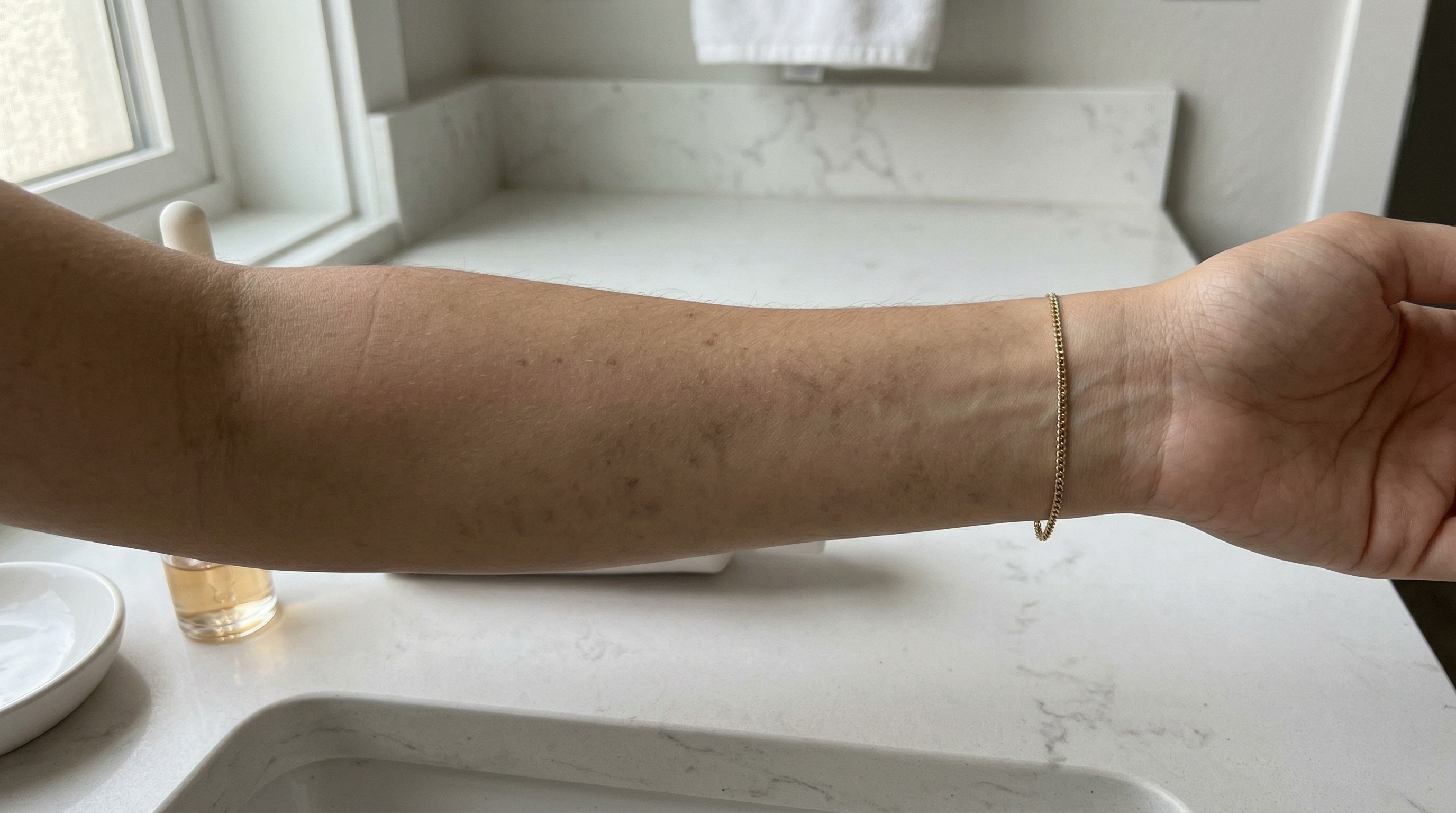
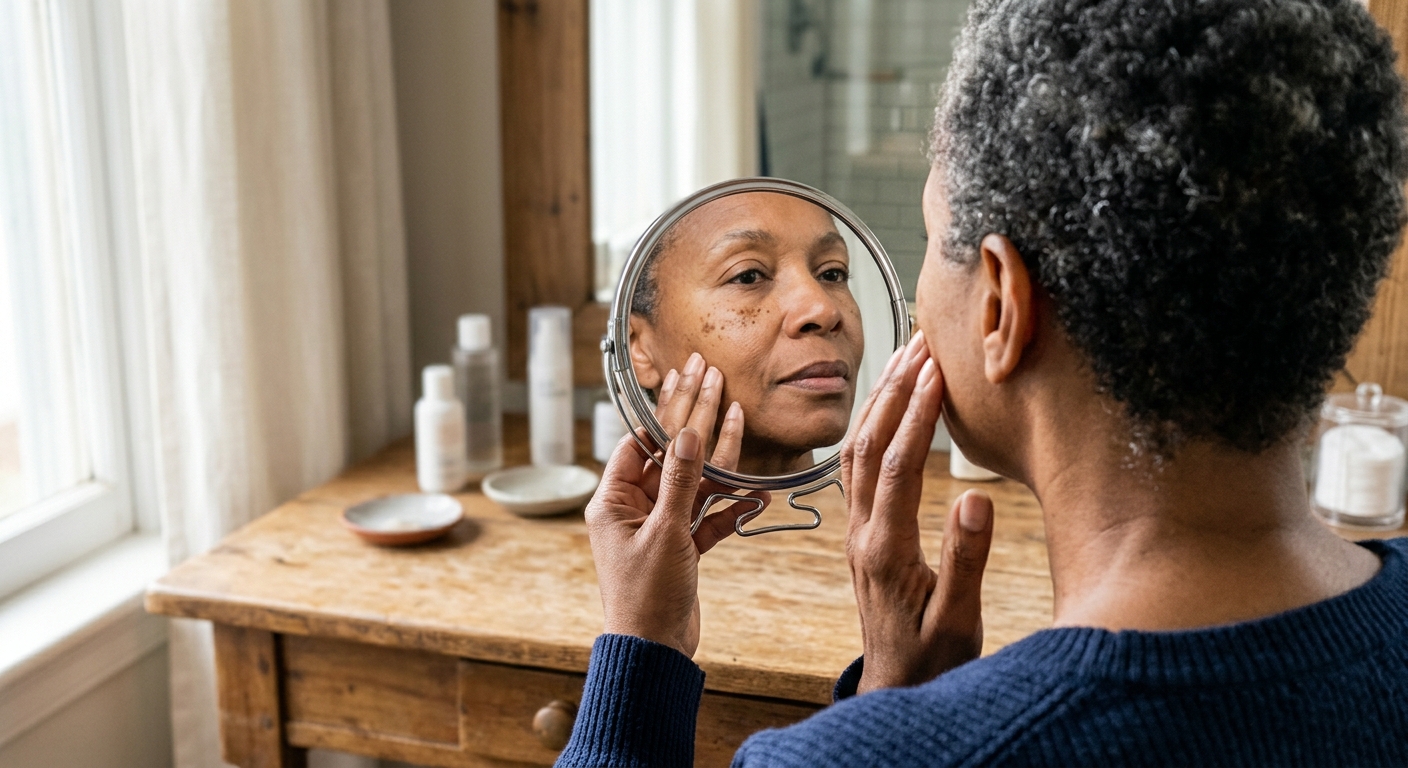
Does retinol help dark spots? It can gradually fade some epidermal hyperpigmentation, especially recent post-inflammatory marks and mottled pigmentation from sun exposure. It is less predictable for deep pigment and melasma, and it cannot safely diagnose a changing spot.
The strongest clinical evidence belongs to the retinoid family—particularly prescription tretinoin—while smaller studies also support cosmetic retinol. That distinction matters when comparing product claims or timelines [1][2][4].
Does Retinol Help Dark Spots? The Short Answer
Retinoids address uneven pigment through faster epidermal turnover, reduced transfer of pigment packages called melanosomes, and effects on melanin production [2][3]. Results depend on the type and depth of the spot:
| Type of pigmentation | What to expect from retinol |
|---|---|
| Recent post-inflammatory marks | Often among the more responsive types, provided irritation is controlled. |
| Surface-level sun spots and mottled tone | Gradual improvement is possible over several months. |
| Melasma | Variable; sun protection is essential and combination treatment is often needed. |
| Deep dermal pigment | Usually responds less because epidermal turnover cannot directly remove deep pigment. |
| New, changing, bleeding, or irregular spot | Do not self-treat as a cosmetic dark spot; have it assessed by a clinician. |
How Dark Spots Form in the First Place
To understand how retinol addresses dark spots, you need to understand why they appear.
Your skin color is determined by melanin — a pigment produced by specialized cells called melanocytes, which sit in the deepest layer of the epidermis. When melanocytes are stimulated — by UV radiation, hormonal changes, inflammation, or injury — they produce excess melanin and transfer it to surrounding keratinocytes (the main cells of the outer skin) via small packages called melanosomes [3].
This transfer process is normally distributed evenly. Dark spots form when melanin production becomes localized — concentrated in specific areas rather than spread uniformly. The three most common types:
- Sun spots (solar lentigines): Caused by cumulative UV exposure. Melanocytes in chronically sun-exposed areas become overactive, producing melanin clusters that appear as flat brown patches.
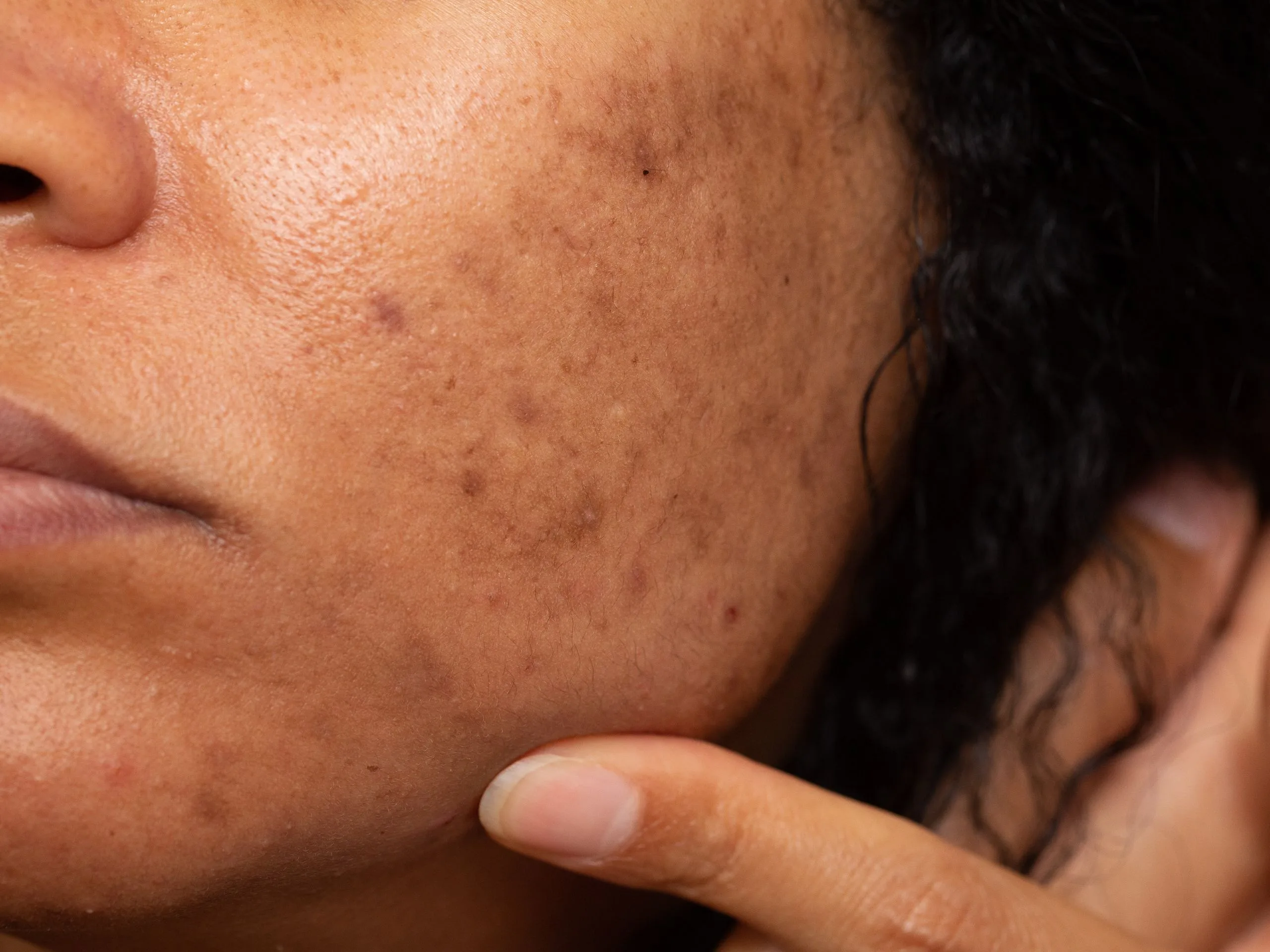
- Post-inflammatory hyperpigmentation (PIH): Follows skin trauma — acne, cuts, burns, eczema flares. The inflammatory cascade triggers excess melanin production at the site of injury.
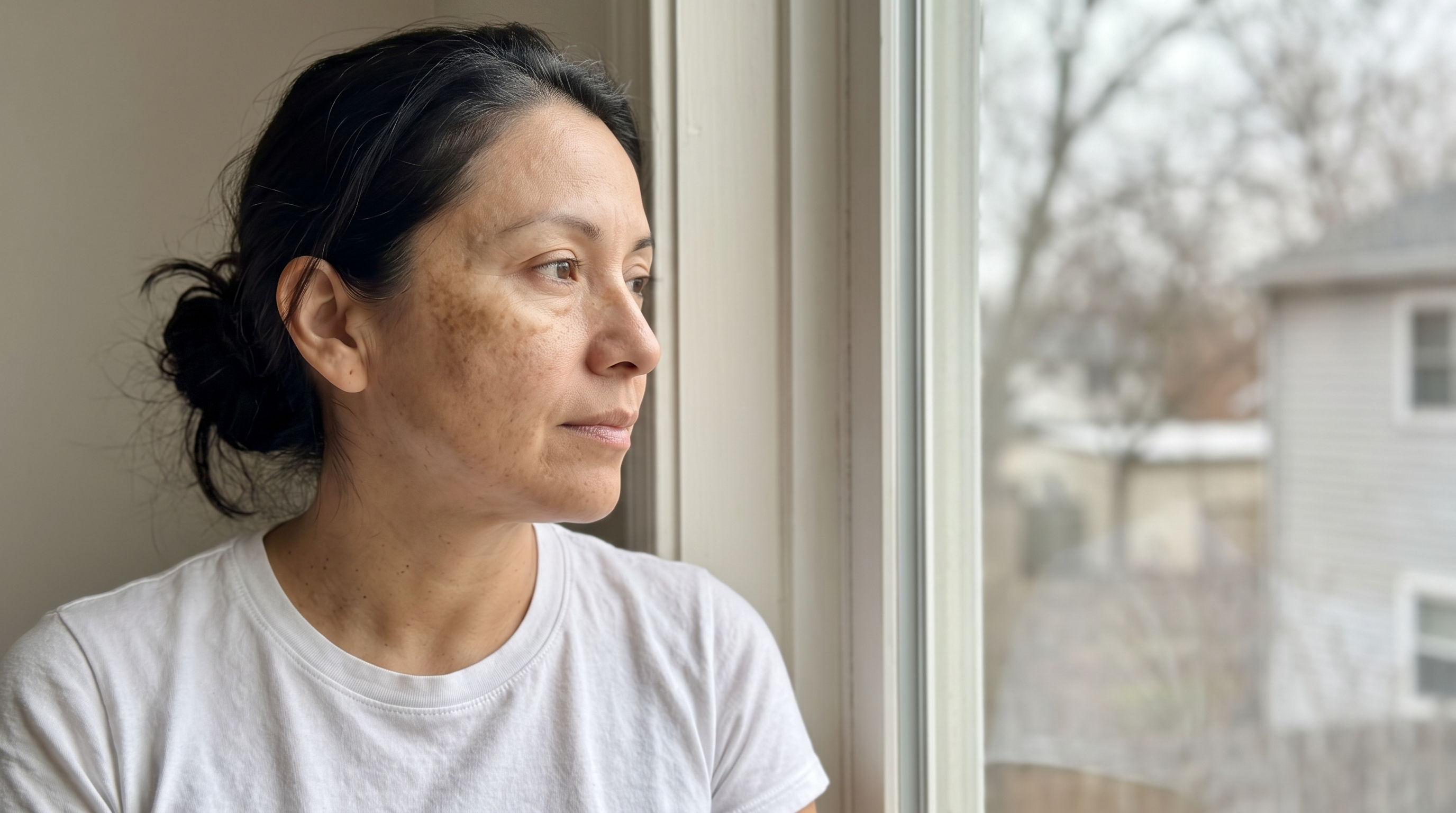
- Melasma: A hormonally driven condition producing symmetric brown or gray-brown patches, typically on the face. Triggered by estrogen, progesterone, and UV exposure — common during pregnancy or with oral contraceptive use.
In all three cases, the fundamental problem is the same: too much melanin, deposited unevenly, in specific areas of the epidermis (and sometimes the dermis).
How Retinol Fades Dark Spots: Three Mechanisms
Retinol doesn’t “bleach” skin the way hydroquinone does. It works through multiple, complementary pathways — which is both its strength and the reason it takes time.
1. Accelerated Epidermal Turnover
This is retinol’s primary depigmenting mechanism. When retinol is converted to retinoic acid in the skin, it binds to nuclear receptors that dramatically speed up the rate at which keratinocytes divide, mature, and shed [3].
Think of the epidermis like a conveyor belt. Under normal conditions, a skin cell takes 28–40 days to travel from the basal layer to the surface, where it’s eventually shed. During this journey, it carries melanin pigment with it. By accelerating this conveyor belt, retinol forces melanin-laden keratinocytes to the surface and off the skin faster than they would otherwise be replaced [3].
Ortonne (2006) described this process precisely: “Topical retinoids stimulate the cell turn-over of epidermal keratinocytes and promote a decrease in melanosome transfer and a rapid loss of melanins via epidermopoiesis” [3]. In plain English: the pigment gets pushed out faster, and less new pigment gets loaded into the replacement cells.
2. Reduced Melanosome Transfer
Beyond just speeding up turnover, retinoids appear to directly interfere with the transfer of melanosomes from melanocytes to keratinocytes [3]. This is a distinct mechanism from turnover — it means that even as new cells are produced, they receive less pigment to begin with.
All studies consistently reported that tretinoin improved mottled hyperpigmentation, with visible results appearing as early as one month and sustained improvements documented at 24 months of continued use.
The combination of “push out the old pigment faster” and “load less new pigment into replacement cells” creates a compounding depigmentation effect over time.
3. Inhibition of Tyrosinase Activity
Tyrosinase is the key enzyme in the melanin synthesis pathway — it catalyzes the conversion of tyrosine to DOPA and DOPA to dopaquinone, which are the rate-limiting steps in melanin production. Several in vitro studies have demonstrated that retinoic acid can directly inhibit UV-stimulated tyrosinase activity and melanin synthesis in melanocytes [3].
This is a direct effect on pigment production, independent of turnover. By reducing how much melanin the melanocyte produces in the first place — particularly in response to UV stimulation — retinol addresses the root cause, not just the symptom.
What the Clinical Evidence Shows
The evidence base for retinoids against hyperpigmentation is unusually strong for a cosmetic ingredient.
A 2022 systematic review by Sitohang et al. evaluated randomized controlled trials of topical tretinoin for photoaging. All studies consistently reported that tretinoin improved mottled hyperpigmentation, with visible results appearing as early as one month and sustained improvements documented at 24 months of continued use [1]. In a controlled clinical trial, Zasada et al. (2020) tested 0.3% and 0.5% retinol serums applied daily for 12 weeks. Both concentrations produced gradual, statistically significant decreases in skin hyperpigmentation and unevenness, along with improvements in overall skin tone and brightness [4]. The 0.5% concentration tended to produce slightly more irritation but comparable efficacy.
For melasma specifically, Ortonne (2006) reviewed evidence showing that retinoic acid monotherapy improves melasma and post-inflammatory hypermelanosis, and that combining retinoids with depigmenting agents like hydroquinone significantly enhances the potency of treatment [3].
Realistic Timelines: What to Actually Expect
Managing expectations is critical. Dark spots don’t appear overnight, and they don’t fade overnight either.
Weeks 1–4: You’re unlikely to see significant pigmentation changes. This is the adjustment period where skin is adapting to accelerated turnover. Some temporary worsening — dryness, mild peeling — is normal. The depigmenting mechanisms are active but haven’t had time to produce visible results yet.
Weeks 4–8: Subtle improvements begin. Skin tone may start looking more even and “brighter” as surface-level pigmented cells are shed more rapidly. Fresh PIH may respond faster than deeper, older spots.
Weeks 8–16: This is where meaningful fading typically becomes visible. The compounding effect of accelerated turnover + reduced melanosome transfer + tyrosinase inhibition starts to show. Shallow epidermal pigmentation responds better and faster than deeper dermal pigment [1].
Months 4–12+: Continued improvement with consistent use. Deeper pigmentation (some melasma, dermal PIH) requires longer treatment windows. Some spots may fade significantly but not completely — particularly if they involve dermal melanin deposits that retinol’s epidermal turnover mechanism can’t fully reach [3].
Key caveat: Sun protection is absolutely non-negotiable during this entire process. Retinol accelerates turnover, making skin more photosensitive. UV exposure during retinol treatment can trigger new melanin production that counteracts everything the retinol is doing. Broad-spectrum SPF 30+ every single morning is the difference between results and frustration.
Why Some Dark Spots Respond Better Than Others
Not all hyperpigmentation is equally treatable with retinol:
Retinol + Niacinamide: Niacinamide (vitamin B3) inhibits melanosome transfer through a different pathway than retinol, creating an additive effect.
Most responsive:
- Fresh post-inflammatory hyperpigmentation (< 6 months old)
- Surface-level sun spots (solar lentigines)
- Mild, recent mottled pigmentation from photoaging
Moderately responsive:
- Epidermal melasma
- Older PIH (6–12 months)
- Age spots on the face
Least responsive:
- Dermal melasma (deep melanin deposits below the epidermis)
- Very old, established PIH (> 12 months)
- Dermal melanocytosis
The distinction between epidermal and dermal pigmentation is crucial. Retinol’s primary mechanism — accelerated epidermal turnover — is exceptionally effective at clearing pigment trapped in the epidermis. Dermal pigment sits deeper, below the basement membrane, where epidermal turnover can’t directly reach it. This is why some melasma and deep PIH resist even prolonged retinol therapy [3].
Combining Retinol with Other Depigmenting Agents
Retinol rarely works best alone for stubborn dark spots. The clinical evidence strongly supports combination approaches:
Retinol + Sunscreen: The baseline minimum. Retinol fades existing spots; sunscreen prevents new ones and protects the treatment gains.
Retinol + Niacinamide: Niacinamide (vitamin B3) inhibits melanosome transfer through a different pathway than retinol, creating an additive effect. Well-tolerated and easy to layer.
Retinol + Vitamin C: Vitamin C inhibits tyrosinase independently and provides antioxidant photoprotection. The combination targets melanin production from two different angles. (Our updated formula integrates vitamin C directly within the nanoparticle system, addressing the traditional stability and pH concerns of this combination.) Retinol + Hydroquinone: The gold standard combination in dermatology for melasma and severe hyperpigmentation [3]. Hydroquinone directly inhibits melanin synthesis; retinol accelerates turnover and enhances hydroquinone penetration. This combination should be used under dermatologist supervision due to potential side effects with prolonged hydroquinone use.
The Delivery Problem: Why Conventional Retinol Underdelivers
Here’s the practical challenge: retinol is one of the most effective OTC depigmenting ingredients available — but conventional formulations waste much of its potential.
Traditional retinol products rely on penetration enhancers and solvents that disrupt the skin barrier to force the molecule through [5]. This creates a paradox for dark spot treatment: the barrier disruption itself can trigger inflammation, which can cause more post-inflammatory hyperpigmentation, particularly in melanin-rich skin tones that are already prone to PIH [3].
The harder you push conventional retinol for pigmentation, the more you risk triggering the exact inflammatory response that produces new dark spots. This is why dermatologists consistently advise “starting low and slow” — it’s not just about comfort; it’s about not making the pigmentation worse before it gets better.
Nanoparticle encapsulation changes this dynamic fundamentally. Nanoretinol® by North Biomedical® encapsulates retinol in biomimetic lipid nanoparticles that the skin recognizes as “self” — passing through the epithelial barrier without disrupting it. The result: +232% greater collagen recovery and +73% greater elastin recovery versus conventional retinol, with significantly reduced cytotoxicity.
For dark spot treatment specifically, this matters because you get retinol’s full depigmenting power — accelerated turnover, reduced melanosome transfer, tyrosinase inhibition — without the barrier damage that risks inflammatory hyperpigmentation as a side effect. It’s the difference between treating the problem and potentially creating a new one.
When to See a Dermatologist
Retinol is effective for many types of hyperpigmentation, but some situations warrant professional assessment:
- Dark spots that are new, changing shape, or have irregular borders (rule out melanoma)
- Pigmentation that worsens despite consistent retinol use and sun protection
- Widespread melasma that isn’t responding to OTC treatment after 3–4 months
- Hyperpigmentation on darker skin tones, where the risk of retinoid-induced PIH requires careful management
- Any pigmented lesion that bleeds, itches, or crusts
A dermatologist can perform a Wood’s lamp examination to determine whether your pigmentation is epidermal or dermal — which directly predicts how well retinol will work — and can prescribe combination therapies (tretinoin + hydroquinone + corticosteroid) for resistant cases.
Retinol for Dark Spots: Quick Questions
How long does retinol take to fade dark spots?
Subtle tone changes may appear after roughly 4–8 weeks, while clearer fading commonly takes 8–16 weeks or longer. Deeper or older pigmentation can take many months and may not clear completely [1][3][4].
Can retinol make dark spots worse?
It can indirectly worsen pigmentation if excessive use causes inflammation, or if UV exposure triggers new melanin while the skin is irritated. Start gradually, support the skin barrier, and use broad-spectrum sunscreen every morning.
Is retinol enough for melasma?
Often not. Melasma is recurrent and influenced by light, hormones, and pigment depth. Retinoids may be part of a dermatologist-led combination plan, but daily photoprotection and other depigmenting therapies are commonly needed [3].
The Long Game
Dark spots are a patience game. Retinol is one of the best tools available — three distinct depigmenting mechanisms, decades of clinical validation, and a dose-response relationship that rewards consistent, long-term use [1][3][4]. But it’s not instant, and it works best as part of a system: the right retinol, rigorous sun protection, and realistic expectations.
The spots that took months or years to form will take weeks or months to fade. The evidence says they will. Give the science time to work.
References
-
Sitohang IBS, Elvira D, Engeline N. “Topical tretinoin for treating photoaging: A systematic review of randomized controlled trials.” International Journal of Women’s Dermatology. 2022;8(1):e003. doi:10.1097/JW9.0000000000000003
-
Mukherjee S, Date A, Patravale V, Korting HC, Roeder A, Weindl G. “Retinoids in the treatment of skin aging: an overview of clinical efficacy and safety.” Clinical Interventions in Aging. 2006;1(4):327-348. doi:10.2147/ciia.2006.1.4.327
-
Ortonne JP. “Retinoid therapy of pigmentary disorders.” Dermatologic Therapy. 2006;19(5):280-288. doi:10.1111/j.1529-8019.2006.00085.x
-
Zasada M, Budzisz E, Erkiert-Polguj A. “A Clinical Anti-Ageing Comparative Study of 0.3 and 0.5% Retinol Serums: A Clinically Controlled Trial.” Skin Pharmacology and Physiology. 2020;33(2):102-116. doi:10.1159/000508168
-
Milosheska D, Roškar R. “Use of Retinoids in Topical Antiaging Treatments: A Focused Review of Clinical Evidence for Conventional and Nanoformulations.” Advances in Therapy. 2022;39(12):5351-5375. doi:10.1007/s12325-022-02319-7