Dark Upper Lip: Why Pigmentation Forms There and How to Fade It
Upper lip hyperpigmentation has three overlapping causes—and treating only one of them leads to recurrence
Why the Upper Lip Is Prone to Hyperpigmentation
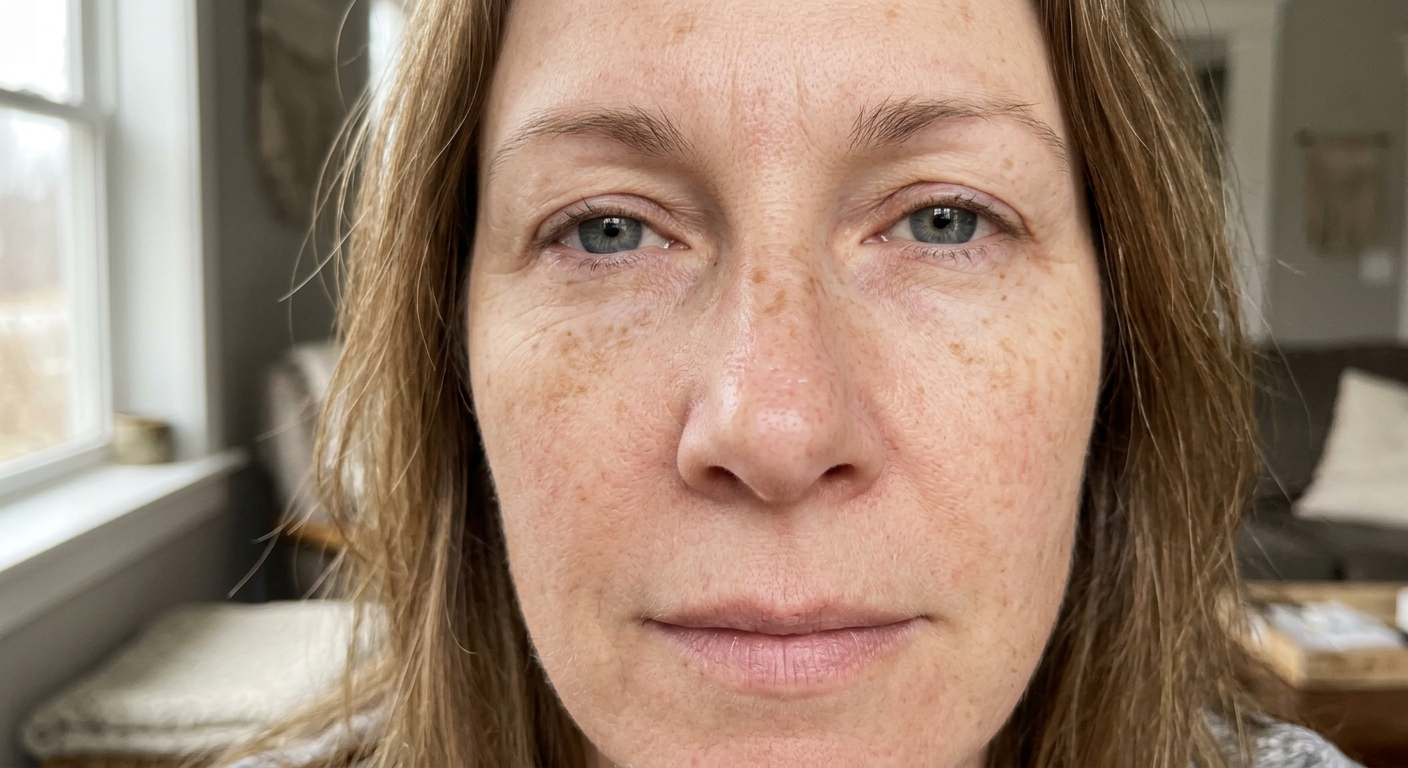
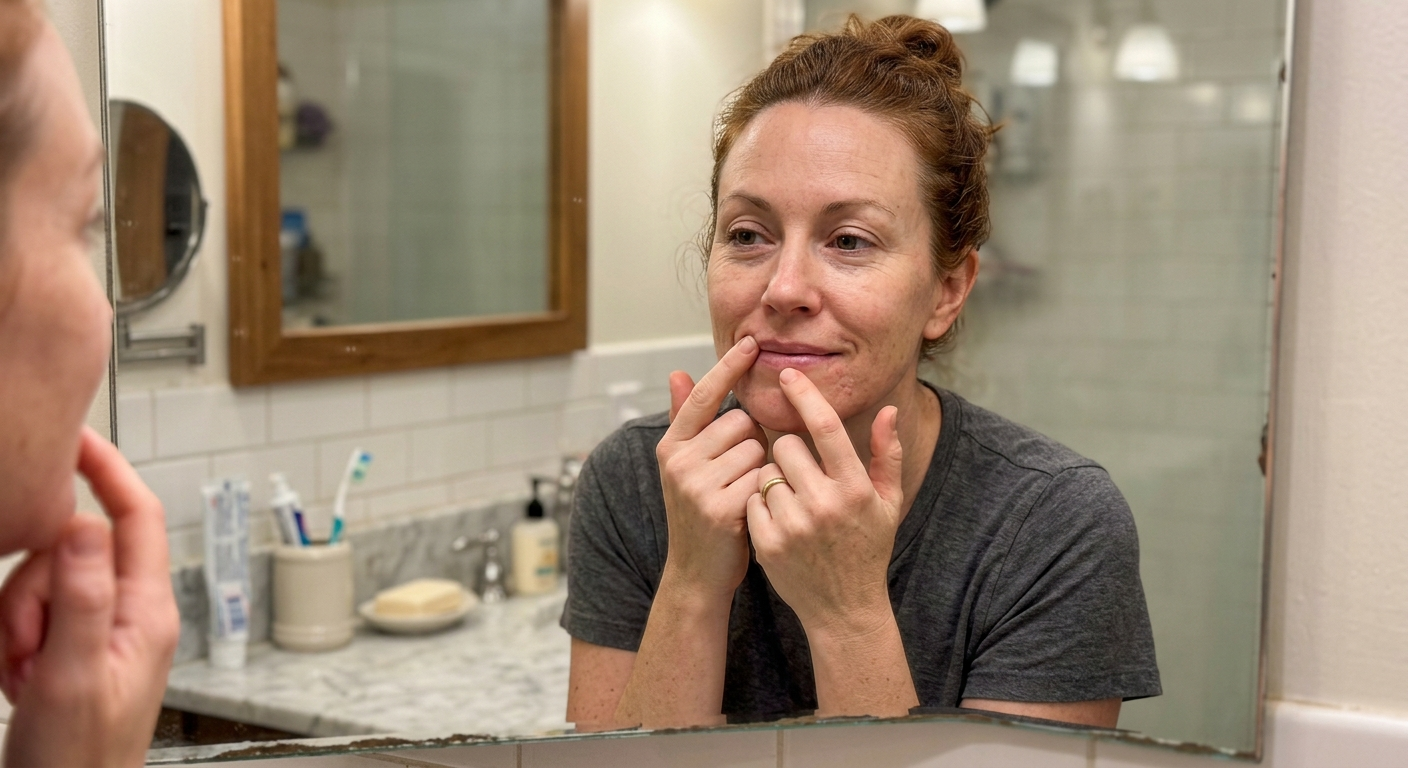
The strip of skin between the base of the nose and the lip line is among the most pigment-prone areas on the face. Women over 35 notice it far more often than men—a dark shadow or mustache-like discoloration that foundation covers but doesn’t fix.
This is called perioral hyperpigmentation, and most cases fall into one of three overlapping categories: melasma triggered by hormonal fluctuations, post-inflammatory darkening from repeated irritation or hair removal, and chronic sun exposure compounding both of the above.
Understanding which type you’re dealing with—and why they overlap—determines which treatment protocol will actually work.
The Role of Hormones
Melasma, the most common cause of upper lip darkening in women over 35, is driven by hormonal fluctuations that increase melanocyte sensitivity. Estrogen and progesterone both upregulate melanin production, which is why melasma appears or worsens during pregnancy, with oral contraceptives, or during perimenopause [1].
The centrofacial pattern—which includes the forehead, nose, upper lip, and chin—accounts for 50-80% of melasma presentations [2]. The upper lip sits at the intersection of UV-exposed tissue and hormonally responsive skin, making it particularly vulnerable. Studies find that 55-64% of people with melasma have a positive family history of the condition, suggesting genetic predisposition plays a major role alongside hormonal and UV triggers [2].
UV Exposure as the Activating Trigger
Even in women with strong hormonal drivers for melasma, UV exposure is what actually triggers pigment production episode by episode. Visible light—not just UVA and UVB radiation—can induce pigmentation in the perioral zone. Research shows that wavelengths at 415nm (blue visible light) cause hyperpigmentation that can persist for up to three months following a single exposure [2].
This is why broad-spectrum SPF is considered the non-negotiable cornerstone of any melasma treatment protocol. Without consistent daily sun protection, topical treatments are fighting an active process every time skin sees light. No brightening ingredient can outpace daily UV-triggered melanin production in someone who skips SPF.
Post-Inflammatory Darkening
A second common contributor is post-inflammatory hyperpigmentation (PIH) from repeated irritation. Women who regularly wax, thread, shave, or bleach the upper lip—especially those with medium to deeper skin tones—often develop persistent darkening from repeated micro-injury to melanocyte-dense follicular tissue.
Studies find that 55-64% of people with melasma have a positive family history of the condition, suggesting genetic predisposition plays a major role alongside hormonal and UV triggers.
This type of pigmentation sits primarily in the epidermis (closer to the skin surface) and is generally more responsive to topical treatment than the mixed epidermal-dermal pigmentation seen in long-standing melasma. However, any irritation to the area during treatment can worsen PIH, which is why the tolerability of whatever retinoid you use matters considerably in this zone.
The Evidence-Based Treatment Protocol
Effective treatment of dark upper lip pigmentation requires layering several approaches, applied with consistency and a realistic timeline.
Daily sun protection—without exception
A broad-spectrum SPF 30-50 worn every day—reapplied if outdoors for extended periods—is the single most important intervention. Without it, new pigmentation forms faster than treatment can reverse existing discoloration.
Topical retinoids to accelerate cell turnover
Tretinoin (prescription-strength) and retinol (over-the-counter) both demonstrate clinical effectiveness for melasma and perioral hyperpigmentation. In a 40-week randomized controlled trial, 68% of patients treated with topical tretinoin achieved clinically significant improvement in melasma, compared to 5% in the vehicle control group [3]. Histological analysis showed tretinoin reduced epidermal pigment by 36% while the vehicle group showed a 50% increase in pigmentation over the same period.
The mechanism: retinoids accelerate epidermal cell turnover, dispersing melanin clusters and reducing the time that melanin-laden keratinocytes remain visible at the skin surface. For specific retinol application strategies and concentration guidance, see our overview of retinol for dark spots.
Tranexamic acid to interrupt melanin signaling
Tranexamic acid interferes with the plasminogen-tyrosinase pathway that drives melanocyte activation, reducing melanin production upstream of where most other brighteners work. For the clinical evidence on tranexamic acid in hyperpigmentation treatment, see our dedicated article on tranexamic acid for dark spots.
Azelaic acid as a tyrosinase inhibitor
Azelaic acid inhibits tyrosinase—the enzyme responsible for melanin synthesis—and has a strong safety profile for long-term daily use. It’s one of the few brightening ingredients with robust evidence in sensitive skin types and during periods when stronger retinoids aren’t appropriate.
Supporting brighteners
Vitamin C (L-ascorbic acid at 10-20%) inhibits tyrosinase and provides antioxidant protection against UV-triggered melanocyte activation. Niacinamide inhibits melanosome transfer from melanocytes to keratinocytes, reducing how much melanin actually reaches the skin surface. Both are useful in combination with a retinoid, applied in the morning under SPF.
Vitamin C (L-ascorbic acid at 10-20%) inhibits tyrosinase and provides antioxidant protection against UV-triggered melanocyte activation.
What to Avoid
Several common practices actively worsen perioral hyperpigmentation:
Waxing or threading during active treatment. Each hair-removal session traumatizes melanocyte-dense follicular tissue and can reactivate or deepen PIH. If hair removal is necessary, laser or IPL performed by a professional—with appropriate skin-type protocols—causes less post-inflammatory risk than mechanical methods.
High-concentration exfoliating peels without professional guidance. The perioral zone is thin-skinned and prone to PIH. Aggressive at-home acids can cause reactive darkening that takes months to fade—longer than the original pigmentation.
Spot treating without SPF. There is no brightening ingredient capable of reversing active UV-driven pigmentation. Applying vitamin C or tranexamic acid without SPF in the morning is running uphill: treatment works, but new darkening forms faster.
The Sensitivity Problem and How Nanoretinol Addresses It
The upper lip skin is thin, close to mucous membranes, and unusually sensitive to irritation. This is where conventional retinol formulations consistently fail: they use barrier-disrupting penetration enhancers that cause stinging, redness, and peeling in sensitive perioral tissue. That irritation is itself a PIH risk—meaning standard retinol can temporarily worsen the dark upper lip it’s meant to treat.
Nanoretinol solves this through mechanism, not just formulation. Its biomimetic lipid nanoparticles are structurally recognized by skin cell membranes as “self,” allowing passage through the epithelial barrier without requiring any disruption of it [4]. Retinol is delivered intact to target cells, with significantly reduced surface reactivity.
Clinical data show Nanoretinol produces +61% improvement in skin firmness and +56% in elasticity within 56 days [4]. Cytotoxicity studies confirm it is substantially gentler on skin cells than conventional retinol—a difference that matters most in areas like the perioral zone, where tolerance determines whether treatment can be maintained consistently enough to produce results. For a broader perspective on melasma treatment options across the full face, that article covers additional approaches and timelines.
Realistic Expectations
Perioral hyperpigmentation is among the most stubborn facial pigmentation concerns. Clinical trials for melasma treatments typically run 12-24 weeks to show meaningful results, and real-world improvement in established pigmentation often takes longer.
A realistic protocol that produces consistent improvement: nightly retinol (or Nanoretinol) applied to the upper lip, morning vitamin C serum, and daily SPF 50. Tranexamic acid or azelaic acid can be layered in where tolerated. Over three to six months, most people see meaningful fading; in deeply established or dermal-component melasma, procedural intervention (laser, chemical peel) may be needed alongside topical treatment.
The first month usually brings minimal visible change—this is normal. The biology requires multiple cell cycles to show cumulative results. Stopping treatment at four weeks, before the process has had time to work, is the most common reason perioral hyperpigmentation persists.
References
-
Grimes PE, Ijaz S, Nashawati R, Kwak D. “New oral and topical approaches for the treatment of melasma.” Int J Womens Dermatol. 2018;5(1):30-36. doi:10.1016/j.ijwd.2018.09.004
-
Ogbechie-Godec OA, Elbuluk N. “Melasma: an Up-to-Date Comprehensive Review.” Dermatol Ther (Heidelb). 2017;7(3):305-318. doi:10.1007/s13555-017-0194-1
-
Griffiths CE, Finkel LJ, Ditre CM, Hamilton TA, Ellis CN, Voorhees JJ. “Topical tretinoin (retinoic acid) improves melasma. A vehicle-controlled, clinical trial.” Br J Dermatol. 1993;129(4):415-21. doi:10.1111/j.1365-2133.1993.tb03169.x
-
North Biomedical LLC. “Nanoretinol vs. Conventional Retinol: Efficacy in Collagen and Elastin Recovery.” Clinical Study Summary, 2024. northbiomedical.com/documents/Nanoretinol-Study_Summary.pdf