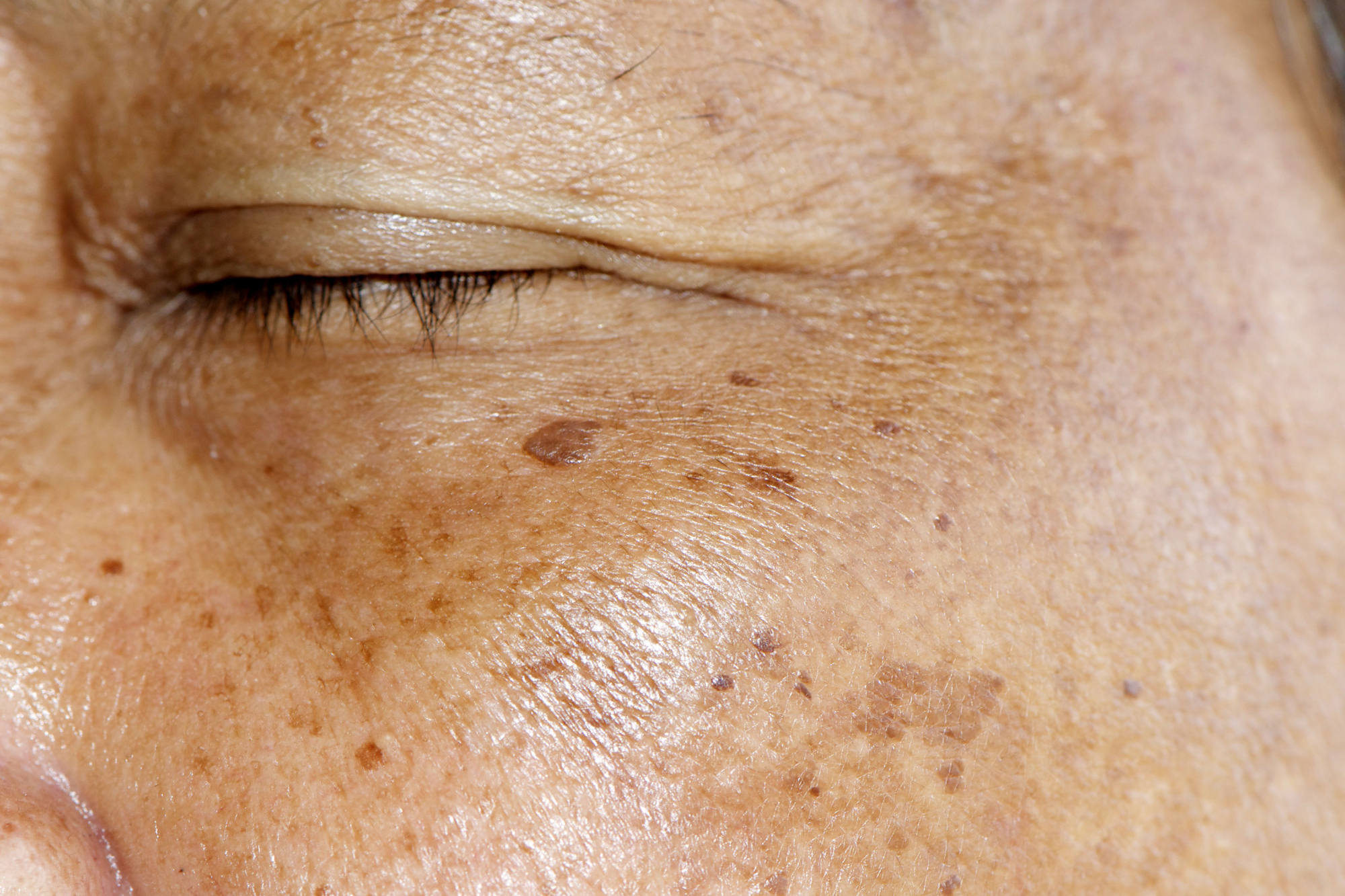
Tranexamic Acid for Dark Spots: A Gentler Approach to Hyperpigmentation
The ingredient that moved from the operating room to the medicine cabinet — and why it's outpacing older brighteners
Hyperpigmentation is, statistically, one of the most common reasons women in their 40s and 50s seek out new skincare. The gradual accumulation of sun spots, post-inflammatory marks, and the blotchy unevenness of melasma — each with a slightly different cause, each requiring a slightly different approach — has driven decades of research into how melanin production can be modulated without the side effects that plagued older brightening agents.
Tranexamic acid (TXA) has emerged from that research as one of the most clinically compelling answers. Its rise over the past decade from a niche dermatological treatment to a mainstream skincare ingredient reflects a genuine shift in the understanding of how pigmentation works — and how to interrupt it.
What Hyperpigmentation Actually Is
Before understanding how tranexamic acid works, it helps to understand what it’s working against.
Dark spots and uneven skin tone are the result of melanin overproduction or maldistribution. Melanocytes — the pigment-producing cells in the basal layer of the epidermis — respond to a variety of triggers by synthesizing more melanin and transferring it to surrounding keratinocytes. Those triggers include ultraviolet radiation (the mechanism behind sun spots and freckles), inflammation (the mechanism behind post-blemish marks), and hormonal fluctuations, especially during pregnancy or menopause (the mechanism behind melasma).
The result in all cases is the same: more melanin concentrated in a visible zone of the skin. The difference lies in what’s activating the melanocytes, which is what makes single-mechanism brighteners partially effective at best — they interrupt one pathway while the others remain open.
Tranexamic Acid’s Origin: From Surgery to Skincare
Tranexamic acid was developed in the 1960s as a hemostatic agent — a drug used to reduce blood loss during surgery by inhibiting the breakdown of fibrin clots. It works by blocking lysine binding sites on plasminogen, the precursor to plasmin, a protein that dissolves clots.
It doesn’t inhibit tyrosinase directly (the key enzyme in melanin synthesis), which distinguishes its mechanism from most other brighteners.
The connection to skin pigmentation was discovered somewhat serendipitously: surgeons noticed that patients receiving TXA perioperatively showed reduced post-surgical hyperpigmentation in sun-exposed areas. Investigation revealed that plasmin — the enzyme TXA blocks — plays a key role in UV-induced pigmentation signaling. When UV radiation hits keratinocytes, it activates plasmin, which then triggers the release of arachidonic acid and prostaglandins that signal melanocytes to increase melanin synthesis [1].
By blocking plasminogen activation in keratinocytes, TXA interrupts this signaling cascade before it reaches the melanocytes. It doesn’t inhibit tyrosinase directly (the key enzyme in melanin synthesis), which distinguishes its mechanism from most other brighteners. Instead, it prevents the keratinocyte-to-melanocyte communication that tells melanin production to increase in the first place [2].
The Evidence Base: Clinical Results
A 2017 randomized controlled trial compared topical tranexamic acid to hydroquinone — still widely considered the benchmark brightening agent — in the treatment of melasma [1]. The study found that TXA produced statistically significant improvements in the Melasma Area and Severity Index (MASI) comparable to hydroquinone, with a notably better side effect profile. Hydroquinone is associated with irritation, paradoxical rebound hyperpigmentation (ochronosis) with prolonged use, and increasing regulatory restrictions in multiple countries. TXA showed none of these concerns.
The evidence is promising but not uniformly positive. In a separate 12-week, double-blind split-face trial of 23 women, both the 5% TXA and vehicle-treated sides improved, but TXA was not statistically superior to the vehicle for pigmentation [4]. That small result is a useful limit on the marketing language: topical TXA is a reasonable option, especially when tolerability matters, but it is not guaranteed to outperform a well-formulated control.
A 2020 in vitro study demonstrated that TXA also inhibits angiogenesis and reduces VEGF (vascular endothelial growth factor) signaling in the skin [3]. This matters because melasma has a vascular component — the redness and warmth of melasma lesions partially reflect abnormal vascular activity that supports the hyperpigmented tissue. TXA appears to address this dimension of the condition as well, which is why it often outperforms purely pigmentation-focused ingredients in melasma specifically.
How TXA Compares to Other Brighteners
| Ingredient | Mechanism | Side Effects | Long-term Safety |
|---|---|---|---|
| Hydroquinone | Tyrosinase inhibitor | Irritation, rebound hyperpigmentation (ochronosis) | Restricted in EU, concerns with prolonged use |
| Vitamin C | Antioxidant, mild tyrosinase inhibition | Oxidizes quickly, instability issues | Excellent |
| Kojic acid | Tyrosinase inhibitor | Sensitizing in some users | Good short-term |
| Tranexamic acid | Plasminogen inhibition, VEGF modulation | Minimal | Excellent |
| Arbutin | Tyrosinase inhibitor (gentler) | Low irritation | Good |
Most brighteners target tyrosinase — the enzyme that synthesizes melanin once the melanocytes have already received the signal to produce it.
What distinguishes TXA from this list is its mechanism. Most brighteners target tyrosinase — the enzyme that synthesizes melanin once the melanocytes have already received the signal to produce it. TXA works upstream, preventing that signal from being sent in the first place. The practical difference is that TXA doesn’t just slow down existing hyperpigmentation — it reduces the creation of new pigment in response to UV and inflammatory triggers.
This makes it particularly valuable for women with melasma, where ongoing hormonal and UV triggers continuously stimulate melanocyte activity. Tyrosinase inhibitors are fighting the symptom; TXA is interrupting the signaling chain.
Where Retinol Fits in the Protocol
Retinol and tranexamic acid address hyperpigmentation from complementary directions, which is why a combined protocol often outperforms either ingredient alone.
Retinol works through accelerated cell turnover — speeding up the rate at which the epidermis sheds and renews itself. Melanin-loaded keratinocytes that would otherwise remain visible in the upper layers of the epidermis for weeks are cycled to the surface and shed more quickly. The result is that existing pigmentation fades faster. Retinol also partially suppresses melanin transfer from melanocytes to keratinocytes via modulation of protease-activated receptor signaling. TXA, meanwhile, works at the signaling level — preventing new melanin from being produced in response to ongoing UV and inflammatory triggers. Together, the two ingredients cover both directions: retinol clearing what’s already there, TXA reducing what’s being added.
The practical routine: retinol at night, TXA in the morning, for example as a tranexamic acid cream under sunscreen (or both morning and night if the formulation allows). SPF is non-negotiable in any brightening protocol — without it, every morning undoes progress made overnight.
Nanoretinol® as the Retinol Component
The choice of retinol delivery system matters in a brightening protocol, not just for efficacy but for skin tolerance. Women using TXA for pigmentation are often already dealing with skin that’s been sensitized by years of sun exposure. Adding a retinol that disrupts the skin barrier increases the risk of post-inflammatory hyperpigmentation — the kind that makes dark spots worse, not better.
Nanoretinol® bypasses this risk through its encapsulated delivery architecture. Rather than disrupting the barrier to penetrate, its biomimetic lipid nanoparticles — structurally identical to cell membranes — are absorbed through natural cellular transport pathways. The result is retinol that reaches dermal cells without triggering the surface-level inflammation that conventional formulations can cause in sensitized or post-sun-damaged skin. Its documented superiority in collagen recovery (+232% vs. conventional retinol) is an added benefit: the structural skin support that accelerates the replacement of photodamaged tissue over time.
What to Expect
Hyperpigmentation responds slowly to topical treatment, regardless of the ingredients involved. Clinical studies of topical TXA have commonly assessed change after roughly 12 weeks [1,4], and real-world results for stubborn sun spots or deep post-inflammatory marks often take longer. Set the expectation: this is a four-to-six-month protocol, not a four-to-six-week one.
What changes fastest: surface texture and superficial pigmentation. What takes longest: deeper melasma, chronic sun spots, and marks from acne that resolved more than a year ago. Consistency and daily SPF are the variables that most predict whether the protocol actually works.
References
- Atefi N, Dalvand B, Ghassemi M, et al. “Therapeutic Effects of Topical Tranexamic Acid in Comparison with Hydroquinone in Treatment of Women with Melasma.” Dermatol Ther (Heidelb). 2017;7(3):367-377. doi:10.1007/s13555-017-0195-0
- Maeda K, Tomita Y. “Mechanism of the Inhibitory Effect of Tranexamic Acid on Melanogenesis in Cultured Human Melanocytes in the Presence of Keratinocyte-conditioned Medium.” J Health Sci. 2007;53(4):389-396. doi:10.1248/jhs.53.389
- Zhu J-W, Ni Y-J, Tong X-Y, et al. “Tranexamic Acid Inhibits Angiogenesis and Melanogenesis in Vitro by Targeting VEGF Receptors.” Int J Med Sci. 2020;17(7):903-911. doi:10.7150/ijms.44188
- Kanechorn Na Ayuthaya P, Niumphradit N, Manosroi A, Nakakes A. “Topical 5% tranexamic acid for the treatment of melasma in Asians: a double-blind randomized controlled clinical trial.” J Cosmet Laser Ther. 2012;14(3):150-154. doi:10.3109/14764172.2012.685478