Dry Skin on Face: Why It Happens After 40 and How to Actually Fix It
The science behind facial dryness, what's really going wrong in your skin barrier, and the ingredients that restore lasting hydration
Why Your Face Gets Drier Every Year
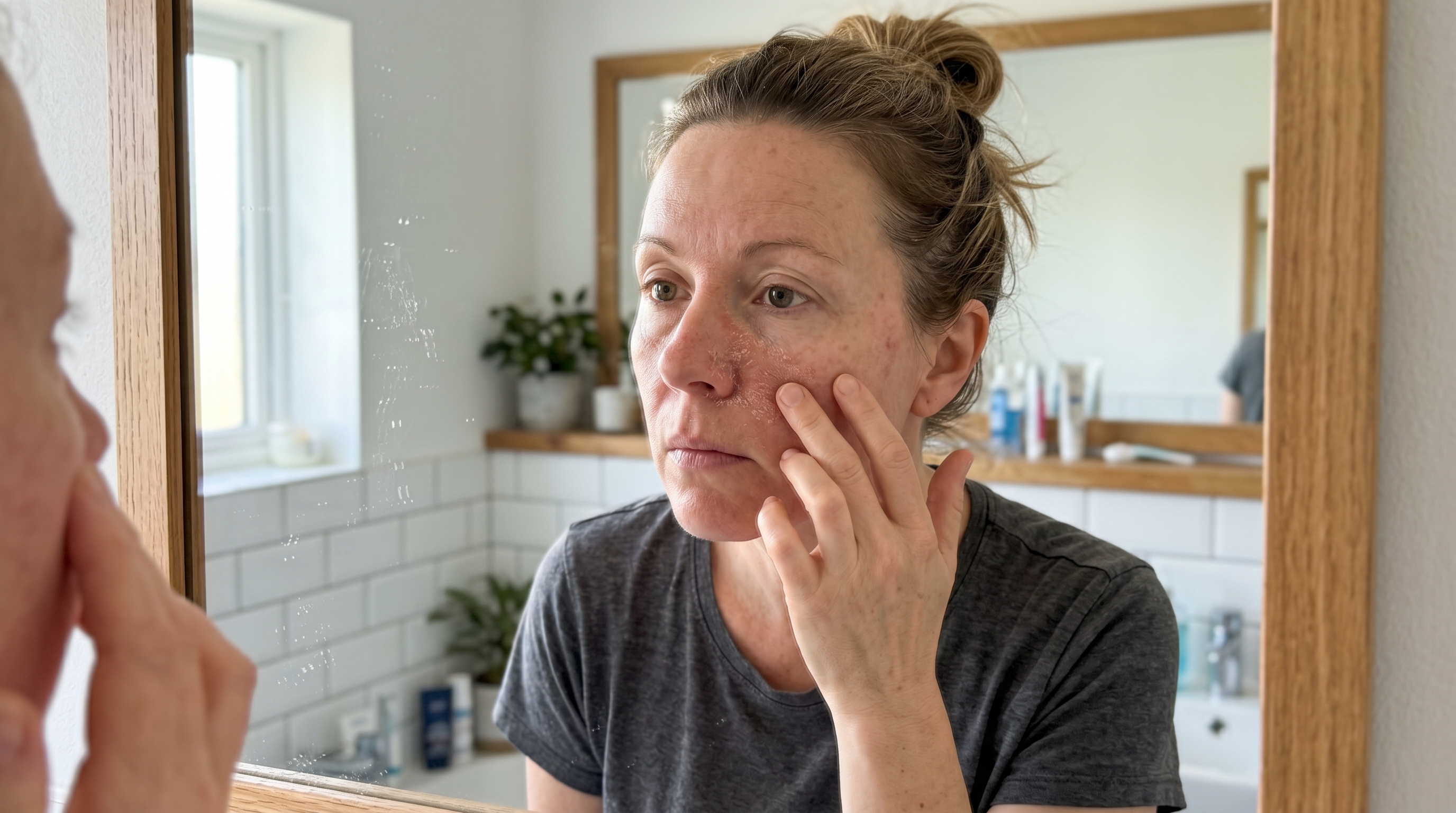
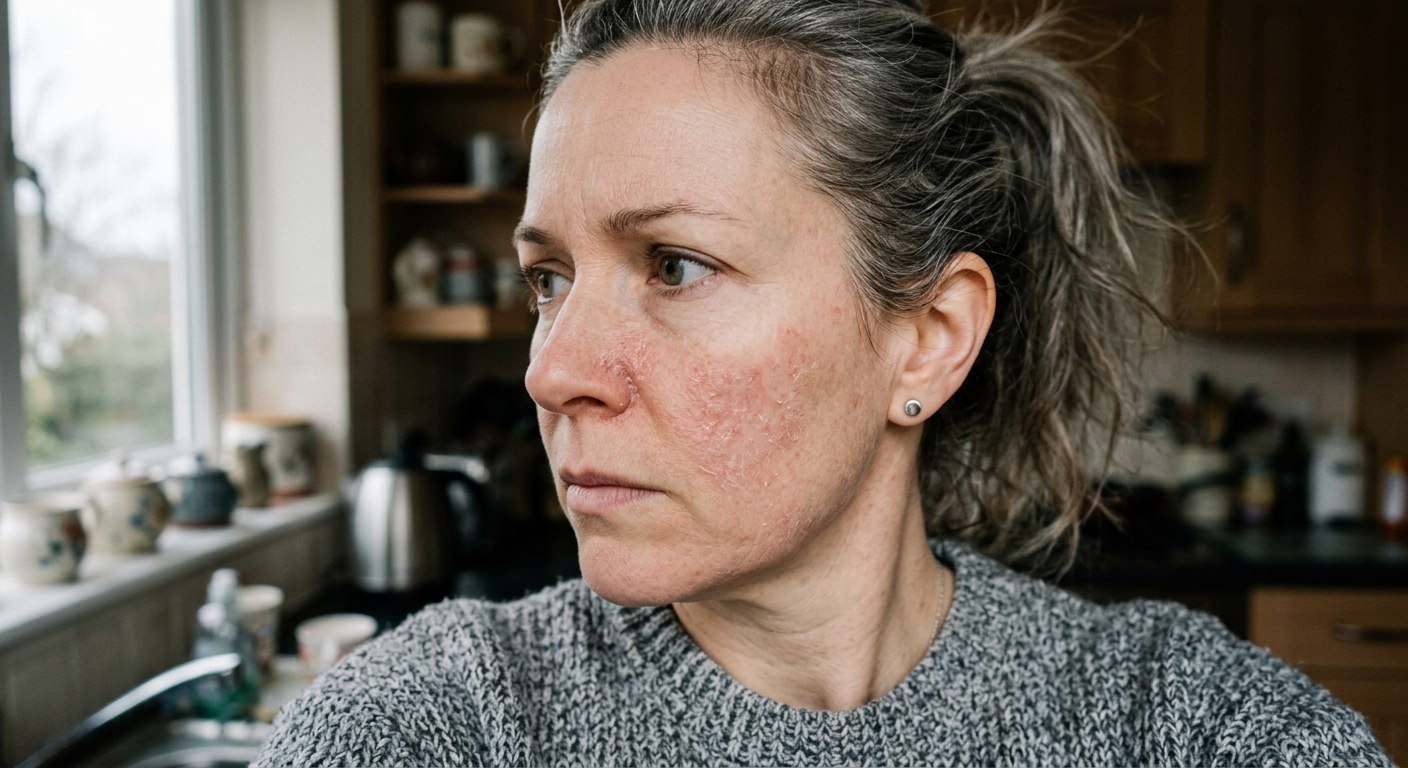
If your skin felt perfectly fine in your twenties but now feels tight, flaky, or irritated by mid-afternoon, you’re not imagining it. Facial dryness after 40 isn’t just a cosmetic annoyance — it’s a measurable biological shift that accelerates with every passing year.
The clinical term is xerosis cutis, and it affects a striking number of adults. A large German cross-sectional study found that the prevalence of dry skin increases significantly with age, with roughly 75% of adults over 60 showing clinical signs of xerosis [1]. But the problem starts decades earlier. By your early forties, the changes are already well underway.
Understanding why this happens — at the cellular level — is the first step toward actually fixing it.
The Barrier Is Breaking Down
Your skin’s outermost layer, the stratum corneum, works like a brick wall. Skin cells (corneocytes) are the bricks. Lipids — especially ceramides, cholesterol, and free fatty acids — are the mortar that holds everything together and keeps water from escaping.
After 40, this mortar starts to thin. Ceramide production declines, and the lipid matrix becomes disorganized. A 2025 review published in Experimental Dermatology confirmed that ceramide depletion is directly linked to increased transepidermal water loss (TEWL), reduced hydration, and heightened susceptibility to irritants [2]. Without adequate ceramides, water evaporates from the skin’s surface faster than it can be replenished from within. Rebuilding that mortar is what a skin care routine for dry skin should be organised around, step by step. This is also why drinking more water does so little once your intake is already adequate — the limiting factor is the seal, not the supply.
This isn’t just about ceramides, though. Your skin also produces less natural moisturizing factor (NMF) — a collection of hygroscopic molecules including urea, lactic acid, and amino acids that pull water from the atmosphere into the stratum corneum. When NMF production declines, your skin loses its ability to stay hydrated even in favorable conditions. Because NMF is water-soluble, the face wash you choose for dry skin determines how much of it survives each wash.
Hormones Make Everything Worse
For women, menopause adds a second wave of dryness. Estrogen directly stimulates the production of hyaluronic acid, sebum, and ceramides in the skin. When estrogen levels drop — often dramatically between ages 45 and 55 — so does the skin’s ability to retain moisture [3].
If your skin barrier is compromised, slathering on a thick occlusive might temporarily reduce water loss, but it won’t restore the ceramide architecture that makes lasting hydration possible.
A position paper published in the Journal of the German Society of Dermatology noted that postmenopausal women experience measurably reduced skin hydration, increased TEWL, and accelerated loss of dermal collagen — all factors that compound the sensation of facial dryness [4]. This hormonal shift explains why many women who never had “dry skin” suddenly find themselves dealing with persistent flakiness, tightness, and sensitivity.
What You’re Probably Doing Wrong
Most people respond to dry skin by layering on heavier creams. That addresses the symptom — but it doesn’t fix the underlying problem. If your skin barrier is compromised, slathering on a thick occlusive might temporarily reduce water loss, but it won’t restore the ceramide architecture that makes lasting hydration possible. It is worth confirming the starting point too, since knowing your actual skin type decides whether you need oil or water.
Worse, some common skincare habits actively aggravate facial dryness:
- Hot water strips natural oils and disrupts the lipid barrier
- Foaming cleansers with sodium lauryl sulfate dissolve the very lipids your skin needs
- Over-exfoliation with acids or scrubs thins the stratum corneum faster than it can rebuild
- Fragrance and alcohol in skincare products trigger subclinical inflammation that impairs barrier repair
The Journal of the American Academy of Dermatology has published data showing that even in otherwise healthy adults, the use of harsh surfactant-based cleansers significantly increases TEWL and reduces stratum corneum hydration within days [5]. If your water is mineral-rich, that effect is amplified, because the residue left behind is harder to rinse off, as we explain in hard water and your skin.
What the Science Says Actually Works
Ceramide-Containing Moisturizers
Because ceramide depletion is a root cause of age-related dryness, topical ceramide replenishment is one of the most evidence-backed approaches. Clinical trials have shown that ceramide-containing formulations improve barrier function, reduce TEWL, and increase skin hydration within two to four weeks of consistent use [2].
But here’s what the research actually shows: long-term retinol use improves skin hydration.
Urea: The Gold Standard for Xerosis
Urea has been extensively studied for dry skin management. A position paper on xerosis treatment identified urea as the gold standard active ingredient, citing its ability to hydrate the stratum corneum, improve barrier function, and reduce roughness and scaling [4]. For facial use, concentrations of 3–5% are typically recommended — higher concentrations can cause stinging on sensitive facial skin.
Hyaluronic Acid for Deep Hydration
Hyaluronic acid (HA) acts as a humectant, drawing water from the dermis and the environment into the upper skin layers. Low-molecular-weight hyaluronic acid has been shown to penetrate deeper into the skin, providing more sustained hydration than high-molecular-weight forms [6]. When paired with an occlusive layer on top, HA can significantly boost skin moisture levels. If heavier oils feel too much on your face, a squalane moisturizer offers that top layer in a lighter form, since squalane closely resembles a surface lipid that your own oil glands produce less of with age. That pairing matters most in the cold months, when indoor air is far too dry for a humectant to draw from, as we explain in dry skin in winter.
Niacinamide: The Multi-Tasker
Niacinamide (vitamin B3) doesn’t just reduce redness. Research demonstrates that it stimulates the biosynthesis of ceramides, cholesterol, and fatty acids in the stratum corneum — the exact lipids that decline with age [7]. In clinical trials, topical niacinamide at 2–4% improved skin barrier function and reduced TEWL in subjects with compromised barriers.
Why Retinol Matters for Dry, Aging Skin
This might sound counterintuitive — retinol is known for causing dryness and peeling, especially during the first few weeks of use. But here’s what the research actually shows: long-term retinol use improves skin hydration.
A landmark clinical trial published in Archives of Dermatology demonstrated that topical retinol significantly increased glycosaminoglycan production, boosted collagen synthesis, and improved overall skin texture in naturally aged skin [8]. Glycosaminoglycans — including hyaluronic acid — are the molecules responsible for holding water in the dermis.
The catch is delivery. Conventional retinol formulations often damage the very skin barrier you’re trying to repair. The retinol triggers an initial inflammatory response — peeling, redness, tightness — that makes dry skin worse before it gets better. Many people quit during this “retinoid dermatitis” phase and never see the benefits.
This is precisely the problem that drove North Biomedical® to develop Nanoretinol®. By encapsulating retinol in biomimetic lipid nanoparticles, the active ingredient bypasses the skin barrier without disrupting it. Clinical testing showed Nanoretinol® was +232% more effective in collagen recovery and +73% more effective in elastin recovery compared to conventional retinol — with significantly reduced irritation. For skin that’s already dry and sensitized, a delivery system that avoids barrier damage isn’t a luxury. It’s a necessity.
Building a Dry Skin Routine That Lasts
The goal isn’t to coat your face in moisture every morning and hope it holds. The goal is to rebuild the barrier so your skin holds its own moisture. Here’s what that looks like, based on the evidence:
- Cleanse gently. Use a non-foaming, fragrance-free cleanser with a pH close to 5.5; a micellar water is among the mildest options if foaming washes leave your face feeling tight. Your skin’s acid mantle is part of its defense system.
- Apply actives on damp skin. Hyaluronic acid and niacinamide work best when there’s available water to bind.
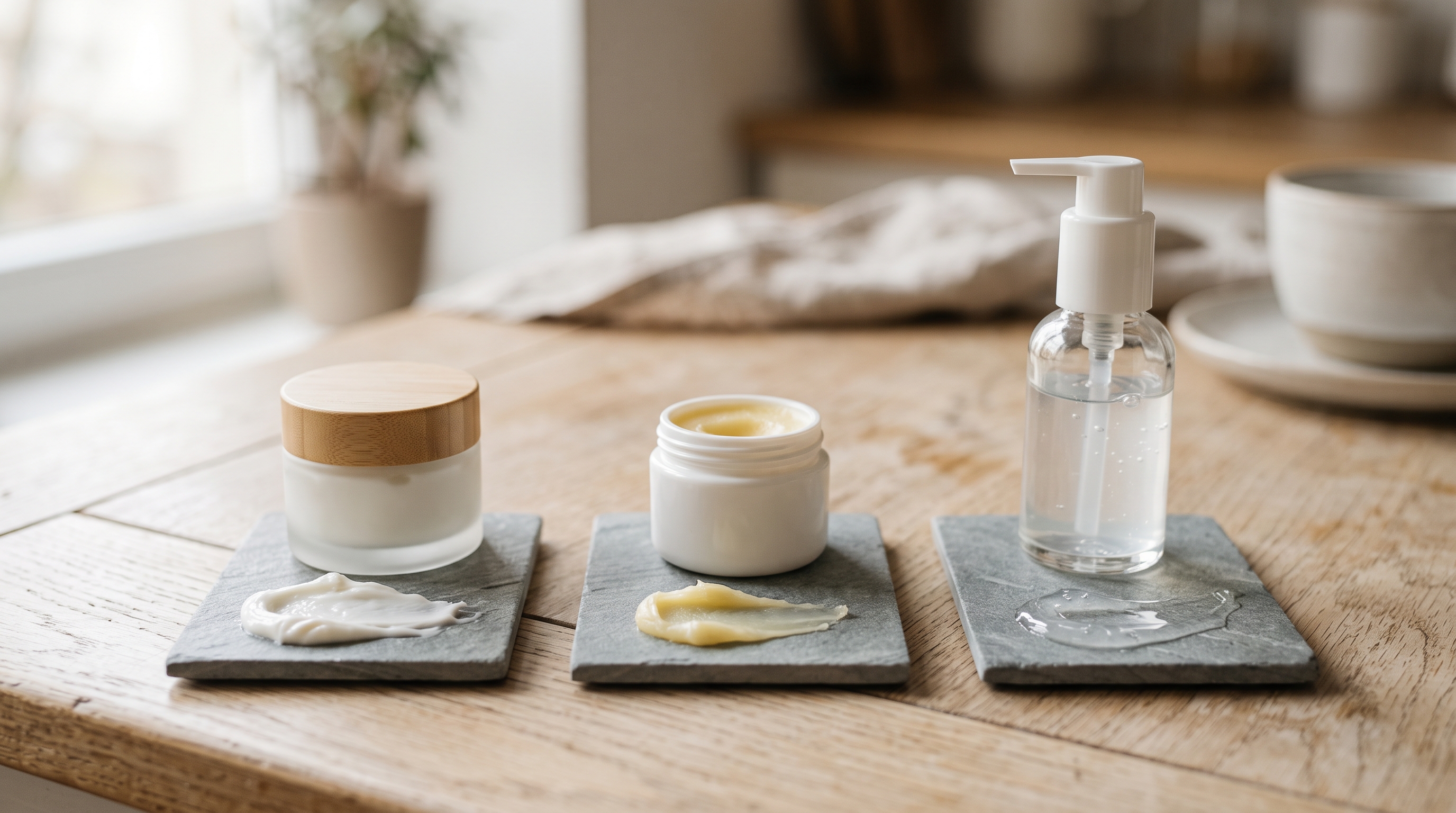
- Seal with ceramides. A ceramide-rich moisturizer rebuilds the lipid matrix. Look for formulations that include all three barrier lipids: ceramides, cholesterol, and fatty acids. Our guide to the best face moisturizer for dry skin compares those formats by ingredient.
- Use retinol strategically. Start low, go slow. If irritation is a concern, consider a nanoparticle-encapsulated form that minimizes barrier disruption.
- Protect daily. UV exposure degrades ceramides and collagen. A broad-spectrum sunscreen is non-negotiable. Choosing a base that will not flake or pill on dry skin is covered in our guide to the best sunscreen for dry skin.
When to See a Dermatologist
Persistent facial dryness that doesn’t respond to barrier-focused skincare may signal an underlying condition — atopic dermatitis, contact dermatitis, rosacea, or thyroid dysfunction can all present as chronic facial dryness. If your skin is cracking, bleeding, or intensely itchy despite consistent moisturization, a dermatologist can rule out medical causes and prescribe targeted treatment.
References
- Mekić S, Jacobs LC, et al. “Prevalence and determinants for xerosis cutis in the middle-aged and elderly population: A cross-sectional study.” Journal of the American Academy of Dermatology. 2019;81(4):963-969. doi:10.1016/j.jaad.2019.06.022
- Yong TL, et al. “Ceramides and Skin Health: New Insights.” Experimental Dermatology. 2025;34(2):e70042. doi:10.1111/exd.70042
- Thornton MJ. “Estrogens and aging skin.” Dermato-Endocrinology. 2013;5(2):264-270. doi:10.4161/derm.23872
- Augustin M, Wilsmann-Theis D, et al. “Diagnosis and treatment of xerosis cutis — a position paper.” Journal der Deutschen Dermatologischen Gesellschaft. 2019;17(Suppl 7):3-33. doi:10.1111/ddg.13906
- Ananthapadmanabhan KP, et al. “Cleansing without compromise: the impact of cleansers on the skin barrier and the technology of mild cleansing.” Dermatologic Therapy. 2004;17(Suppl 1):16-25. doi:10.1111/j.1396-0296.2004.04S1002.x
- Pavicic T, et al. “Efficacy of cream-based novel formulations of hyaluronic acid of different molecular weights in anti-wrinkle treatment.” Journal of Drugs in Dermatology. 2011;10(9):990-1000. PMID: 21931055
- Tanno O, et al. “Nicotinamide increases biosynthesis of ceramides as well as other stratum corneum lipids to improve the epidermal permeability barrier.” British Journal of Dermatology. 2000;143(3):524-531. doi:10.1111/j.1365-2133.2000.03705.x
- Kafi R, Kwak HSR, Schumacher WE, et al. “Improvement of Naturally Aged Skin With Vitamin A (Retinol).” Archives of Dermatology. 2007;143(5):606-612. doi:10.1001/archderm.143.5.606