How to Repair a Damaged Skin Barrier: The Science of What Actually Works
Your skin's outermost layer is an engineered defense system — and when it breaks down, everything from hydration to aging accelerates
Your Skin Barrier Is More Sophisticated Than You Think
Picture a brick wall. The bricks are your corneocytes — flattened, protein-rich dead cells. The mortar between them is a precisely organized matrix of lipids: ceramides, cholesterol, and free fatty acids arranged in tightly packed lamellar sheets. This is your stratum corneum — the outermost layer of your epidermis and your body’s primary interface with the outside world.
This “wall” is only about 15–20 cells thick, yet it accomplishes something extraordinary: it prevents the roughly 60% of your body that’s water from evaporating into the atmosphere, while simultaneously blocking pathogens, allergens, and irritants from getting in [1]. When this barrier is intact, your skin feels smooth, hydrated, and resilient. When it’s compromised, everything changes.
How to Know Your Barrier Is Damaged
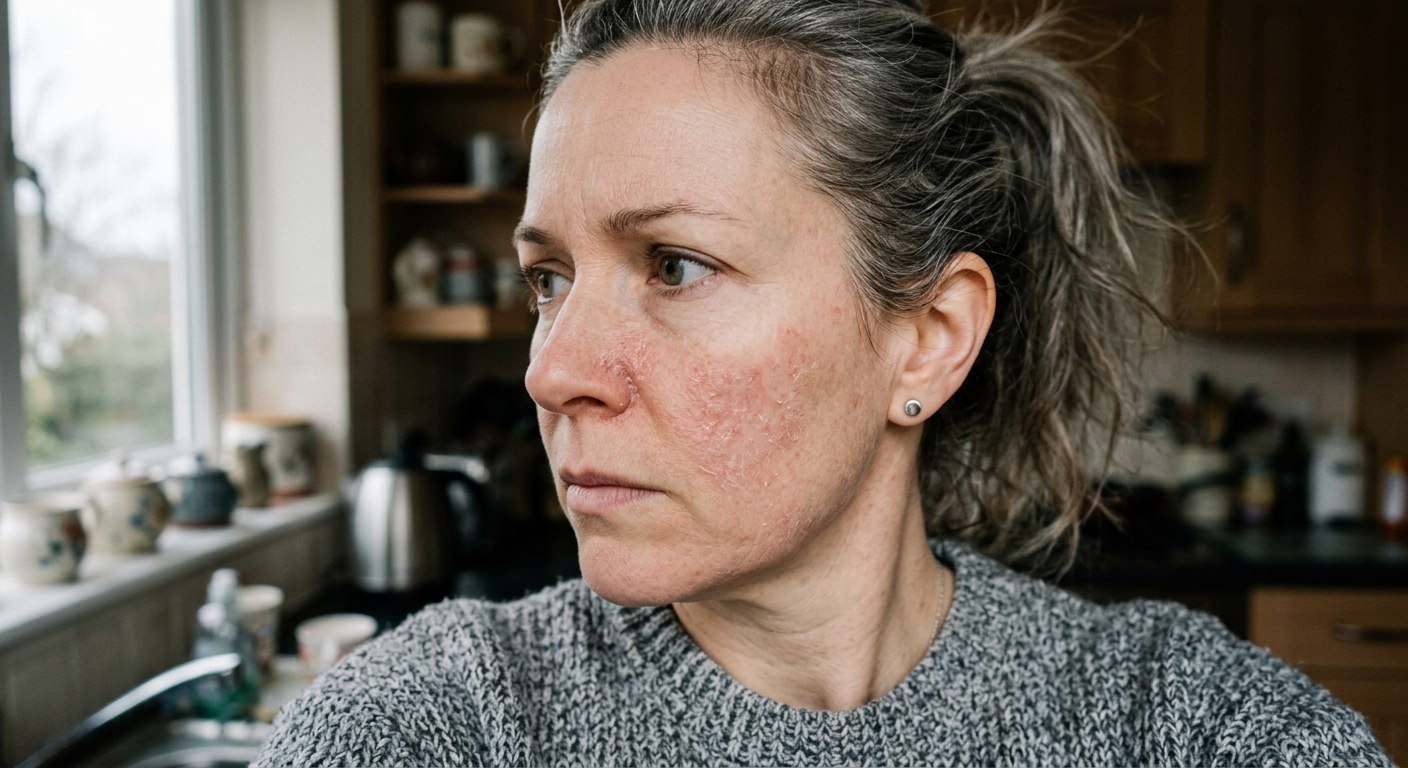
A compromised skin barrier announces itself through a constellation of symptoms that often get mistakenly attributed to other causes:
- Persistent dryness that doesn’t resolve with moisturizer
- Stinging or burning when applying products that never bothered you before
- Redness and visible irritation that fluctuates but doesn’t fully resolve
- Increased sensitivity to temperature changes, wind, or pollution
- Rough, flaky texture even in areas that used to be smooth
- More frequent breakouts, because a weakened barrier allows acne-causing bacteria easier access
The clinical marker dermatologists use to assess barrier health is transepidermal water loss (TEWL) — a measurement of how much water escapes through the stratum corneum per unit area over time. Elevated TEWL is the objective signature of a compromised barrier, and it correlates strongly with reduced ceramide levels in the stratum corneum [2].
The Six Most Common Ways People Damage Their Barrier
Understanding what breaks the barrier down is essential to stopping the cycle. Most barrier damage is self-inflicted:
1. Over-Cleansing and Harsh Surfactants
Every time you wash your face with a foaming cleanser containing sodium lauryl sulfate or similar aggressive surfactants, you strip away a portion of the lipid mortar between your corneocytes. Your barrier can tolerate this occasionally — it has self-repair mechanisms. But twice-daily cleansing with harsh products overwhelms these repair pathways [3]. Water hardness compounds the problem by leaving more of that surfactant behind on the skin, which is why hard water and skin deserves its own look. Swapping to a milder wash is the highest-yield change available here, and the best face wash for sensitive skin guide covers how to identify one from the ingredient list alone. Where that cleanser sits in the wider sequence is laid out in our skin care routine for dry skin.
2. Over-Exfoliation
Chemical exfoliants (AHAs, BHAs) and physical scrubs deliberately remove outer corneocyte layers. Used judiciously, this promotes turnover and reveals fresher skin. Used excessively — which is remarkably common in the era of “skincare stacking” — it thins the stratum corneum faster than new cells can replace the lost ones.
3. Retinoid Irritation (Without Proper Delivery)
Retinoids are the gold standard for anti-aging, but conventional formulations penetrate the skin barrier through a process called lipid mobility — using chemical vehicles that disrupt the stratum corneum’s lipid organization. This is literally a barrier-damaging mechanism built into the delivery system. The resulting redness, peeling, and sensitivity are signs of barrier compromise, not just “retinization.”
Every time you wash your face with a foaming cleanser containing sodium lauryl sulfate or similar aggressive surfactants, you strip away a portion of the lipid mortar between your corneocytes.
4. Environmental Assault
Cold, dry air in winter strips moisture. Wind increases evaporation. Pollution deposits particulate matter that generates free radicals at the skin surface. Air conditioning and indoor heating reduce ambient humidity. Your barrier is under constant environmental siege [4]. Mechanical insults count as much as environmental ones, and for men shaving is the most frequent of them, as our guide to the best face moisturizer for men sets out.
5. Age-Related Decline
After 40, the skin’s ability to produce ceramides declines significantly. Studies have shown that total ceramide content in the stratum corneum decreases with age, and the ratio of ceramide subtypes shifts in ways that reduce barrier efficiency [2]. This means the barrier becomes progressively more vulnerable to damage from all other sources.
6. Fragrance and Sensitizing Ingredients
Fragrances — both synthetic and natural essential oils — are among the most common causes of contact irritation. They can penetrate the barrier and trigger inflammatory responses that further compromise structural integrity.
The Science of Barrier Repair
Your stratum corneum has built-in repair mechanisms. When the barrier is disrupted, a cascade of biological signals triggers increased production of the lipids needed to rebuild the mortar: ceramides, cholesterol, and fatty acids. This process takes roughly 72 hours under ideal conditions, but can take significantly longer if the disrupting stimulus is ongoing or if the skin is aged [5].
The strategic question is: how do you support and accelerate this natural repair process?
Ceramides: The Key to Rebuilding
Ceramides constitute approximately 40–50% of the stratum corneum’s intercellular lipid matrix. They’re the dominant structural lipid, and their depletion is the single most significant factor in barrier dysfunction [2].
A qualitative review of 12 controlled clinical studies found that ceramide-containing formulations consistently improved barrier function in patients with compromised skin — reducing TEWL, improving stratum corneum structure, and increasing stratum corneum lipid content [6]. A separate randomized trial demonstrated that a ceramide-enriched regimen reduced skin severity scores by 61.2% and improved quality of life by 67.2% in patients with barrier-disrupted skin [7].
The evidence is clear: topical ceramide supplementation works for barrier repair. Protective film-formers play a supporting role rather than a rebuilding one, as our guide to dimethicone for skin explains.
Cholesterol and Fatty Acids: The Complete Ratio
Ceramides alone aren’t sufficient for optimal repair. Research has shown that the stratum corneum lipid matrix requires ceramides, cholesterol, and free fatty acids in an approximately equimolar ratio for proper lamellar organization. Formulations that provide all three lipids in physiological ratios, whether a cream or a lightweight ceramide serum, restore barrier function faster than any single lipid alone [5].
Here’s the paradox many women over 40 face: the most effective anti-aging ingredient — retinol — is also one of the most common barrier disruptors.
Hyaluronic Acid and Glycerin: Hydration Support
While these humectants don’t directly rebuild the lipid barrier, they support the repair process by maintaining hydration in the stratum corneum. Adequate hydration is necessary for the enzymatic processes that drive desquamation (normal cell shedding) and lipid synthesis [1], which is also the supporting role a soothing beta glucan serum or centella serum plays for reactive skin.
Niacinamide: The Ceramide Booster
Niacinamide (vitamin B3) has been shown to increase ceramide and other lipid synthesis in the stratum corneum. Clinical studies demonstrate that topical niacinamide at 2–4% concentration improves barrier function, reduces TEWL, and decreases sensitivity in barrier-compromised skin [8].
The Barrier-Friendly Approach to Anti-Aging
Here’s the paradox many women over 40 face: the most effective anti-aging ingredient — retinol — is also one of the most common barrier disruptors. This creates a frustrating cycle: you start retinol to address wrinkles, the barrier damage triggers sensitivity, you stop retinol, your wrinkles continue, you restart, and the cycle repeats.
The solution isn’t to abandon retinol. It’s to use retinol that doesn’t damage the barrier in the first place.
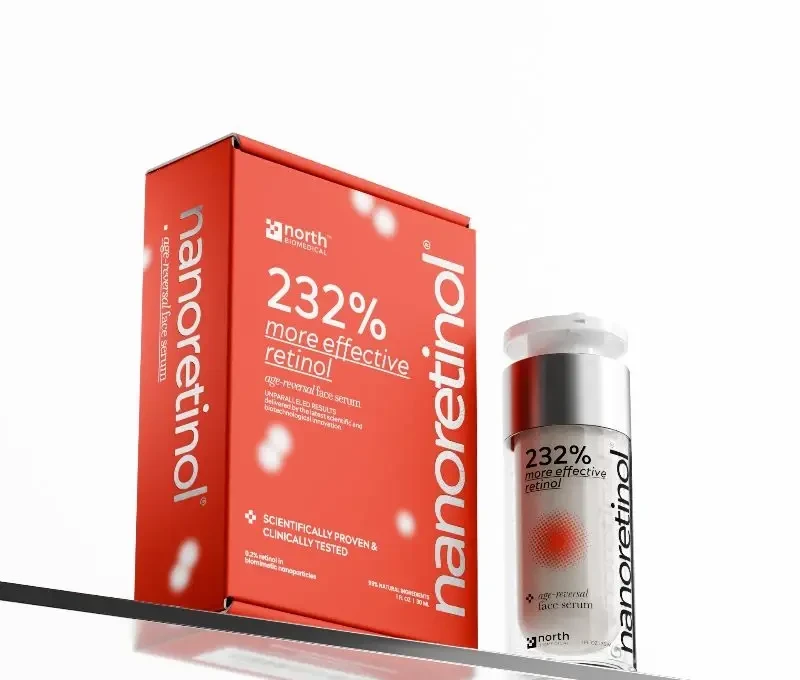
Nanoretinol® was engineered specifically to solve this problem. Its biomimetic lipid nanoparticles deliver retinol through the epithelial barrier without the lipid-disrupting mechanism that conventional formulations rely on. The nanoparticles are externally identical to skin cell membranes, so the body’s defense systems don’t mount an inflammatory response. Instead of breaking through the wall, they’re recognized as part of it.
The clinical implications are significant: 232% greater collagen recovery compared to conventional retinol, with drastically reduced cytotoxicity. For women with compromised or sensitive barriers, this means accessing the full anti-aging power of retinol without the barrier damage that normally accompanies it.
A Step-by-Step Barrier Repair Protocol
If your barrier is currently compromised, here’s what the evidence supports:
Step 1: Stop the damage (immediately) Eliminate harsh cleansers, reduce exfoliation frequency to once per week maximum, pause any irritating actives. Switch to a gentle, cream or milk cleanser with a pH between 4.5 and 5.5. Rebuild on a fragrance-free base chosen for sensitive skin.
Step 2: Rebuild the lipid matrix (weeks 1–4) Apply a ceramide-containing moisturizer twice daily. Look for formulations that include all three barrier lipids: ceramides, cholesterol, and fatty acids, a requirement our best ceramide moisturizer guide traces back to the original barrier-repair research. Layer over a hyaluronic acid serum for hydration support, or choose a snail mucin moisturizer with ceramides if you want the soothing filtrate and the barrier lipids in one step. On a face that is oily in the T-zone and dry on the cheeks, our guide to the best moisturizer for combination skin covers how to vary that by zone.
Step 3: Reintroduce actives carefully (weeks 3–6) Once sensitivity resolves, reintroduce your retinoid — ideally one with a barrier-friendly delivery system like Nanoretinol®. Start with every other night and gradually increase frequency. If products roll into crumbs during reintroduction, use the moisturizer-pilling test to distinguish film incompatibility from genuine barrier flaking.
Step 4: Protect daily (ongoing) Broad-spectrum sunscreen every morning. UV radiation directly damages barrier lipids and impairs repair mechanisms.
Step 5: Maintain (ongoing) Continue ceramide-containing products as part of your permanent routine, especially if you’re over 40. Your skin’s natural ceramide production will continue declining, and consistent topical supplementation compensates for this loss.
Once the barrier is stable, the order in which you reintroduce actives decides whether it stays that way. The sensitive skin care routine sets out a fortnightly reintroduction schedule that puts retinoids last.
When to See a Dermatologist
If barrier damage persists beyond 4–6 weeks of a simplified, barrier-supportive routine, professional evaluation is warranted. Chronic barrier dysfunction can indicate underlying conditions like rosacea, eczema, or contact dermatitis that require targeted treatment beyond cosmetic skincare.
Barrier repair isn’t glamorous. It doesn’t produce dramatic before-and-after photos. But without a healthy barrier, every other product you apply — every serum, every active, every SPF — works less effectively. Your barrier is the foundation. Fix it first, and everything else works better.
References
- Del Rosso JQ, Levin J. “The Clinical Relevance of Maintaining the Functional Integrity of the Stratum Corneum in both Healthy and Disease-affected Skin.” Journal of Clinical and Aesthetic Dermatology. 2011;4(9):22-42. PMID: 21938268
- Imokawa G, Abe A, Jin K, Higaki Y, Kawashima M, Hidano A. “Decreased Level of Ceramides in Stratum Corneum of Atopic Dermatitis: An Etiologic Factor in Atopic Dry Skin?” Journal of Investigative Dermatology. 1991;96(4):523-526. doi:10.1111/1523-1747.ep12470233
- Ananthapadmanabhan KP, Moore DJ, Subramanyan K, Misra M, Meyer F. “Cleansing without Compromise: The Impact of Cleansers on the Skin Barrier and the Technology of Mild Cleansing.” Dermatologic Therapy. 2004;17(Suppl 1):16-25. doi:10.1111/j.1396-0296.2004.04S1002.x
- Engebretsen KA, Johansen JD, Kezic S, Linneberg A, Thyssen JP. “The Effect of Environmental Humidity and Temperature on Skin Barrier Function and Dermatitis.” Journal of the European Academy of Dermatology and Venereology. 2016;30(2):223-249. doi:10.1111/jdv.13301
- Elias PM. “Stratum Corneum Defensive Functions: An Integrated View.” Journal of Investigative Dermatology. 2005;125(2):183-200. doi:10.1111/j.0022-202X.2005.23668.x
- Spada F, Barnes TM, Greive KA. “Skin Hydration Is Significantly Increased by a Cream Formulated to Mimic the Skin’s Own Natural Moisturizing Systems.” Clinical, Cosmetic and Investigational Dermatology. 2018;11:491-497. doi:10.2147/CCID.S177697
- Fukushima M, Tagami H. “Clinical Significance of the Water Retention and Barrier Function-Improving Capabilities of Ceramide-Containing Formulations: A Qualitative Review.” Journal of Dermatology. 2022;49(8):735-746. doi:10.1111/1346-8138.16475
- Draelos ZD, Ertel K, Berge C. “Niacinamide-containing Facial Moisturizer Improves Skin Barrier and Benefits Subjects with Rosacea.” Cutis. 2005;76(2):135-141. PMID: 16209160