Hyperpigmentation Treatment: What Actually Fades Dark Spots (and What Wastes Your Money)
A dermatology-backed guide to the ingredients and procedures that genuinely fade sun spots, melasma, and post-inflammatory marks.
If you have spent any money on a “dark spot corrector,” you already know the frustration. The spot fades a little, then stalls. Or it seems to lighten for a few weeks and then quietly returns, sometimes darker than before. Hyperpigmentation is the single most searched-for skin concern among women over 40, and it is also one of the most misunderstood. The problem is rarely that the spots are permanent. The problem is that most people are treating the symptom without addressing the biology that keeps making it. Among in-office options, BBL broadband light is one of the most popular for clearing sun-driven dark spots.
Here is the reframe that changes everything: a dark spot is not a stain sitting on top of your skin. It is a factory underneath it, running on overtime.
Why Your Skin Makes Dark Spots
Deep in the lower layer of your epidermis sit specialized cells called melanocytes. Their job is to produce melanin, the pigment that protects your DNA from ultraviolet light. The rate-limiting step in that entire process is a single enzyme called tyrosinase. When tyrosinase is switched on — by sun exposure, by inflammation, by hormonal signals — melanocytes package melanin into little parcels and hand them off to surrounding skin cells. Multiply that across a cluster of overactive cells and you get a visible patch of pigment.
Almost every effective treatment on earth works by interrupting one of three points: dialing down tyrosinase, slowing the hand-off of pigment to neighboring cells, or speeding up how fast pigmented cells shed off the surface. Understanding which lever a product pulls is how you separate the genuinely useful from the beautifully packaged. Our guide to the best brightening serum walks through those three levers product by product.
Here is the reframe that changes everything: a dark spot is not a stain sitting on top of your skin.
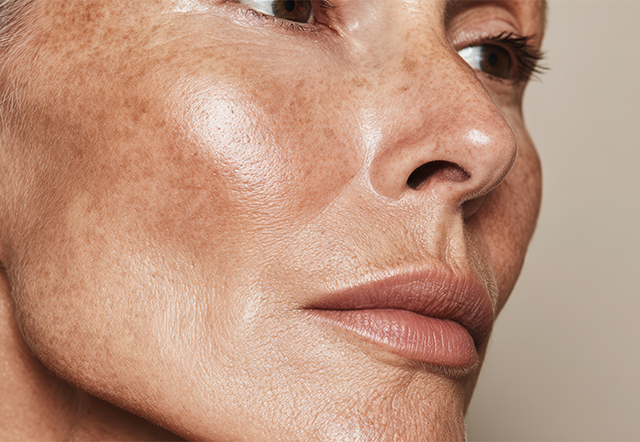
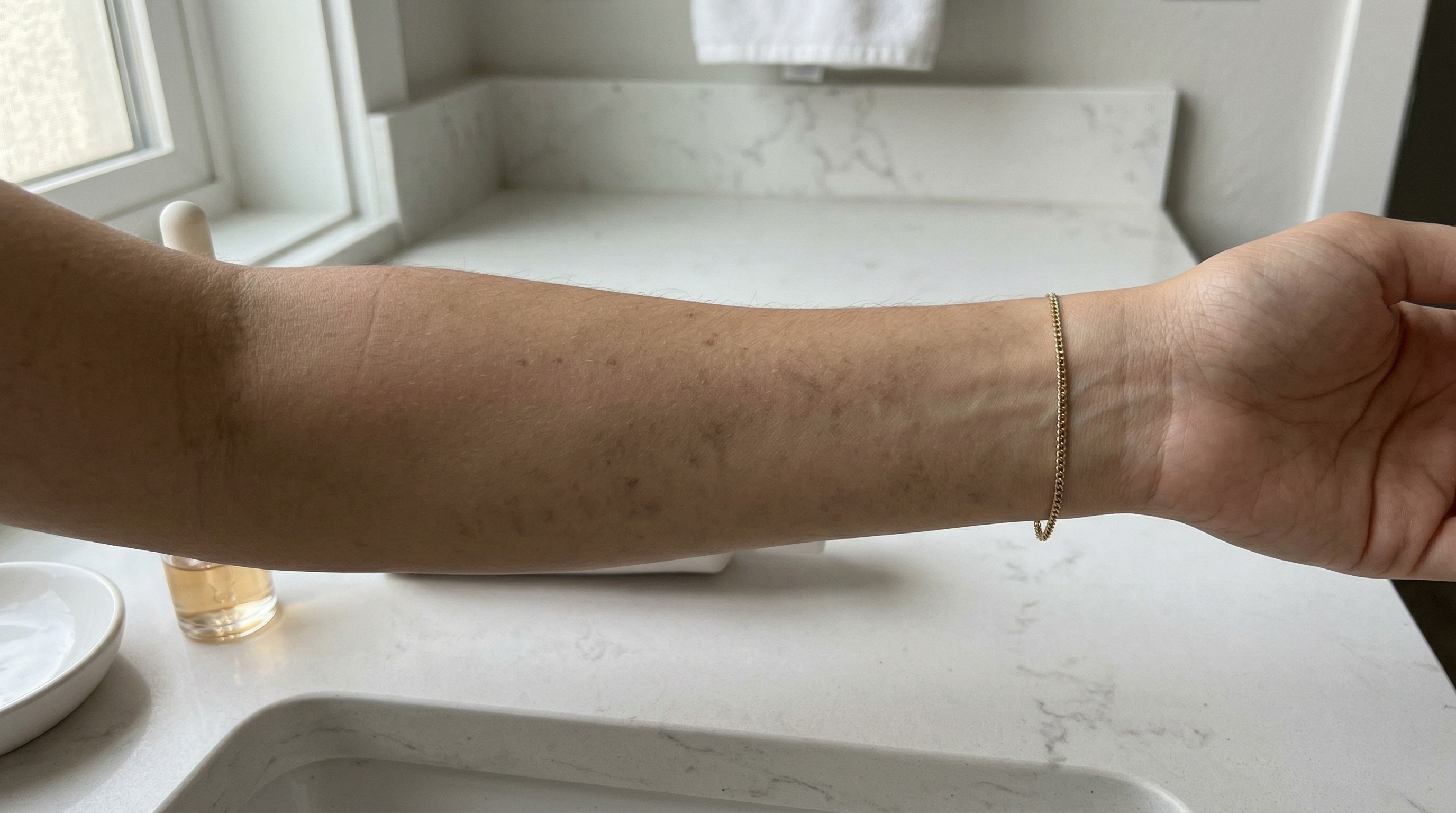
The three most common patterns are worth naming, because they respond differently. Sun-induced spots, or solar lentigines, are the flat brown patches from decades of cumulative UV. Melasma is the larger, blotchy, often symmetrical pigmentation driven by hormones and heat, and it is famously stubborn. And post-inflammatory hyperpigmentation is the mark left behind after a breakout, a bug bite, or an aggressive treatment — the skin’s overreaction to injury.
The Foundation Nobody Wants to Hear: Sunscreen
Every dermatologist gives the same unglamorous answer first, because it is true. Ultraviolet and visible light are the primary trigger that reactivates tyrosinase. You can fade a spot with the most potent regimen available, but if you skip daily broad-spectrum SPF, you are refilling the tank as fast as you drain it. This is not a moral lecture; it is arithmetic. No treatment discussed below performs to its potential without it. If you fade one thing this year, protecting the progress you make with sunscreen is what determines whether it lasts.
The Ingredients With Real Evidence
Tyrosinase inhibitors are the workhorses. Hydroquinone has been the prescription standard for decades, but a new generation of well-tolerated molecules — thiamidol, alpha arbutin, kojic acid (usually studied as a kojic acid cream), and azelaic acid — now offer meaningful fading without hydroquinone’s downsides. A 2025 review in Molecules catalogued dozens of these small-molecule inhibitors and confirmed that directly suppressing the enzyme remains the most targeted way to reduce melanin at the source [1]. Niacinamide acts further downstream, blocking pigment transfer rather than pigment synthesis, which is why it stacks cleanly with these; our best niacinamide serum guide covers the concentrations that were actually tested, and we put the two gentlest options head to head in azelaic acid vs niacinamide.
Tranexamic acid is the ingredient that quietly changed melasma care. Rather than bleaching pigment, it interrupts the signaling between your skin’s blood vessels and its melanocytes. A 2024 meta-analysis of randomized controlled trials in the Journal of Dermatological Treatment found that tranexamic acid — whether taken orally, applied topically, or injected — significantly reduced melasma severity across every measured scale [2]. For hormone-driven pigmentation that laughs at conventional lighteners, it is often the missing piece. It is worth understanding how tranexamic acid works on dark spots before you build a routine around it.
Rather than bleaching pigment, it interrupts the signaling between your skin’s blood vessels and its melanocytes.
Retinoids are the multitaskers, and this is where the science is genuinely impressive. Topical retinoids attack pigmentation from several directions at once: they inhibit tyrosinase, they slow the transfer of melanin to keratinocytes, and they accelerate cell turnover so pigmented cells shed faster. A landmark New England Journal of Medicine trial showed that after ten months of topical tretinoin, liver spots and photodamaged pigmentation lightened significantly compared with placebo [3]. A second NEJM study in patients with darker skin found the same benefit for post-inflammatory hyperpigmentation, without worsening the surrounding tone [4]. A 2009 evidence-based review in the American Journal of Clinical Dermatology concluded that retinoids reduce pigment through cell-turnover and tyrosinase pathways, and that they amplify the effect of other lighteners when combined [5].
The Trap That Makes Everything Worse
Here is the paradox at the heart of pigmentation. Inflammation is one of the biggest triggers of melanin production — yet many of the most popular fading strategies are themselves irritating. Aggressive acid peels, high-strength retinoids used too fast, and harsh scrubs can all provoke the exact inflammatory response that generates new post-inflammatory marks. For anyone with a medium-to-deep skin tone, this is not a hypothetical risk; it is the single most common reason a fading routine backfires. The same trap catches people trying to scrub off a summer tan, as we explain in how to remove sun tan from your face.
The lesson from decades of clinical data is quietly consistent: the goal is maximum active delivery with minimum irritation. A gentle regimen used consistently for six months beats an aggressive one abandoned after three weeks of redness and peeling.
Where Nanoretinol Changes the Equation
Retinol is one of the best-studied tools for pigmentation, but the classic formulations carry a built-in problem. Conventional retinol penetrates the skin barrier poorly, so brands push concentrations higher to compensate — and higher concentrations mean more of the burning, redness, and peeling that can trigger fresh pigmentation. It is the irritation trap in a bottle.
Nanoretinol was engineered specifically around this dilemma. It encapsulates retinol inside biomimetic lipid nanoparticles that the skin recognizes as “self” and admits through the barrier without the chemical disruption conventional formulas rely on. That biology lets a fully stabilized 0.2% concentration deliver retinol efficiently to the cells that matter, while remaining gentle enough for sensitive and reactive skin. In North Biomedical’s testing, this delivery approach proved dramatically less cytotoxic to skin cells than conventional retinol, alongside markedly stronger collagen and elastin recovery. For pigmentation-prone skin, that combination — real retinoid activity without the irritation that manufactures new spots — is exactly the balance the research says matters most.
Fading Spots Is a Long Game
The honest truth about hyperpigmentation is that there is no overnight fix, and any product promising one is selling optimism. What works is a stack: rigorous daily sun protection, a targeted tyrosinase inhibitor, tranexamic acid for hormonal patterns, and a well-delivered retinoid to accelerate turnover — used patiently and gently for months, not days. Get those pieces right and the factory beneath your skin finally slows down. If persistent or rapidly changing pigmentation does not respond, see a board-certified dermatologist to rule out anything that needs medical evaluation.
References
- Ni X, Luo X, Jiang X, Chen W, Bai R. “Small-Molecule Tyrosinase Inhibitors for Treatment of Hyperpigmentation.” Molecules. 2025;30(4):788. doi:10.3390/molecules30040788
- Calacattawi R, Alshahrani M, Aleid M, et al. “Tranexamic acid as a therapeutic option for melasma management: meta-analysis and systematic review of randomized controlled trials.” Journal of Dermatological Treatment. 2024;35(1):2361106. doi:10.1080/09546634.2024.2361106
- Rafal ES, Griffiths CE, Ditre CM, et al. “Topical Tretinoin (Retinoic Acid) Treatment for Liver Spots Associated with Photodamage.” New England Journal of Medicine. 1992;326(6):368-374. doi:10.1056/NEJM199202063260603
- Bulengo-Ransby SM, Griffiths CE, Kimbrough-Green CK, et al. “Topical Tretinoin (Retinoic Acid) Therapy for Hyperpigmented Lesions Caused by Inflammation of the Skin in Black Patients.” New England Journal of Medicine. 1993;328(20):1438-1443. doi:10.1056/NEJM199305203282002
- Kang HY, Valerio L, Bahadoran P, Ortonne JP. “The role of topical retinoids in the treatment of pigmentary disorders: an evidence-based review.” American Journal of Clinical Dermatology. 2009;10(4):251-260. doi:10.2165/00128071-200910040-00005