Jeuveau: What 'Newtox' Actually Is — and What It Can't Fix
How prabotulinumtoxinA-xvfs compares to Botox, what the clinical trials really show, and the surface-level aging it leaves completely untouched.
The Injectable Everyone Started Calling “Newtox”
Walk into almost any medical spa and you will now see a name on the menu that did not exist a decade ago: Jeuveau. It arrived with a marketing-friendly nickname — “Newtox” — and a price tag that often undercuts the original. For women in their forties and fifties weighing their first injectable, or looking to switch, the obvious question is whether the newcomer is genuinely different or simply cheaper.
The short answer: chemically, it is a very close cousin of Botox, and the trials show it performs about as well for one specific job. The longer answer is more useful, because it explains exactly what Jeuveau does, what it costs you, and — most importantly — the large category of facial aging it cannot reach at all.
Jeuveau is the brand name for prabotulinumtoxinA-xvfs, a botulinum toxin type A. Like Botox, Dysport, and Xeomin, it is a purified protein that temporarily blocks the nerve signal telling a muscle to contract. It is FDA-approved for one indication only: the temporary improvement of moderate-to-severe glabellar lines — the vertical ”11s” that form between the eyebrows when you frown.
How a Neurotoxin Softens a Frown Line
To understand both the power and the limits of Jeuveau, it helps to know why the lines form in the first place. Every time you knit your brows, the corrugator and procerus muscles fold the skin above them. In your twenties, the skin springs back flat. Over decades, that repeated folding etches a crease into the dermis — the same way a sheet of paper creased thousands of times eventually holds the line.
Jeuveau interrupts the loop. Injected into those small muscles, it blocks acetylcholine release at the neuromuscular junction, so the muscle relaxes and stops folding the skin. Within a few days the frown lines soften, and over two to four weeks they fade as the skin is left in peace.
At day 30, responder rates were 87.2% for Jeuveau versus 82.8% for Botox and just 4.2% for placebo — a result that met the bar for non-inferiority to Botox.
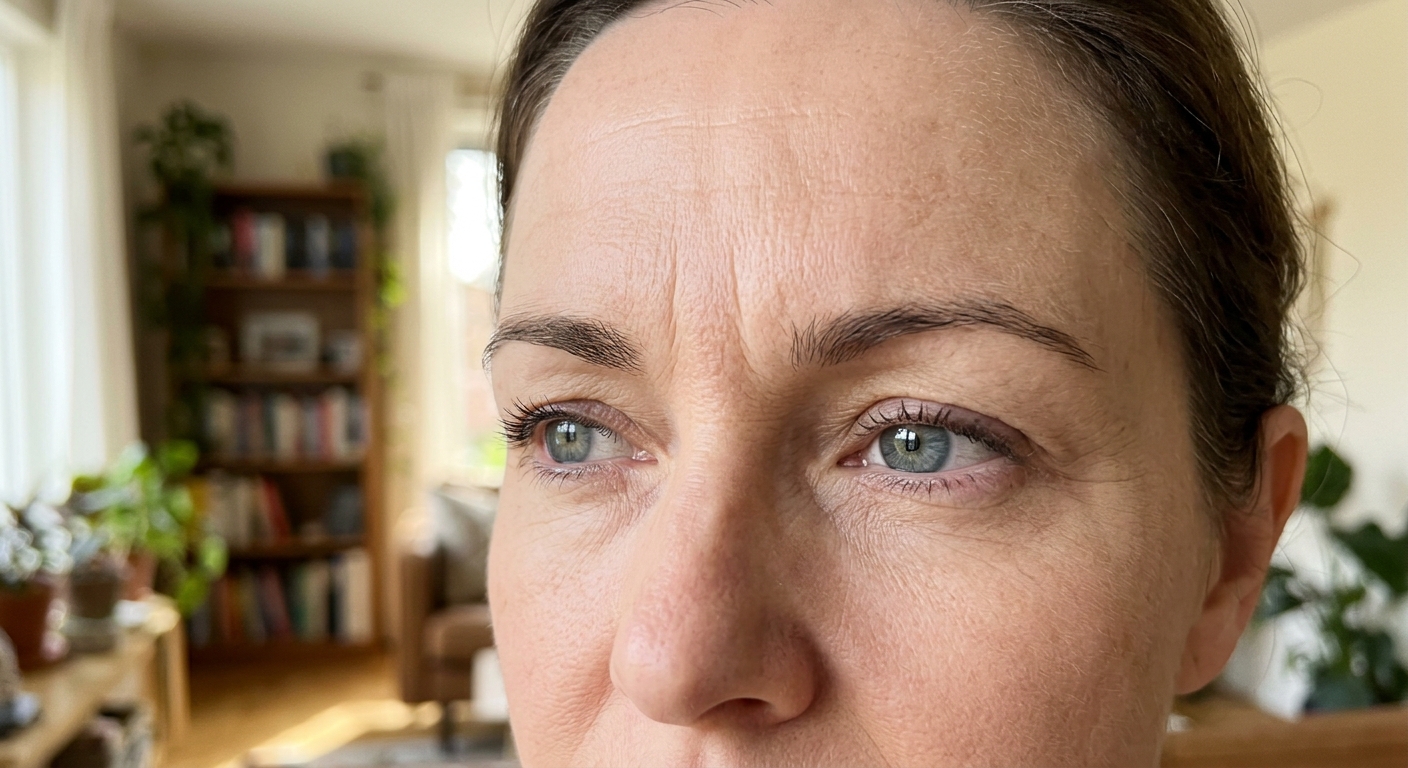
Put simply, Jeuveau does not erase a wrinkle so much as stop the muscle that keeps carving it. That is why it works beautifully on the creases you make on purpose and does nothing for the ones gravity and sun leave behind. This mechanism is why neurotoxins excel at dynamic wrinkles — the ones driven by movement — and do essentially nothing for static wrinkles, crepiness, sun spots, or loss of firmness. Hold that distinction; it is the entire point of this article.
What the Trials Actually Show
Jeuveau is not an unproven upstart. Its approval rested on a serious clinical program. In a large multicenter, randomized, double-blind, placebo-controlled Phase III study, a single 20-unit treatment was compared head-to-head against 20 units of onabotulinumtoxinA (Botox) and placebo in 540 adults with moderate-to-severe glabellar lines. At day 30, responder rates were 87.2% for Jeuveau versus 82.8% for Botox and just 4.2% for placebo — a result that met the bar for non-inferiority to Botox [1].
Smaller independent work has echoed this. A randomized, triple-blind, split-face study treating forehead and glabellar lines found no statistically significant difference between the two toxins in onset, wrinkle appearance, or patient satisfaction [3]. In other words, most patients cannot tell which one they received.
Duration is the more interesting frontier. A Phase II trial testing a higher 40-unit dose reported a median duration of effect of roughly six months — about 23% longer than the standard 20-unit dose — while keeping a clean safety profile, with adverse events that were mostly mild and transient [2]. As with all neurotoxins, the effect is temporary by design; the muscle eventually recovers and the treatment must be repeated.
Jeuveau vs. Botox: The Honest Comparison
For the frown lines it is approved to treat, Jeuveau and Botox are close enough that the decision usually comes down to price, your injector’s experience, and loyalty programs rather than raw efficacy. Jeuveau is often positioned as the value option because Evolus, its maker, markets it exclusively for aesthetics.
You can relax every expression muscle in your forehead and still have skin that looks older than you want it to.
A few practical notes. Jeuveau, like Botox, typically takes two to four days to begin working and peaks around two weeks. Off-label, injectors use it in the forehead and crow’s feet just as they do other toxins, though those uses are not FDA-cleared for this product. If you are new to injectables and want to understand the broader landscape first, our guide to Botox alternatives walks through how the toxins and their longer-lasting rivals like Daxxify stack up.
The Aging Jeuveau Cannot Touch
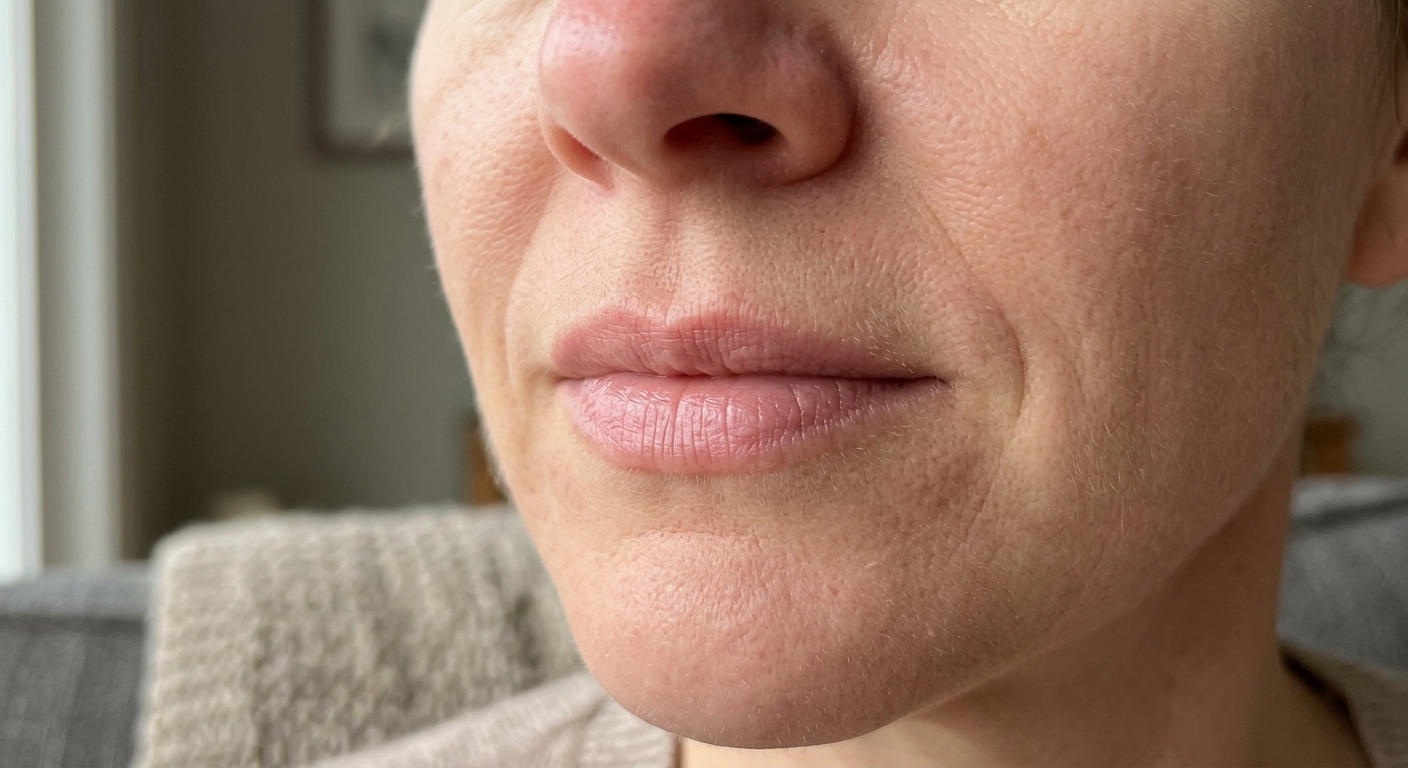
Here is where honest expectations matter most. A neurotoxin relaxes muscle. It does not build tissue. That means Jeuveau does nothing for the changes that actually age skin at the surface: thinning dermis, collagen loss, rough texture, dullness, sun-induced brown spots, and the fine “static” lines that remain visible even when your face is completely relaxed.
Those changes trace back to the dermis, not the muscle. Collagen production declines with age, and the enzymes that break collagen down rise — a combination that leaves aging skin thinner and more fragile. When researchers examined naturally aged human skin, they found elevated collagen-degrading matrix metalloproteinases and reduced collagen synthesis; crucially, topical vitamin A reversed part of that trend, increasing fibroblast activity and stimulating new collagen [4]. A frozen frown muscle contributes nothing to that process.
You can relax every expression muscle in your forehead and still have skin that looks older than you want it to. Tone, texture, and firmness live in the dermis — a layer no injectable toxin ever reaches. This is why the best-aging faces almost never rely on a single tool. Injectables like Jeuveau handle movement lines. Surface aging needs a treatment that works on the skin itself, every day, between appointments.
The Daily Layer That Works While Jeuveau Wears Off
The most reliable way to improve dermal quality at home is a retinoid — the one topical category with decades of evidence for stimulating collagen and refining texture. The catch has always been tolerability and delivery: conventional retinol is unstable, poorly absorbed, and often irritating, which is exactly the burning-and-peeling reputation that makes people quit.
This is the gap Nanoretinol was built to close. Instead of relying on harsh solvents to force retinol through the skin barrier, Nanoretinol encapsulates a stabilized 0.2% dose inside biomimetic lipid nanoparticles that the skin recognizes as “self” and admits without damage. In North Biomedical’s laboratory testing, this delivery system proved 232% more effective at collagen recovery than conventional retinol, while being significantly gentler on skin cells.
Used nightly, a treatment like this addresses precisely what a toxin can’t: it works on tone, texture, and firmness in the dermis. Jeuveau smooths the lines you make on purpose; a well-delivered retinoid quietly rebuilds the canvas underneath. Pairing the two — a neurotoxin for dynamic lines, a nightly retinoid for skin quality — is a far more complete strategy than either alone. And if you would rather start with the topical before committing to needles, retinoids remain the most studied first step in any serious wrinkle-prevention routine.
Where Jeuveau Fits
Jeuveau is a legitimate, well-studied neurotoxin that matches Botox for softening frown lines, often at a friendlier price. If moving muscles are etching lines between your brows, it is a reasonable choice. Just go in clear-eyed about the boundary: it is a movement tool, not a skin-quality tool. The lift, glow, and firmness people actually mean when they say “younger skin” come from the dermis — and that work happens nightly, in your own bathroom, long after the injection has worn off.
References
- Rzany B, Ascher B, Avelar RL, et al. “A Multicenter, Randomized, Double-Blind, Placebo-Controlled, Single-Dose, Phase III, Non-Inferiority Study Comparing PrabotulinumtoxinA and OnabotulinumtoxinA for the Treatment of Moderate to Severe Glabellar Lines in Adult Patients.” Aesthetic Surgery Journal. 2020;40(4):413–429. PubMed: 30951166
- Fagien S, Avelar RL, Cox SE, et al. “Safety and Duration of Effect of 40-Unit PrabotulinumtoxinA-xvfs for the Treatment of Moderate to Severe Glabellar Lines in Adult Patients: A Phase II, Multicenter, Randomized, Double-Blind, Active-Controlled Trial.” Aesthetic Surgery Journal. 2024;44(9):987–1000. PMC11334208
- Vasile G, Green C, Bhatti H, et al. “OnabotulinumtoxinA versus PrabotulinumtoxinA-xvfs: A Randomized, Triple-blind, Split-face Study on the Time to Onset, Rhytid Appearance, and Patient Satisfaction in Forehead and Glabellar Lines.” The Journal of Clinical and Aesthetic Dermatology. 2023;16(5):47–49. PubMed: 37288279
- Varani J, Warner RL, Gharaee-Kermani M, et al. “Vitamin A Antagonizes Decreased Cell Growth and Elevated Collagen-Degrading Matrix Metalloproteinases and Stimulates Collagen Accumulation in Naturally Aged Human Skin.” Journal of Investigative Dermatology. 2000;114(3):480–486. PubMed: 10692106