Retinol for Wrinkles: How to Use It, What to Expect, and Why Most People Give Up Too Soon
A practical guide to concentration, protocol, timeline, and the delivery variable most guides ignore
Retinol has the most extensive clinical evidence of any over-the-counter topical anti-aging ingredient. Decades of peer-reviewed trials have documented its ability to stimulate collagen synthesis, accelerate cell turnover, and produce measurable reductions in fine line depth and skin texture irregularities. If you are using retinol for wrinkles, the science is firmly on your side.
The problem is not whether retinol works. It is that most people either use it incorrectly, stop before seeing results, or tolerate unnecessary irritation because they are using a formulation that delivers the active through a suboptimal mechanism.
This guide covers the practical side: which wrinkles respond best, what concentrations to use and when, the correct protocol, a realistic timeline, and why the delivery format matters more than concentration.
Which Wrinkles Does Retinol Address?
Retinol is most effective against wrinkles with a dermal component — those driven by collagen loss and structural thinning rather than pure muscle movement:
Fine surface lines caused by photoaging and skin dehydration respond well and often quickly — within 8–12 weeks.
Dynamic wrinkles (expression lines — frown lines, smile lines, crow’s feet) are primarily caused by repeated muscle contraction. Retinol does not relax muscles and does not address the primary cause of dynamic wrinkles. It can improve skin quality around these lines — making skin more resilient and thicker — but it is not the primary treatment for deep set expression lines. Botulinum toxin addresses the muscular cause; retinol addresses the skin quality component.
Structural wrinkles from collagen and fat loss — jowl lines, nasolabial folds, deep hollowing — have significant volume components. Retinol improves the skin itself but cannot restore lost volume. These respond partially and benefit most from a combined approach.
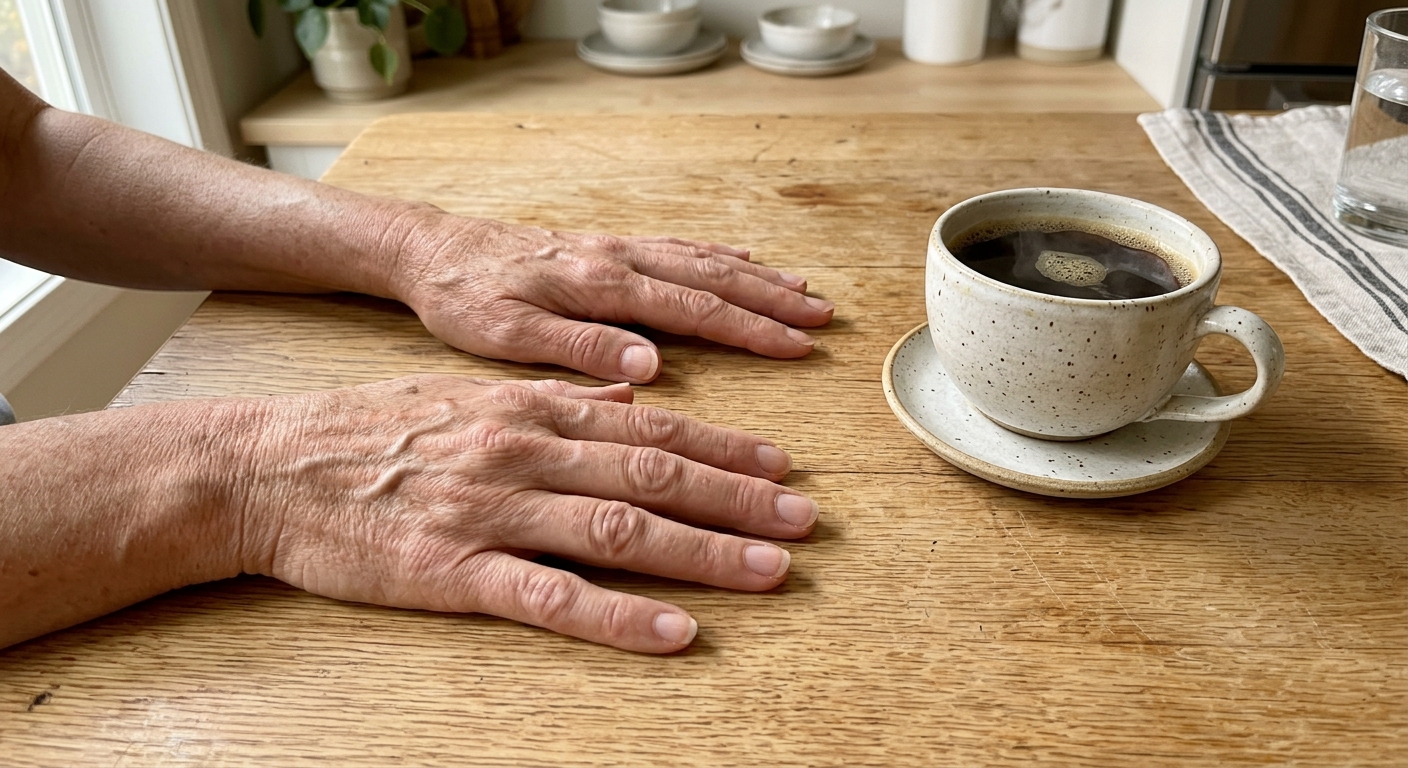
Crepey texture — particularly on the neck, décolletage, and under eyes — is driven by thinning epidermis and collagen loss. This responds well to retinol with consistent long-term use, though more slowly than fine surface lines [1].
For the full clinical picture on retinol’s efficacy evidence, see our article on whether retinol reduces wrinkles.
How Retinol Works Against Wrinkles
Understanding the mechanism helps set correct expectations. Retinol does not work on contact — it works by reprogramming cellular behavior over weeks and months [2].
If you are using retinol for wrinkles, the science is firmly on your side.
Once inside skin cells, retinol is converted through a two-step enzymatic process first to retinaldehyde and then to retinoic acid — the biologically active form. Retinoic acid binds to nuclear retinoid receptors and directly influences gene expression in keratinocytes and fibroblasts.
The downstream effects are multiple:
- Fibroblasts increase production of type I and type III collagen [5]
- Matrix metalloproteinases (MMPs) — the enzymes that degrade collagen in response to UV exposure — are inhibited
- Epidermal cell turnover accelerates, shedding damaged surface cells more rapidly
- The dermis thickens as new collagen is laid down
This is why the results are not immediate. You are not filling wrinkles from the outside — you are stimulating the production of new structural tissue from the inside. That process takes months [3].
Concentration Guide
0.025–0.05% — Beginner range. Appropriate for first-time retinol users, those with sensitive skin, or anyone coming off a period of barrier disruption. This concentration produces measurable results over 12+ months of consistent use and is the best starting point for skin over 40 that has not previously used retinoids.
0.1–0.3% — Intermediate range. The range used in most clinical trials demonstrating significant wrinkle reduction. Effective for visible improvements within 12–24 weeks in most skin types. Expect a 2–4 week adjustment period with some flaking and sensitivity.
0.5–1.0% — High concentration. Appropriate for experienced retinol users with tolerant skin. The adjustment period is more pronounced, and risk of persistent barrier disruption is higher. Results are faster but so is the risk of the irritation that causes people to stop.
The critical insight: Higher concentration does not automatically mean better outcomes. A 1% retinol that causes you to stop after two weeks produces fewer results than 0.1% used every night for six months. In clinical trials, the consistency of use is the primary predictor of outcome — not the starting concentration. You can read the full concentration analysis in our guide to retinol concentrations.
The Protocol
Start 2–3 nights per week. Allow the skin to adjust over 4–6 weeks before increasing frequency. Applying every night immediately is the most common reason for barrier disruption in new retinol users.
Apply to dry skin. Applying retinol immediately after washing, while skin is still damp, increases penetration and irritation simultaneously. Wait 20–30 minutes after cleansing. This is particularly relevant at higher concentrations.
A pea-sized amount covers the entire face. More product does not increase efficacy — it increases irritation risk without meaningfully increasing absorption.
A 1% retinol that causes you to stop after two weeks produces fewer results than 0.1% used every night for six months.
Moisturize after. A ceramide-rich moisturizer applied over retinol supports barrier function during the adjustment phase. Some protocols apply moisturizer first (“buffering”) to reduce irritation at the cost of some potency — a reasonable trade-off for sensitive skin.
Daily SPF is non-negotiable. Retinol accelerates surface cell shedding, leaving skin temporarily more UV-sensitive. Using retinol without daily sun protection undermines the collagen-building work it is doing. Use SPF 30+ every morning.
Increase frequency gradually. Move from 2–3 nights per week to every other night, then every night, over a 6–8 week period. Only increase if you are tolerating the current frequency without persistent redness, peeling, or irritation.
For more on frequency, see our guide on using retinol every night.
Realistic Timeline
| Timeframe | What to Expect |
|---|---|
| Week 1–4 | Possible adjustment (flaking, temporary sensitivity). No visible anti-aging effect yet. |
| Week 4–8 | Skin texture begins to improve. Pore appearance may reduce. Surface hydration improves. |
| Week 8–12 | Fine line reduction begins to be visible. Skin tone more even. |
| Month 3–6 | Measurable reduction in fine line depth. Significant texture improvement in most users. |
| Month 6–12 | Continued improvement in deeper lines. Skin thickening measurable in histological studies. |
| Year 1+ | Maximum benefit phase. Maintenance use required to sustain results. |
The clinical literature consistently shows that retinol’s anti-wrinkle effects build cumulatively and continue improving beyond 12 months of use [4]. The biggest predictor of failure is abandoning before month 3.
Why Delivery Format Changes Everything
This is the variable most retinol guides skip over: the mechanism by which retinol is delivered into the skin determines how much active actually reaches target cells, how much irritation the process produces, and how consistently you can use it.
Conventional retinol formulations rely on petroleum-based vehicles and chemical penetration enhancers — surfactants that temporarily disrupt the stratum corneum to push the retinol through. The retinol gets in, but so does the disruption. This is why conventional retinol almost inevitably causes a “purging” phase: the delivery mechanism itself is damaging the barrier you are trying to improve.
Encapsulated retinol formats work differently. Lipid nanoparticles — particles sized and structured to resemble the biological architecture of skin cells — carry the retinol through the epithelial barrier via a biomimetic mechanism: the nanoparticles are recognized as biologically “self” and pass through intact, releasing retinol inside target cells without disrupting the surface. You can read the full technical explanation in our article on encapsulated retinol.
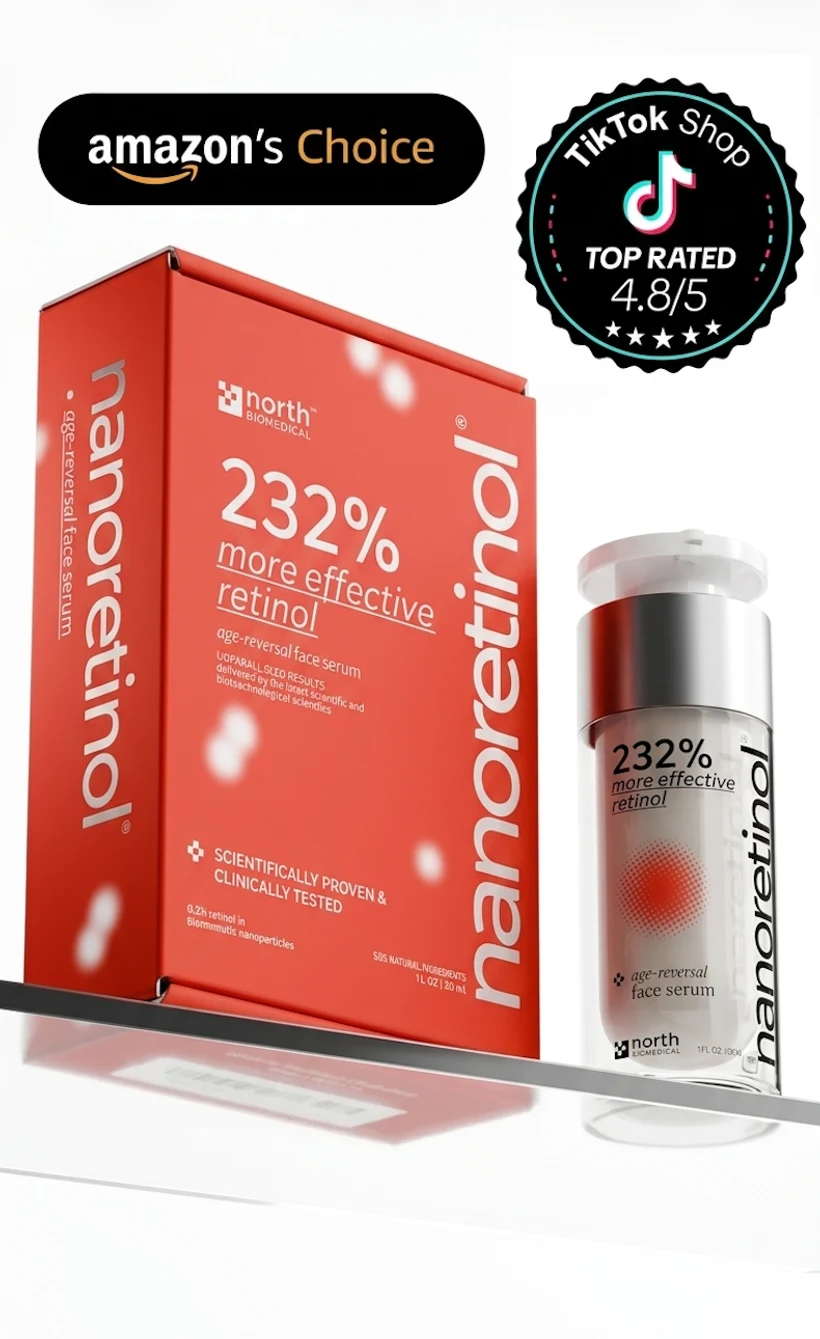
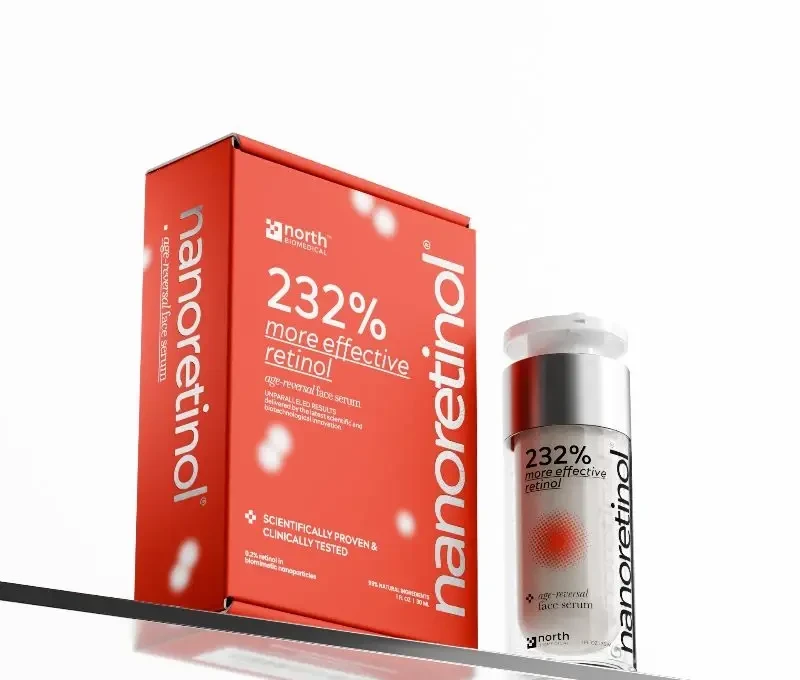
The practical consequence is meaningful: in a head-to-head study, Nanoretinol® — a 0.2% retinol encapsulated in biomimetic lipid nanoparticles — produced 232% greater collagen recovery and 73% greater elastin recovery compared to conventional retinol at the same concentration. The delivery efficiency accounts entirely for the performance gap. In clinical use, a 56-day protocol produced a 61% increase in skin firmness and 56% improvement in skin elasticity.
For wrinkle treatment, this matters for one practical reason: a retinol you can use every night without barrier disruption produces better outcomes over 6–12 months than a higher-concentration conventional formula you can only use twice a week because the irritation forces you to stop.
Who Should Use Caution
Retinol is not appropriate for use during pregnancy or breastfeeding — consult a physician before starting. For skin that is actively sunburned, compromised, or recovering from a procedure, wait until the barrier has fully healed before introducing retinol.
Those with rosacea or perioral dermatitis should introduce retinol at the lowest available concentration, with the support of a ceramide-based moisturizer and ideally under dermatological supervision. Encapsulated formats are significantly better tolerated in these cases due to reduced barrier disruption relative to conventional formulations.
For a complete protocol tailored to first-time users, see our guide for retinol beginners.
References
-
Kang S, Bergfeld W, Gottlieb AB, et al. “Long-Term Efficacy and Safety of Tretinoin Emollient Cream 0.05% in the Treatment of Photodamaged Facial Skin.” American Journal of Clinical Dermatology. 2005;6(4):245–253. doi:10.2165/00128071-200506040-00005
-
Fisher GJ, Datta SC, Talwar HS, et al. “Molecular basis of sun-induced premature skin ageing and retinoid antagonism.” Nature. 1996;379(6563):335–339. doi:10.1038/379335a0
-
Griffiths CE, Russman AN, Majmudar G, Singer RS, Hamilton TA, Voorhees JJ. “Restoration of collagen formation in photodamaged human skin by tretinoin (retinoic acid).” New England Journal of Medicine. 1993;329(8):530–535. doi:10.1056/NEJM199308193290803
-
Mukherjee S, Date A, Patravale V, Korting HC, Roeder A, Weindl G. “Retinoids in the treatment of skin aging: an overview of clinical efficacy and safety.” Clinical Interventions in Aging. 2006;1(4):327–348. doi:10.2147/ciia.2006.1.4.327
-
Varani J, Dame MK, Rittie L, et al. “Decreased collagen production in chronologically aged skin: roles of age-dependent alteration in fibroblast function and defective mechanical stimulation.” American Journal of Pathology. 2006;168(6):1861–1868. doi:10.2353/ajpath.2006.051302