Laser Genesis: What This 'No-Downtime' Laser Actually Does for Your Skin
How the 1064-nm Nd:YAG laser calms redness and rebuilds collagen without peeling — and why the results depend on what you do at home.
Most people picture the same thing when they hear “laser”: raw, peeling skin, a week of hiding indoors, and a result dramatic enough to justify the misery. Laser Genesis is the opposite of that picture, and that is precisely why it confuses people. There is no visible wound, no downtime, and no obvious “before and after” the afternoon you leave the clinic. You look slightly flushed for an hour, then normal. Which raises a fair question: if nothing dramatic happens, is anything happening at all?
The answer is yes — but the action is invisible, gradual, and happening several layers down. Understanding that is the difference between being thrilled with Laser Genesis and feeling like you wasted your money.
The Gentle-Heat Approach
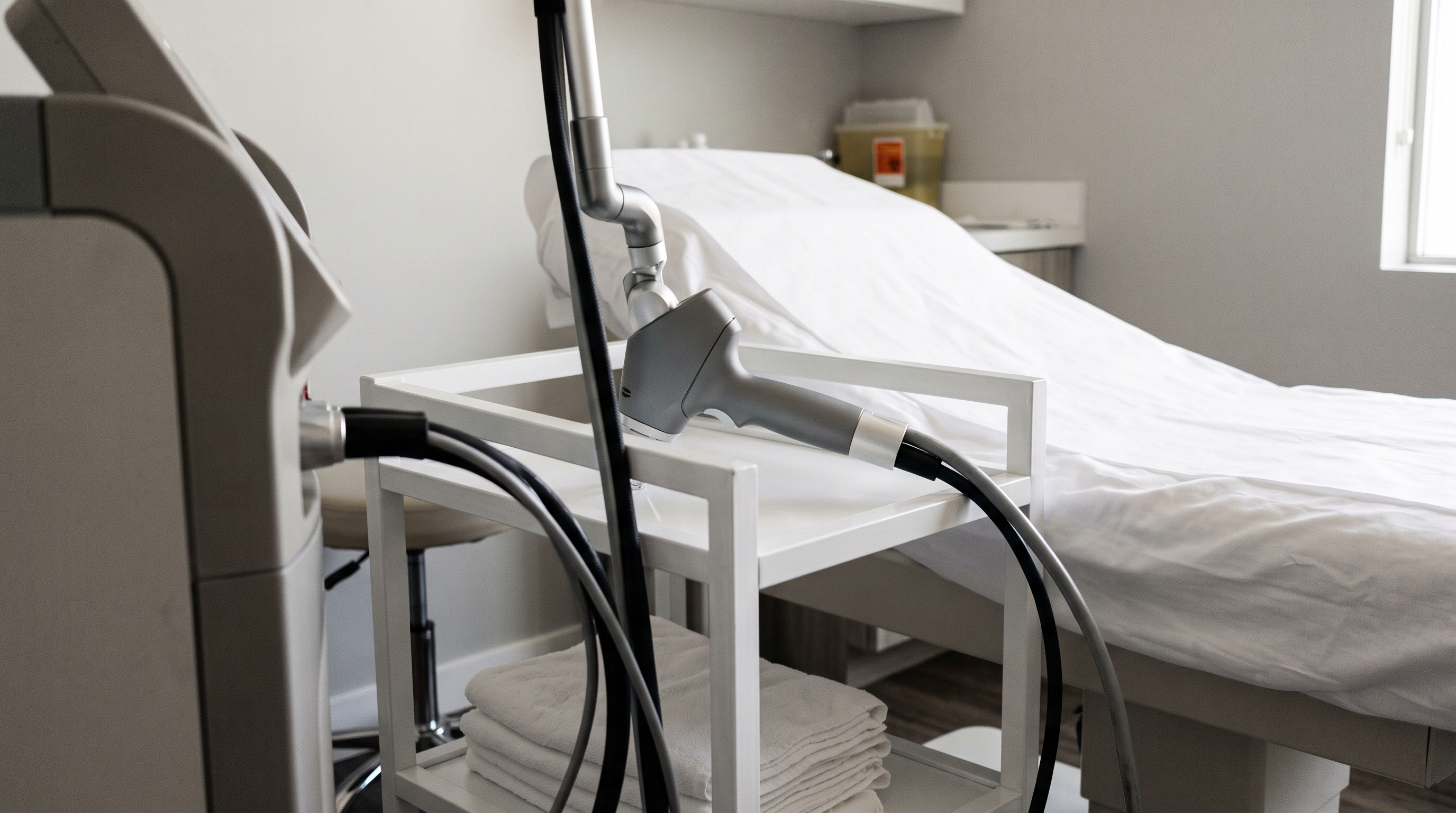
Laser Genesis is a non-ablative laser, meaning it deliberately does not remove or wound the surface of your skin the way aggressive resurfacing lasers do. It uses a 1064-nm Nd:YAG wavelength delivered in rapid, low-energy micropulses that gently raise the temperature of the upper dermis — the living layer beneath the surface — while the epidermis stays intact and cool.
That controlled heat does two useful things. First, it targets the tiny dilated blood vessels responsible for facial redness and diffuse flushing, which is why the treatment is a mainstay for rosacea-prone and reactive skin. Second, and more importantly for aging skin, the sub-injury signals your fibroblasts — the cells that manufacture collagen — to wake up and start rebuilding, a process called neocollagenesis.
Understanding that is the difference between being thrilled with Laser Genesis and feeling like you wasted your money.
The Evidence That Something Real Is Happening
Skepticism about a “no-downtime” laser is healthy, so the histology matters. In a study published in the Archives of Dermatology, researchers treated skin with a microsecond 1064-nm Nd:YAG laser and took biopsies afterward. They documented a statistically significant change in collagen fibers consistent with new collagen formation, alongside a measurable reduction in facial redness — proof that gentle, non-ablative heating produces structural change, not just a temporary glow [1]. Earlier work on the long-pulse 1064-nm Nd:YAG laser for nonablative resurfacing reached the same conclusion: gradual, cumulative improvement in fine lines and skin quality without damaging the surface [2].
The mechanism has even been traced in controlled models. A study in Photomedicine and Laser Surgery found that 1064-nm laser irradiation increased collagen synthesis while simultaneously inhibiting collagen breakdown, and did so in a dose-dependent way [3]. And the benefits extend beyond wrinkles: a 2022 trial in Lasers in Medical Science found the long-pulsed 1064-nm Nd:YAG laser effective at refining enlarged facial pores, a notoriously hard target [4].
What It’s Good For — and What It Isn’t
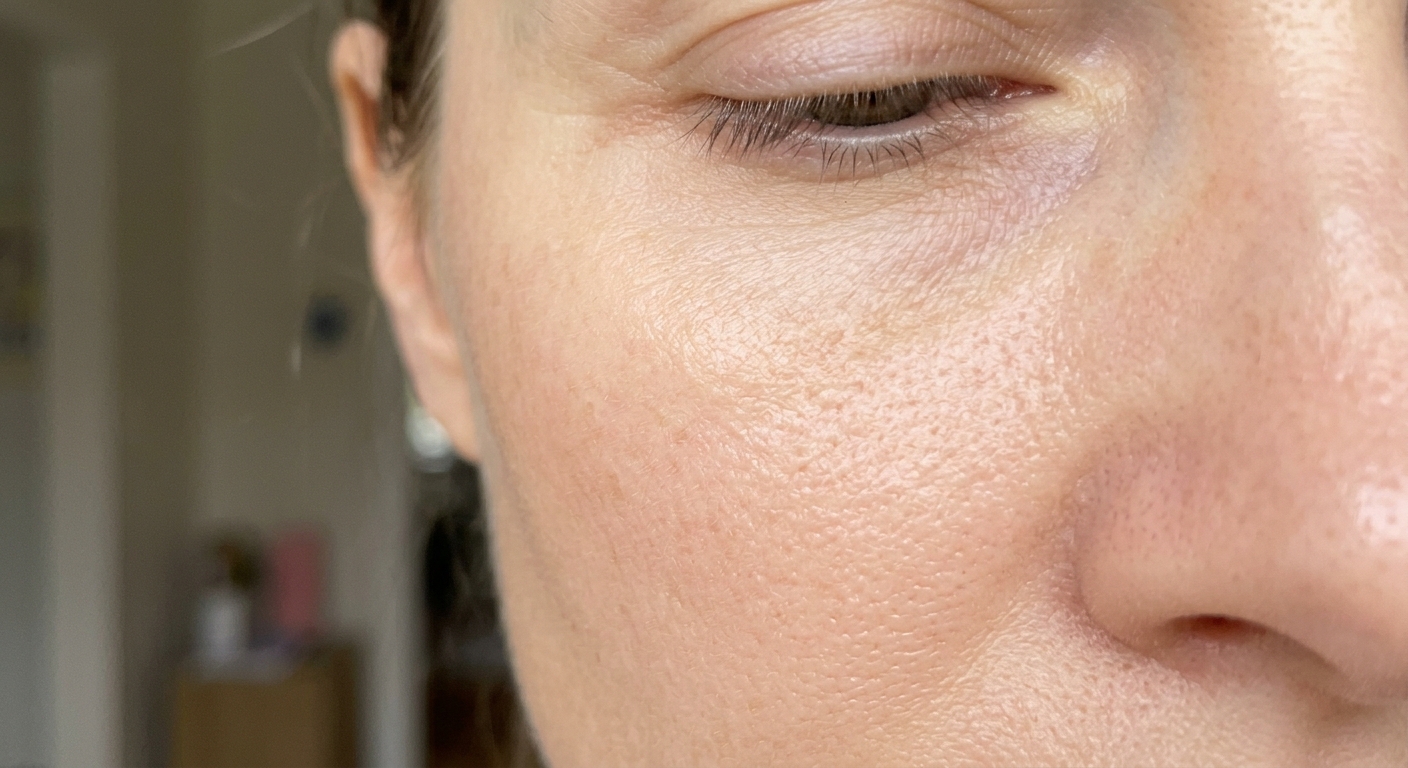
Laser Genesis earns its place for a specific profile: overall redness and flushing, broken capillaries, uneven tone, rough texture, mildly enlarged pores, and the subtle laxity of early aging. Because it is gentle and safe across a wide range of skin tones, it is often chosen by people who cannot tolerate — or do not want the recovery of — ablative resurfacing like fractional CO2 or Fraxel.
But it is not a magic wand. It will not erase deep, etched wrinkles, lift significant sagging, or eliminate stubborn brown patches the way targeted treatments can. And critically, its effects are built through a series — typically four to six sessions — and they fade. New collagen is not permanent; without ongoing stimulus, the same aging processes that thinned your collagen in the first place resume. This is the part that gets glossed over at the consultation: the laser starts the fire, but something has to keep it burning.
A laser can light the spark; a well-delivered retinoid is how you keep your skin building collagen long after the flushing fades.
The Maintenance Problem Nobody Mentions
Here is the uncomfortable economics of any collagen-stimulating procedure. You pay for a package, you build a bank of new collagen over a few months, and then — unless you maintain it — that bank slowly draws down. Repeat courses cost money and time. The smarter approach, and the one most experienced practitioners quietly recommend, is to pair in-office collagen stimulation with a daily topical that keeps fibroblasts active between and after treatments.
The best-studied ingredient for that job is the retinoid. Retinoids continuously signal fibroblasts to produce collagen and accelerate cell turnover — essentially doing at home, every night, a mild version of what the laser does in the clinic every few weeks. The science on boosting collagen production keeps returning to the same conclusion.
Why Delivery Is the Deciding Factor
The obstacle has always been tolerability. Post-laser skin is temporarily more sensitive, and conventional retinol — which penetrates the barrier poorly and irritates at the concentrations needed to work — is a rough match for it. People either can’t use it consistently or avoid it entirely, and the maintenance never happens.
Nanoretinol was designed around this exact constraint. It encapsulates retinol in biomimetic lipid nanoparticles that the skin admits through its barrier as though they were its own, delivering active retinol efficiently at a gentle, stabilized 0.2% without the barrier disruption conventional formulas depend on. North Biomedical’s testing showed this approach drove substantially greater collagen and elastin recovery than conventional retinol while proving significantly less irritating to skin cells — which is precisely what post-procedure, collagen-focused maintenance calls for. A laser can light the spark; a well-delivered retinoid is how you keep your skin building collagen long after the flushing fades.
The Bottom Line on Laser Genesis
Laser Genesis is a legitimate, evidence-backed tool for redness, tone, texture, and gradual collagen renewal, with the rare advantage of essentially zero downtime. Judge it for what it is — a subtle, cumulative rejuvenator, not a one-and-done transformation — and pair it with consistent at-home collagen support, and it earns its cost. Treat it as a standalone miracle and you will be recalculating that value every time the results quietly recede. As always, work with a qualified provider to decide whether it fits your skin and your goals.
References
- Schmults CD, Phelps R, Goldberg DJ. “Nonablative Facial Remodeling: Erythema Reduction and Histologic Evidence of New Collagen Formation Using a 300-Microsecond 1064-nm Nd:YAG Laser.” Archives of Dermatology. 2004;140(11):1373-1376. doi:10.1001/archderm.140.11.1373
- Dayan SH, Vartanian AJ, Menaker G, Mobley SR, Dayan AN. “Nonablative laser resurfacing using the long-pulse (1064-nm) Nd:YAG laser.” Archives of Facial Plastic Surgery. 2003;5(4):310-315. doi:10.1001/archfaci.5.4.310
- Ye X, Wang L, Dang Y, Liu B, Zhao D. “Investigation of the 1064 nm Q-Switched Nd:YAG Laser on Collagen Expression in an Animal Model.” Photomedicine and Laser Surgery. 2012;30(10):604-609. doi:10.1089/pho.2012.3221
- Wang Y, Zheng Y, Cai S. “Efficacy and safety of 1565-nm non-ablative fractional laser versus long-pulsed 1064-nm Nd:YAG laser in treating enlarged facial pores.” Lasers in Medical Science. 2022;37(8):3279-3284. doi:10.1007/s10103-022-03622-z