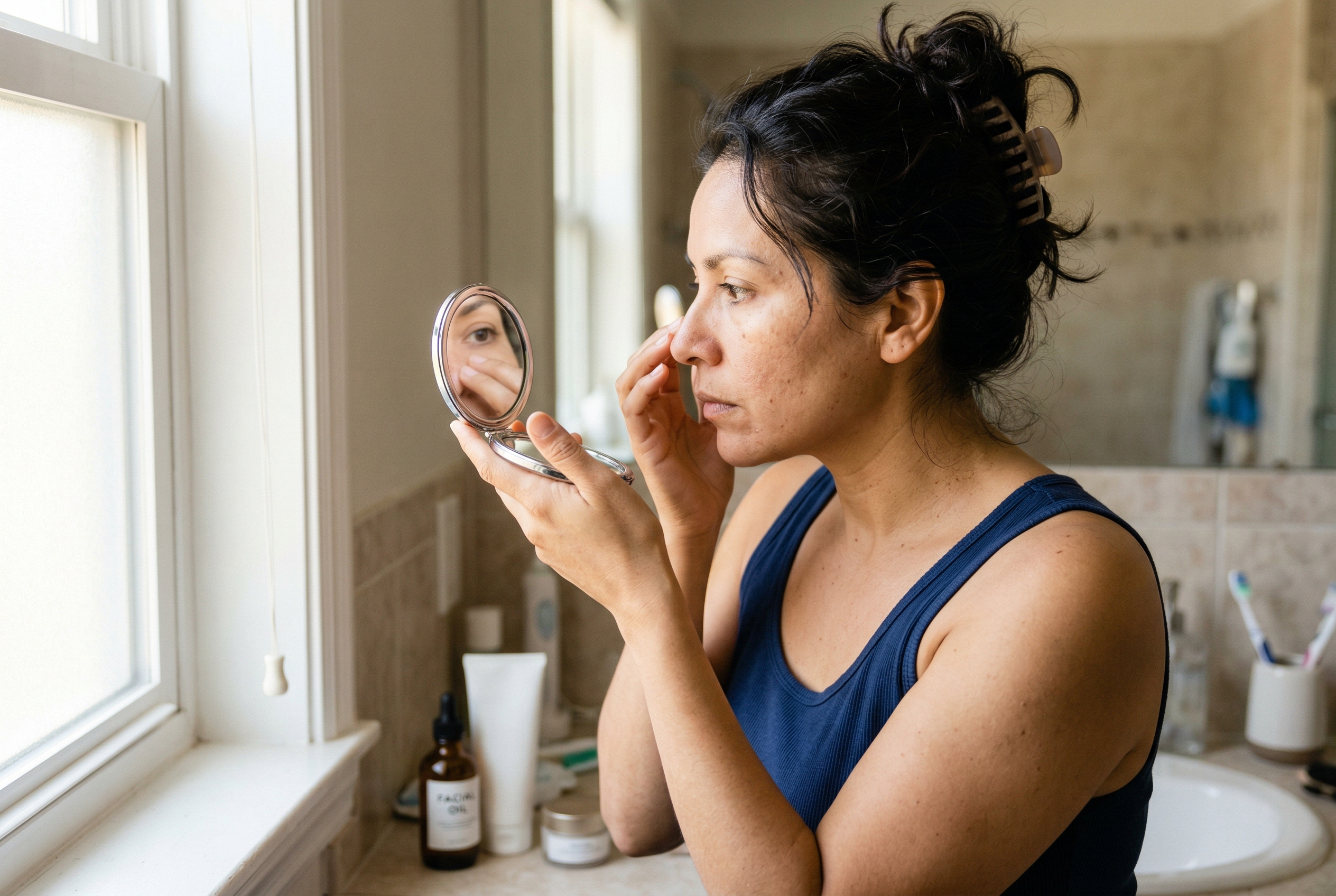
How to Shrink Pores: What Actually Works According to Dermatology Research
The science-backed ingredients and strategies that genuinely minimize pore appearance
Why Pores Look Larger Than They Should
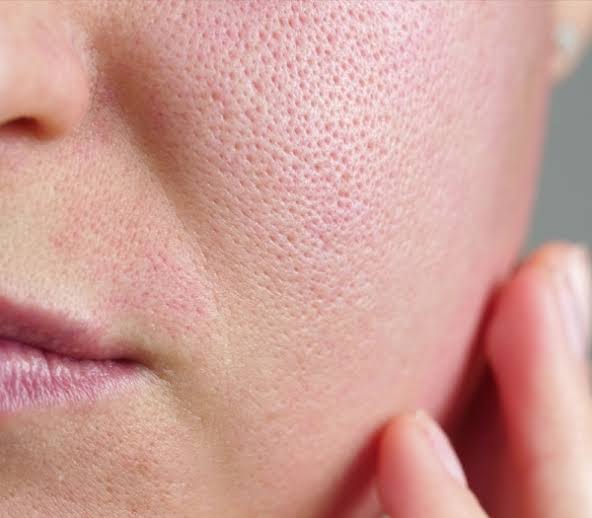
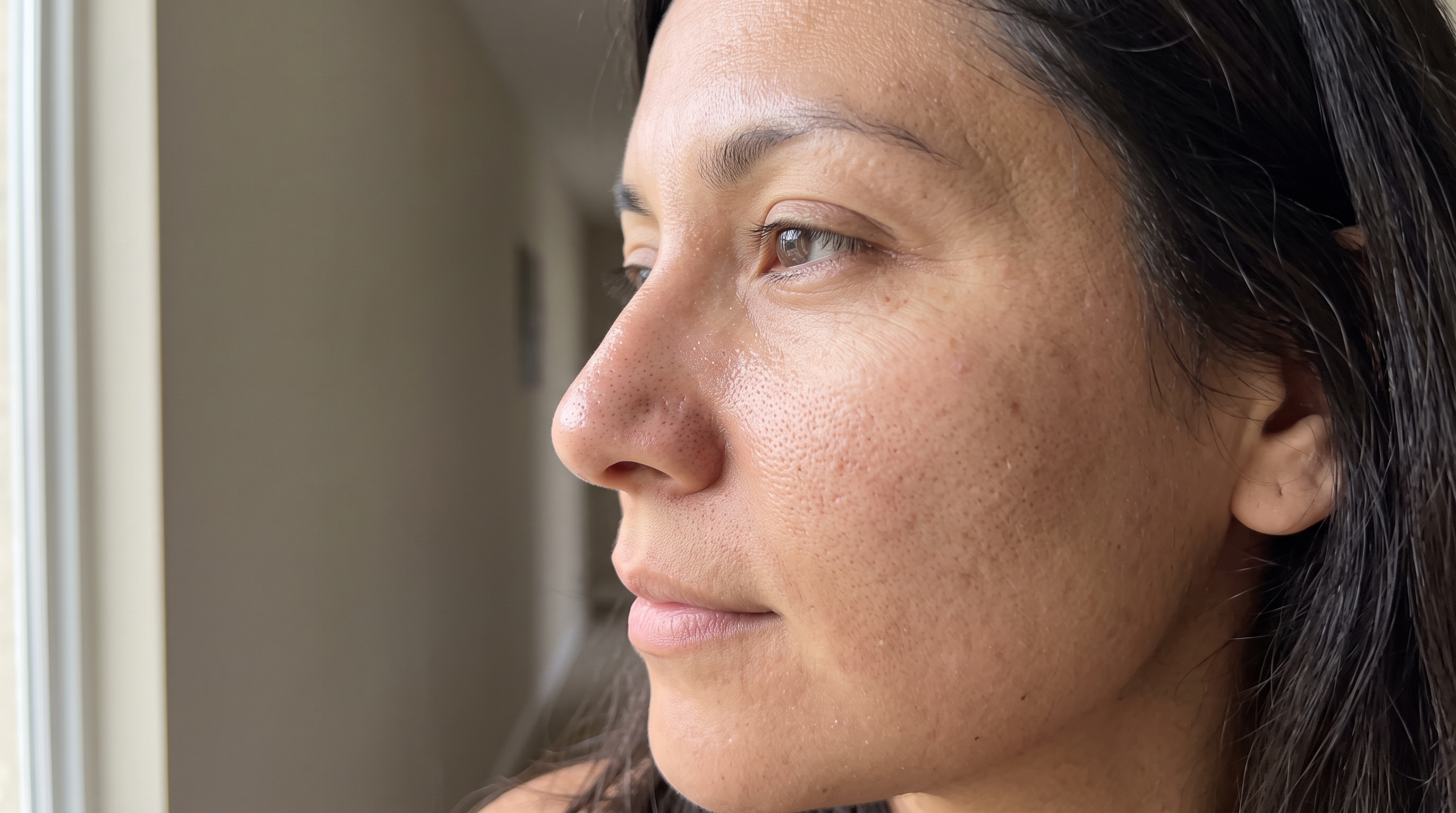
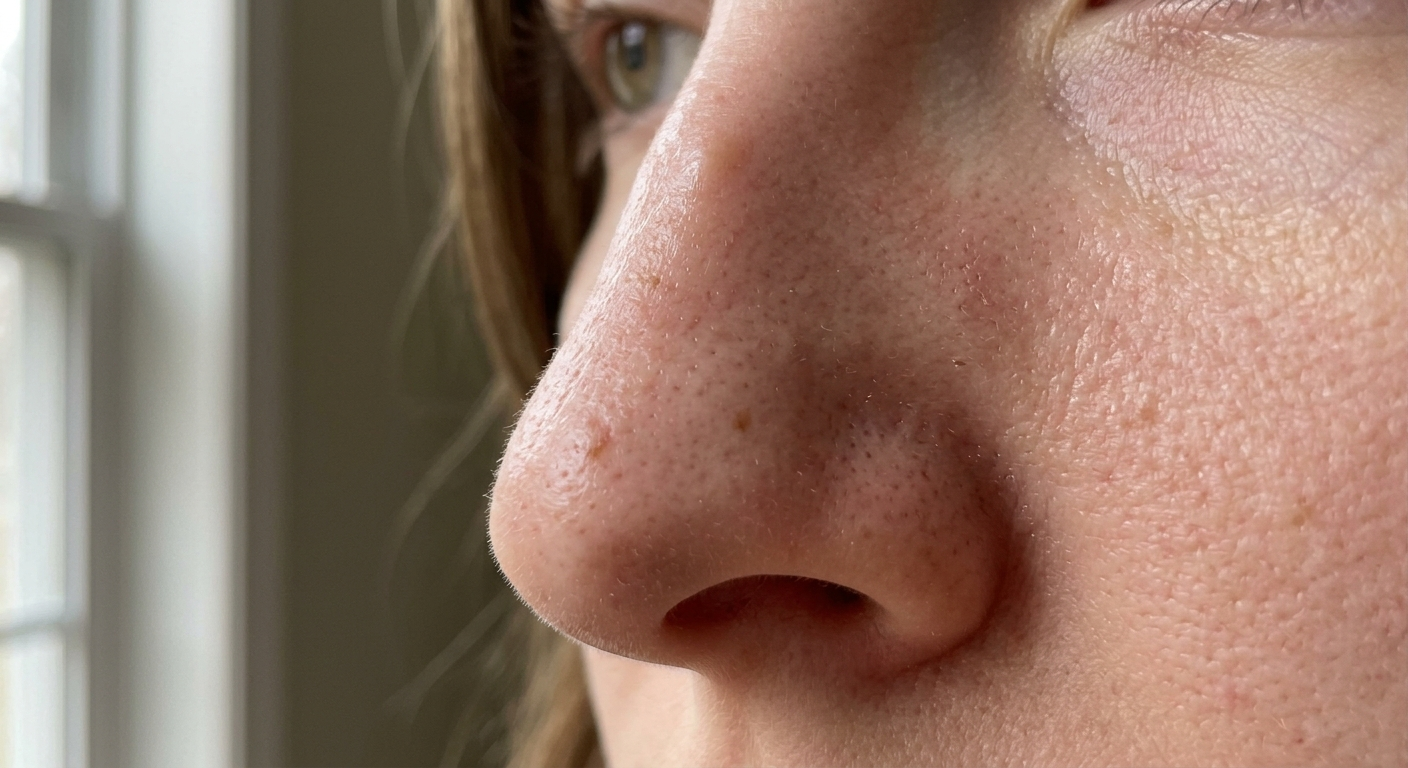
Every pore on your face is the opening of a hair follicle that extends deep through multiple layers of skin. Sebaceous glands attached to these follicles produce oil that travels upward through the pore canal. When everything works smoothly, you barely notice them. When it doesn’t, they become the first thing you see in the mirror.
Pore size is partly genetic — about 50% to 70% of your baseline pore diameter is determined before you ever wash your face [1]. But the rest is influenced by factors you can actually control: sebum production, sun exposure, and the structural integrity of the collagen network surrounding each pore.
Here is what happens over time. Collagen fibers that form a tight scaffold around every pore begin to degrade. UV exposure accelerates this breakdown through matrix metalloproteinase (MMP) activation [2]. Meanwhile, dead skin cells accumulate inside the pore canal, mixing with sebum to form microcomedones — invisible plugs that stretch the pore opening wider. By the time you notice “big pores,” both structural loosening and internal congestion have usually been at work for years. Because sebum feeds that congestion, the moisturizer you choose for oily skin affects how quickly pores refill. Which clay mask you reach for matters too, because the most absorbent mineral is the wrong choice for thinning skin. Kitchen remedies aim at the same target and miss it, as our look at the egg white face mask explains.
The Three Mechanisms Behind Visible Pores
Understanding why pores appear enlarged is the key to choosing treatments that actually work.
Excess sebum production. Sebaceous glands are hormone-sensitive. During hormonal fluctuations — puberty, menstruation, perimenopause — these glands can overproduce oil by 30% to 60% [3]. More oil means more material stretching each pore from the inside.
Collagen degradation. The dermal matrix acts like scaffolding. As collagen density decreases with age (roughly 1% per year after your mid-twenties), the rigid support structure around pores weakens [2]. Without that scaffold, pore walls lose tension and sag open.
Congestion and microcomedones. Dead keratinocytes normally shed invisibly. When desquamation slows — due to aging, dehydration, or lack of exfoliation — these cells pile up inside the follicle, physically widening the pore canal.
Pore size is partly genetic — about 50% to 70% of your baseline pore diameter is determined before you ever wash your face.
What the Research Says Actually Works
Retinol: The Collagen Rebuilder
Retinoids remain the most well-studied topical intervention for pore appearance. A 24-week multicenter trial of 568 patients found that 0.1% tazarotene cream produced a statistically significant reduction in apparent pore size compared to vehicle, alongside improvements in fine wrinkles and overall photodamage [4]. Retinol works by accelerating cell turnover — flushing congestion out of the pore canal — while simultaneously stimulating new collagen production in the surrounding dermis.
A separate 84-day study showed that 0.2% retinol reduced pore dilation by an average of 30.6%, while prescription tretinoin (0.025%) achieved 37.5% [5]. The retinol group experienced significantly less irritation, making it the more practical daily-use option.
Niacinamide: The Sebum Regulator
Niacinamide (vitamin B3) attacks enlarged pores from the oil-production side. A randomized, double-blind, split-face study found that 4% niacinamide significantly reduced pores and skin unevenness after just 8 weeks [6]. The mechanism is twofold: niacinamide decreases sebum excretion rate while strengthening the skin barrier through increased ceramide synthesis.
Unlike retinol, niacinamide causes virtually zero irritation, making it ideal for sensitive skin types who cannot tolerate retinoids at higher concentrations.
Salicylic Acid: The Pore-Clearing Specialist
While retinol rebuilds structure and niacinamide regulates oil, salicylic acid (a beta-hydroxy acid) does something neither can: it dissolves sebum plugs inside the pore itself. Because salicylic acid is oil-soluble, it penetrates through the lipid-rich environment of the follicle canal, loosening the compacted mix of dead cells and oil that physically stretches pore walls [3].
Regular use at 1% to 2% concentrations keeps pores clear of the microcomedones that make them appear larger. The effect is visible within weeks, though it’s cosmetic rather than structural — stop using it, and congestion gradually returns.
If you would rather start from the shelf than from the routine, our guide to the best products for large pores maps each product category onto the cause it actually treats.
Sunscreen: The Underrated Protector
UV exposure directly degrades the collagen matrix around pores through MMP activation. A landmark Australian study demonstrated that daily sunscreen use prevented measurable increases in skin aging over 4.5 years [7]. Protecting existing collagen is always easier than rebuilding it, which is why broad-spectrum SPF belongs in every pore-minimizing routine — regardless of what active ingredients you use.
The Combination Strategy
Clinical evidence supports layering these approaches for maximum effect. A morning routine built around niacinamide, such as a niacinamide moisturizer (for sebum control and barrier support), plus sunscreen (to protect collagen) paired with an evening routine using retinol (for cell turnover and collagen stimulation) addresses all three pore-enlarging mechanisms simultaneously. That sequence is laid out step by step in our oily skin routine.
For anyone already using glycolic acid or other AHAs, incorporating salicylic acid one to two times weekly adds the pore-specific decongestion that surface exfoliants miss. If you would rather start from the shelf than from the routine, our guide to the best products for large pores maps each product category onto the cause it actually treats.
What Does Not Work
Pore strips. They physically remove the oxidized sebum plug (blackhead) but do nothing about the stretched pore opening or the oil production that created the plug. The pore refills within 24 to 48 hours.
Ice cubes and cold water. Temperature causes temporary vasoconstriction, which can briefly reduce redness around pores. It has zero effect on pore size or sebum production. Heat does not work in the opposite direction either, which is the question our guide to facial steamers takes apart.
Baking soda scrubs. At pH 8 to 9, baking soda disrupts the skin’s acid mantle, potentially increasing irritation and paradoxically worsening skin barrier function.
A Smarter Delivery Makes the Difference
One challenge with retinol for pore treatment is getting enough active ingredient to the target cells without triggering excessive irritation. Concentration alone does not determine effectiveness — the delivery vehicle matters enormously. A 1% retinol in a poor vehicle may deliver less active ingredient to target cells than a 0.2% retinol in a superior delivery system.
This is precisely the principle behind Nanoretinol® by North Biomedical®. By encapsulating retinol in biomimetic lipid nanoparticles — structures the skin recognizes as its own — Nanoretinol® achieves +232% greater effectiveness in collagen recovery compared to conventional retinol, with dramatically reduced irritation. For pore treatment, that means more collagen scaffolding rebuilt around each pore with fewer side effects. The 0.2% concentration, stabilized within nanoparticles, outperforms higher-concentration conventional formulations because the delivery efficiency — not just the dose — determines what actually reaches your cells.
What to Expect and When
Pore minimization is not an overnight process. Here is a realistic timeline:
- Weeks 1-2: Salicylic acid clears surface congestion; pores may appear slightly smaller
- Weeks 4-8: Niacinamide reduces sebum output; oil-related pore stretching decreases
- Weeks 8-12: Retinol-driven collagen remodeling begins tightening the dermal scaffold
- Months 3-6: Cumulative structural improvements become clearly visible
The key is consistency. Every ingredient works through sustained biological signaling, not a one-time correction.
References
- Flament F, Francois G, Qiu H, et al. “Facial skin pores: a multiethnic study.” Clinical, Cosmetic and Investigational Dermatology. 2015;8:85-93. doi:10.2147/CCID.S74401
- Varani J, Dame MK, Rittie L, et al. “Decreased collagen production in chronologically aged skin: roles of age-dependent alteration in fibroblast function and defective mechanical stimulation.” American Journal of Pathology. 2006;168(6):1861-1868. doi:10.2353/ajpath.2006.051302
- Zouboulis CC, Jourdan E, Picardo M. “Acne is an inflammatory disease and alterations of sebum composition initiate acne lesions.” Journal of the European Academy of Dermatology and Venereology. 2014;28(5):527-532. doi:10.1111/jdv.12298
- Kang S, Leyden JJ, Lowe NJ, et al. “Tazarotene cream for the treatment of facial photodamage: a multicenter, investigator-masked, randomized, vehicle-controlled, parallel comparison.” Archives of Dermatology. 2001;137(12):1597-1604. PMID: 11735708
- Zasada M, Budzisz E. “Retinoids: active molecules influencing skin structure formation in cosmetic and dermatological treatments.” Postepy Dermatologii i Alergologii. 2019;36(4):392-397. doi:10.5114/ada.2019.87443
- Boo YC. “Mechanistic Basis and Clinical Evidence for the Applications of Nicotinamide (Niacinamide) to Control Skin Aging and Pigmentation.” Antioxidants. 2021;10(8):1315. doi:10.3390/antiox10081315
- Hughes MCB, Williams GM, Baker P, Green AC. “Sunscreen and prevention of skin aging: a randomized trial.” Annals of Internal Medicine. 2013;158(11):781-790. doi:10.7326/0003-4819-158-11-201306040-00002