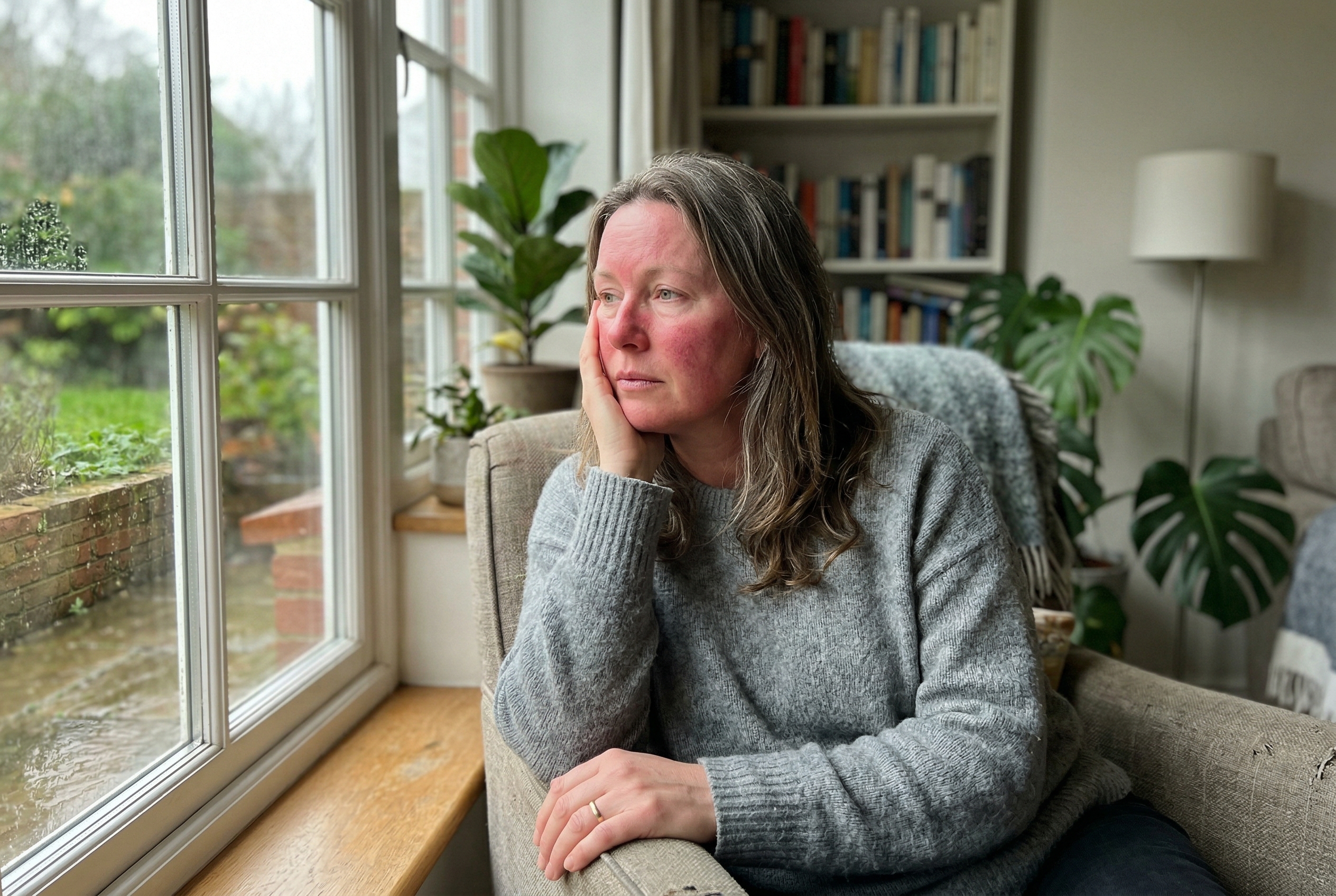
Face Redness: Why Your Skin Flushes and What Actually Calms It
The science behind persistent facial redness and the ingredients proven to reduce it
What Is Actually Happening When Your Face Turns Red
Facial redness is one of the most common skin complaints — affecting an estimated 16 million Americans and roughly 415 million people globally [1]. Yet most people who deal with persistent redness have never been given a clear explanation of the biology driving it.
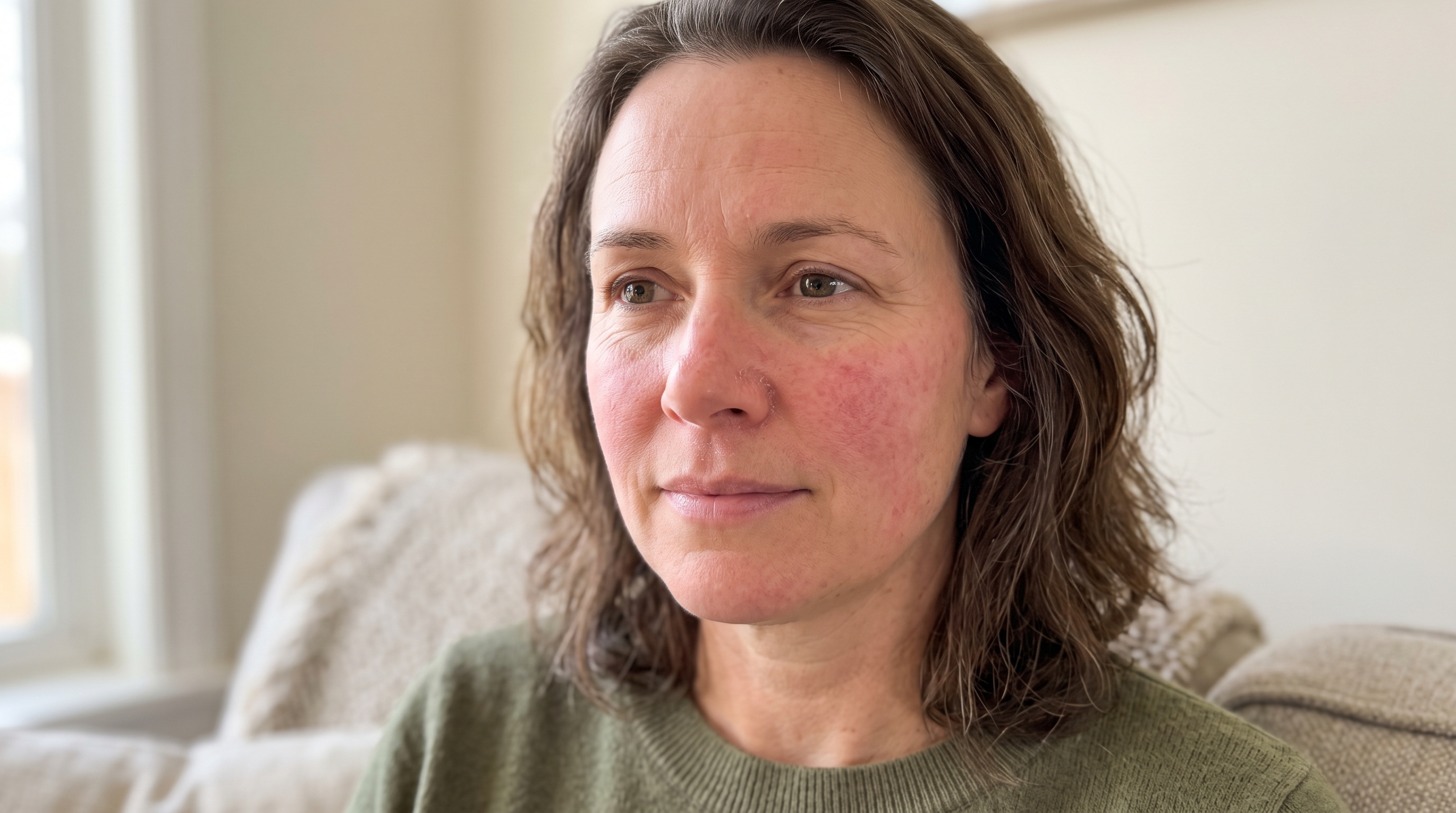
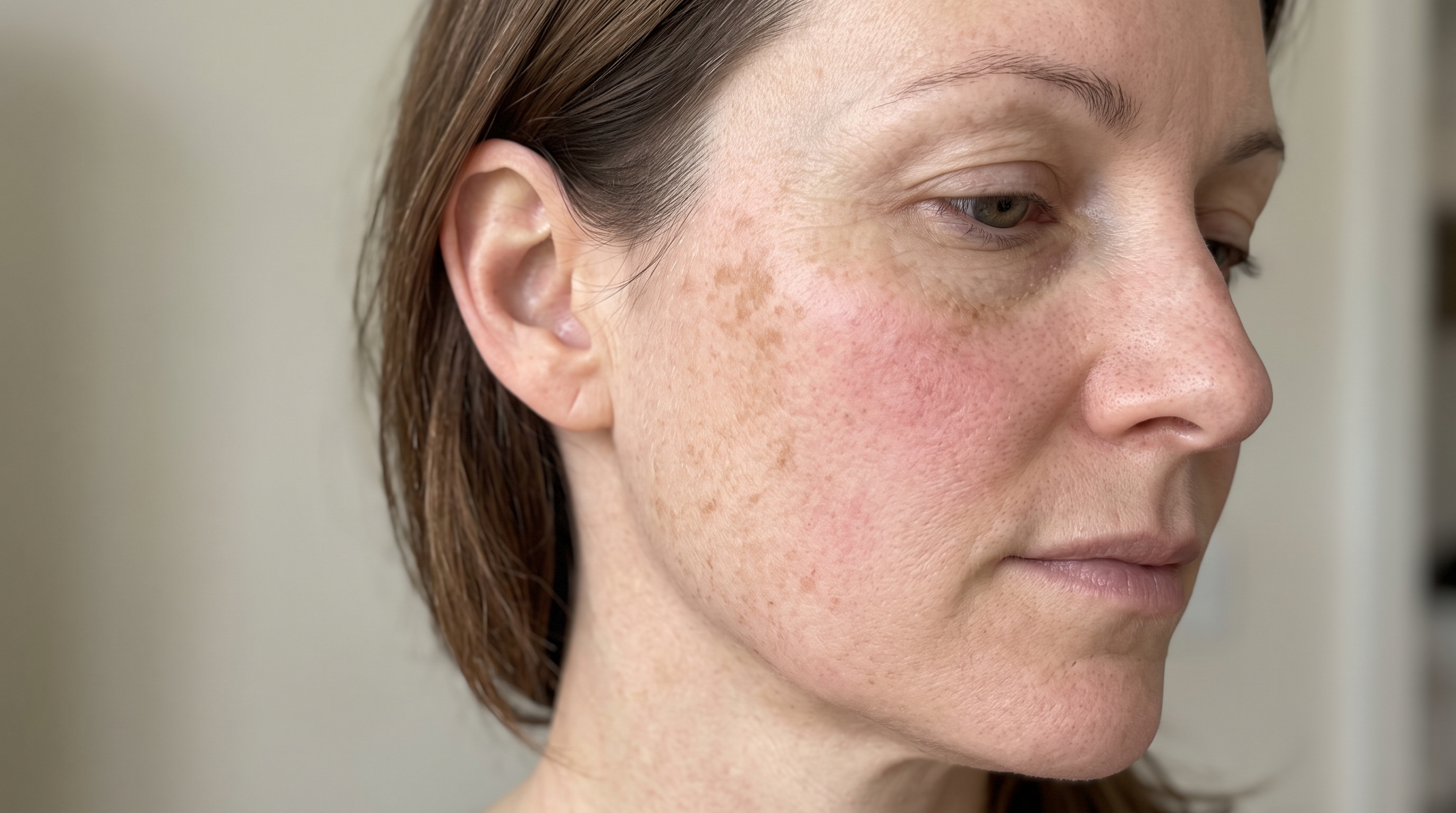
At its core, redness is a vascular event. Blood vessels in the facial dermis dilate wider than normal, allowing more blood to pool near the skin’s surface. In fair skin, this creates visible pinkness or redness. In deeper skin tones, the same vascular dilation may present as warmth, darkening, or a dusky undertone rather than obvious red.
The question is not whether your blood vessels dilate — everyone’s do. The question is why certain faces flush disproportionately and why that flushing sometimes becomes permanent.
The Three Pathways to Persistent Redness
Neurovascular Dysregulation
Your facial blood vessels receive signals from both the nervous system and local immune cells. In rosacea — the most common cause of chronic face redness — the communication between nerves and blood vessels becomes hyperactive [2]. Triggers that would cause a brief flush in most people (temperature changes, spicy food, alcohol, emotional stress) produce an exaggerated vascular response that lingers far longer than normal. Alcohol is among the most consistently reported of those triggers, and its effect on skin explains why repeated flushing can become permanent.
Research has identified elevated levels of cathelicidin antimicrobial peptides in rosacea-affected skin. These peptides, processed by the enzyme kallikrein 5, trigger inflammation and vasodilation in a self-amplifying loop [2]. The more inflammation, the more cathelicidin production, the more redness.
Mast Cell Accumulation
A groundbreaking finding in rosacea research is the marked increase in mast cells at the junction between the nervous system and vascular system in affected skin [1]. Mast cells release histamine and other inflammatory mediators that directly dilate blood vessels. Their accumulation creates a permanent state of low-grade vascular inflammation that manifests as persistent background redness — the kind that never fully fades between flares.
Skin Barrier Compromise
A weakened skin barrier allows environmental irritants to penetrate more easily, triggering inflammatory cascades that worsen redness. Transepidermal water loss (TEWL) measurements in rosacea patients consistently show impaired barrier function compared to controls [3]. This creates a vicious cycle: redness-causing inflammation damages the barrier, which allows more irritants in, which causes more inflammation.
Common Triggers and How to Identify Yours
Not every red face means rosacea. Before pursuing treatment, understanding your trigger pattern matters:
Triggers that would cause a brief flush in most people (temperature changes, spicy food, alcohol, emotional stress) produce an exaggerated vascular response that lingers far longer than normal.
Temperature shifts. Moving between heated indoor air and cold outdoor air causes rapid vasodilation/constriction cycles. This is the most commonly reported trigger, affecting over 75% of rosacea patients [1].
UV exposure. Ultraviolet radiation both triggers acute flushing and causes long-term structural damage to dermal blood vessels. Sunscreen is non-negotiable for anyone managing facial redness.
Topical irritants. Alcohol-based toners, fragrance, menthol, and high-concentration acids can provoke immediate redness responses in sensitized skin. If your face burns after applying a product, the product is contributing to the problem.
Hormonal fluctuations. Perimenopause brings hot flashes — sudden vasomotor events that affect the face dramatically. These are neurological in origin but their visible impact is identical to rosacea flares.
Ingredients That Actually Reduce Redness
Azelaic Acid: The Anti-Inflammatory Workhorse
Azelaic acid is the best-studied topical treatment for rosacea-related redness. A systematic review of 43 randomized controlled trials found that azelaic acid significantly improved erythema severity, inflammatory lesion counts, and treatment success compared to vehicle after 12 weeks [4]. The 15% gel formulation has been FDA-approved for rosacea since 2002.
How it works: azelaic acid inhibits NADPH oxidase on neutrophil membranes, reducing reactive oxygen species production. It also directly inhibits kallikrein 5 — the enzyme responsible for processing cathelicidin into its pro-inflammatory fragments [5]. A 2021 multicenter trial confirmed that 15% azelaic acid with 1% dihydroavenanthramide D significantly decreased erythema scores from a median of 2 to 1 after just 8 weeks [6].
Niacinamide: Barrier Repair Plus Anti-Redness
Niacinamide addresses redness through barrier restoration. A study of 50 rosacea patients using a niacinamide-containing moisturizer twice daily for 4 weeks found reduced redness, dryness, and irritation in nearly all participants, with improved skin hydration across the board [3]. By boosting ceramide synthesis and strengthening the skin barrier, niacinamide reduces the penetration of environmental irritants that trigger flushing.
Niacinamide also has a direct anti-inflammatory effect, suppressing the release of inflammatory cytokines from keratinocytes. This dual mechanism — structural barrier repair plus immune modulation — makes it one of the gentlest yet most effective ingredients for redness-prone skin.
If your face burns after applying a product, the product is contributing to the problem.
Centella Asiatica: The Calming Botanical
Centella asiatica (also called cica or tiger grass, and the namesake of cica cream) has been used in wound healing for centuries, and modern research validates its anti-redness properties. Its active compounds — asiaticoside, madecassoside, and asiatic acid — promote collagen synthesis while reducing inflammatory signaling [7]. For redness, the key benefit is calming acute irritation without the potential for initial worsening that retinoids sometimes cause.
Zinc Oxide: Physical Sun Protection Plus Soothing
Zinc oxide functions as both a mineral sunscreen and an anti-inflammatory agent. It provides broad-spectrum UV protection without the chemical UV filters (like oxybenzone or avobenzone) that commonly trigger redness in sensitized skin. Zinc also has inherent astringent and antimicrobial properties that help calm inflamed tissue.
What to Avoid When Managing Redness
Certain popular skincare ingredients can make facial redness dramatically worse:
- Retinoids at high concentrations. While low-concentration retinol can eventually help redness-prone skin by rebuilding collagen, starting too aggressively almost always provokes a flare. Begin at the lowest available strength and increase slowly over months.
- Alpha hydroxy acids above 10%. Glycolic acid and lactic acid at high concentrations increase TEWL and irritation in barrier-compromised skin.
- Fragrance and essential oils. Even “natural” fragrances contain compounds that sensitize redness-prone skin.
- Physical scrubs. Mechanical exfoliation creates micro-tears in already-inflamed tissue, amplifying redness.
Building a Redness-Calming Routine
An effective anti-redness routine prioritizes three goals: protect the barrier, reduce inflammation, rebuild vascular resilience.
Morning: Gentle cleanser → niacinamide serum → moisturizer with ceramides → zinc oxide sunscreen (SPF 30+)
Evening: Micellar water or gentle cleanser → azelaic acid (15% if tolerated) → barrier-repair moisturizer
After 8 to 12 weeks of consistent barrier repair, introduce a low-concentration retinol (0.2% or below) every third evening. Retinol stimulates collagen production around blood vessels, gradually improving the structural support that prevents chronic dilation. The key is starting low and slow — the initial adjustment period should not involve visible redness or peeling.
When Delivery Technology Matters
For redness-prone skin, how an ingredient reaches target cells is arguably more important than which ingredient you choose. Conventional retinol formulations use solvents and penetration enhancers that disrupt the already-compromised lipid barrier — the opposite of what redness-prone skin needs.
Nanoretinol® by North Biomedical® takes a fundamentally different approach. Its retinol is encapsulated in biomimetic lipid nanoparticles that the skin recognizes as its own membrane components. Instead of forcing passage through a damaged barrier, these nanoparticles slip through naturally — delivering +232% more collagen recovery than conventional retinol with dramatically reduced cytotoxicity. For anyone managing facial redness, this means accessing retinol’s collagen-building benefits without the inflammatory cost that typically comes with it.
Recognizing When to See a Doctor
Most facial redness responds well to consistent topical care. However, certain patterns warrant professional evaluation:
- Redness accompanied by pustules or papules (possible papulopustular rosacea)
- Visible blood vessels (telangiectasia) that don’t respond to topical care
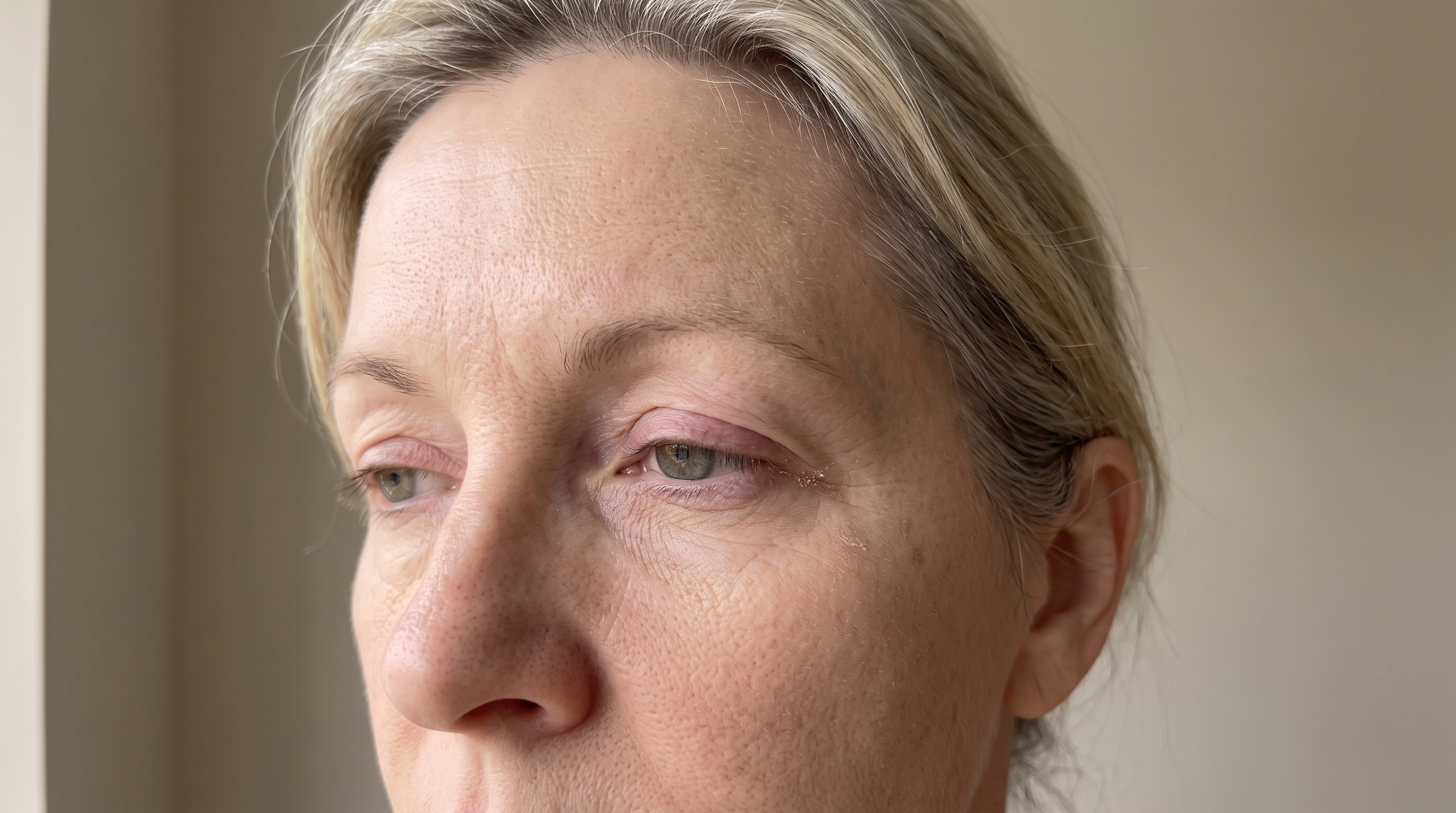
- Eye involvement: burning, grittiness, or persistent wateriness alongside facial redness
- Thickening skin, particularly on the nose (possible phymatous rosacea)
Prescription options including low-dose doxycycline, topical ivermectin, and brimonidine gel can address moderate-to-severe cases that topical cosmeceuticals alone cannot manage.
References
- Two AM, Wu W, Gallo RL, Hata TR. “Rosacea: part I. Introduction, categorization, histology, pathogenesis, and risk factors.” Journal of the American Academy of Dermatology. 2015;72(5):749-758. doi:10.1016/j.jaad.2014.08.028
- Yamasaki K, Di Nardo A, Bardan A, et al. “Increased serine protease activity and cathelicidin promotes skin inflammation in rosacea.” Nature Medicine. 2007;13(8):975-980. doi:10.1038/nm1616
- Draelos ZD, Ertel K, Berge C. “Niacinamide-containing facial moisturizer improves skin barrier and benefits subjects with rosacea.” Cutis. 2005;76(2):135-141. PMID: 16209160
- King S, Campbell J, Rowe R, et al. “A systematic review to evaluate the efficacy of azelaic acid in the management of acne, rosacea, melasma and skin aging.” Journal of Cosmetic Dermatology. 2023;22(10):2650-2662. doi:10.1111/jocd.15923
- Coda AB, Hata T, Miller J, et al. “Cathelicidin, kallikrein 5, and serine protease activity is inhibited during treatment of rosacea with azelaic acid 15% gel.” Journal of the American Academy of Dermatology. 2013;69(4):570-577. doi:10.1016/j.jaad.2013.05.019
- Dall’Oglio F, Nasca MR, Gerbino C, Micali G. “A novel azelaic acid formulation for the topical treatment of inflammatory rosacea: a multicentre, prospective clinical trial.” Journal of Cosmetic Dermatology. 2021;20(Suppl 1):28-31. doi:10.1111/jocd.14098
- Bylka W, Znajdek-Awiżeń P, Studzińska-Sroka E, Brzezińska M. “Centella asiatica in cosmetology.” Postepy Dermatologii i Alergologii. 2013;30(1):46-49. doi:10.5114/pdia.2013.33378