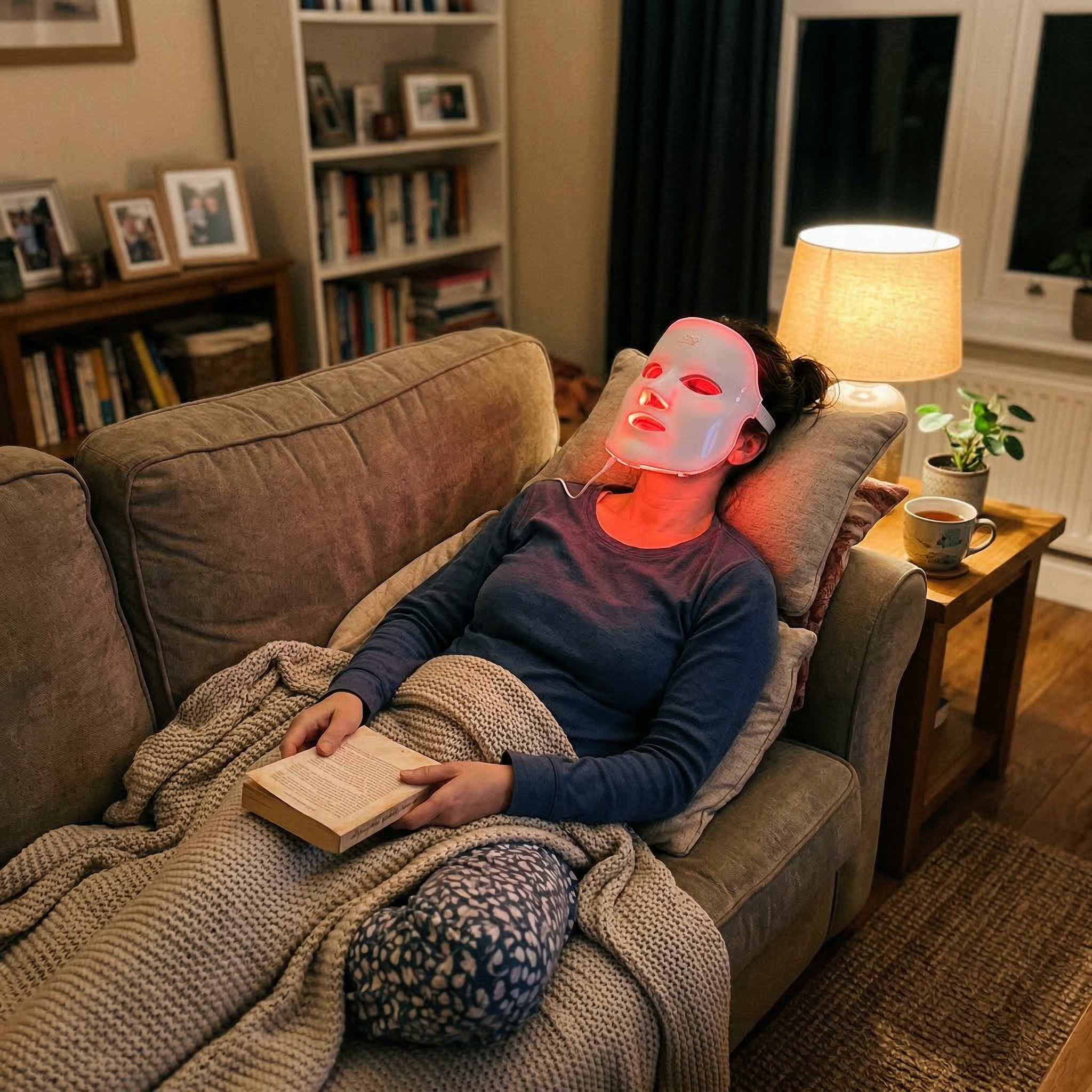
LED Face Mask for Anti-Aging: What the Science Actually Says About At-Home Light Therapy
Clinical trials show red and near-infrared LED masks boost collagen, reduce wrinkles, and improve skin density — but results depend on wavelength, dosage, and consistency
How Light Became a Skincare Tool
The idea that light can heal skin sounds like science fiction — until you look at the research. Photobiomodulation (PBM), the clinical term for what most people call LED light therapy, has been studied for decades in wound healing, pain management, and dermatology. Now, at-home LED face masks have turned this clinical technology into a nightly skincare routine for millions of women.
But can a mask you bought online really stimulate collagen the way a dermatologist’s panel does? The answer, according to a growing body of peer-reviewed research, is a qualified yes — with some important caveats.
What Happens When Light Hits Your Skin
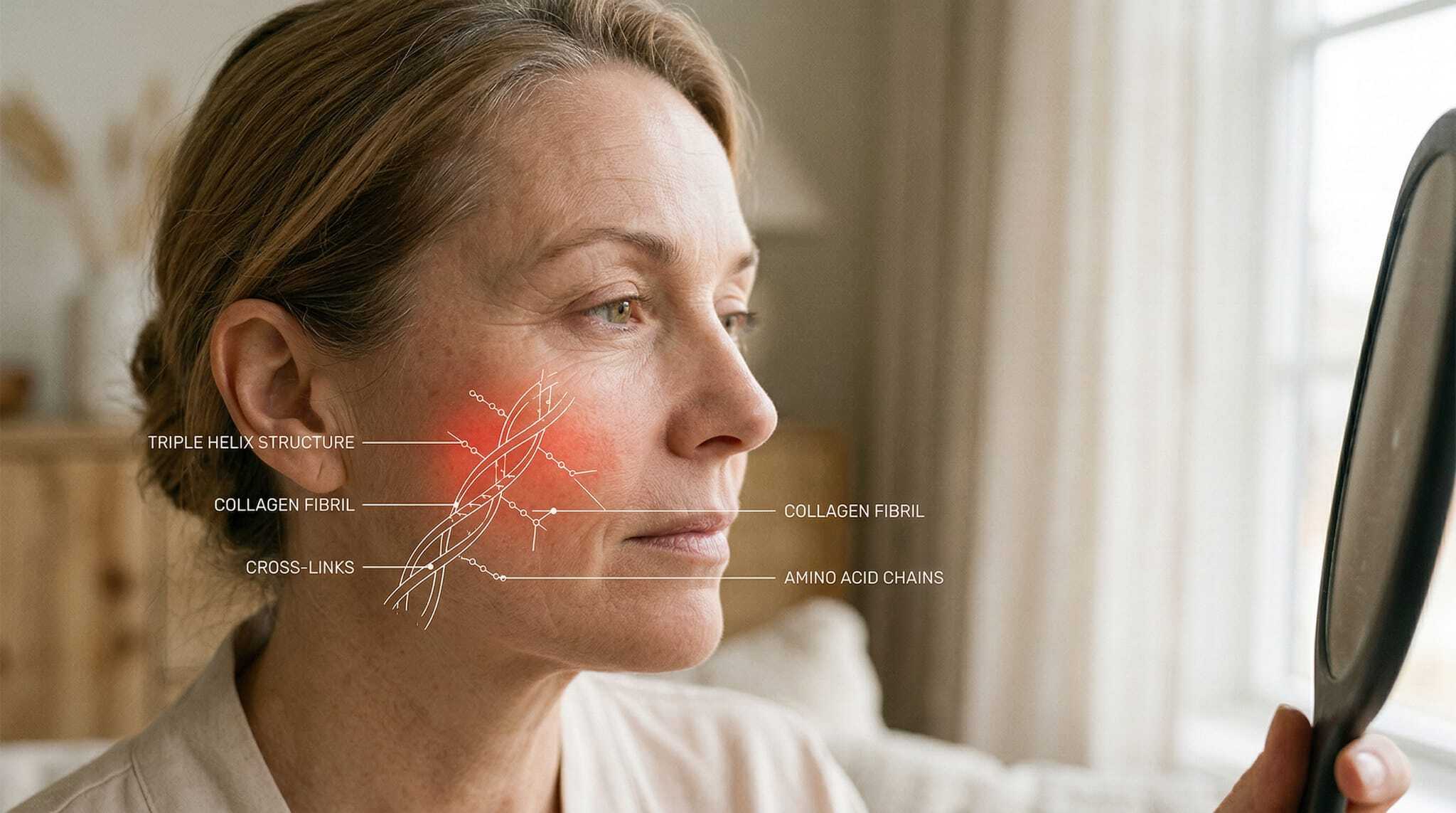
When red or near-infrared light penetrates the skin, it is absorbed by a molecule called cytochrome c oxidase inside your mitochondria — the energy factories of every cell [1]. This triggers a cascade of events: increased ATP (cellular energy) production, reduced oxidative stress, and the activation of signaling pathways that tell fibroblasts to produce more collagen and elastin.
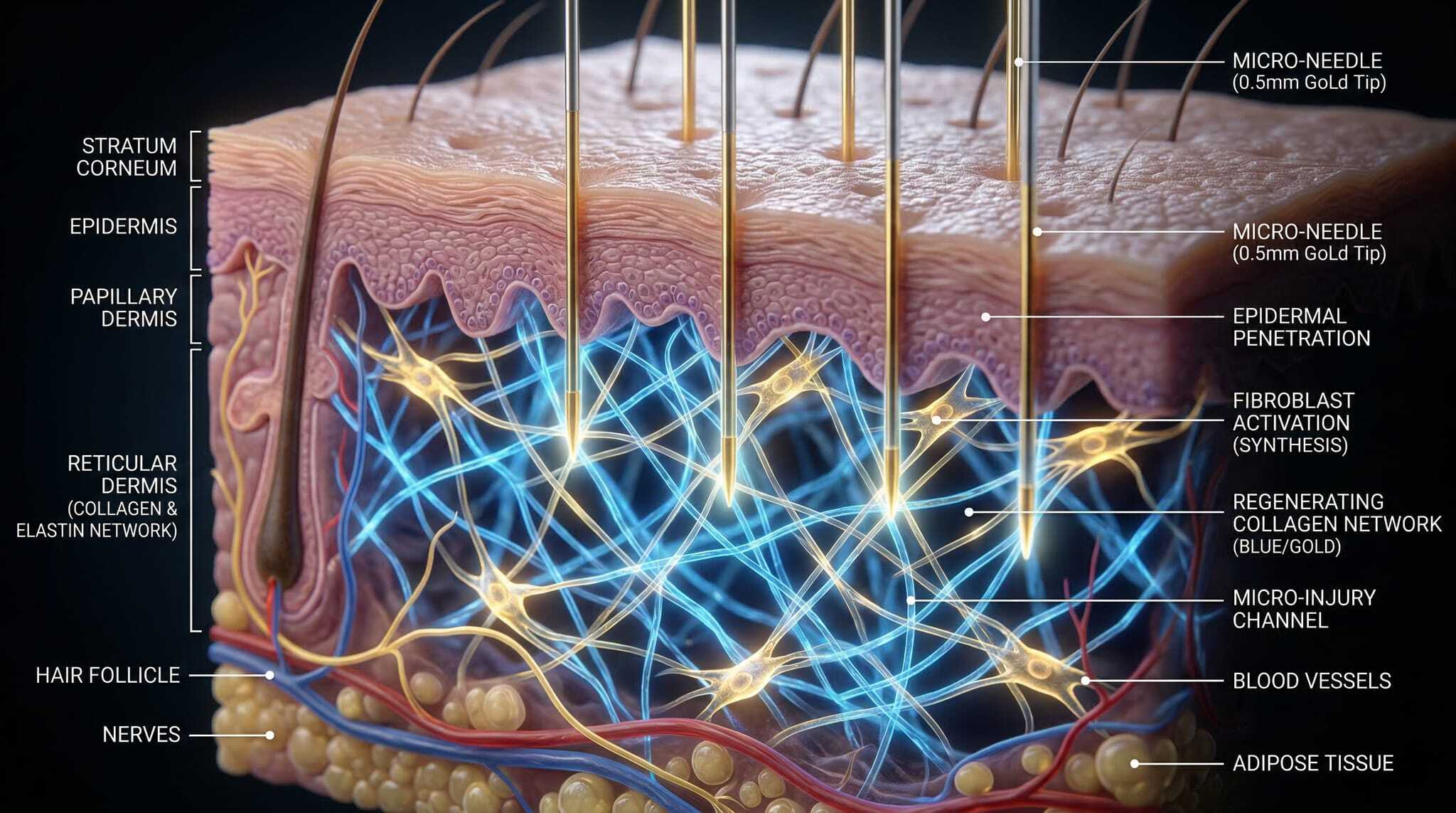
This is fundamentally different from how lasers or IPL treatments work. Those technologies cause controlled damage to trigger a healing response. LED therapy skips the damage entirely and directly stimulates regenerative processes. That is why it carries virtually no risk of burns, scarring, or downtime — and why it is safe enough for daily home use [2].
The wavelengths that matter most for anti-aging fall into two ranges: red light (620–660 nm) and near-infrared light (800–860 nm). Red light primarily acts on the epidermis and superficial dermis, stimulating collagen and reducing inflammation. Near-infrared penetrates deeper, reaching the lower dermis where it influences elastin production and cellular repair [3].
What the Clinical Trials Actually Show
The most rigorous evidence comes from a landmark 2007 randomized, placebo-controlled, double-blinded, split-face study by Lee et al. Participants received LED treatments using 830 nm and 633 nm wavelengths over several weeks. The results showed significant wrinkle reduction — up to 36% in the treated group — along with a 19% increase in skin elasticity. Histological analysis confirmed increased collagen fiber density and improved dermal architecture [4].
A 2014 controlled trial by Wunsch and Müller examined 136 volunteers treated with polychromatic red and near-infrared light. The study found statistically significant improvements in skin complexion, skin feeling, and intradermal collagen density measured by ultrasound. Importantly, patients reported visible improvement in fine lines and overall skin texture, and these results were confirmed by both blinded clinical assessments and objective measurement [2].
Barolet et al. demonstrated in 2009 that pulsed 660 nm LED light increased type-I procollagen levels by 31% in a tissue-engineered skin model and reduced MMP-1 (the enzyme that breaks down collagen) by 18%. A corresponding clinical study on aged and photoaged individuals confirmed visible improvements in skin texture and wrinkle severity [5].
More recently, a 2025 study published in Medicine evaluated at-home LED/IRED masks specifically. After systematic use of red (600–660 nm) and near-infrared (800–860 nm) light, participants showed increased fibroblast activity, enhanced collagen and elastin synthesis, and measurable improvements in wrinkle depth — all achieved without professional supervision [3].
The results showed significant wrinkle reduction — up to 36% in the treated group — along with a 19% increase in skin elasticity.
The Wavelength Guide: What Each Color Does
Not all LED colors are created equal. Here is what the evidence supports:
Red light (620–660 nm) is the most studied wavelength for anti-aging. It stimulates fibroblasts, increases type-I and type-III collagen production, and reduces inflammatory markers. This is the wavelength that drives wrinkle reduction in most clinical trials [4].
Near-infrared (800–860 nm) penetrates deeper than red light and reaches the lower dermis. It enhances elastin production, supports wound healing, and appears to amplify the effects of red light when the two are combined [3].
Blue light (400–470 nm) primarily targets bacteria and is used for acne management. It has minimal evidence for anti-aging applications.
Yellow/amber light (570–590 nm) may reduce redness and improve lymphatic drainage, but the clinical evidence for wrinkle reduction is limited.
Goldberg et al. found that combining 633 nm and 830 nm LED treatments over a 5-week period produced statistically significant clinical improvement in photoaged skin, with biopsy analysis revealing increased collagen fiber density at the ultrastructural level [6].
How to Choose an At-Home LED Mask
The market is flooded with LED face masks ranging from $30 to $1,500. Here is what actually matters based on the clinical literature:
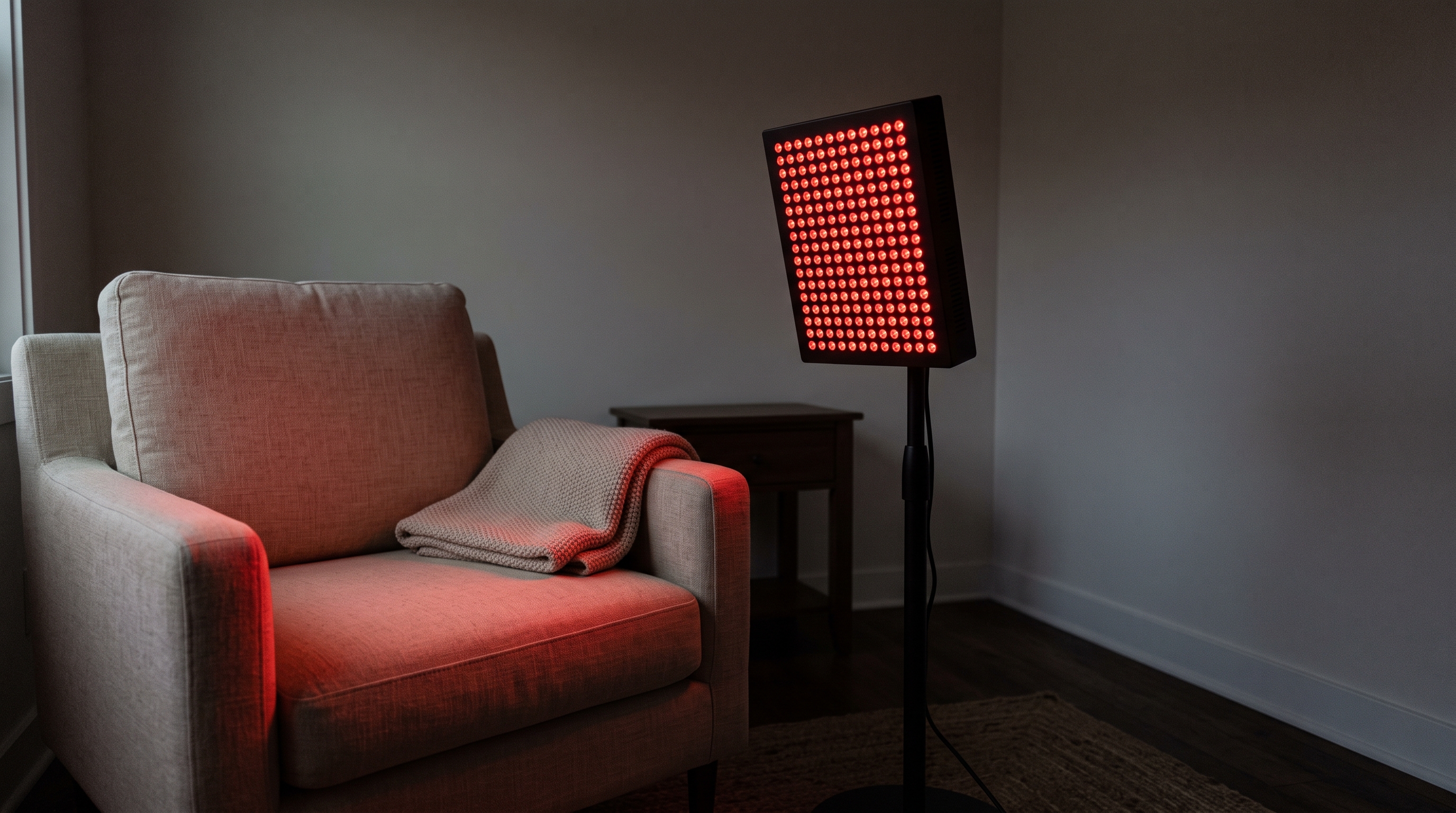
Wavelength specificity. Look for devices that use 630–660 nm (red) and/or 830–850 nm (near-infrared). Devices that only list “7 color LED therapy” without specifying exact wavelengths and power output are typically underpowered. The same scrutiny applies to the high frequency facial wand, which emits no therapeutic wavelength at all.
Near-infrared (800–860 nm) penetrates deeper than red light and reaches the lower dermis.
Irradiance (power density). Clinical trials typically use 20–100 mW/cm². Many consumer devices deliver less than 5 mW/cm² — which may be below the therapeutic threshold. Unfortunately, most brands do not disclose this specification, which makes comparison shopping difficult. If you are weighing a mask against a panel or a wand, our best red light therapy device guide compares the form factors on delivered dose rather than price. The same specification-first logic applies when picking the best microcurrent device, where amperage and waveform decide the outcome.
Treatment time. In clinical studies, treatment sessions typically last 10–30 minutes. Shorter treatments (under 5 minutes) are unlikely to deliver sufficient energy dose to stimulate meaningful collagen changes.
FDA clearance. In the United States, LED masks are regulated as Class II medical devices. FDA-cleared devices have demonstrated safety and efficacy to a regulatory standard. This is not a guarantee of results, but it does indicate the device meets minimum performance criteria.
Consistency matters more than intensity. The clinical trials showing real results all involved regular, sustained use — typically 3–5 sessions per week for 4–12 weeks. Occasional use is unlikely to produce visible changes.
What LED Therapy Cannot Do
LED face masks are effective for mild to moderate photoaging: fine lines, skin texture, skin tone, and collagen density. But they have clear limitations.
They will not replace lost facial volume, tighten significantly sagging skin, or eliminate deep rhytids (deep wrinkles). For those concerns, injectable fillers, radiofrequency treatments, or surgical options remain more appropriate.
LED therapy also works best as part of a comprehensive skincare routine. Clinical studies consistently show that combining photobiomodulation with active topical ingredients — particularly retinol — produces synergistic results. Retinol stimulates collagen through the retinoic acid receptor pathway, while LED stimulates it through the mitochondrial pathway. These are complementary mechanisms that do not compete with each other.
For women over 40, where collagen decline accelerates due to hormonal changes, layering these approaches makes biological sense. A nightly retinol like Nanoretinol® — which uses lipid nanoparticle delivery to achieve +232% more collagen recovery than conventional retinol — paired with regular LED sessions addresses aging through two independent cellular pathways simultaneously.
The Takeaway
LED face masks are not gimmicks. When a device delivers the right wavelengths at sufficient power density, and you use it consistently, the clinical evidence shows real improvements in collagen density, wrinkle depth, and skin elasticity. The key is choosing a quality device and committing to regular use — just as you would with any effective anti-aging ingredient.
The science is clear: your skin cells respond to light. The question is whether you are giving them enough of it.
References
-
Karu TI. “Multiple Roles of Cytochrome c Oxidase in Mammalian Cells Under Action of Red and IR-A Radiation.” IUBMB Life. 2010;62(8):607-610. doi:10.1002/iub.359
-
Wunsch A, Matuschka K. “A Controlled Trial to Determine the Efficacy of Red and Near-Infrared Light Treatment in Patient Satisfaction, Reduction of Fine Lines, Wrinkles, Skin Roughness, and Intradermal Collagen Density Increase.” Photomedicine and Laser Surgery. 2014;32(2):93-100. doi:10.1089/pho.2013.3616
-
Kim H, et al. “Clinical Study to Evaluate the Efficacy and Safety of a Home-Used LED and IRED Mask.” Medicine. 2025;104(7):e41596. doi:10.1097/MD.0000000000041596
-
Lee SY, et al. “A Prospective, Randomized, Placebo-Controlled, Double-Blinded, and Split-Face Clinical Study on LED Phototherapy for Skin Rejuvenation.” Journal of Photochemistry and Photobiology B: Biology. 2007;88(1):51-67. doi:10.1016/j.jphotobiol.2007.04.008
-
Barolet D, Roberge CJ, Auger FA, et al. “Regulation of Skin Collagen Metabolism In Vitro Using a Pulsed 660 nm LED Light Source: Clinical Correlation with a Single-Blinded Study.” Journal of Investigative Dermatology. 2009;129(12):2751-2759. doi:10.1038/jid.2009.186
-
Goldberg DJ, et al. “Combined 633-nm and 830-nm LED Treatment of Photoaging Skin.” Journal of Drugs in Dermatology. 2006;5(8):748-753. PMID: 16989189