Lip Lines: Why They Form and What Actually Smooths Them
The anatomy of perioral wrinkles, why women are more affected, and evidence-based treatments for lines around the mouth
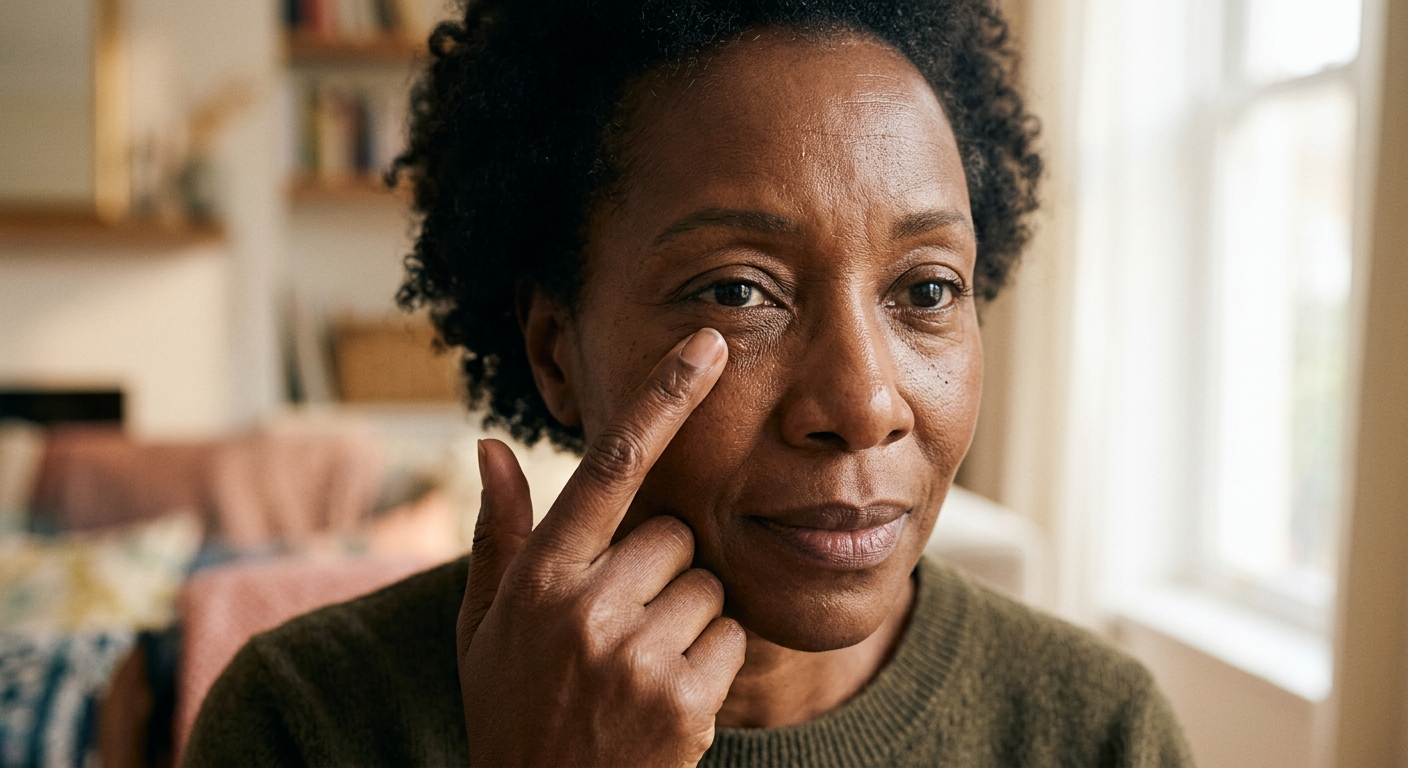
The vertical lines that radiate from the upper lip upward toward the nose are among the most stubborn and frustrating signs of facial aging. Known variously as lip lines, smoker’s lines, lipstick lines, or perioral rhytides, these creases can make a person look older than their actual age and create practical annoyances — lipstick bleeding into the lines being the most commonly cited.
The name “smoker’s lines” is misleading. While smoking does accelerate their formation, these lines develop in people who have never touched a cigarette. Understanding the real anatomy behind lip lines explains both why they form and why they can be so resistant to treatment.
The Anatomy Behind Lip Lines
Zhang et al. published a comprehensive review of lip aging that highlights the unique anatomical features of the perioral area [1]. The skin surrounding the mouth differs from the rest of the face in several critical ways.
First, it is significantly thinner than the skin on the cheeks or forehead. Shuster et al. documented that skin thickness varies substantially across different body regions, and the perioral area ranks among the thinnest facial zones [5]. Less thickness means fewer collagen and elastin fibers to resist mechanical stress — and the mouth generates enormous mechanical stress.
The orbicularis oris is the circular muscle that surrounds the mouth and controls lip movement — speaking, eating, drinking, kissing, and every facial expression involving the mouth. Unlike muscles in the forehead or around the eyes, the orbicularis oris contracts in a pursing motion that creates vertical compression lines perpendicular to the muscle fibers. Every sip through a straw, every pucker, every articulated word contributes microscopic mechanical creasing to the overlying skin.
Over decades, the same mechanism that produces smile lines (nasolabial folds) operates on an even thinner skin canvas around the mouth. The creases that initially appear only during movement gradually become etched permanently into skin that has progressively lost the collagen needed to resist them. That is a dermal problem, which is why an overnight lip mask improves the comfort of the lip without softening the lines above it.
Why Women Develop Deeper Lip Lines
One of the more striking findings in perioral aging research is the consistent sex difference. Women develop more numerous and deeper lip lines than men of the same age.
Zhang et al. attribute this to several factors [1]. Women have fewer sebaceous glands around the mouth than men, resulting in less natural moisturization and lipid barrier protection. The perioral skin in women also has fewer blood vessels per unit area, potentially reducing nutrient delivery to the dermis.
Additionally, hormonal changes during menopause accelerate collagen loss. The estrogen decline that begins in perimenopause triggers a rapid reduction in dermal collagen — some studies estimate up to 30% collagen loss in the first five years after menopause. Since perioral skin starts with less collagen than other facial areas, this accelerated loss has a disproportionate visual impact around the mouth.
Men also benefit from a thicker dermis overall [5] and from facial hair follicles that provide structural support and increase blood flow to the perioral area. The biological cards, unfortunately, are stacked against women when it comes to lip lines.
The estrogen decline that begins in perimenopause triggers a rapid reduction in dermal collagen — some studies estimate up to 30% collagen loss in the first five years after menopause.
Collagen Loss: The Core Problem
At the cellular level, lip lines are fundamentally a collagen problem. Varani et al. demonstrated that aged skin shows decreased collagen production alongside elevated matrix metalloproteinases (MMPs) — the enzymes that break down existing collagen [4]. In the perioral area, where collagen reserves are already thin, this simultaneous decrease in production and increase in degradation creates visible creasing relatively early in the aging process.
Understanding how collagen banking works is particularly relevant for lip lines. The principle is straightforward: the more collagen you maintain through your thirties and forties, the more structural reserve the perioral skin has to resist mechanical creasing in the decades that follow.
UV exposure accelerates perioral collagen loss, though the mouth area often receives less deliberate sun protection than the forehead or cheeks. Cumulative photodamage compounds the intrinsic collagen decline, deepening lines that might otherwise remain shallow.
Treatments That Actually Work
Topical Retinoids: Rebuilding Collagen From Within
Retinoids are the most evidence-based topical treatment for perioral lines. Mukherjee et al. reviewed decades of clinical data confirming that retinoids stimulate collagen synthesis, suppress collagen-degrading MMPs, and improve overall skin texture and thickness [2]. Topical treatment works on a different timescale from cosmetics, which is why the best lip plumper options deliver hours of change while retinoids deliver months of it.
Sadick et al. specifically evaluated a topical anti-aging serum on perioral rhytides and found measurable improvement in line depth and skin texture with consistent use [3]. The perioral area responded to treatment despite being one of the more challenging regions to treat topically.
The mechanism is well established: retinoids activate nuclear retinoic acid receptors in fibroblasts, upregulating the genes responsible for collagen I and collagen III production [4]. Over weeks to months of consistent application, the dermal collagen matrix thickens — providing more structural resistance to the mechanical creasing from orbicularis oris contractions.
The challenge, as with the eye area, is tolerability. The thin perioral skin is prone to irritation from conventional retinol — redness, flaking, and dryness that can actually accentuate the appearance of lip lines in the short term. For those with sensitive skin, choosing a retinoid formulation designed for tolerability is essential.
Hyaluronic Acid: Hydration as Architecture
While retinoids rebuild structural collagen, hyaluronic acid addresses the hydration deficit that contributes to lip line visibility. Dehydrated skin shows wrinkles more prominently — think of the difference between a dried raisin and a fresh grape.
Topical hyaluronic acid in low molecular weight forms (under 50 kDa) penetrates the epidermis to draw and retain water in the upper skin layers. This plumping effect can reduce the apparent depth of superficial lip lines within hours of application, though the effect is temporary and requires consistent use.
Results typically last 6–12 months before the body gradually metabolizes the filler.
For deeper lines, injectable hyaluronic acid fillers placed by a trained professional can physically fill the crease from below. Results typically last 6–12 months before the body gradually metabolizes the filler.
Daily SPF: Preventing Further Damage
Sun protection around the mouth is frequently overlooked but critically important. A lip balm with SPF 30 or higher addresses the lips themselves, while extending facial sunscreen application to the full perioral area protects the surrounding skin. Which balm you choose matters more than most people assume, as our guide to the best lip balm for dry lips sets out. The connection between retinol and collagen production is most effective when UV-driven collagen degradation is simultaneously minimized.
Professional Treatments
For moderate to severe lip lines, professional options include fractional laser resurfacing (which creates controlled micro-injuries to stimulate collagen remodeling), radiofrequency microneedling (which delivers heat to the dermal layer), and botulinum toxin micro-injections (which relax the orbicularis oris to reduce dynamic pursing lines).
These treatments are most effective when combined with a consistent at-home retinoid routine. Professional treatments provide periodic collagen stimulation events, while daily retinoid use maintains the ongoing collagen-building signal between sessions.
Why Nanoretinol® Works for the Perioral Area
The perioral area requires a formulation that can stimulate meaningful collagen production without triggering the irritation that makes conventional retinol impractical around the mouth. Peeling, redness, and dryness around the lips are not just uncomfortable — they can make lip lines look worse during the adjustment period and cause many people to abandon treatment entirely.
Nanoretinol® by North Biomedical® was designed with exactly this challenge in mind. The lipid nanoparticle encapsulation delivers 0.2% retinol through biomimetic carriers that release the active ingredient gradually into the dermis rather than depositing it all at once on the skin surface. Clinical results show +232% more effective collagen recovery and +73% more effective elastin recovery compared to conventional retinol, with significantly reduced irritation [6].
For perioral skin specifically, the water-based gel formulation avoids the occlusive films that heavy creams create around the mouth — films that can trap bacteria and cause perioral irritation. The +61% increase in skin firmness and +56% increase in skin elasticity measured over 56 days [6] directly address the structural deficit that allows lip lines to form and deepen.
While the lines are softening, formula choice decides whether color stays where you put it, and our guide to the best lipstick for older women covers which textures resist migrating. The pencil underneath does more of that work than the bullet, as the guide to the best lip liner for mature lips explains.
A Practical Protocol for Lip Lines
- Morning: Gentle cleanser, vitamin C serum, hyaluronic acid, moisturizer, SPF 30+ sunscreen (extended to full perioral area), SPF lip balm
- Evening: Gentle cleanser, retinoid treatment (applied to the perioral area, avoiding the vermilion border of the lips), hyaluronic acid, moisturizer
- Frequency: Start retinoid application every third night around the mouth, progress to every other night, then nightly as tolerated
- Behavioral: Minimize straw use; stay hydrated; avoid repetitive lip pursing
Expect initial improvement in skin texture within 4–6 weeks, with progressive reduction in fine line depth over 3–6 months. Deeper etched lines may require professional intervention in combination with topical retinoid maintenance.
Lip lines are the product of anatomy, biology, and decades of mechanical movement. They cannot be entirely prevented in a face that smiles and speaks and expresses itself. But they can be meaningfully reduced with a treatment approach grounded in the biology of collagen restoration — starting with retinoids that are formulated to actually work in the thin, sensitive perioral skin where these lines live.
References
-
Zhang Y, Li J, Wang X, et al. Aging of the Human Lip: Current Knowledge and Clinical Implications. Skin Res Technol. 2025;31(1):e70311. doi:10.1111/srt.70311
-
Mukherjee S, Date A, Patravale V, Korting HC, Roeder A, Weindl G. Retinoids in the treatment of skin aging: an overview of clinical efficacy and safety. Clin Interv Aging. 2006;1(4):327-348. PMID: 18046911
-
Sadick NS, Karcher C, Engelman DE, Grana L. A study evaluating the tolerability and efficacy of a topical anti-aging serum on perioral rhytides. J Cosmet Dermatol. 2019;18(6):1691-1698. doi:10.1111/jocd.12909
-
Varani J, Dame MK, Rittie L, et al. Vitamin A antagonizes decreased cell growth and elevated collagen-degrading matrix metalloproteinases and stimulates collagen accumulation in naturally aged human skin. J Invest Dermatol. 2000;114(3):480-486. doi:10.1046/j.1523-1747.2000.00876.x
-
Shuster S, Black MM, McVitie E. The influence of age and sex on skin thickness, skin collagen and density. Br J Dermatol. 1975;93(6):639-643. doi:10.1111/j.1365-2133.1975.tb05113.x
-
North Biomedical LLC. “Nanoretinol® vs. Conventional Retinol: Efficacy in Collagen and Elastin Recovery.” Clinical Study Summary, 2024.