Retinol and Hyaluronic Acid: Why These Two Ingredients Are Better Together
The science of hydration, collagen, and a surprising molecular connection that makes this pairing uniquely effective
The Dehydration Problem With Retinol
Retinol is one of the most effective anti-aging ingredients in existence — decades of clinical research confirm its ability to stimulate collagen, accelerate cell turnover, and visibly reduce wrinkles [1]. But it comes with a trade-off that most people discover within the first few weeks: it can leave skin feeling noticeably drier.
This isn’t a coincidence. Retinol accelerates epidermal cell turnover, pushing new cells to the surface faster than the skin’s barrier machinery can keep pace. During the adjustment period, transepidermal water loss (TEWL) temporarily increases — more water evaporates from the skin surface — while the barrier recalibrates to the new rate of cellular activity [1].
The result: tightness, flaking, and that uncomfortable tight-dry feeling that drives many people to abandon retinol before it can work.
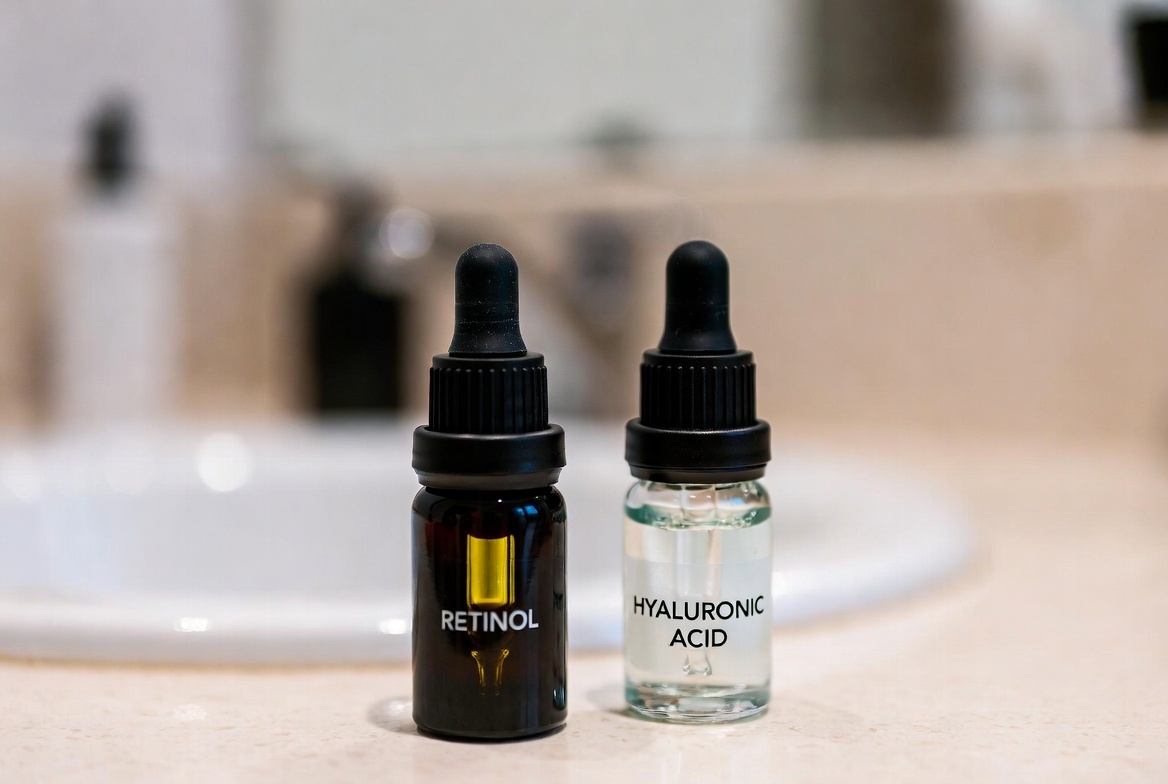
Hyaluronic acid (HA) directly addresses this problem. But more than just a moisture band-aid, HA and retinol have a relationship that goes deeper than you might expect.
What Hyaluronic Acid Actually Does
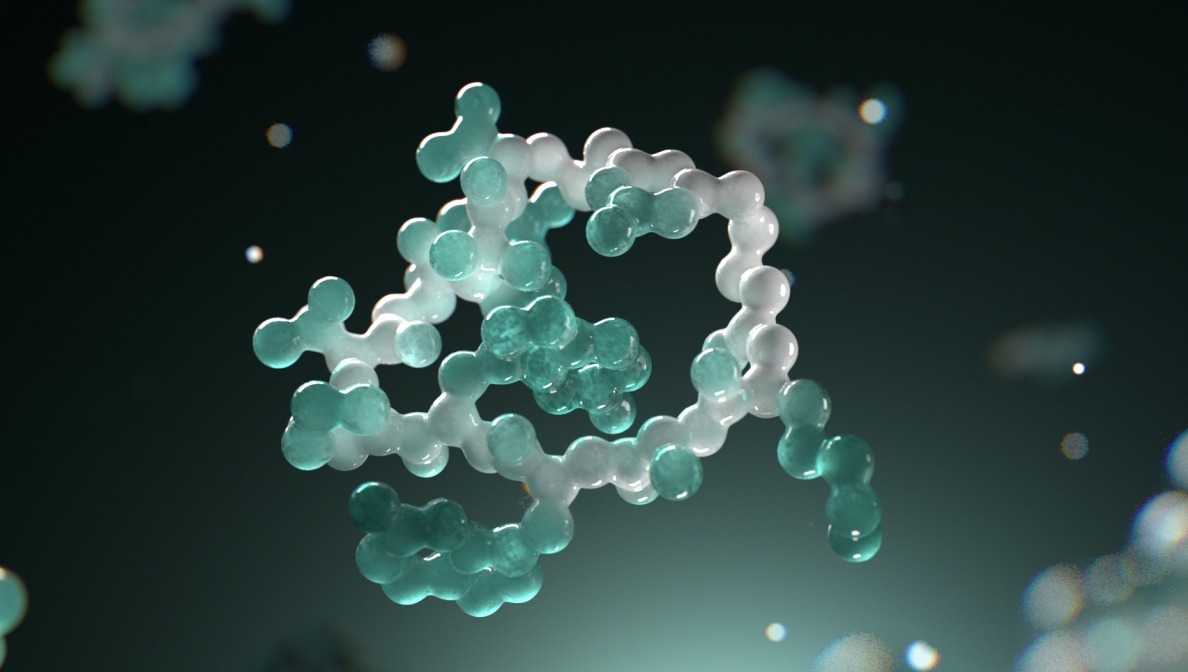
Hyaluronic acid is a glycosaminoglycan — a long-chain polysaccharide that exists naturally throughout the body. In skin, it’s concentrated in the dermis, where it performs a critical structural role: it binds water molecules at a ratio of approximately 1,000:1 by molecular weight, creating the plump, hydrated matrix that gives young skin its characteristic volume and elasticity [2].
The problem is that HA degrades rapidly — the half-life of HA in skin is roughly 24 hours — and production declines significantly with age. By the time most people start using retinol (typically late 20s to 30s), their skin’s natural HA reserves are already declining [2].
Topical HA addresses this through two molecular mechanisms:
Direct surface hydration. Low-molecular-weight HA (typically <50 kDa) can penetrate the epidermis and reach the deeper layers where it binds water and plumps the skin matrix. High-molecular-weight HA forms a film on the surface that reduces TEWL and maintains surface hydration. Many advanced formulations use a combination of both molecular weights for layered benefit [3]. Our guide to choosing the best hyaluronic acid serum covers how to tell whether a bottle genuinely does that.
Anti-aging effects beyond hydration. Clinical research confirms that HA doesn’t just hydrate — it reduces skin atrophy and supports the structural integrity of the extracellular matrix in aged skin [3].
The Surprising Science: Retinol Tells Your Skin to Make More HA
Here’s where this combination becomes genuinely interesting.
Retinol accelerates epidermal cell turnover, pushing new cells to the surface faster than the skin’s barrier machinery can keep pace.
The conventional understanding of retinol and HA is additive: retinol handles collagen and cell turnover, HA handles hydration. Apply both, get both benefits separately. That’s partly true — but incomplete.
A 2004 study published in Skin Pharmacology and Physiology revealed something more significant: retinol directly induces the expression of HA synthase-3 (HAS3), the enzyme responsible for HA production in keratinocytes [4]. In the study, both retinoic acid and retinol markedly upregulated HAS3 mRNA in human keratinocyte cultures, leading to increased endogenous HA production. Retinoic acid also stimulated membrane-associated HAS enzyme activity.
This means that when you apply retinol consistently, you’re not just getting collagen stimulation — you’re also triggering your skin to produce more of its own hyaluronic acid. The clinical confirmation comes from Kafi et al.’s landmark randomized controlled trial, where topical 0.4% retinol significantly increased glycosaminoglycan expression in aged human skin compared to vehicle — glycosaminoglycans being the broader molecular family that includes hyaluronic acid [1].
So the combination of topical HA and retinol is genuinely synergistic:
- Topical HA provides immediate hydration and barrier support
- Retinol builds new collagen AND upregulates endogenous HA production over time
- The net result: you’re hydrating from the outside in (topical HA) while retinol trains your skin to hydrate itself from the inside out
How to Use Them Together
The application order matters, but not for the reasons commonly cited.
Apply HA first, retinol second. Apply your HA serum to slightly damp skin after cleansing. HA’s water-binding capacity is maximized when there’s ambient moisture to draw in. Let it absorb fully (about 60 seconds), then apply your retinol over the top.
This sequence works because HA creates a hydrated microenvironment in the epidermis before retinol penetrates. The result is that retinol’s cell-renewal effects proceed against a backdrop of adequate hydration, which significantly reduces the likelihood of that tight, flaky adjustment period.
The “sandwich method.” For those with sensitive skin or in the early adjustment phase, apply a thin layer of HA serum, then retinol, then seal everything with a light moisturizer. The top layer of moisturizer slows retinol penetration slightly, reducing intensity while still delivering results. This approach is particularly helpful during the first 4-6 weeks of retinol use — see our guide for beginners.
Same-product formulations. HA and retinol are increasingly combined in single-product formulations. These work well as long as the retinol concentration and encapsulation are adequate. The key question is always delivery — conventional retinol loses potency to oxidation and poor penetration, regardless of what it’s paired with.
This means that when you apply retinol consistently, you’re not just getting collagen stimulation — you’re also triggering your skin to produce more of its own hyaluronic acid.
Why the Adjustment Phase Feels Easier With HA
During the retinol adjustment period, the skin is simultaneously dealing with:
- Faster cell turnover (new cells arriving before old barrier lipids are fully processed)
- Temporary increase in TEWL
- Mild inflammation from retinoid receptor activation
HA’s role during this phase is to act as a hydration buffer — maintaining adequate water content in the stratum corneum while the barrier rebuilds between retinol sessions. A well-hydrated barrier recovers faster. Cells in a hydrated environment proliferate and differentiate more normally.
Research from Draelos et al. confirms that maintaining adequate skin hydration is fundamental to supporting the skin’s anti-aging processes and mitigating the effects of cellular stress during active treatment [3].
Who Benefits Most From This Combination?
Retinol beginners. This is the combination most likely to help you get through the adjustment phase without abandoning retinol. The hydration support makes those first 4-8 weeks significantly more comfortable.
Dry or mature skin. If your baseline skin is already dry, retinol’s dehydrating effect hits harder. HA is essential, not optional, for this skin type. Sensitive skin. Combined with the skin barrier support that HA provides, this pairing is one of the more tolerable ways to introduce retinol to reactive skin types.
All skin types for long-term use. Even users with normal or oily skin benefit — the endogenous HA production triggered by retinol becomes a long-term benefit rather than a short-term hydration fix.
One More Ingredient Synergy Worth Knowing
If you’re using retinol and niacinamide together, HA integrates naturally into that stack. HA goes on first, niacinamide next, retinol last, sealed with a light moisturizer. The three ingredients attack different aspects of skin aging without overlap: niacinamide handles inflammation and barrier ceramides, HA handles hydration and supports HA production, retinol drives collagen synthesis and cell renewal.
These aren’t competing ingredients. They’re complementary tools operating through distinct mechanisms.
Why Nanoretinol® Changes This Equation
The central tension in retinol’s relationship with skin hydration is delivery: conventional retinol relies on barrier penetration methods that temporarily disrupt the very barrier you’re trying to support. This creates the need for aggressive hydration protocols just to compensate for unnecessary damage.
Nanoretinol® by North Biomedical® resolves this through lipid nanoparticle encapsulation. Biomimetic particles are recognized as “self” by skin cells — they bypass the barrier through physiological lipid exchange rather than chemical disruption. The result is retinol delivery without the barrier damage penalty [5].
This changes the HA combination story: instead of using HA to compensate for retinol’s barrier-disrupting side effects, you’re using HA alongside a retinol that doesn’t disrupt the barrier in the first place. The synergy between topical HA and Nanoretinol’s capacity to stimulate endogenous HA production becomes the primary story — not damage control.
The clinical outcome reflects this: +232% more collagen recovery than conventional retinol, with significantly reduced irritation. That’s what happens when delivery science eliminates the trade-off that has always made retinol harder to use than it needs to be.
References
-
Kafi R, Kwak HSR, Schumacher WE, et al. “Improvement of naturally aged skin with vitamin A (retinol).” Arch Dermatol. 2007;143(5):606-612. doi:10.1001/archderm.143.5.606
-
Wang ST, Neo BH, Betts RJ. “Glycosaminoglycans: Sweet as Sugar Targets for Topical Skin Anti-Aging.” Clin Cosmet Investig Dermatol. 2021;14:1227-1246. doi:10.2147/CCID.S328671
-
Draelos ZD, et al. “Top weapons in skin aging and actives to target the consequences of skin cell senescence.” J Eur Acad Dermatol Venereol. 2024;38 Suppl 4:15-22. doi:10.1111/jdv.19648
-
Sayo T, Sakai S, Inoue S. “Synergistic effect of N-acetylglucosamine and retinoids on hyaluronan production in human keratinocytes.” Skin Pharmacol Physiol. 2004;17(2):77-83. doi:10.1159/000076017
-
Mukherjee S, Date A, Patravale V, et al. “Retinoids in the treatment of skin aging: an overview of clinical efficacy and safety.” Clin Interv Aging. 2006;1(4):327-348. doi:10.2147/ciia.2006.1.4.327