The Retinol Purge: Why Your Skin Gets Worse Before It Gets Better
What's really happening beneath the surface — and how to tell if it's working
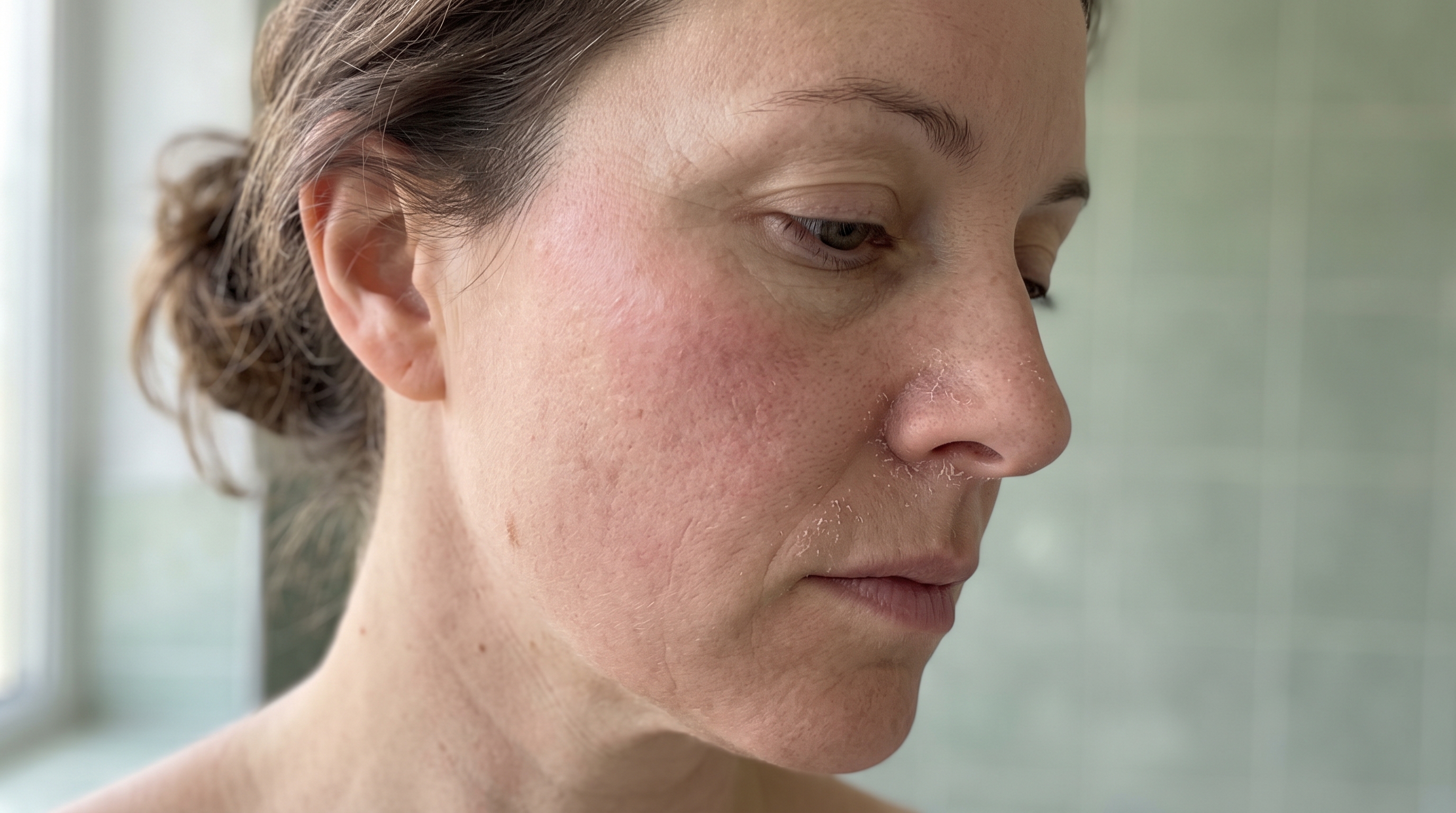
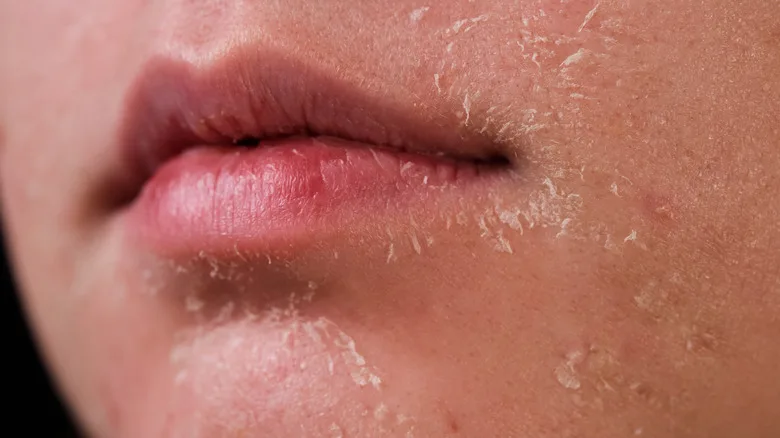
You start using retinol. Two weeks later, your skin looks worse than it did before — more breakouts, flaking, redness. Every instinct tells you to throw the bottle away.
Don’t. That reaction has a name: the retinol purge. And counterintuitive as it sounds, it’s often a sign that the product is doing exactly what it’s supposed to do.
But here’s the thing — not every breakout after starting retinol is a purge. Some reactions genuinely mean the product isn’t right for you. Understanding the difference is the single most important distinction in any retinol journey.
What the Retinol Purge Actually Is
The retinol purge isn’t a formal medical diagnosis. You won’t find a dedicated ICD code for it. But the biological process behind it is well-documented.
When retinol reaches your skin cells, it’s converted into retinoic acid — the active form of vitamin A that binds to nuclear receptors and directly influences gene expression [1]. One of the most prominent effects is a dramatic acceleration of epidermal cell turnover. Retinoids boost the rate at which keratinocytes (the primary cells of your outer skin) divide, mature, and shed [2].
Think of it like fast-forwarding your skin’s natural renewal cycle. Under normal circumstances, a skin cell takes roughly 28–40 days to migrate from the deepest layer of the epidermis to the surface, where it eventually flakes off. Retinoids compress this timeline considerably [1].
The consequence? Everything hiding beneath the surface — microcomedones (tiny, invisible clogged pores), trapped sebum, early-stage inflammatory lesions — gets pushed to the surface weeks ahead of schedule. You’re not developing new problems. You’re seeing problems that were already forming underground, now arriving all at once.
The Science of Accelerated Turnover
On a cellular level, retinoids cause what dermatologists sometimes call a “differentiation shift.” In a landmark review, Elias (1986) described how retinoid treatment produces acanthosis (thickening of the living epidermis), hypergranulosis, and a relative thinning of the dead stratum corneum — all direct consequences of accelerated cell turnover [2]. Desmosomes, the protein bridges holding skin cells together, are actively shed during this process, and the outer layer of skin becomes temporarily looser and more fragile.
This is why the purge doesn’t just mean breakouts. It often includes:
- Peeling and flaking — dead cells shed faster than your skin can replace them smoothly
- Dryness — the barrier is temporarily compromised
- Redness and sensitivity — increased blood flow and mild inflammation accompany the cellular upheaval
- Surface breakouts — microcomedones that would have appeared over the next 2–3 months surface simultaneously
Two weeks later, your skin looks worse than it did before — more breakouts, flaking, redness.
Mukherjee et al. (2006) noted that irritant reactions such as burning, scaling, and dermatitis are common during the initial phase of retinoid therapy and are more pronounced with stronger retinoids like tretinoin and tazarotene [1]. Milder retinoids — retinol, retinaldehyde — tend to produce less dramatic purge symptoms, though they can still occur.
Purge vs. Breakout: How to Tell the Difference
This is the question that keeps people up at night. Here’s a practical framework:
It’s likely a purge if:
- Breakouts appear in areas where you already tend to get acne
- Lesions are mostly small whiteheads, blackheads, or pustules (not deep cysts)
- Symptoms began within the first 2–4 weeks of starting retinol
- The breakouts are gradually improving by weeks 6–8
- You also notice peeling and dryness alongside the breakouts It’s likely a true breakout (or irritation) if:
- Acne appears in areas where you never break out
- Lesions are deep, painful, cystic, or nodular
- Symptoms are getting progressively worse after 8+ weeks
- There’s intense itching, hives, or a rash pattern (possible allergic contact dermatitis)
- You see no improvement whatsoever by the 12-week mark
Interestingly, a 2009 review by Yentzer et al. found no primary clinical trial data supporting the idea that topical retinoids actually cause acne flares. The available evidence suggested that retinoids improved acne even during the first couple of weeks [3]. What this means is that the “purge” may be less about retinoids worsening acne and more about pre-existing subclinical acne becoming visible during accelerated turnover — a subtle but important distinction.
How Long Does the Retinol Purge Last?
For most people, the purge window follows a predictable timeline:
- Weeks 1–2: Initial dryness, tightness, and possibly mild peeling. Some surface breakouts begin.
- Weeks 2–6: Peak purge phase. This is where breakouts, flaking, and sensitivity are at their worst. Many people quit during this window — right before things start improving.
- Weeks 6–12: Gradual clearing. Cell turnover has normalized at its new, faster pace. The skin begins to look noticeably better than baseline [1][3].
- Weeks 12+: The skin has adapted (a process sometimes called “retinization”). Irritation subsides, and the benefits — smoother texture, fewer breakouts, improved tone — become visible.
If your purge symptoms haven’t improved meaningfully by week 12, consult a dermatologist. That timeline suggests something other than normal adaptation.
How to Survive the Purge
You can’t skip the purge entirely, but you can manage it intelligently:
Start low and slow. Begin with a lower concentration of retinol (0.25%–0.5%) and apply it every other night or even every third night for the first 2–4 weeks. Gradually increase frequency as your skin adapts [1].
If your purge symptoms haven’t improved meaningfully by week 12, consult a dermatologist.
Buffer the application. Apply your moisturizer first, let it absorb for a few minutes, then layer retinol on top. This “sandwich” technique reduces direct irritation without meaningfully reducing efficacy. We break down the controlled trial evidence behind it in our guide to the retinol sandwich method.
Protect the barrier. Use a gentle, fragrance-free cleanser and a ceramide-rich moisturizer. Avoid other actives — vitamin C, AHAs, BHAs, benzoyl peroxide — during the adjustment period. Reintroduce them one at a time after your skin has stabilized.
Sunscreen is non-negotiable. Accelerated cell turnover makes your skin more photosensitive. A broad-spectrum SPF 30+ every morning is essential [1].
Don’t pick. The worst thing you can do during a purge is manually extract lesions that are surfacing. You risk scarring, infection, and prolonged inflammation.
Why Delivery Technology Changes the Equation
Here’s where the story gets interesting. Much of the purge problem traces back to how retinol interacts with the skin barrier. Conventional retinol formulations rely on penetration enhancers — often solvents or petroleum derivatives — that disrupt the lipid matrix of the stratum corneum to force the active ingredient through [1]. This barrier disruption is itself a major source of irritation, independent of what retinol does once it’s inside.
Research has shown that encapsulating retinoids in lipid-based delivery systems — liposomes and nanoparticles — can significantly reduce this irritation. In a double-blind clinical trial, Schäfer-Korting et al. (1994) found that liposome-encapsulated tretinoin at just 0.01% produced equivalent acne-clearing efficacy to conventional gels at 0.025%–0.05%, while causing dramatically less burning, erythema, and irritation [4]. The encapsulation allowed lower concentrations to deliver equal or greater therapeutic effect, simply by improving how the molecule reached target cells. Solid lipid nanoparticles (SLNs) have similarly demonstrated improved skin penetration with reduced irritation profiles, offering a route to retinoid therapy that doesn’t depend on damaging the barrier to work [5].
This is the principle behind Nanoretinol® by North Biomedical®. By encapsulating retinol in biomimetic lipid nanoparticles — particles the skin recognizes as “self” — the retinol passes through the epithelial barrier without the destructive mechanisms that conventional formulations rely on. The result: +232% greater collagen recovery and +73% greater elastin recovery compared to regular retinol, with significantly reduced cytotoxicity. Clinical trials confirm that side effects, when present, are milder than those caused by conventional retinol.
In practical terms, this means a gentler adjustment period. The purge isn’t eliminated — accelerated cell turnover is still part of how retinol works — but the barrier damage that amplifies purge symptoms is dramatically reduced.
When to See a Dermatologist
The purge is a waiting game, and patience is the strategy. But some situations warrant professional evaluation:
- Symptoms worsen progressively beyond 8–10 weeks
- You develop deep cystic acne that you’ve never experienced before
- There’s significant pain, swelling, or signs of infection
- You notice a spreading rash or hive-like reaction (possible allergic response)
- The irritation is severe enough to disrupt your daily life
A dermatologist can distinguish between normal retinization, irritant contact dermatitis, allergic contact dermatitis, and genuine acne flares — distinctions that are genuinely difficult to make on your own.
The Takeaway
The retinol purge is temporary. The results are not. Every peer-reviewed study on retinoid therapy shows the same pattern: an initial adjustment period followed by measurable, lasting improvements in skin texture, tone, and clarity [1][3]. The people who get the most out of retinol are the ones who push through the awkward phase — ideally with a well-formulated product that doesn’t make the transition harder than it needs to be.
Your skin is not rejecting retinol. It’s recalibrating. Give it time.
References
-
Mukherjee S, Date A, Patravale V, Korting HC, Roeder A, Weindl G. “Retinoids in the treatment of skin aging: an overview of clinical efficacy and safety.” Clinical Interventions in Aging. 2006;1(4):327-348. doi:10.2147/ciia.2006.1.4.327
-
Elias PM. “Epidermal effects of retinoids: supramolecular observations and clinical implications.” Journal of the American Academy of Dermatology. 1986;15(4 Pt 2):797-809. doi:10.1016/s0190-9622(86)70236-3
-
Yentzer BA, McClain RW, Feldman SR. “Do topical retinoids cause acne to ‘flare’?” Journal of Drugs in Dermatology. 2009;8(9):799-801. PMID: 19746671
-
Schäfer-Korting M, Mehnert W, Korting HC. “Liposomal tretinoin for uncomplicated acne vulgaris.” Clinical Investigator. 1994;72(12):1086-1091. doi:10.1007/BF00577761
-
Shah KA, Date AA, Joshi MD, Patravale VB. “Solid lipid nanoparticles (SLN) of tretinoin: potential in topical delivery.” International Journal of Pharmaceutics. 2007;345(1-2):163-171. doi:10.1016/j.ijpharm.2007.05.061