Retinol for Beginners: Everything You Need to Know Before Your First Application
A no-nonsense guide to starting retinol — what it does, how to use it, and why most beginners make the same avoidable mistakes
Why Retinol Deserves Its Reputation
If you’ve spent any time researching skincare, you’ve heard the name. Retinol sits at the top of virtually every dermatologist’s list of recommended active ingredients, and it has earned that position through something rare in the beauty industry: decades of rigorous, peer-reviewed scientific evidence.
Retinol is a form of vitamin A. When applied topically, it converts through a series of enzymatic steps into retinoic acid — the biologically active form that communicates directly with skin cells. This communication triggers a cascade of effects: accelerated cellular turnover, increased collagen and elastin production, and more even melanin distribution [1]. The result, over time, is measurably firmer, smoother, and more evenly toned skin.
Large-scale clinical trials have confirmed these effects repeatedly. A landmark integrated analysis of six vehicle-controlled studies found that topical retinol produced significant improvements across every measured sign of photoaging — wrinkles, fine lines, uneven skin tone, and brown spots — as early as four weeks into treatment [2]. These aren’t marketing claims; they’re clinical measurements from controlled research.
So why does retinol intimidate so many beginners? Because alongside its impressive benefits comes a learning curve — and most of the problems people experience are entirely avoidable.
What Retinol Actually Does to Your Skin
To use retinol well, it helps to understand what’s happening beneath the surface.
Your skin naturally renews itself on a roughly 28-day cycle. Old cells at the surface shed, and new ones migrate upward from deeper layers. As you age, this cycle slows down. Dead cells accumulate, collagen production declines, and the skin gradually loses its structural integrity [1].
Retinol essentially tells your skin to behave younger. Once it converts to retinoic acid inside the skin, it binds to specific nuclear receptors (RARs and RXRs) that regulate gene expression in skin cells [3]. This triggers several parallel processes:
- Faster cell turnover: Old, damaged surface cells are replaced more quickly by fresh ones
- Collagen stimulation: Fibroblasts in the dermis ramp up production of new collagen fibers
- Elastin recovery: The elastic network that gives skin its bounce begins to rebuild
- Melanin regulation: Pigment distribution becomes more uniform, fading dark spots over time
Think of it like upgrading your skin’s operating system. The hardware is the same — but the instructions are running more efficiently.
When you first start using retinol, your skin often gets worse before it gets better.
The Retinization Period: What Nobody Warns You About
Here’s where most beginners get derailed.
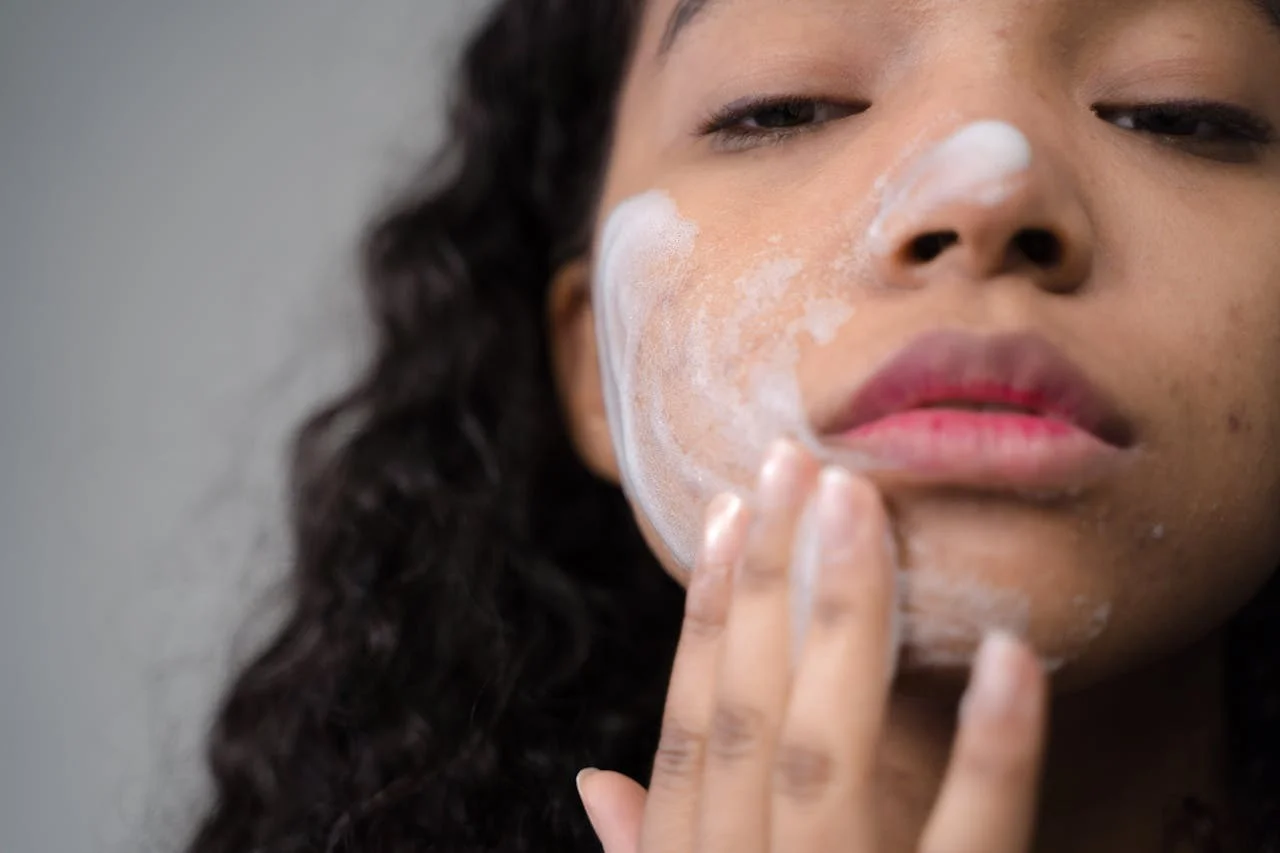
When you first start using retinol, your skin often gets worse before it gets better. Dermatologists call this the retinization period — a temporary adjustment phase where the skin adapts to increased cellular activity. It typically lasts two to six weeks, though it can stretch longer for people with sensitive skin.
During retinization, you might experience:
- Dryness and flaking as cell turnover accelerates faster than your skin is used to
- Mild redness from increased blood flow to the surface
- A temporary breakout (sometimes called “purging”) as clogged pores are cleared from the inside out
- Tightness or a stinging sensation when applying other products
This is not damage. It’s adaptation. Your skin is recalibrating to a new normal, and the discomfort is temporary. Research confirms that retinoid-associated irritation is transient and resolves as the skin acclimates — with proper use, few participants in controlled studies experienced irritation beyond mild and short-lived events [2]. The critical mistake most beginners make is either quitting during this phase (losing the benefits entirely) or pushing through too aggressively (causing unnecessary irritation). The solution is neither — it’s a measured, gradual approach.
How to Start: The Beginner Protocol
The single most important principle for retinol beginners is start low, go slow. Here’s a practical protocol:
Week 1–2: Twice a week
Apply retinol on two non-consecutive nights (for example, Monday and Thursday). This gives your skin four to five days of recovery between applications. Always apply to clean, completely dry skin — water on the surface can increase penetration and irritation.
Week 3–4: Three times a week
If your skin is tolerating the twice-weekly applications without significant irritation, increase to every other night.
Week 5–8: Every other night
Continue building frequency gradually. Most skin types can comfortably reach every-other-night application within six to eight weeks.
Week 9+: Nightly use
Once your skin has fully acclimated, you can move to nightly application. Some people’s skin prefers every other night long-term — and that’s completely fine. Consistency matters more than frequency.
The Buffer Technique
If you find that even twice-weekly application causes irritation, try the “sandwich method”: apply a layer of moisturizer first, then retinol, then another layer of moisturizer. This buffers the retinol’s contact with the skin without meaningfully reducing its effectiveness. As your tolerance builds, you can drop the first moisturizer layer and apply retinol directly.
If you are standing in front of a shelf trying to compare products, our rubric for judging the best retinol serum walks through the four formulation signals that actually predict results.
Concentration: Why More Isn’t Better
Retinol products range from 0.01% to over 1.0% concentration. For beginners, the instinct is often to start somewhere in the middle — a concentration high enough to “actually work.” This is a mistake.
Research consistently demonstrates that lower concentrations of retinol are effective. The integrated analysis by Farris et al. studied 0.1% stabilized retinol and found clinically significant improvements across all photoaging parameters [2]. You don’t need a high concentration to see real results.
What matters far more than concentration is delivery — how much of the retinol actually reaches the target cells in the dermis, rather than degrading on the skin surface or being blocked by the barrier. A well-formulated product at a low concentration will outperform a poorly formulated one at a high concentration, every time. If you are standing in front of a shelf trying to compare products, our rubric for judging the best retinol serum walks through the four formulation signals that actually predict results.
This is where newer delivery technologies have changed the equation. Traditional retinol formulations rely on chemical penetration enhancers to push the molecule past the skin barrier — the same mechanism that causes much of the irritation beginners experience. Lipid nanoparticle encapsulation, the technology behind Nanoretinol®, takes a fundamentally different approach: wrapping retinol in biomimetic nanoparticles that the skin recognizes as its own cellular material and allows through without resistance [4]. The result is significantly more retinol reaching the target cells at a gentler 0.2% concentration — with clinical studies showing +232% greater collagen recovery and drastically reduced irritation compared to conventional formulations.
For beginners especially, this matters. Less irritation during the retinization period means you’re far more likely to actually stick with the product long enough to see results.
The Non-Negotiable Rules
Regardless of which retinol product you choose, these rules apply to every beginner:
1. Apply at night
Retinol degrades in sunlight. UV exposure not only reduces its effectiveness but can increase the risk of irritation. Apply it in the evening, after cleansing, on dry skin [5].
2. Use sunscreen every morning
Retinol increases your skin’s photosensitivity. A broad-spectrum SPF 30 or higher is non-negotiable every single day — even on cloudy days, even if you’re mostly indoors. This isn’t optional; it’s the difference between retinol helping your skin and retinol making it more vulnerable.
3. Don’t mix with certain actives
Avoid combining retinol with vitamin C (use vitamin C in the morning instead), benzoyl peroxide, or AHA/BHA exfoliants on the same night. These combinations can cause excessive irritation or deactivate the retinol itself.
4. Moisturize generously
Retinol accelerates cell turnover, which can temporarily compromise the moisture barrier. Use a simple, fragrance-free moisturizer after every retinol application, or choose a retinol moisturizer in airless packaging if you prefer a single step. Hyaluronic acid and ceramide-based products pair particularly well.
5. Be patient
Meaningful results take eight to twelve weeks of consistent use. Collagen remodeling is a slow biological process — you can’t rush it. The first visible changes are usually improved skin texture and a subtle “glow” from faster cell turnover. Wrinkle reduction and firmness improvements follow later.
Who Should Wait
Retinol is suitable for most adults, but there are important exceptions:
- Pregnant or breastfeeding: Retinoids are contraindicated during pregnancy. Do not use any retinol product without consulting your physician.
- Active eczema, rosacea, or open wounds: Retinol will aggravate these conditions. Treat them first, then introduce retinol once the skin has healed.
- Currently using prescription retinoids: If you’re on tretinoin or adapalene, adding over-the-counter retinol is redundant and risks irritation. Use one or the other.
- Very young skin (under 25): Retinol’s primary benefits address age-related changes. For most people under 25, a good sunscreen and gentle cleanser are sufficient.
Men starting retinol have one extra variable to manage, because shaving already disrupts the barrier on the days they shave. Our skin care routine for men covers how to schedule the two so they do not compound.
Starting Smart
Retinol is not complicated. It’s one of the most thoroughly researched and consistently proven ingredients in all of skincare science. The only thing that separates people who love retinol from people who quit in frustration is approach.
Start with a low concentration. Build frequency gradually. Protect your skin from the sun. Be patient through the adjustment period. And choose a formulation that prioritizes delivery over raw concentration — your skin will thank you for it. If you are still deciding whether it is time at all, when to start using retinol answers that with biology rather than an age.
References
- Mambwe B, Mellody KT, Kiss O, O’Connor C, Bell M, Watson REB, Langton AK. “Cosmetic retinoid use in photoaged skin: A review of the compounds, their use and mechanisms of action.” International Journal of Cosmetic Science. 2025;47(1):45-57. doi:10.1111/ics.13013
- Farris P, et al. “Efficacy and Tolerability of Topical 0.1% Stabilized Bioactive Retinol for Photoaging: A Vehicle-Controlled Integrated Analysis.” Journal of Drugs in Dermatology. 2024;23(4):209-215. doi:10.36849/JDD.8124
- Ghyselinck NB, Duester G. “Retinoic acid signaling pathways.” Development. 2019;146(13):dev167502. doi:10.1242/dev.167502
- Zhong J, Zhao N, Song Q, Du Z, Shu P. “Topical retinoids: Novel derivatives, nano lipid-based carriers, and combinations to improve chemical instability and skin irritation.” Journal of Cosmetic Dermatology. 2024;23(10):3102-3115. doi:10.1111/jocd.16415
- Gilchrest BA. “Treatment of photodamage with topical tretinoin: an overview.” Journal of the American Academy of Dermatology. 1997;36(3 Pt 2):S27-36. doi:10.1016/s0190-9622(97)70058-6