Retinol for Your Neck and Décolletage: Why Anti-Aging Shouldn't Stop at Your Chin
The neck and chest age differently from the face — here's the biology behind it, and how to treat it effectively
The Most Neglected Anti-Aging Zone
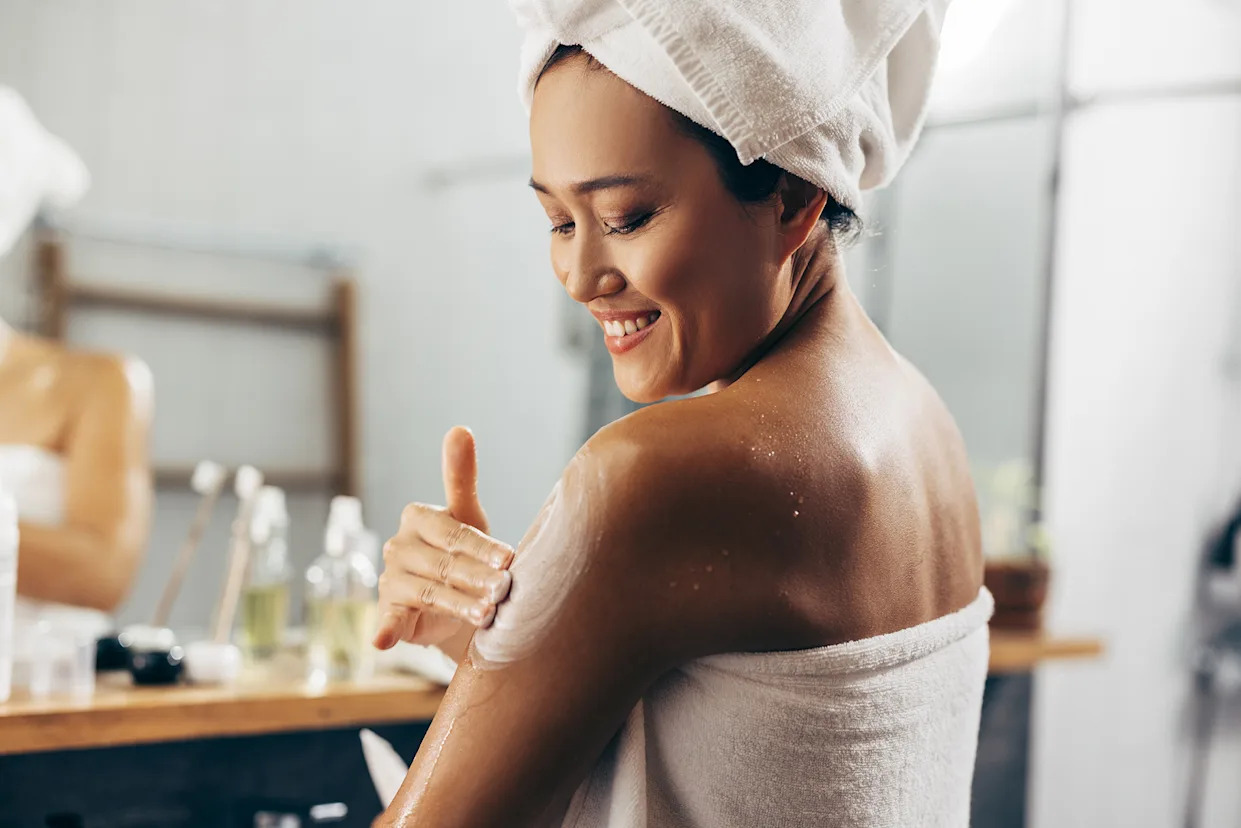
When you apply your retinol serum at night, where do you stop? Most people stop at the jaw. The neck, décolletage, and chest — all of it visible, all of it aging — gets nothing.
This skincare boundary isn’t accidental. Most skincare marketing is built around the face. Product directions say “apply to face.” Dermatologists demonstrate on facial skin. The default assumption is that anti-aging skincare = facial skincare.
But the neck and décolletage age on their own schedule — often faster than the face — and they have structural disadvantages the face doesn’t share. The gap between how much attention we give the face versus the neck and chest is one of the most practical fixable problems in anti-aging skincare.
Why the Neck Ages Faster Than the Face
The neck and décolletage have a more challenging aging profile than the face for several reasons rooted in basic skin anatomy:
Fewer sebaceous glands. The face — particularly the T-zone — has a high density of sebaceous glands that produce sebum. Sebum is an imperfect but real moisturizing factor, providing a thin lipid layer that slows transepidermal water loss (TEWL) and adds some barrier protection. The neck and chest have significantly fewer sebaceous glands. Less natural oil production means less inherent barrier support, making this skin more prone to dehydration and — over years — dryness-accelerated structural aging.
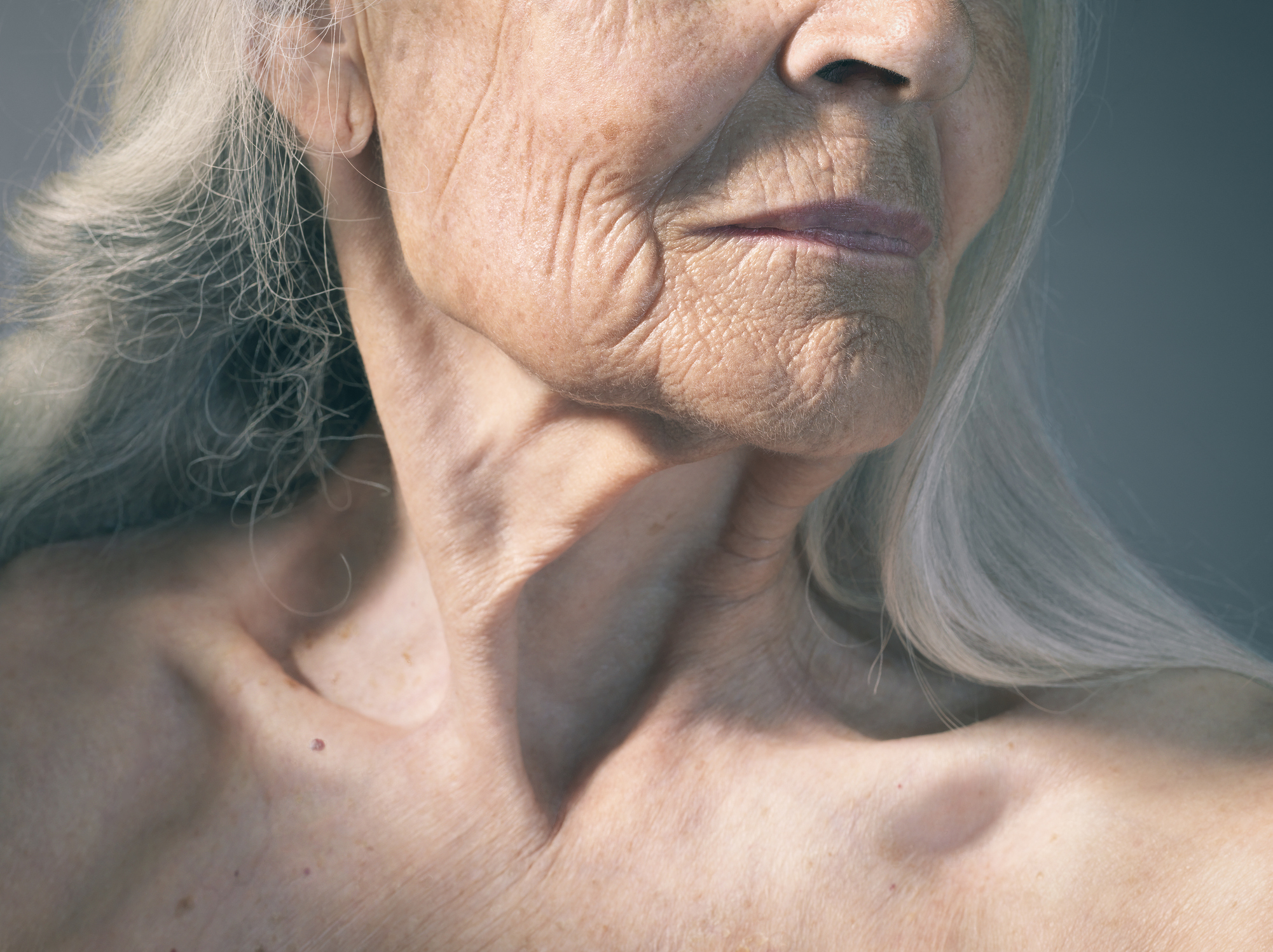
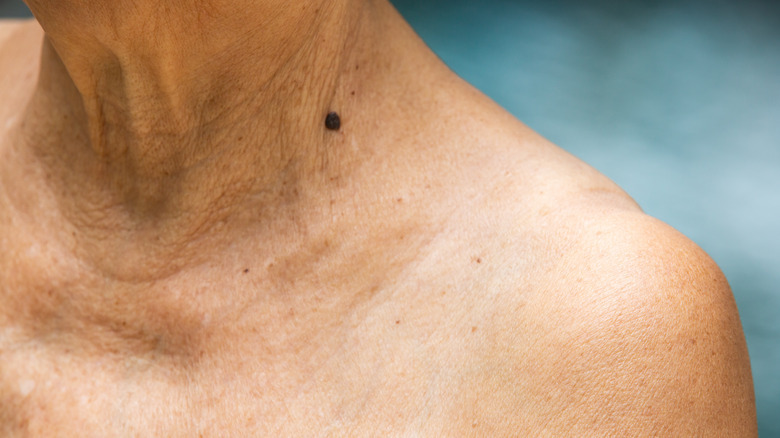
High UV exposure, low SPF attention. The face receives SPF almost reflexively in most skincare routines. The neck and décolletage, particularly the V of the chest, are exposed to direct sunlight year-round — during commuting, outdoor activities, and any time clothing is open at the collar. Yet very few people apply SPF to this area consistently. Ultraviolet radiation is the principal driver of extrinsic skin aging [1]. The microscopic hallmark of UV damage is solar elastosis — a massive accumulation of abnormal, non-functional elastin in the dermis that cannot provide recoil, producing the sagging, crepey texture characteristic of photoaged neck and chest skin [1].
Constant mechanical stress. The neck moves constantly — up, down, sideways, forward while looking at screens. These repeated movements stress the skin’s elastic network in ways the relatively stable facial skin is less exposed to. Horizontal neck lines deepen partly because of this chronic mechanical stretching on skin with progressively less elastin resilience.
Less consistent care. The face has a daily care routine built around it — cleanser, serum, moisturizer, SPF. The neck gets moisturizer at best, and often nothing. Decades of this differential treatment — combined with the structural factors above — compound into the visible discrepancy between a well-maintained face and an older-looking neck.
The Collagen and Elastin Story
Cutaneous aging — whether intrinsic or UV-driven — converges on the same structural targets: collagen and elastin in the dermis [1].
Intrinsic aging causes the dermis to thin progressively as collagen production declines and matrix metalloproteinases (MMPs) increase collagen degradation. Elastin fibers gradually fragment and lose their organization. The dermis becomes less supportive — producing the looser, thinner skin quality visible on the neck.
When you apply your retinol serum at night, where do you stop?
UV exposure accelerates and compounds this through a distinct mechanism: it directly activates the elastin gene promoter, driving abnormal elastin biosynthesis that accumulates as non-functional elastotic material rather than organized elastic fibers [1]. This solar elastosis is visible as the yellowish, thickened texture in severely sun-damaged neck skin, and it’s the underlying pathology behind the crepey, loose skin that many women notice developing on their neck and chest from their 40s onward.
The good news: retinol addresses both components of this damage at the cellular level.
Why Retinol Works on Neck and Chest Skin
Retinol’s mechanism — converting to retinoic acid and activating nuclear retinoic acid receptors — is not limited to facial skin. The keratinocytes and dermal fibroblasts that respond to retinoid signaling are present throughout the body. When retinol reaches these cells in neck and chest skin, the same collagen-building, cell-renewal cascade is triggered [2].
Critically, some of the most important retinol clinical studies were conducted specifically on non-facial, body skin:
Shao et al. applied 0.4% retinol to sun-protected buttock skin (average age 76 years) and found it “significantly increased epidermal thickness by stimulating keratinocyte proliferation” and “significantly improved dermal extracellular matrix (ECM) microenvironment; increasing ECM production (type I collagen, fibronectin and elastin) by activating dermal fibroblasts” [2]. This is body skin — not face — showing the full range of retinol’s structural remodeling effects.
Mellody et al.’s concentration study applied retinol to the extensor forearm of photoaged volunteers, demonstrating a “stepwise increase in epidermal thickness” and significant increases in fibrillin-rich microfibril deposition (p < 0.01) [3]. Fibrillin microfibrils are the scaffolding on which elastin is deposited — rebuilding this scaffold is a key mechanism in recovering skin elasticity on photoaged areas like the décolletage.
Kafi et al.’s randomized controlled trial demonstrated that retinol applied to naturally aged skin significantly increased glycosaminoglycan expression and improved fine wrinkling after 24 weeks compared to vehicle [4] — confirming that consistent use drives measurable structural improvement.
The retinol evidence base applies to body skin. The neck and décolletage are not special exceptions — they respond to the same mechanism.
How to Extend Your Retinol Routine to the Neck and Chest
Start gently. Neck and chest skin hasn’t been gradually acclimating to retinol the way your face may have. Begin with the same concentration you use on your face but apply it to the neck 2-3 nights per week for the first month before building to nightly use. Use slightly less product than you might expect — a pea-sized amount typically covers face, neck, and upper chest.
A realistic timeline: 8–12 weeks before visible surface improvement, 6 months before meaningful structural change in skin firmness and texture.
Include the whole exposed zone. The décolletage — the V-shaped area of the upper chest — receives the same UV exposure as the neck. Treat it as one connected zone: after applying retinol to the face, sweep downward in gentle, upward strokes across the neck and décolletage. Don’t stop at the collar.
Don’t skip the jawline transition. Apply retinol continuously from the cheeks and chin down the neck. Stopping at the jaw creates a visible line of differential aging over time — the treated face, the untreated neck. Even if your neck routine is minimal, this transition matters.
Apply SPF to the neck every morning. With or without retinol in your routine, the neck and décolletage need daily broad-spectrum SPF. If you’re using retinol on these areas, it’s non-negotiable. Sun protection is the foundation of every anti-aging protocol — without it, you’re working against yourself.
Pair with hyaluronic acid. Neck and chest skin is often drier than facial skin due to lower sebaceous density. Applying a hyaluronic acid serum before retinol provides a hydration buffer that makes the adjustment period more comfortable and supports barrier integrity through the cell renewal process.
Be patient. Structural collagen rebuilding in body skin takes time. A realistic timeline: 8–12 weeks before visible surface improvement, 6 months before meaningful structural change in skin firmness and texture. The visible results in neck and décolletage skin tend to be slower than on the face — but they accumulate with consistent application.
What to Expect (and Not Expect)
Retinol addresses the root biology of neck and chest aging — collagen loss, elastin network degeneration, epidermal thinning [2]. It can meaningfully:
- Improve skin texture and smoothness as cell turnover normalizes
- Gradually firm the appearance of the neck as collagen rebuilds
- Reduce the crepey texture of photoaged décolletage skin as fibrillin scaffolding is restored
- Even out sun-related pigmentation as accelerated cell turnover clears melanin deposits
What retinol won’t do: reverse deep mechanical neck lines from decades of repeated folding, fill significant volume loss from fat pad atrophy, or restore severely elastotic skin to pre-damage levels. For advanced structural changes, retinol is a maintenance and improvement tool — not a substitute for procedures. But as a daily, consistent intervention, it’s the most evidence-based topical option available.
Why Delivery Quality Matters More for Body Application
Applying retinol to the neck and décolletage means covering more surface area than facial application. With conventional retinol formulations, which degrade rapidly on exposure to light and air and depend on barrier disruption for penetration, this creates practical challenges: higher product volume required, more barrier disruption over sensitive skin, and greater variability in actual retinoid delivery to dermal fibroblasts.
Nanoretinol® by North Biomedical® delivers retinol through lipid nanoparticle encapsulation — a biomimetic format that penetrates the epithelial barrier through physiological lipid exchange rather than chemical disruption. The encapsulation protects retinol from oxidation and pH degradation en route, so more active retinol reaches the target cells [5]. The result is the same structural collagen-building mechanism, with significantly less inflammatory toll on the skin being treated.
For neck and décolletage skin — which starts with less barrier reserve than the face — this reduced irritation profile means the adjustment period is more tolerable, and the retinol can be applied consistently from the start without the risk of overloading skin that isn’t accustomed to active ingredients.
Stop at your chin if you want. But the biology of your neck and chest is making an argument for going further.
References
-
Uitto J. “The role of elastin and collagen in cutaneous aging: intrinsic aging versus photoexposure.” J Drugs Dermatol. 2008;7(2 Suppl):s12-6. PMID:18404866
-
Shao Y, He T, Fisher GJ, Voorhees JJ, Quan T. “Molecular basis of retinol anti-ageing properties in naturally aged human skin in vivo.” Int J Cosmet Sci. 2017;39(1):56-65. doi:10.1111/ics.12348
-
Mellody KT, Bax DV, Roberts SA, et al. “Multifaceted amelioration of cutaneous photoageing by (0.3%) retinol.” Int J Cosmet Sci. 2022;44(6):625-635. doi:10.1111/ics.12799
-
Kafi R, Kwak HSR, Schumacher WE, et al. “Improvement of naturally aged skin with vitamin A (retinol).” Arch Dermatol. 2007;143(5):606-612. doi:10.1001/archderm.143.5.606
-
Quan T. “Human Skin Aging and the Anti-Aging Properties of Retinol.” Biomolecules. 2023;13(11):1614. doi:10.3390/biom13111614