Skin Purging vs Breakout: How to Tell the Difference and What to Do
Why starting a new active can make your skin worse before it gets better — and when that's actually a good sign
You Started a New Product. Your Skin Got Worse.
You did your research. You introduced the active slowly. You followed the instructions. And three weeks in, your skin looks worse than it did before you started — more breakouts, more texture, more congestion right where you wanted less.
Before you pull the product and start over, it’s worth knowing whether what you’re seeing is a purge or a reaction. These two experiences look similar from the outside but have completely different implications for what you should do next. Getting this distinction wrong costs people months of progress.
The Mechanism Behind a True Purge
Skin purging is not random. It has a specific biological explanation, and it only happens with a specific category of ingredients.
Your skin has pores. Inside those pores are sebaceous glands that produce oil, and hair follicles lined with keratinocytes — the same cell type that forms the surface of your skin. Normally, those keratinocytes shed gradually into the follicle and are expelled with sebum. When shedding is too slow, or sebum production is too high, the material accumulates and compresses into a plug — a microcomedone, the invisible precursor to every visible blackhead, whitehead, and clogged pore [1].
At any given moment, you likely have dozens or hundreds of microcomedones in various stages of formation. They’re not visible yet because they’re beneath the surface. Under normal conditions, they would eventually surface over the course of weeks or months, becoming visible just before they resolve.
Retinoids accelerate this timeline dramatically. Topical retinoic acid and retinol increase keratinocyte turnover in the follicular epithelium — the cells lining the inside of pores shed more rapidly, which forces whatever is impacted inside out to the surface, faster [2]. What would have taken six weeks to surface takes six days. The microcomedones that were quietly forming in your pores all come up at once.
This is why purging looks like a sudden worsening — you’re seeing the cumulative backlog from weeks of follicular congestion compressed into a short window. It will pass, because once those plugs have surfaced and resolved, there are no new ones forming to replace them — the retinoid is actively preventing that.
What Causes Purging (and What Doesn’t)
This is where a lot of confusion enters. Not every ingredient can cause a purge, because not every ingredient accelerates cell turnover in the follicular epithelium.
If your skin is breaking out from a new hyaluronic acid serum or a ceramide moisturizer, that is not a purge.
Purging is possible with:
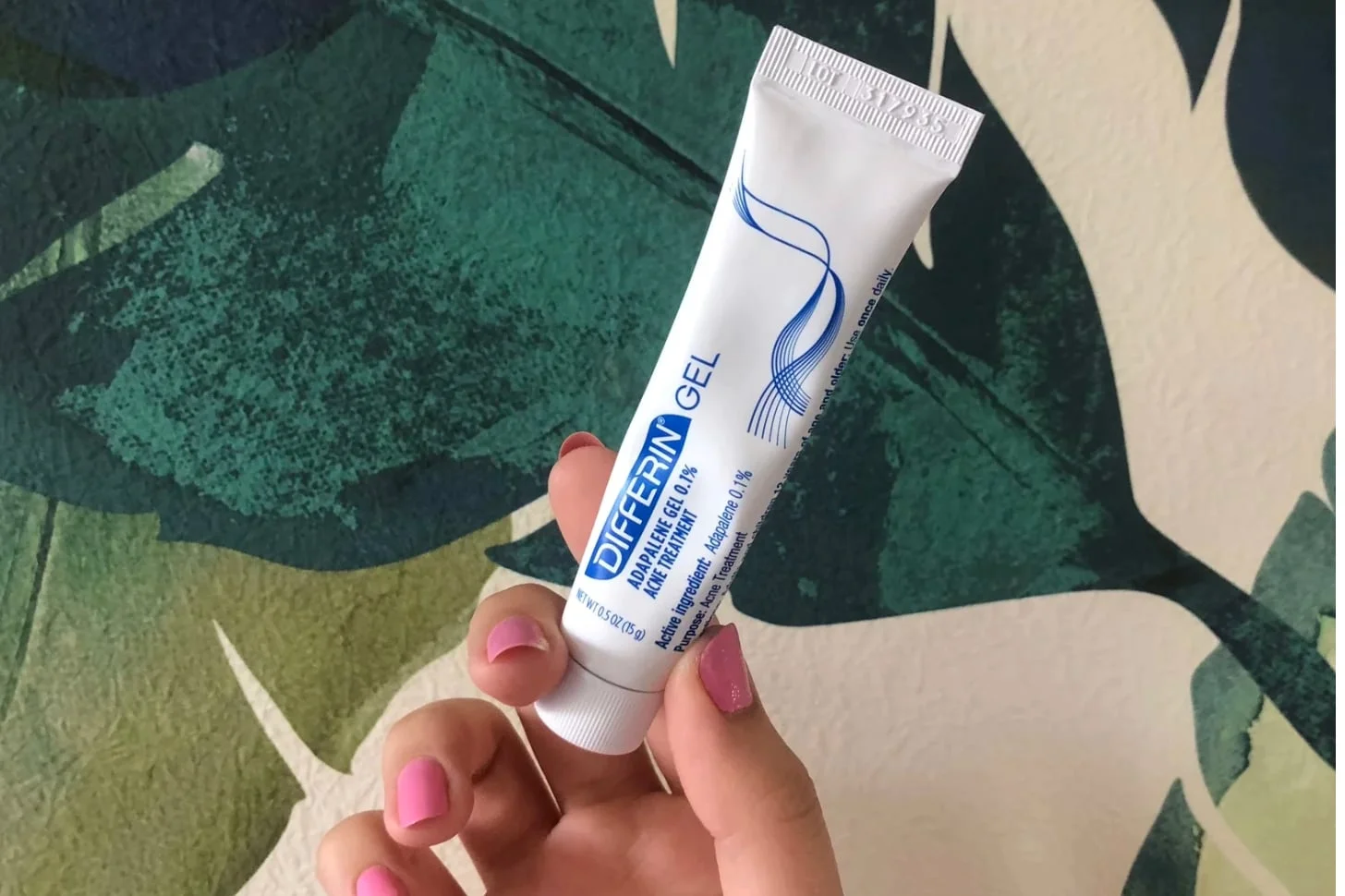
- Retinoids (retinol, retinal, tretinoin, adapalene) — the most common cause
- Alpha hydroxy acids (glycolic acid, lactic acid, mandelic acid) — increase surface desquamation
- Beta hydroxy acids (salicylic acid) — oil-soluble, penetrates follicles, comedolytic
- Benzoyl peroxide — antimicrobial and comedolytic
- Chemical peels at higher concentrations
Purging is NOT possible with:
- New moisturizers or hydrating serums
- Oils that aren’t comedogenic
- Peptide serums
- Vitamin C at typical concentrations
- SPFs
If your skin is breaking out from a new hyaluronic acid serum or a ceramide moisturizer, that is not a purge. Those products don’t touch keratinocyte turnover. What you’re likely seeing is either a reaction (allergic or irritant) or a comedogenic response to an ingredient in the formulation. That distinction matters: the right response to a reaction is to stop; the right response to a purge is often to continue.
How to Distinguish a Purge from a Breakout
Several markers help separate the two:
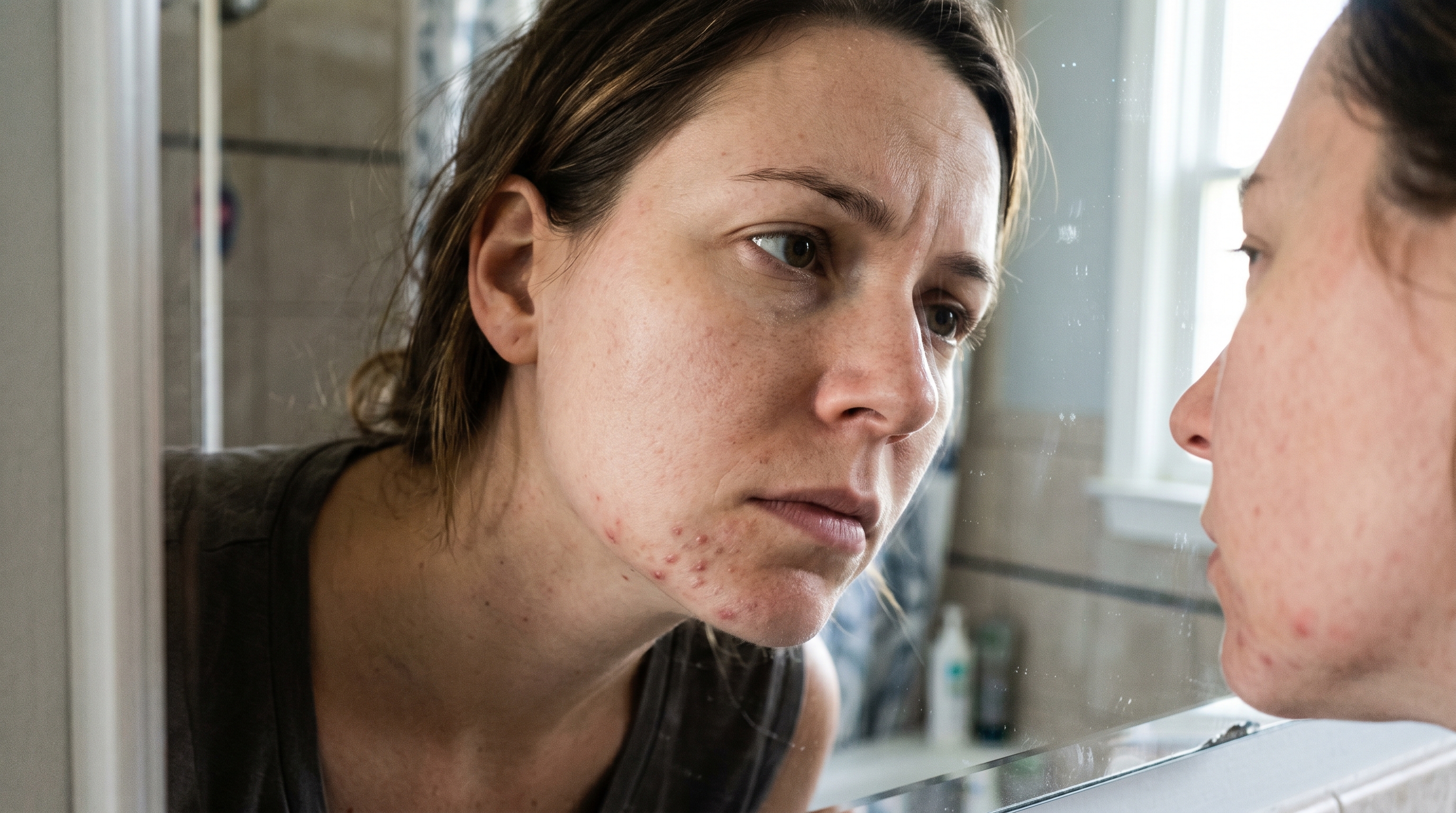
Location. A purge will almost always appear where you normally break out. If you’ve historically gotten clogged pores along your jawline, a purge from a new retinol will concentrate there. If the new breakouts are appearing in areas you’ve never had congestion before — on your forehead when you always break out on the chin, for example — that’s more suspicious for a reaction or product issue.
Type of lesion. Purge breakouts are predominantly comedones — whiteheads and blackheads, or small papules. They tend to be shallow and resolve relatively quickly. Cystic, deep, inflamed nodules are less typical of purging and more consistent with a product that your skin is actively reacting against.
Timeline. A purge from retinol or an AHA typically begins within one to two weeks of starting and peaks around weeks two to four. By weeks six to eight, the skin should be visibly improved compared to your pre-product baseline [3].
Whether it’s getting worse over time. A purge plateaus and then improves. A true reaction tends to escalate — more redness, more irritation, spreading beyond the initial area. If the pattern is escalating rather than peaking and resolving, that’s a signal to reassess.
The Retinoid Irritation Question
There is a related but distinct phenomenon called retinoid dermatitis — redness, peeling, tightness, and irritation that is not comedonal breakout but inflammatory skin response to the retinoid itself. Studies comparing retinoid-induced irritation to other forms of contact dermatitis show that retinoic acid produces a specific pattern of epidermal hyperplasia and elevated growth factor expression that differs from standard irritant contact dermatitis [4].
If the new breakouts are appearing in areas you’ve never had congestion before — on your forehead when you always break out on the chin, for example — that’s more suspicious for a reaction or product issue.
This is important because it means someone experiencing retinoid irritation is dealing with a barrier response, not comedonal purging. The management is different: reducing frequency, buffering with a moisturizer before application, or switching to a gentler delivery format.
Retinoid dermatitis is particularly common in people with a compromised skin barrier and in those who start with too high a concentration too quickly. The classic advice — start low, go slow — exists specifically to minimize this response while the skin’s barrier adapts to the new active [5].
When to Push Through and When to Stop
This is the practical question most people actually want answered.
Push through if:
- The breakouts are comedonal, concentrated where you normally break out
- The skin started improving around week four to six
- There’s no significant redness, burning, or spreading irritation
- The product is a verified purge-capable ingredient (retinoid, AHA, BHA)
Stop and reassess if:
- New breakouts are in unusual locations for your skin
- You’re developing significant redness, burning, or stinging
- The breakouts are cystic or inflamed, not primarily comedonal
- You’re past the eight-week mark with no improvement
- There are signs of an allergic reaction (hives, swelling, widespread flushing)
Stopping doesn’t necessarily mean abandoning the ingredient class entirely. It may mean giving the skin a rest period, identifying whether the irritation is from the active itself or from supporting ingredients in the formulation, and reintroducing more gradually.
Reducing Purge Intensity Without Abandoning the Goal
For people who find the purge phase difficult to tolerate, several strategies can reduce its intensity:
Lower starting frequency. Starting retinol at one night per week rather than nightly dramatically reduces the initial surge of accelerated turnover. You extend the purge over a longer timeline, but with less peak intensity. This is the approach recommended for beginners — our guide to retinol for beginners covers the full introduction protocol.
Prioritize delivery technology. Conventional retinol formulations require barrier disruption to penetrate — the very mechanism that causes the worst of the irritation and the most intense initial purge response. Encapsulated retinol, particularly lipid nanoparticle formats like Nanoretinol, delivers retinol through biomimetic nanoparticles that penetrate the barrier without disrupting its lipid matrix. Clinical testing shows dramatically reduced cytotoxicity compared to conventional retinol, which translates directly to a gentler initial experience for users who have found standard retinols intolerable.
For context on the specific technology, see our deep dive on encapsulated retinol and how nanoparticle delivery changes the penetration equation. For those with particularly reactive skin, retinol for sensitive skin covers the evidence on safe introduction strategies.
Buffer rather than skip. Applying a thin layer of ceramide cream or moisturizer before retinol application is well-supported as a strategy for reducing retinoid dermatitis without eliminating efficacy. The buffer slows penetration and reduces irritation while still allowing the retinoid to work — just more gradually.
What Purging Tells You About Your Skin
There is a somewhat counterintuitive reframe here: a purge is information. It tells you that the active is reaching the follicular epithelium and doing what it’s supposed to do — accelerating turnover. It tells you there was congestion present that needed to surface. And it predicts that the skin on the other side of the purge, once the backlog has cleared, will have a significantly cleaner baseline.
People who push through a properly identified purge from a retinoid consistently report substantially improved texture and clarity at the two to three month mark. The temporary worsening is the mechanism of the eventual improvement.
The goal isn’t to avoid all early-stage worsening. It’s to correctly identify what type of worsening you’re experiencing — so you can make an informed choice about whether to stay the course or change your approach.
References
- Clayton RW, Göbel K, Niessen CM, Paus R, van Steensel MAM, Lim X. “Homeostasis of the sebaceous gland and mechanisms of acne pathogenesis.” Br J Dermatol. 2019;181(4):677-690. doi:10.1111/bjd.17981
- Dreno B, Kang S, Leyden J, York J. “Update: Mechanisms of Topical Retinoids in Acne.” J Drugs Dermatol. 2022;21(7):734-740. doi:10.36849/JDD.6890
- Griffiths CE, Voorhees JJ. “Topical retinoic acid for photoaging: clinical response and underlying mechanisms.” Skin Pharmacol. 1993;6(Suppl 1):70-7. doi:10.1159/000211166
- Lee JE, Chang JY, Lee SE, Kim MY, Lee JS, Lee MG, Kim SC. “Epidermal Hyperplasia and Elevated HB-EGF are More Prominent in Retinoid Dermatitis Compared with Irritant Contact Dermatitis Induced by Benzalkonium Chloride.” Ann Dermatol. 2010;22(3):290-299. doi:10.5021/ad.2010.22.3.290
- Effendy I, Weltfriend S, Patil S, Maibach HI. “Differential irritant skin responses to topical retinoic acid and sodium lauryl sulphate: alone and in crossover design.” Br J Dermatol. 1996;134(3):424-30. https://pubmed.ncbi.nlm.nih.gov/8731664/