Snow Mushroom for Skin: What It Actually Does — And What It Can't
The polysaccharide-rich fungus marketed as a natural hyaluronic acid alternative — separating the legitimate moisturizing science from the cellular renewal it can't deliver
If you’ve followed clean beauty media in the last few years, you’ve probably seen snow mushroom positioned as a kind of botanical miracle — a natural alternative to hyaluronic acid, only better. Korean and Chinese beauty brands have built entire serum lines around it. Niche American brands have followed. The marketing language is consistent: deeper hydration, smaller molecules, longer-lasting moisture, plumper skin.
Some of that is real. Some of it is the standard rhetorical sleight-of-hand that turns “moisturizer” into “anti-aging treatment.” The two are very different things, and confusing them is why so many people spend years layering hydrating products on aging skin and wonder why the wrinkles aren’t budging.
Here’s what the actual research on snow mushroom shows — and the part of the skin-aging equation that no humectant, however good, can address.
What Snow Mushroom Actually Is
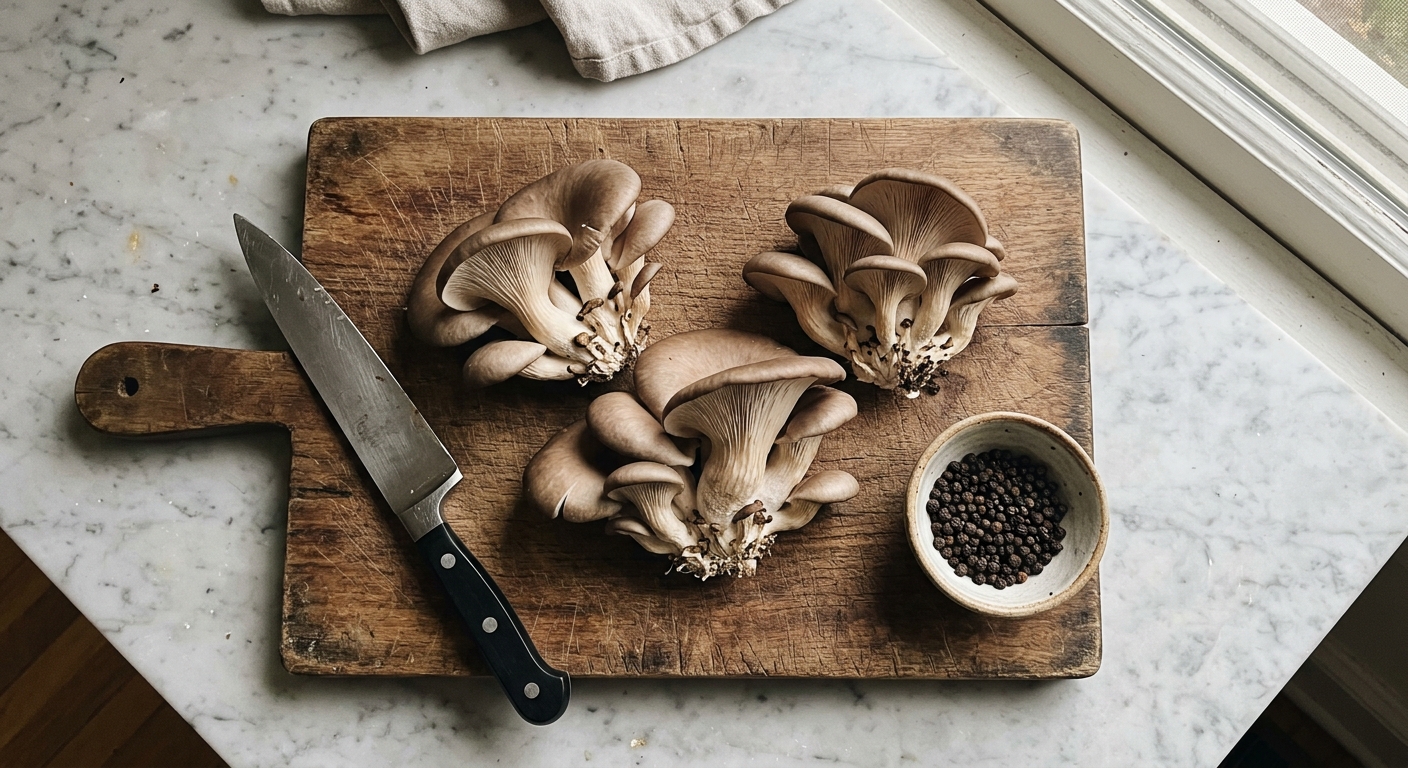
Snow mushroom — botanically Tremella fuciformis — is a translucent, gelatinous fungus native to East Asian forests. It has been used in traditional Chinese cuisine and medicine for centuries, valued for its texture and reputed health properties. Modern cosmetic interest stems from a specific class of molecules it contains: long-chain polysaccharides that have an unusually high affinity for water.
A 2021 review of Tremella polysaccharides in the International Journal of Immunopathology and Pharmacology catalogued their bioactivities — moisturizing, antioxidant, anti-inflammatory, wound-healing — and identified the structural features responsible [1]. The branched chains carry abundant hydroxyl and acetyl groups, which form hydrogen bonds with water molecules and trap them in a gel matrix. The more hydrophilic functional groups on the branches, the better the moisture-binding capacity.
In a 2023 article in Archives of Dermatological Research, Mineroff and Jagdeo reviewed the potential cutaneous benefits of Tremella fuciformis specifically, noting evidence for hydration support, antioxidant activity, and possible barrier-supporting effects [2]. The authors were careful to note that most existing studies are preclinical or small-scale, and that high-quality clinical trials are still limited.
The Hyaluronic Acid Comparison
The marketing claim that gets repeated most often is that snow mushroom is “better than hyaluronic acid.” The research it’s based on is real, but narrower than the marketing suggests.
The most-cited study, published in 2021 in Food Science and Human Wellness, compared cosmetic formulations containing Tremella polysaccharide to formulations with hyaluronic acid. The researchers found that 0.05% Tremella polysaccharide held moisture in the stratum corneum at least as well as 0.02% hyaluronic acid — actually somewhat better in their setup. They also reported that Tremella polysaccharide upregulated gene expression for natural moisturizing factors in cultured keratinocytes, including filaggrin and aquaporin-3, which support the skin’s own water-handling capacity [3].
The comparison is legitimate as a moisturizing claim. It tells you that snow mushroom can do the surface hydration job that hyaluronic acid does, possibly with smaller molecules that penetrate slightly further into the epidermis. What the comparison does not tell you — and what the marketing tends to elide — is that hyaluronic acid itself isn’t a wrinkle treatment in any meaningful sense. It plumps the surface temporarily by binding water. The plumping disappears once the water leaves.
Here’s what the actual research on snow mushroom shows — and the part of the skin-aging equation that no humectant, however good, can address.
In other words, “as good as hyaluronic acid for hydration” and “better than retinol for wrinkles” are two completely different statements. The first is supportable. The second is not, and you’ll rarely see snow mushroom brands actually claim it in those words — but the implication is engineered into the surrounding language.
Why Hydration Alone Doesn’t Address Aging
To understand what snow mushroom can and can’t do, you have to separate two distinct phenomena in skin aging.
The first is dehydration. When skin lacks water, it looks dull, feels tight, and fine lines appear more pronounced because the stratum corneum is shrunken and brittle. This is a surface problem with a surface solution: humectants like hyaluronic acid, glycerin, and Tremella polysaccharide draw water into the upper layers of the epidermis and hold it there. The skin looks plumper and the fine lines soften, often within minutes to hours of application.
The second is structural aging. This happens in the dermis, well below the layers that humectants reach. Collagen production declines roughly 1% per year from the mid-20s onward. The collagen fibers that remain become fragmented and disorganized [4]. UV exposure dramatically accelerates the loss by upregulating matrix metalloproteinases (MMPs) — enzymes that break down collagen and elastin [5]. Solar elastosis progressively destroys the snap-back elasticity of the skin [6].
These are not hydration problems. They are structural-protein problems, and no amount of water binding at the surface can rebuild proteins in the dermis.
The reason this distinction matters practically: a person whose primary visible concern is dullness, tight feel, and a “tired” appearance from low hydration may benefit substantially from a snow mushroom serum. A person whose primary concern is lines that persist when their face is relaxed, loss of firmness, or volumetric changes is dealing with structural aging, and a snow mushroom serum will produce essentially no improvement on those specific issues — though it will make the skin look better-hydrated while the underlying problem continues to progress.
What the Evidence Actually Supports for Snow Mushroom
Based on the published research, here is what snow mushroom (Tremella fuciformis polysaccharide) is reasonably supported to do:
- Bind water in the stratum corneum, with capacity comparable to hyaluronic acid at similar use concentrations.
- Reduce transepidermal water loss by forming a moisture-retaining film on the skin surface.
- Support natural moisturizing factor expression in epidermal keratinocytes (preliminary, mostly in vitro evidence).
- Provide some antioxidant activity via free-radical scavenging by the polysaccharide structure, though the relevance to topical use is less well-established than the hydration data.
- Be very well-tolerated, with minimal sensitization or irritation reported even in sensitive skin.
What it does not have meaningful clinical evidence to support:
Here’s the part the marketing rarely makes clear: even the most sophisticated humectant cannot replace the cellular renewal that the dermis needs to actually reverse visible aging.
- Reducing established wrinkles in any reproducible, clinically significant way
- Stimulating collagen synthesis in the dermis
- Increasing skin firmness or elasticity through structural remodeling
- Reversing photoaging or sun damage
- Replacing any of the functions of a retinoid
If a product makes any of those second-list claims based on its snow mushroom content, the claim is leaning on the ingredient’s reputation rather than its data.
How to Actually Use Snow Mushroom Effectively
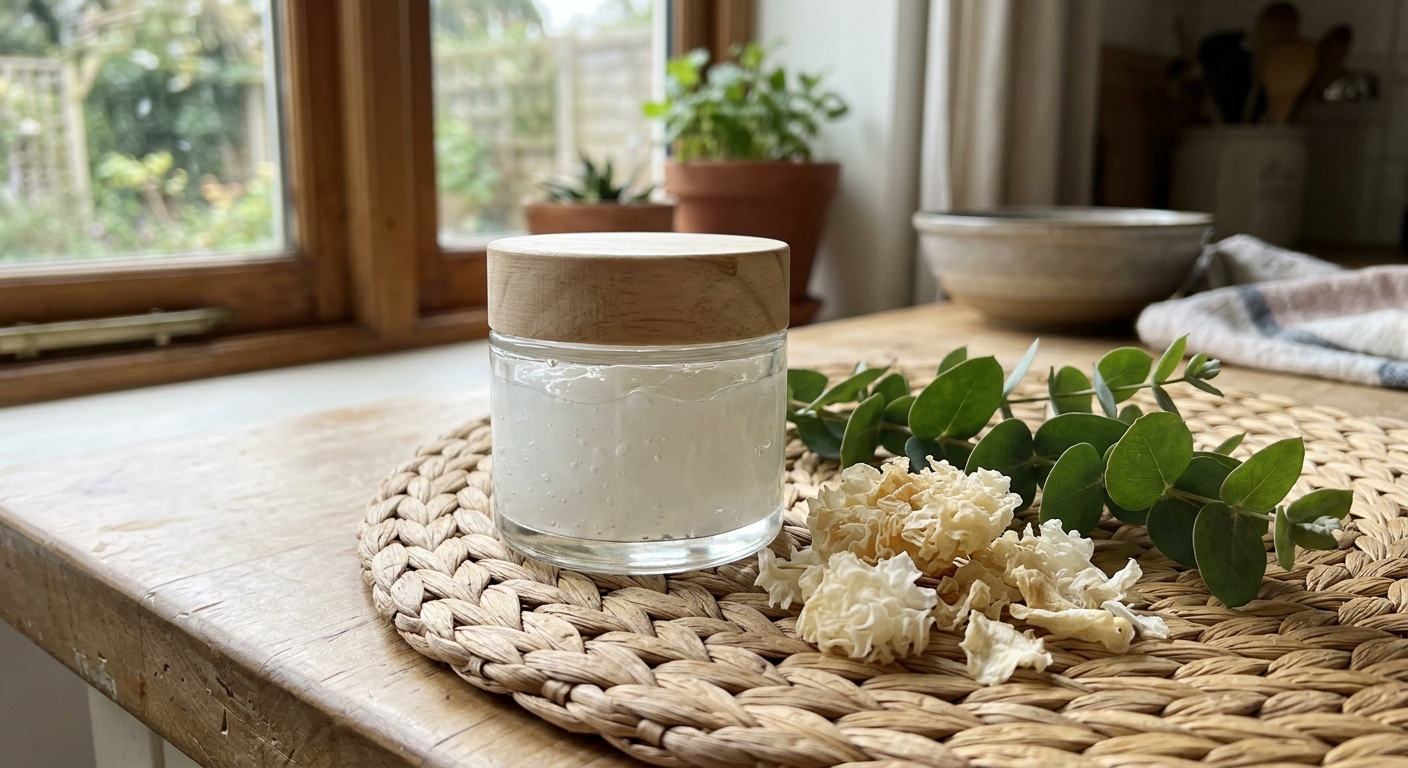
The most useful framing of snow mushroom is as a high-quality humectant — equivalent in function to hyaluronic acid, well-suited for sensitive or reactive skin, and a fine choice if you specifically need surface hydration. That’s a real and useful job, just not the dramatic one the marketing implies.
A practical approach:
-
Use it on damp skin. Like all humectants, snow mushroom works by binding water — and it works best when there’s water to bind. Apply to skin still slightly damp from cleansing, then seal with a moisturizer.
-
Pair it with a true anti-aging active. If your concerns extend beyond surface hydration, the humectant is the supporting role, not the lead. A retinoid is the most evidence-backed lead for dermal remodeling. The two layer well — apply the hydrating serum first if water-based, then the retinoid, then occlusive moisturizer.
-
Don’t choose it over a barrier-repair routine. If your skin barrier is compromised, ceramides and lipid-replenishing ingredients matter more than humectants. Humectants on a broken barrier can sometimes pull water out of the deeper skin in low-humidity environments.
-
Set realistic expectations. Expect smoother, plumper, healthier-looking skin within a few weeks of consistent use. Don’t expect static wrinkle reduction, lifting, or firmness gains — those require a different mechanism of action.
The Cellular Renewal Snow Mushroom Can’t Provide
Here’s the part the marketing rarely makes clear: even the most sophisticated humectant cannot replace the cellular renewal that the dermis needs to actually reverse visible aging. Decades of clinical evidence — randomized, vehicle-controlled trials and large systematic reviews — have established retinoids as the single ingredient class that can rebuild dermal collagen, suppress MMP activity, and produce measurable wrinkle reduction in human skin [7][8][9].
A randomized, double-blind, vehicle-controlled study by Kafi and colleagues at the University of Michigan applied 0.4% retinol versus placebo to subjects with a mean age of 87 — among the most photodamaged skin tested in any clinical trial. After 24 weeks, the retinol-treated skin showed significant increases in collagen production and reductions in fine wrinkles [7]. A 2022 systematic review confirmed the same pattern across diverse populations: topical retinoids produce reliable, dose-dependent improvements in fine and coarse facial wrinkles [8].
The mechanism is not water-binding. Retinoids bind to retinoic acid receptors on fibroblasts and upregulate genes for collagen I and III synthesis while suppressing the enzymes that degrade them [9]. The result is a thicker, more elastic dermal matrix — exactly the structural improvement that hydration alone can’t produce.
The Delivery Problem Conventional Retinol Faces
The catch is that conventional retinol formulations are often abandoned within a few months because of irritation. Petroleum-based vehicles use chemical penetration enhancers to push the active ingredient through the lipid barrier — effective but inflammatory. The same delicate, sensitive skin that snow mushroom is celebrated for soothing is the skin that conventional retinol most often offends.
This is what Nanoretinol® was engineered to resolve. The retinol is encapsulated in biomimetic lipid nanoparticles — structurally similar to the membranes of the skin’s own cells — so it passes through the epithelial barrier without the chemical disruption that drives conventional retinol irritation. At 0.2% retinol concentration, the formulation is gentle enough for sensitive skin while delivering substantially more functional retinol to fibroblasts than the percentage on the label would suggest. Clinical testing showed 232% more effective collagen recovery and 73% greater elastin recovery compared to conventional retinol delivery.
In practical terms, this means the structural-aging side of the equation can be addressed with the same gentleness profile that draws people to snow mushroom in the first place. The two are complementary, not substitutes: a humectant for surface hydration, a well-delivered retinoid for dermal remodeling.
The Bigger Picture
There is nothing wrong with snow mushroom. It’s a genuinely useful humectant with credible research supporting its moisture-binding capacity and a clean tolerability profile. If you’re looking for a hyaluronic acid alternative, especially one that’s plant-derived and vegan-friendly, it’s a reasonable choice.
What’s worth being clear-eyed about is the role it plays in your routine. Snow mushroom hydrates the surface. It does not rebuild what time has dismantled underneath. The two needs require two different tools — and assuming the gentle, comfortable humectant will do the structural job is one of the most common reasons people spend years on skincare without seeing meaningful aging-related improvement.
Hydrate generously. Then layer in the active that actually changes the dermis. The combination is what produces the results the snow mushroom marketing alone promises.
References
- Ma X, Yang M, He Y, Zhai C, Li C. “A Review on the Production, Structure, Bioactivities and Applications of Tremella Polysaccharides.” International Journal of Immunopathology and Pharmacology. 2021;35:20587384211000541. doi:10.1177/20587384211000541
- Mineroff J, Jagdeo J. “The Potential Cutaneous Benefits of Tremella Fuciformis.” Archives of Dermatological Research. 2023;315(7):1883-1886. doi:10.1007/s00403-023-02550-4
- Yang M, Zhang Z, He Y, Li C, Wang J, Ma X. “Study on the Structure Characterization and Moisturizing Effect of Tremella Polysaccharide Fermented from GCMCC5.39.” Food Science and Human Wellness. 2021;10(4):471-479. doi:10.1016/j.fshw.2021.04.009
- Marcos-Garcés V, Molina Aguilar P, Bea Serrano C, et al. “Age-Related Dermal Collagen Changes During Development, Maturation and Ageing — a Morphometric and Comparative Study.” Journal of Anatomy. 2014;225(1):98-108. doi:10.1111/joa.12186
- Quan T, Qin Z, Xia W, Shao Y, Voorhees JJ, Fisher GJ. “Matrix-degrading Metalloproteinases in Photoaging.” Journal of Investigative Dermatology Symposium Proceedings. 2009;14(1):20-24. doi:10.1038/jidsymp.2009.8
- Weihermann AC, Lorencini M, Brohem CA, de Carvalho CM. “Elastin Structure and Its Involvement in Skin Photoageing.” International Journal of Cosmetic Science. 2017;39(3):241-247. doi:10.1111/ics.12372
- Kafi R, Kwak HSR, Schumacher WE, et al. “Improvement of Naturally Aged Skin With Vitamin A (Retinol).” Archives of Dermatology. 2007;143(5):606-612. doi:10.1001/archderm.143.5.606
- Sitohang IBS, Makes WI, Sandora N, Suryanegara J. “Topical Tretinoin for Treating Photoaging: A Systematic Review of Randomized Controlled Trials.” International Journal of Women’s Dermatology. 2022;8(1):e003. doi:10.1097/JW9.0000000000000003
- Shao Y, He T, Fisher GJ, Voorhees JJ, Quan T. “Molecular Basis of Retinol Anti-Ageing Properties in Naturally Aged Human Skin in Vivo.” International Journal of Cosmetic Science. 2017;39(1):56-65. doi:10.1111/ics.12348
- North Biomedical LLC. “Nanoretinol vs. Conventional Retinol: Efficacy in Collagen and Elastin Recovery.” Clinical Study Summary, 2024.