Why Your Skin Looks Tired (Even When You're Not) — and What Actually Fixes It
The biology behind a fatigued complexion — and the four mechanisms you can actually move.
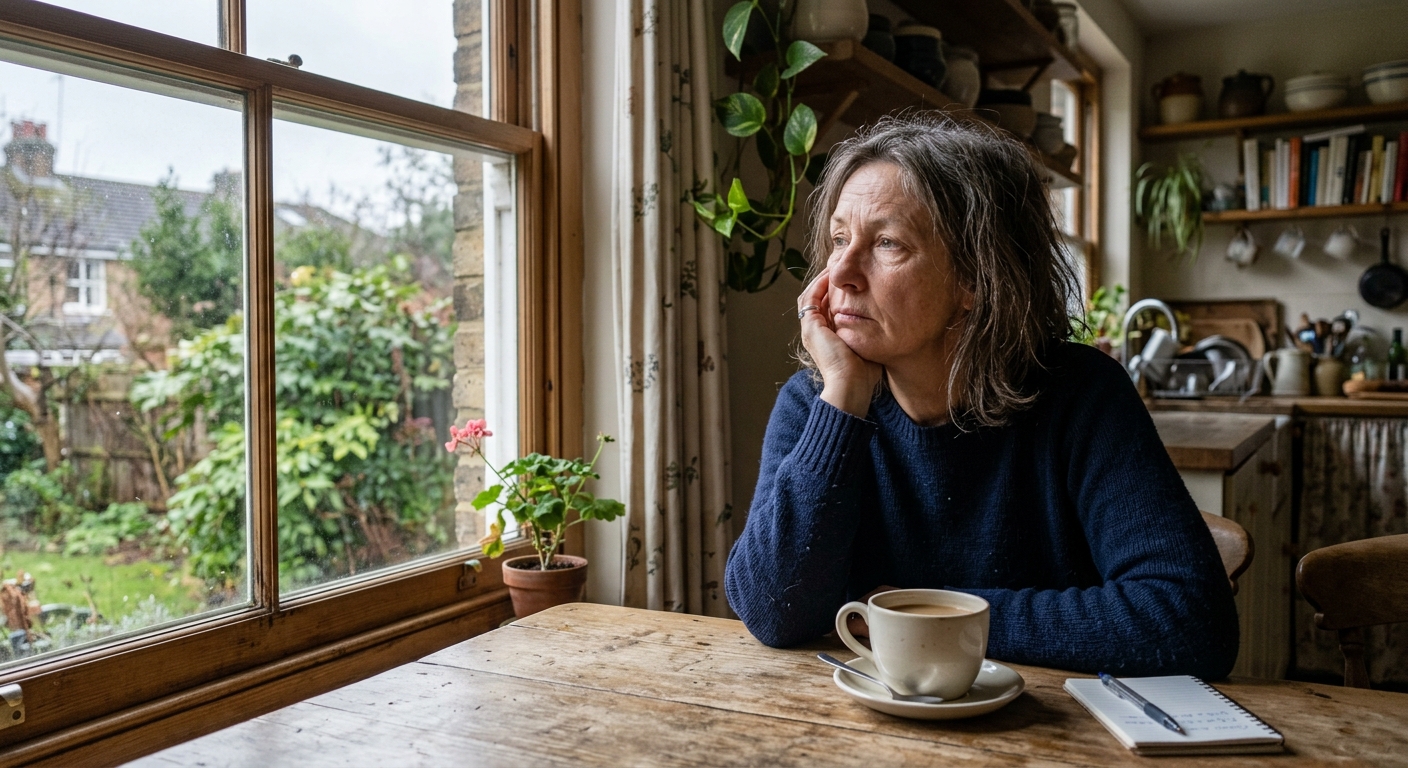
You slept seven hours. You drank water. You skipped the wine. And your face still looks tired.
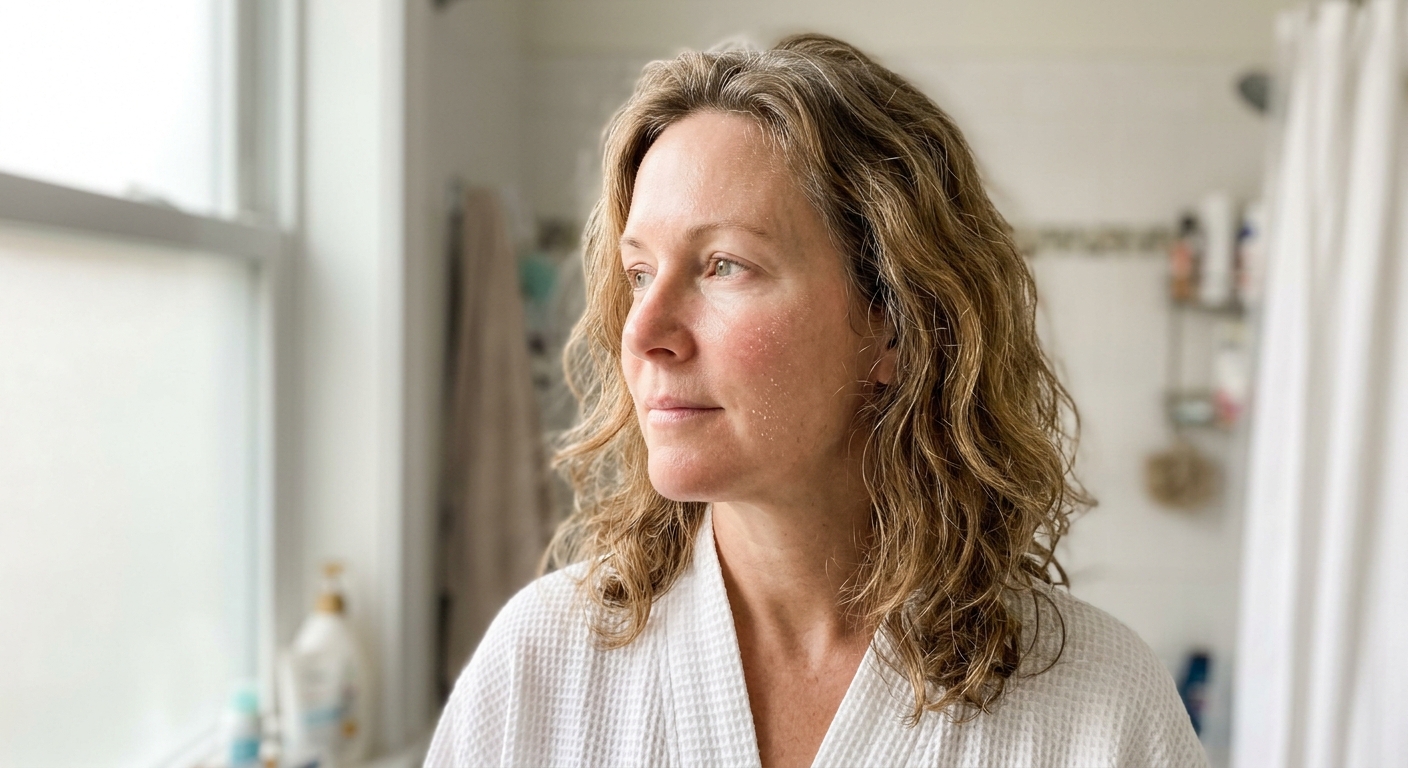
It is a strange feeling — to feel rested and look like you haven’t been. Most people blame the lighting, the camera angle, the day they’re having. But “tired-looking skin” is not a mood. It is a specific visual signature that researchers can measure: a dimmer surface, a slightly yellower undertone, less spring under the cheekbones. The good news is that almost every component of that signature traces to four biological mechanisms — and three of them respond well to the right inputs.
What “Tired Skin” Actually Is
When dermatologists talk about a tired complexion, they’re describing how light interacts with your skin’s surface. Healthy young skin reflects light evenly because the outer layer — the stratum corneum — is smooth and well-organized. As that layer becomes uneven, light scatters in random directions and the face looks dim, “veiled,” less vibrant.
Sleep researchers have measured this directly. In a 2015 study of 60 women in Clinical and Experimental Dermatology, poor sleepers had significantly higher intrinsic skin aging scores, slower barrier recovery after stress, and lower self-rated appearance than good sleepers [1]. The skin was not just perceived as tired — it was structurally different.
So if you’re chronically rested and your face still looks fatigued, the cause is rarely sleep. It is one of four other things.
Mechanism 1: Cellular Renewal Slows Down
Your epidermis is constantly making new cells at the bottom and shedding old ones at the top. In your twenties, that full turnover happens in roughly 20 days. By your fifties and beyond, it stretches past 30 days — and the slowdown accelerates after age 50 [2].
That delay is what creates the “veiled” look. Old corneocytes pile up on the surface, light scatters, and the radiance you remember from a decade ago becomes harder to reach with moisturizer alone. This is also why exfoliation feels temporarily transformative: you are mechanically removing a layer that should have shed weeks ago.
By your fifties and beyond, it stretches past 30 days — and the slowdown accelerates after age 50.
But abrasive exfoliation is a workaround, not a fix. The deeper solution is restarting the renewal engine itself.
Mechanism 2: Senescent Fibroblasts in the Dermis
Underneath the epidermis, your dermal fibroblasts make the collagen and elastin that give skin its bounce. Over time, a growing fraction of these cells stop dividing and enter a state called senescence — they’re alive, but they no longer build, and they secrete inflammatory signals that damage the cells around them.
A 2024 review in Aging Cell described fibroblast senescence as a central driver of dermal aging, with senescent cells releasing a mix of cytokines and proteases that degrade the surrounding extracellular matrix [3]. The result, visually, is thinner, less elastic, less luminous skin — even when nothing visible is wrong.
You can’t undo senescence in cells that have already entered it. But you can stimulate the healthy fibroblasts that remain to produce more matrix, which is exactly what topical retinoids do.
Mechanism 3: Oxidative Stress and the “Dim” Signal
Reactive oxygen species — molecular fragments produced by metabolism, sunlight, pollution, and stress — accumulate in skin faster than antioxidants can quench them. The imbalance damages lipids in the barrier, oxidizes collagen, and triggers more fibroblast senescence in a self-reinforcing loop [4].
Yellowing is one of the visible signatures. Oxidized lipids and glycated proteins both shift the skin’s reflectance toward a duller, sallower tone. This is why a single late night can make your face look subtly off the next morning — and why decades of oxidative load make the change permanent.
The irony is that the irritation is mostly a delivery problem, not a retinol problem.
The countermeasures are unglamorous but real: daily SPF, topical antioxidants like vitamin C, and not adding to the load (smoking, sun, sleep deprivation). For more on the dullness side of this story, our piece on dull skin goes deeper into the surface mechanics.
Mechanism 4: Reduced Microcirculation
A flushed cheek looks alive because oxygenated blood is reaching the surface. As skin ages, dermal capillaries thin and microcirculation slows, which reduces the rosy undertone that signals “vital” to the human eye. Cold weather, chronic stress, and sympathetic nervous system overactivation all constrict these vessels further — which is why a stressful season can age a face visibly within weeks.
This one is partly behavioral (sleep, exercise, managing stress) and partly chemical. Some peptides and retinoids appear to support dermal vascularity over months of use, though the evidence base here is thinner than for collagen.
What Actually Reverses Tired-Looking Skin
The interventions with the strongest evidence target mechanisms 1 and 2 — cellular renewal and dermal matrix production. Three things move both:
- Daily SPF. UV is the single largest accelerant of fibroblast senescence and oxidative damage. Without it, every other product you use is fighting a tide.
- Topical antioxidants in the morning. Vitamin C, ferulic acid, niacinamide. They don’t reverse damage, but they reduce the daily oxidative load.
- A retinoid at night. This is the only category that meaningfully restarts cellular renewal and stimulates new collagen at the same time.
The retinoid step is where most routines stall. Conventional retinol can be irritating — flaking, redness, the well-known “purge” — and the discomfort is enough to make people stop. The irony is that the irritation is mostly a delivery problem, not a retinol problem.
A 2017 study in the International Journal of Cosmetic Science found that 0.4% topical retinol significantly increased epidermal thickness, dermal vascularity, and type I collagen production in naturally aged human skin — comparable to prescription retinoic acid, but with fewer visible side effects [5]. The researchers credited the delivery vehicle.
Where Nanoretinol Fits In
This is the gap Nanoretinol was built for. Conventional retinol formulations rely on petroleum-derived solvents that loosen the skin barrier to push retinol through — which is the same mechanism that causes redness and peeling. Nanoretinol takes a different route: the active is encapsulated in lipid nanoparticles whose outer membrane mimics the composition of human skin cells. The barrier recognizes them as “self” and lets them pass without being disrupted.
The result, in clinical testing, was a 232% improvement in collagen recovery and a 73% improvement in elastin recovery versus conventional retinol — with significantly lower cytotoxicity. (For more on the encapsulation science, see our explainer on encapsulated retinol.) For someone whose skin reads “tired,” this matters because the bottleneck is rarely the molecule itself; it’s whether enough of it reaches the fibroblasts that make collagen.
What This Means for Your Routine
If your face has been looking tired and you can rule out sleep, dehydration, and acute stress, the issue is structural — and structural changes respond to consistent inputs over months, not days. SPF in the morning. Vitamin C if you tolerate it. A well-delivered retinoid at night. Patience.
The radiance you remember isn’t gone. It’s underneath a layer of cells that should have shed three weeks ago, and a dermis that stopped getting strong renewal signals when you were thirty-five.
References
- Oyetakin-White P, Suggs A, Koo B, Matsui MS, Yarosh D, Cooper KD, Baron ED. “Does poor sleep quality affect skin ageing?” Clinical and Experimental Dermatology. 2015;40(1):17-22. doi:10.1111/ced.12455
- Grove GL, Kligman AM. “Age-associated changes in human epidermal cell renewal.” Journal of Gerontology. 1983;38(2):137-142. doi:10.1093/geronj/38.2.137
- Zhang J, Yu H, Man MQ, Hu L. “Aging in the dermis: Fibroblast senescence and its significance.” Aging Cell. 2024;23(2):e14054. doi:10.1111/acel.14054
- Papaccio F, D’Arino A, Caputo S, Bellei B. “Focus on the Contribution of Oxidative Stress in Skin Aging.” Antioxidants. 2022;11(6):1121. doi:10.3390/antiox11061121
- Shao Y, He T, Fisher GJ, Voorhees JJ, Quan T. “Molecular basis of retinol anti-ageing properties in naturally aged human skin in vivo.” International Journal of Cosmetic Science. 2017;39(1):56-65. doi:10.1111/ics.12348