Dull Skin: What Actually Causes That Tired Look and How to Fix It
Your skin's natural radiance depends on cell turnover, hydration, and collagen — here's why they fail and what to do about it
Why Your Skin Looks Tired (Even When You Are Not)
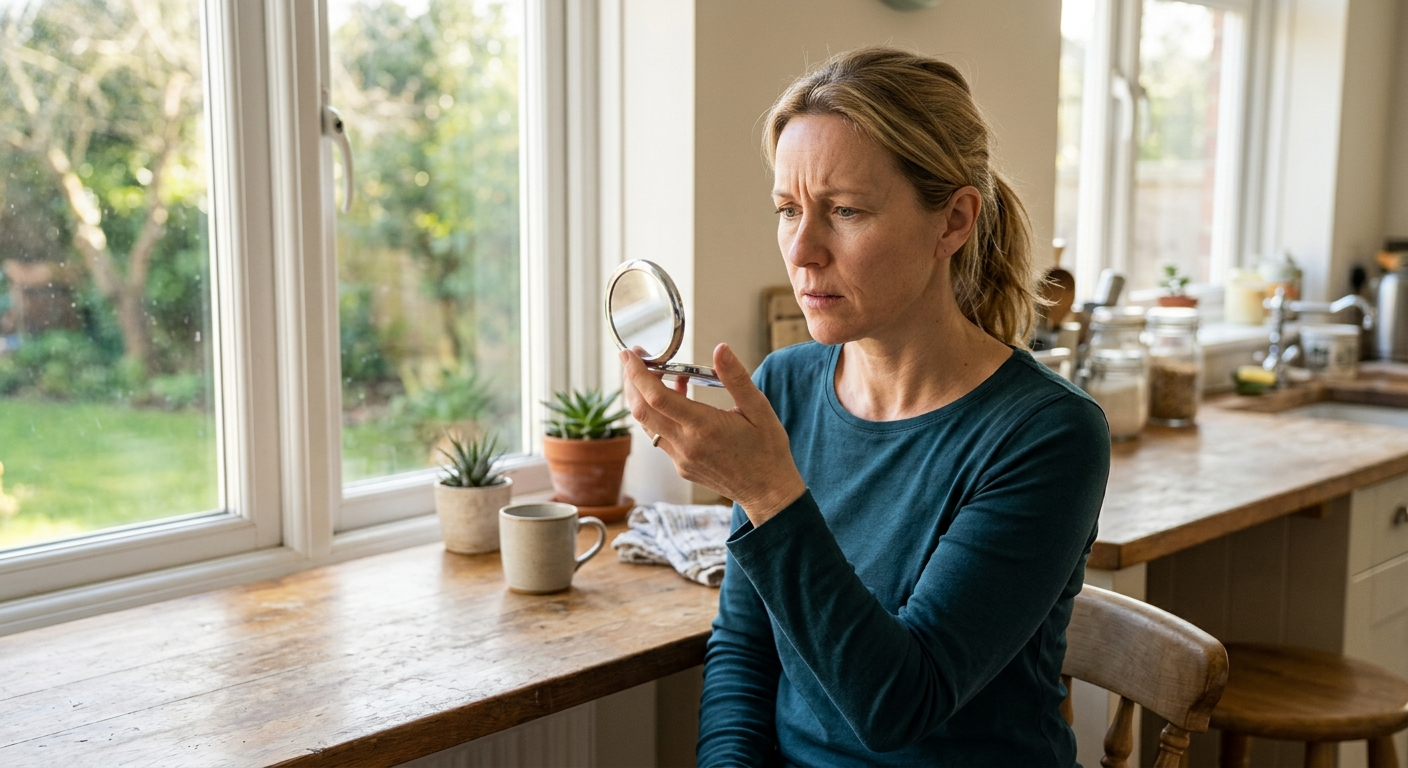
You have slept eight hours, hydrated properly, and avoided the sun. Yet the mirror shows a complexion that looks flat, grey, and exhausted. Dull skin is one of the most common dermatological complaints — and one of the most misunderstood.
The word “dull” is not a clinical term. Dermatologists describe it as a reduction in skin luminosity: the way healthy skin reflects light evenly across its surface, creating what we perceive as a “glow.” When that luminosity diminishes, the skin appears sallow, uneven, and older than it is.
The causes are measurable, and understanding them is the first step toward fixing the problem rather than masking it with highlighter. If you do want to mask it convincingly in the meantime, our guide to the best bronzer for mature skin covers warming dull skin without it reading as dirt.
The Cell Turnover Slowdown
The single largest contributor to dull skin is slowed epidermal turnover — the rate at which your body replaces old skin cells with new ones.
In your twenties, the full turnover cycle takes approximately 28 days. A fresh cell is born at the basal layer of the epidermis, migrates upward, and eventually reaches the surface where it is shed. This constant renewal is what gives young skin its natural radiance — the surface is always being refreshed with cells that are metabolically active and properly hydrated.
By your forties, that cycle stretches to 40 to 50 days. By your sixties, it can take 60 to 90 days [1]. The consequence is straightforward: dead keratinocytes accumulate on the skin surface for weeks longer than they should. These flat, dehydrated cells scatter light unevenly instead of reflecting it, creating the visual flatness we call “dull.”
This is not a cosmetic quirk. The buildup of corneocytes (dead cells in the outermost layer) also impairs the skin’s ability to absorb skincare products, creates an uneven texture that makes fine lines more visible, and can contribute to clogged pores.
Dehydration, Oxidative Damage, and Glycation
Slowed turnover is the primary cause, but three additional mechanisms compound the problem:
In your twenties, the full turnover cycle takes approximately 28 days.
Transepidermal water loss (TEWL). As the skin barrier weakens with age, it loses its ability to retain moisture. Dehydrated skin cells at the surface shrink and flatten further, amplifying the light-scattering effect. This is why dull skin often improves temporarily after applying a rich moisturizer — the hydration plumps surface cells just enough to improve light reflection. The effect fades within hours because the underlying turnover problem remains.
Oxidative stress. UV radiation, pollution, and even normal metabolic processes generate reactive oxygen species (ROS) that damage cellular structures. In the epidermis, oxidative damage accelerates melanin overproduction, creating the uneven pigmentation that makes skin look blotchy rather than luminous [2]. Oxidative stress also damages the lipids in cell membranes, further compromising the barrier.
Glycation. When excess glucose molecules bond to collagen and elastin fibers, they form advanced glycation end-products (AGEs) that stiffen and yellow the structural proteins in your dermis [3]. This process contributes to both the yellowed undertone of sallow skin and the loss of flexibility that makes skin look less vibrant. If your complexion has taken on a dull, yellowish cast that moisturizer cannot fix, glycation may be a significant factor.
What the Science Says About Restoring Radiance
The clinical evidence points to a clear hierarchy of interventions for dull skin, ranked by their ability to address the root causes rather than temporarily mask them. Masking still has its place on any given morning, and the best highlighter for mature skin guide explains which finishes add radiance without exaggerating texture.
Retinoids: The Turnover Accelerator
Retinoids remain the most effective topical ingredient for restoring healthy cell turnover. By binding to retinoic acid receptors in keratinocytes, retinol triggers faster proliferation at the basal layer and more efficient shedding of dead cells at the surface [4].
The clinical data is compelling. A study in the Journal of Investigative Dermatology demonstrated that topical retinol application increased epidermal thickness and collagen production while simultaneously reducing the accumulation of damaged cells on the skin surface [5]. The result is not just smoother skin — it is skin that reflects light more evenly because the surface cells are younger, better hydrated, and more uniform in size.
For dull skin specifically, retinol addresses multiple causes simultaneously: it accelerates turnover (removing the dead cell buildup), stimulates collagen (improving the structural reflectivity of the dermis), and regulates melanogenesis (reducing the uneven pigmentation that contributes to sallowness) [4].
Clinical trials show measurable improvements in skin brightness and texture with 4 to 5% niacinamide concentrations.
Chemical Exfoliation: The Surface Layer Reset
Alpha-hydroxy acids (AHAs) like glycolic acid and lactic acid work at the surface to dissolve the bonds holding dead cells together. Clinical studies show that regular AHA use increases cell turnover by 30 to 50% within 4 to 8 weeks [6].
AHAs produce faster visible results than retinol for dullness — sometimes within days — because they act directly on the corneocyte buildup. However, they do not address the deeper causes (collagen loss, oxidative damage) the way retinol does. The most effective approach for chronically dull skin is combining both: AHA exfoliation on alternating nights with retinol application.
Vitamin C: The Antioxidant Shield
Vitamin C (L-ascorbic acid) directly addresses the oxidative component of dull skin. As the skin’s most abundant natural antioxidant, vitamin C neutralizes free radicals, inhibits melanin overproduction, and serves as a necessary co-factor for collagen synthesis [7].
A study published in Nutrients found that topical vitamin C at concentrations of 10 to 20% significantly improved skin luminosity scores within 12 weeks, with the effect attributed to both reduced melanin clustering and improved collagen density in the dermis [7].
Niacinamide: The Multitasker
Niacinamide (vitamin B3) improves dull skin through a distinct mechanism — it enhances ceramide synthesis, strengthening the skin barrier to reduce water loss, while simultaneously inhibiting melanin transfer to keratinocytes. Clinical trials show measurable improvements in skin brightness and texture with 4 to 5% niacinamide concentrations [2].
The Delivery Challenge for Aging Skin
Here is the frustrating reality that product marketing rarely addresses: the same aging processes that cause dull skin also make it harder for active ingredients to reach the cells that need them.
A thickened dead cell layer on the surface acts as a physical barrier. A weakened lipid matrix in the stratum corneum means active ingredients can trigger irritation without actually reaching the deeper epidermis. And reduced blood flow in aging skin means nutrients delivered topically have less circulatory support.
Conventional retinol formulations attempt to push through these barriers using chemical penetration enhancers — petroleum derivatives and solvents that temporarily break down the lipid matrix. On skin that is already dull because its barrier is compromised, this approach often makes things worse before they get better. The so-called “retinol purge” — weeks of peeling, redness, and even more dullness — is a direct consequence of barrier disruption that aging skin is poorly equipped to handle.
Nanoretinol® was designed to bypass this problem entirely. Its biomimetic lipid nanoparticles are structurally identical to the skin’s own cell membranes, allowing passage through the epithelial barrier without disrupting it. Clinical testing shows 232% more effective collagen recovery compared to conventional retinol — and importantly for dull skin, 73% greater elastin recovery, which directly affects the skin’s ability to reflect light evenly across its surface.
The formulation’s water-based, 99% natural ingredient profile also means it is not depositing petroleum-based occlusive agents on already-congested skin. For dull, sallow complexions, adding more occlusion is the opposite of what the surface needs.
Building a Radiance-Restoring Routine
If dull skin is your primary complaint, the most effective evidence-based routine addresses all four root causes:
- Morning: Vitamin C serum (10-20%) followed by broad-spectrum SPF — this handles oxidative protection and UV defense
- Evening (nights 1, 3, 5): Retinol application — drives cell turnover acceleration and collagen rebuilding
- Evening (nights 2, 4, 6): AHA exfoliant (glycolic or lactic acid) — clears surface buildup
- Daily: Ceramide-rich moisturizer — supports barrier repair and reduces TEWL
- Dietary consideration: Reducing refined sugar intake helps slow glycation of dermal collagen
The first visible improvement — a brighter, more even surface — typically appears within 2 to 3 weeks as the exfoliation and turnover acceleration clear the dead cell backlog. The deeper structural improvements from collagen rebuilding take 8 to 16 weeks to become apparent, but these are the changes that produce lasting radiance rather than a temporary glow.
References
- Shuster S, Black MM, McVitie E. “The influence of age and sex on skin thickness, skin collagen and density.” British Journal of Dermatology. 1975;93(6):639-643. doi:10.1111/j.1365-2133.1975.tb05113.x
- Bissett DL, Oblong JE, Berge CA. “Niacinamide: A B Vitamin that Improves Aging Facial Skin Appearance.” Dermatologic Surgery. 2005;31(s1):860-865. doi:10.1111/j.1524-4725.2005.31732
- Gkogkolou P, Böhm M. “Advanced glycation end products: key players in skin aging?” Dermato-Endocrinology. 2012;4(3):259-270. doi:10.4161/derm.22028
- Mukherjee S, Date A, Patravale V, et al. “Retinoids in the treatment of skin aging: an overview of clinical efficacy and safety.” Clinical Interventions in Aging. 2006;1(4):327-348. doi:10.2147/ciia.2006.1.4.327
- Kong R, Cui Y, Fisher GJ, et al. “A comparative study of the effects of retinol and retinoic acid on histological, molecular, and clinical properties of human skin.” Journal of Cosmetic Dermatology. 2016;15(1):49-57. doi:10.1111/jocd.12193
- Tang SC, Yang JH. “Dual Effects of Alpha-Hydroxy Acids on the Skin.” Molecules. 2018;23(4):863. doi:10.3390/molecules23040863
- Pullar JM, Carr AC, Vissers MCM. “The Roles of Vitamin C in Skin Health.” Nutrients. 2017;9(8):866. doi:10.3390/nu9080866