Best Toner for Aging Skin: What Actually Works (And What's Just Astringent in Disguise)
The toner aisle is half pH-stripping astringent and half marketing fluff. Here's what mature skin actually responds to.
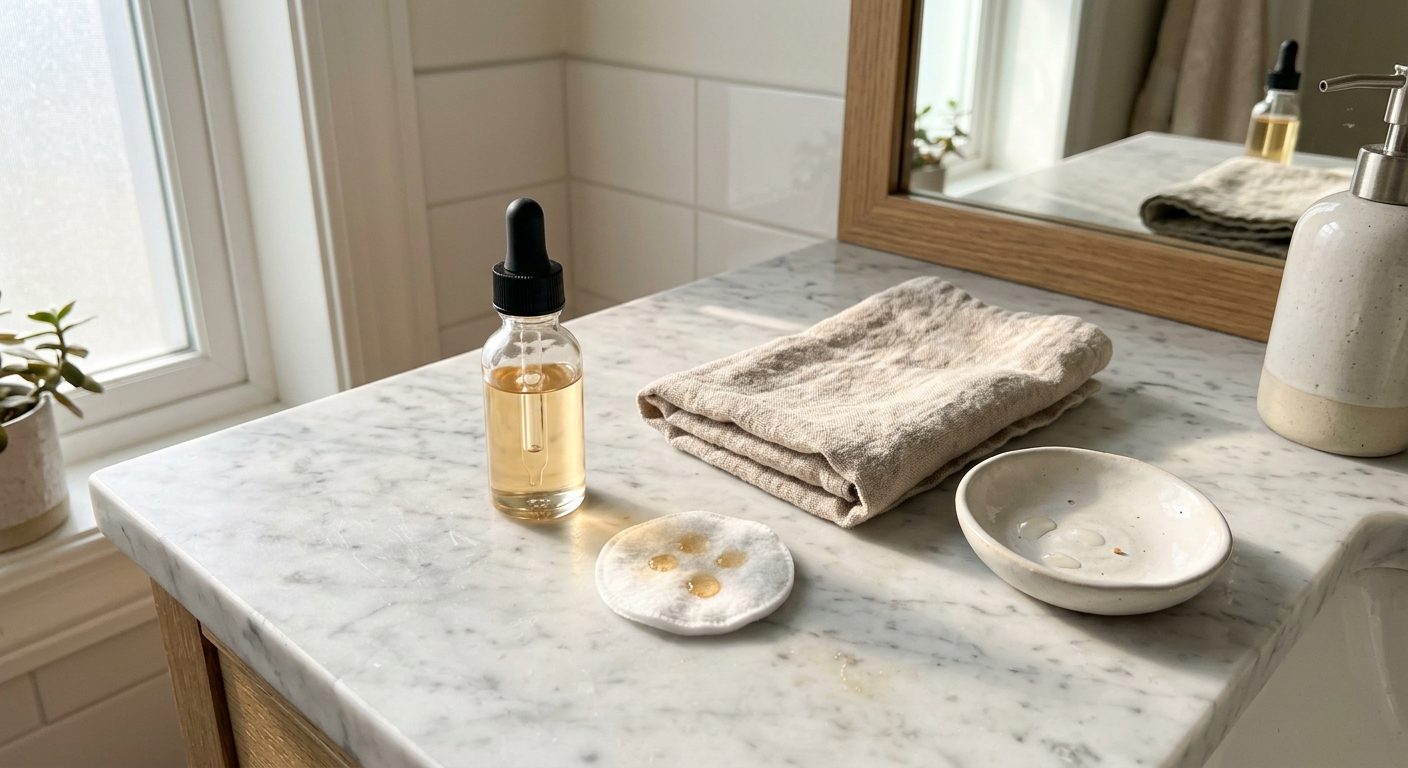
The bottle on the bathroom shelf with a cotton ball next to it has had quite a journey. For most of the 20th century, “toner” meant a high-alcohol, witch-hazel, lemon-acid liquid designed to scour off whatever the cleanser missed. That kind of toner is the worst thing you can put on a 50-year-old face. And yet it’s still on shelves — often labeled “refreshing,” “purifying,” or “for radiant skin.”
The version of toner that actually helps aging skin is barely the same product category. It’s a low-pH, humectant-rich, mildly active liquid that hydrates, gently exfoliates, and primes the skin for whatever serum comes next. Where an essence fits into that same slot is covered in essence vs serum. Picking the right one is mostly about knowing which words to ignore on the label.
What Toners Were For — and Why That Job Doesn’t Exist Anymore
Astringent toners made sense in 1955. Cleansers were alkaline soap bars, faces stayed coated in mineral residue, and the toner’s job was to bring skin back to a more acidic pH and strip off the film.
That problem is largely solved. Modern cleansers — especially the syndet-based face washes designed for aging skin — rinse cleanly and respect the acid mantle. The astringent toner has nothing useful left to do, but it’s still doing harm.
Aging skin already trends toward alkaline. One in vivo study in elderly subjects showed that restoring skin to pH 4 with a mildly acidic formulation rebuilt damaged barriers and improved lipid lamellae structure, while alkaline disruption worsened both [7]. Splashing on a toner with denatured alcohol and high-pH witch hazel is doing the opposite of what mature skin needs.
The Four Things a Toner Can Actually Do for Aging Skin
Strip the marketing copy out, and a good toner for mature skin does at most four things:
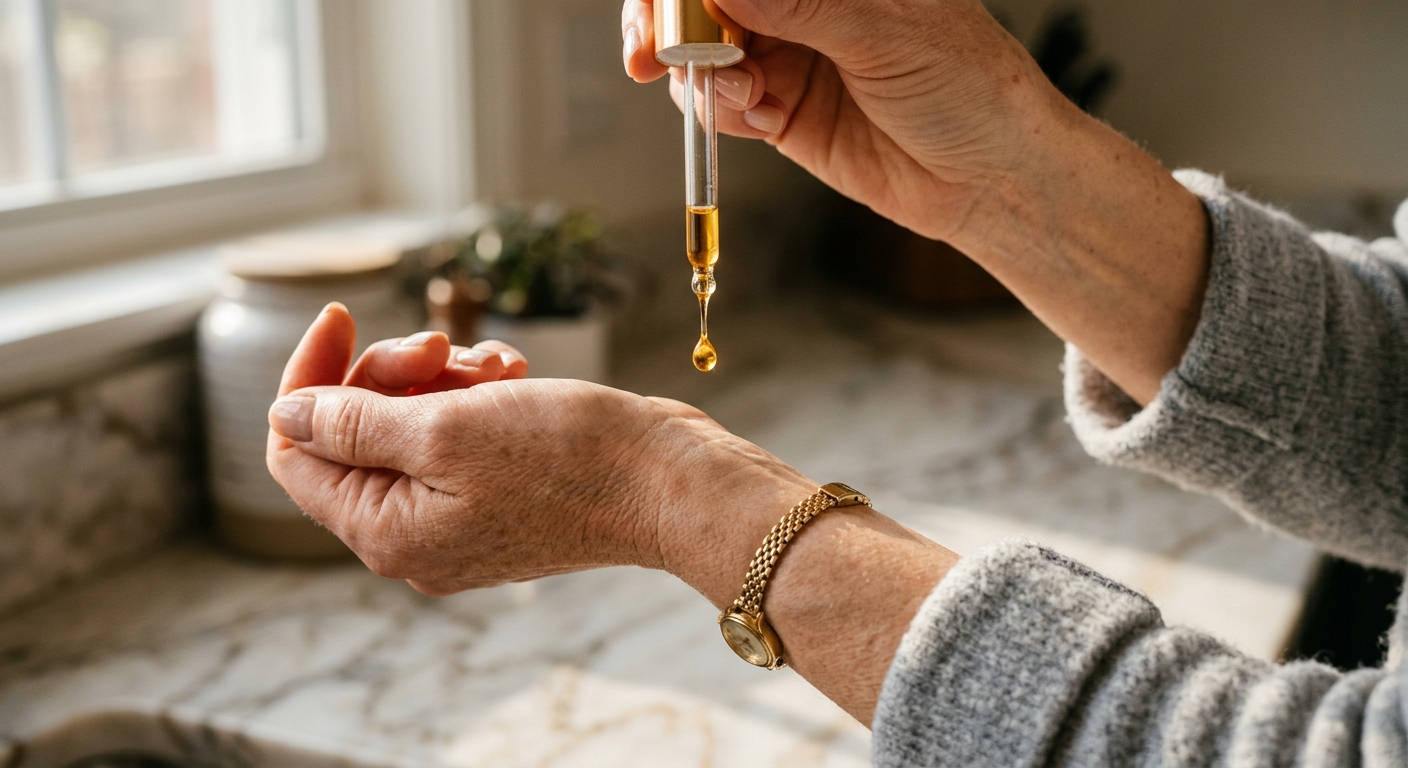
1. Hydrate via humectants. Glycerin, hyaluronic acid, and panthenol pull water into the stratum corneum. This is mostly what a hydrating toner really is. If you prefer your toner pre-soaked, our guide to toner pads explains how the pad format changes dose and friction.
2. Buffer skin pH. A toner at pH 4-5 helps re-acidify the surface after cleansing, which supports barrier enzymes and antimicrobial peptides.
If you prefer your toner pre-soaked, our guide to toner pads explains how the pad format changes dose and friction.
3. Provide gentle, low-dose active exfoliation. PHAs (gluconolactone, lactobionic acid) sit just below AHAs in potency but cause far less irritation.
4. Prime skin for the next product. A damp surface absorbs serums better than a bone-dry one — partly water, partly the humectant film itself, which is why a calming centella toner works well as the layer just before a retinol on sensitive nights.
Anything beyond those four functions is either a serum in disguise (and should be priced accordingly) or marketing, and a vitamin C toner is a good test case for telling the two apart.
Humectants: The Quiet Workhorses
Glycerin is the most studied humectant in dermatology, and it’s the active ingredient hiding in almost every “hydrating toner” worth buying. A comprehensive review covering its origin and function showed glycerin not only pulls water into the stratum corneum but also accelerates barrier recovery in damaged skin and modulates the activity of barrier enzymes [3].
Hyaluronic acid earns the headlines, but its molecular weight matters. A 2011 split-face study on women aged 30-60 found that creams with different molecular-weight HA fractions reduced wrinkle depth and improved skin hydration after eight weeks of twice-daily use [4]. Low-molecular-weight HA penetrates farther; high-molecular-weight HA sits on top and films the skin. A toner with both is doing the most useful work.
Panthenol — provitamin B5 — is the ingredient mature skin doesn’t realize it needs. Two randomized controlled studies on a panthenol-containing emollient demonstrated significant improvements in stratum corneum hydration, barrier function, and recovery from disruption [5]. In a toner, it’s there to repair, not just to hydrate.
Niacinamide: The Toner-Friendly Multitasker
Niacinamide is one of the few legitimately active ingredients that works well in a water-based toner format. The Bissett group at P&G ran the foundational double-blind trial: 50 women applied 5% niacinamide on one side of the face for twelve weeks. The treated side showed reductions in wrinkling, hyperpigmented spots, red blotchiness, and skin yellowing — all statistically significant against vehicle [1].
A second review of the same compound documented its effect on stratum corneum barrier function, ceramide synthesis, and reductions in fine line appearance over 12 weeks of topical use [2]. For a toner, 2-5% niacinamide is the dose range to look for. Anything higher in a leave-on water layer is more marketing than mechanism, and our dedicated guide to choosing a niacinamide toner walks through what the trials used, how the format compares with a serum, and how to pair it with retinol.
For a toner, 2-5% niacinamide is the dose range to look for.
PHAs: The Exfoliation Mature Skin Can Actually Tolerate
Polyhydroxy acids — gluconolactone and lactobionic acid being the main two — are larger molecules than AHAs. They sit on the surface longer, exfoliate more slowly, and rarely cause the stinging that glycolic or lactic acid trigger in postmenopausal skin.
The clinical data is solid. A regimen built around PHAs produced anti-aging effects “comparable to an alpha-hydroxy acid regimen” in a controlled comparison, with substantially less reported irritation [8]. And in an in vitro photoaging model, gluconolactone provided meaningful UV protection through antioxidant activity — a side benefit no AHA delivers [6].
For a toner format, look for 4-10% PHA. That’s enough to drive slow surface turnover without crossing into burning territory. If your skin tolerates stronger acids, a glycolic acid toner works on the same layering logic with a smaller, faster molecule. A separate breakdown of PHA exfoliants for mature skin covers the dosing logic in more depth.
The Layering Effect Most People Don’t Use
Hydration on damp skin behaves differently than hydration on dry skin. A 2008 in vivo study using attenuated total reflectance to track water gradients in the stratum corneum showed that topical moisturizers measurably altered both the water distribution and the apparent thickness of the corneum within hours of application [9]. The implication: putting a humectant-rich toner on freshly washed skin and following with a serum within sixty seconds is not the same as letting skin air-dry first. The serum penetrates further when the corneum is already softened with water.
This is the actual reason Korean and Japanese routines use multiple light layers. It’s not about more steps for the sake of more steps — it’s about exploiting the physics of a softened stratum corneum.
What to Avoid in a Toner for Aging Skin
The disqualifying ingredients, ranked by how much they damage mature skin:
- Alcohol denat (SD alcohol 40) at the top of the ingredient list. It’s a solvent, not a skin ingredient. A small amount as a penetration enhancer is fine; first-five-ingredient placement is a problem.
- Menthol, peppermint oil, eucalyptus. All cold-feeling fragrance compounds that disrupt the barrier in dry, mature skin.
- High concentrations of witch hazel. Witch hazel extracts vary wildly; the cheap distillates are 14-15% alcohol and high-pH.
- Salicylic acid as the primary active. Salicylic acid is great for sebum-rich skin in your 20s. In dry, post-menopausal skin, it accelerates barrier loss.
- Heavy synthetic fragrance. A fragrance load on a leave-on water layer is the single most common cause of “I tried that toner and broke out.”
Where Nanoretinol Fits In
A toner can do real work — hydration, mild exfoliation, pH support — but it cannot do the structural job a retinol does. Retinol drives fibroblasts to produce new collagen, accelerates cell turnover, and pushes melanocytes back toward a younger pattern. No toner is doing those things at the level mature skin needs.
The catch: conventional retinol is also why so many women avoid retinol entirely. The burning, peeling, redness — that’s a barrier problem, and it’s exactly what the toners on this page are trying to compensate for.
Nanoretinol approaches this differently. The retinol is encapsulated in biomimetic lipid nanoparticles — the same delivery technology used in modern drug therapies — so it crosses the epithelial barrier intact rather than disrupting it. In the clinical study, 0.2% Nanoretinol produced 232% more collagen recovery and 73% more elastin recovery than conventional retinol, with significantly lower cytotoxicity to skin cells. After 56 days of use, skin firmness increased 61% and elasticity 56%.
The practical sequence for mature skin in your 40s and beyond: a humectant-and-PHA toner to prepare the surface, then Nanoretinol at night to do the structural work. The toner is the support staff. The retinol is the chief engineer.
How to Audit Your Current Toner Tonight
Pull the bottle off your shelf and check the ingredient list against this short test:
- Does denatured alcohol appear in the first five ingredients? If yes — replace it.
- Are glycerin, panthenol, niacinamide, or hyaluronic acid in the top eight? If no — replace it.
- Is the formulation pH listed (or known) to sit between 4 and 5? Bonus points if yes.
- Are the actives at sensible concentrations (5% niacinamide, 4-10% PHA) — not 20%-of-everything for the marketing claim?
A toner that passes that test is a fine investment of $15-40. One that fails it is doing your face actively less good than rinsing with cool water. The bar is genuinely that low — and that’s the problem with most of what’s still on the shelf.
References
- Bissett DL, Miyamoto K, Sun P, Li J, Berge CA. Topical niacinamide reduces yellowing, wrinkling, red blotchiness, and hyperpigmented spots in aging facial skin. International Journal of Cosmetic Science. 2004;26(5):231-238. doi:10.1111/j.1467-2494.2004.00228.x
- Bissett DL, Oblong JE, Berge CA. Niacinamide: A B vitamin that improves aging facial skin appearance. Dermatologic Surgery. 2005;31(7 Pt 2):860-865. doi:10.1111/j.1524-4725.2005.31732
- Fluhr JW, Darlenski R, Surber C. Glycerol and the skin: holistic approach to its origin and functions. British Journal of Dermatology. 2008;159(1):23-34. doi:10.1111/j.1365-2133.2008.08643.x
- Pavicic T, Gauglitz GG, Lersch P, et al. Efficacy of cream-based novel formulations of hyaluronic acid of different molecular weights in anti-wrinkle treatment. Journal of Drugs in Dermatology. 2011;10(9):990-1000. PMID: 22052267
- Stettler H, Kurka P, Lunau N, et al. A new topical panthenol-containing emollient: results from two randomized controlled studies assessing its skin moisturization and barrier restoration potential. Journal of Dermatological Treatment. 2017;28(2):173-180. doi:10.1080/09546634.2016.1214235
- Bernstein EF, Brown DB, Schwartz MD, Kaidbey K, Ksenzenko SM. The polyhydroxy acid gluconolactone protects against ultraviolet radiation in an in vitro model of cutaneous photoaging. Dermatologic Surgery. 2004;30(2 Pt 1):189-195. doi:10.1111/j.1524-4725.2004.30060.x
- Kilic A, Masur C, Reich H, et al. Skin acidification with a water-in-oil emulsion (pH 4) restores disrupted epidermal barrier and improves structure of lipid lamellae in the elderly. The Journal of Dermatology. 2019;46(6):457-465. doi:10.1111/1346-8138.14891
- Edison BL, Green BA, Wildnauer RH, Sigler ML. A polyhydroxy acid skin care regimen provides antiaging effects comparable to an alpha-hydroxyacid regimen. Cutis. 2004;73(2 Suppl):14-17. PMID: 15002657
- Crowther JM, Sieg A, Blenkiron P, et al. Measuring the effects of topical moisturizers on changes in stratum corneum thickness, water gradients and hydration in vivo. British Journal of Dermatology. 2008;159(3):567-577. doi:10.1111/j.1365-2133.2008.08703.x