PHA Exfoliants for Mature Skin: The Gentle Acid That Aging Skin Loves
Glycolic acid is too harsh for many women over 40 — here's why polyhydroxy acids are changing that
The Exfoliation Problem for Aging Skin
Exfoliation is one of the most evidence-backed strategies in skincare. Alpha-hydroxy acids (AHAs) like glycolic acid have decades of clinical data behind them — improved texture, faster cell turnover, reduced photoaging. But there’s a tension that dermatologists see regularly: the women who most need exfoliation are often the ones who can least tolerate traditional AHAs.
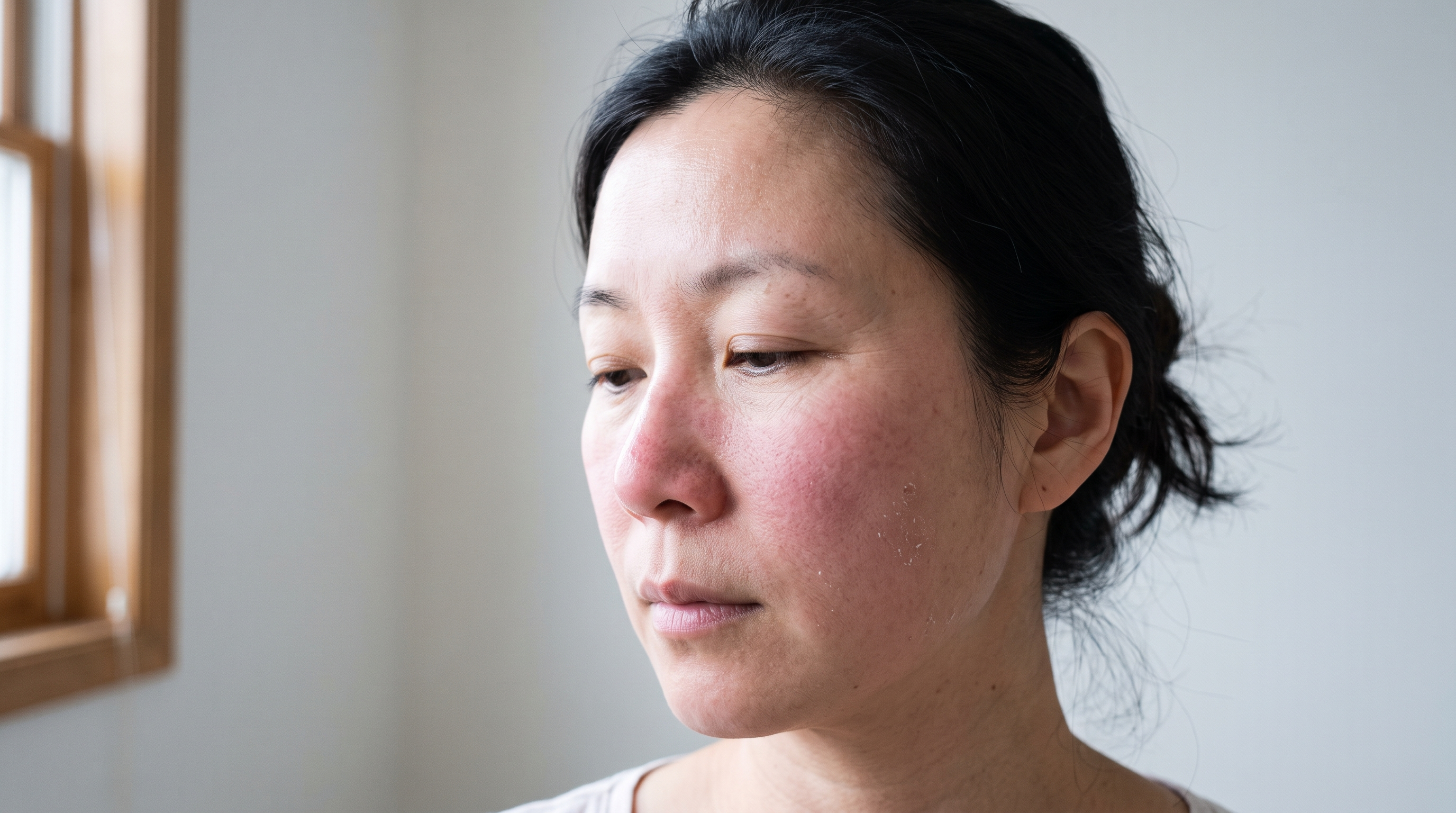
Women over 40 face a specific set of challenges. Cell turnover has slowed, causing dead cells to accumulate on the surface. The skin barrier has often thinned through collagen loss and hormonal changes. Sensitivity — redness, stinging, reactive flushing — becomes more common. And glycolic acid, the most potent and widely studied AHA, has a molecular weight of 76 daltons. That small size gives it excellent penetration, which is both its strength and its weakness. For already-sensitized, thinning skin, that same penetration speed translates to irritation.
Enter polyhydroxy acids — PHAs.
What PHAs Are (and Why Molecular Size Changes Everything)
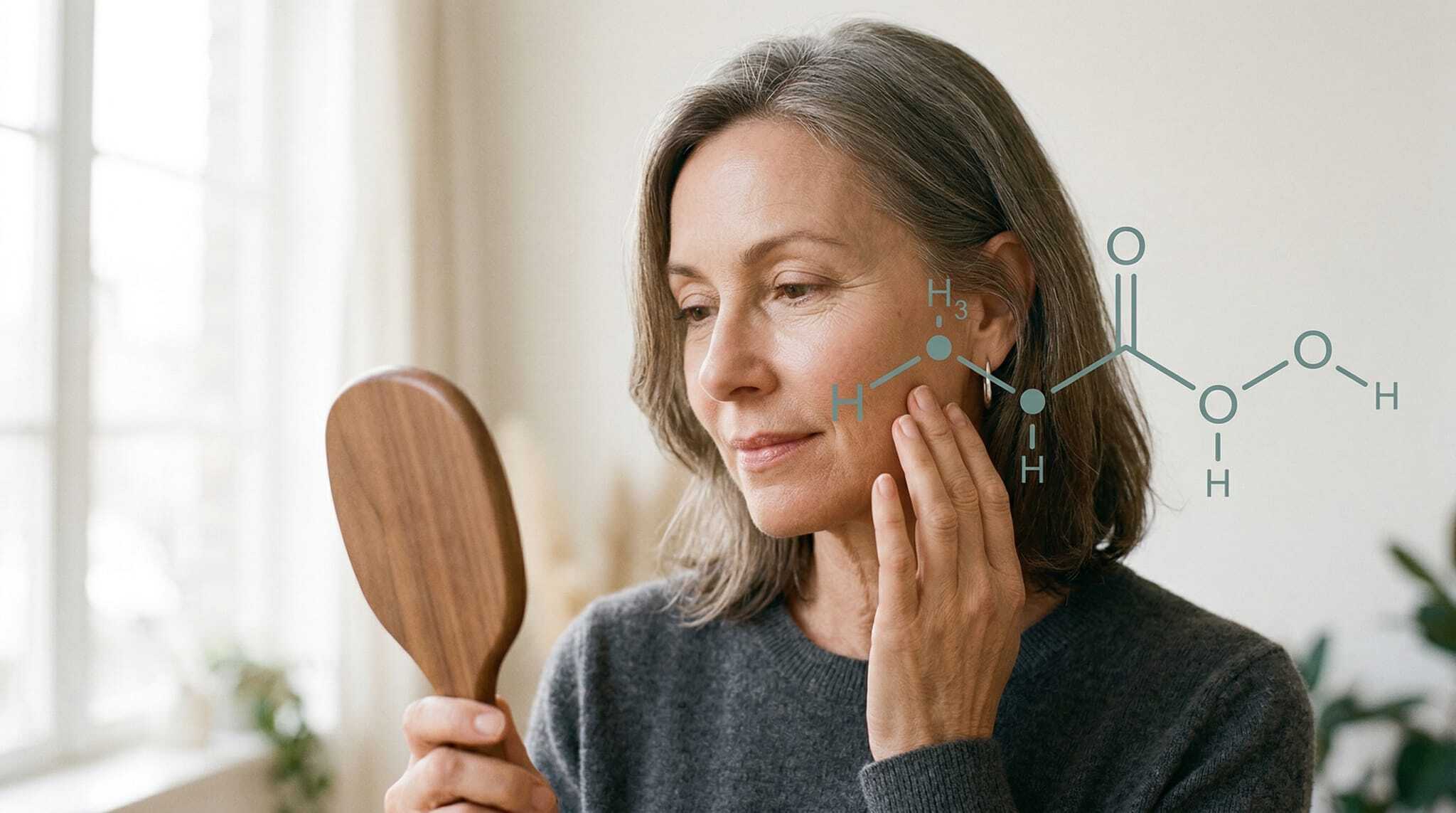
Polyhydroxy acids are a structural evolution of classic AHAs. The main PHAs used in skincare are gluconolactone (also called glucono-delta-lactone) and lactobionic acid — both of which share the same fundamental exfoliating chemistry as glycolic and lactic acids, with one crucial structural difference: they are significantly larger molecules.
Gluconolactone has a molecular weight of approximately 178 daltons — more than twice the size of glycolic acid. Lactobionic acid is larger still, at around 358 daltons. This size difference changes how they interact with skin. They diffuse into the stratum corneum slowly and more superficially, acting on the outermost cell layers without the rapid, deep penetration that triggers burning and stinging responses associated with glycolics.
The result is exfoliation that works — just at a pace that sensitive, mature skin can handle. For the full ranking of options by tolerability, see our guide to a gentle exfoliator for sensitive skin.
What the Clinical Research Shows
The PHA literature is smaller than the AHA literature, but it is consistent. A 12-week controlled clinical trial published in Cutis compared a gluconolactone (PHA) regimen against a glycolic acid (AHA) regimen. The result: equivalent anti-aging benefits — equivalent skin smoothing, equivalent improvement in clinical grading — while the PHA group reported significantly less stinging, burning, and self-reported sensitivity [1].
Not slightly better tolerated. Equivalent efficacy with materially lower irritation. For women who have abandoned glycolic acid due to sensitivity, this finding is clinically meaningful.
Perhaps most relevant for mature skin: a 2025 study in the Journal of Clinical Medicine divided 180 women into age groups (30–40 and 50–60 years) and evaluated lactobionic acid peels.
A companion review in the same issue of Cutis, analyzing multiple clinical studies of PHAs in photoaged skin, reinforced the finding: PHAs — including gluconolactone and lactobionic acid — provide exfoliation, smoothing, and anti-aging effects comparable to AHAs while being compatible with sensitive skin conditions including rosacea and atopic dermatitis [2].
Perhaps most relevant for mature skin: a 2025 study in the Journal of Clinical Medicine divided 180 women into age groups (30–40 and 50–60 years) and evaluated lactobionic acid peels. In the 50–60 group, lactobionic acid outperformed mandelic acid specifically for skin hydration — an advantage attributed to lactobionic acid’s additional function as a humectant [5]. For mature skin where dryness is as much a concern as texture, this dual role is particularly valuable.
PHAs as Antioxidants and Barrier Supporters
What separates PHAs most clearly from classic AHAs is what they do beyond exfoliation.
Gluconolactone has well-documented antioxidant properties — a result of its multiple hydroxyl groups, which can chelate metal ions (preventing free-radical generation) and directly scavenge reactive oxygen species. A study by Bernstein et al. in Dermatologic Surgery demonstrated that gluconolactone provided up to 50% protection against UV-induced elastin degradation in a photoaging model, attributed to this antioxidant mechanism [4].
A 2023 in vitro study published in Pharmaceuticals confirmed additional biological activity: a gluconolactone-based formulation upregulated collagen (COL1A1) and elastin (ELN) gene expression, promoted keratinocyte differentiation, and reduced UV-induced cellular senescence in human skin cell lines [6]. This positions gluconolactone not just as an exfoliant but as an active participant in dermal remodeling.
This makes gluconolactone unusual among exfoliating acids. Where glycolic offers exfoliation, gluconolactone offers exfoliation plus antioxidant defense plus barrier support plus early evidence of collagen and elastin stimulation — a more complete package for skin simultaneously dealing with ongoing oxidative damage, slower renewal, and barrier compromise.
The barrier benefit is structural too. Because PHAs penetrate slowly and superficially, they don’t disrupt the tight junctions and lipid bilayers in the deeper stratum corneum the way aggressive AHAs can. Skin treated with PHAs typically shows improved transepidermal water loss (TEWL) values — meaning the barrier holds moisture more effectively after treatment, not less [3]. For mature skin prone to dryness, this is a significant advantage.
Concentrations up to 15% are available and well-tolerated by most, given the inherent gentleness of the molecule.
How to Use PHAs in Your Routine
PHAs work in multiple formats: toners, serums, cleansers, or leave-on pads (our guide to toner pads covers how the pad format changes dose and friction). Leave-on formulations are the most effective, allowing maximum contact time with the skin surface, which is the same trade-off that limits a rinse-off mandelic acid cleanser compared with a leave-on mandelic acid toner.
Starting concentration: 5–10% gluconolactone is effective for sensitive or mature skin. Concentrations up to 15% are available and well-tolerated by most, given the inherent gentleness of the molecule.
Frequency: PHAs can be used daily for most people, unlike glycolic acid, which typically requires every-other-day application to avoid barrier disruption. Starting every other day and building to daily is a reasonable precaution for skin new to exfoliating acids.
Timing: PHAs work well morning or evening. Because gluconolactone’s antioxidant and UV-protective properties provide mild additional defense, a morning application can complement your SPF. Evening application supports the overnight cell renewal that naturally accelerates during sleep.
Combining with retinol: This is where PHAs become especially powerful for anti-aging routines. Regular PHA use keeps the surface layer of dead cells clear, improving the penetration efficiency of actives applied afterward — including retinol. Using a PHA exfoliant on alternating evenings and an encapsulated retinol on the remaining evenings creates a rhythm that continuously clears the surface while stimulating the deeper dermal remodeling that retinol is best known for.
For context on glycolic acid’s mechanism and clinical evidence — including how it compares to other AHA options — our detailed guide covers the full evidence base. If you want to understand the lactic acid vs glycolic acid comparison, that article explains the differences in penetration depth, irritation profiles, and use cases for mature skin, while our guide to choosing a lactic acid serum explains how strength and pH change what you get.
Who Should Reach for PHAs
PHAs are particularly suited to:
- Women over 40 with post-menopausal thinning, sensitivity, or barrier compromise
- Sensitive or reactive skin that flushes, stings, or reddens easily with glycolic
- Rosacea-prone skin where traditional AHAs trigger flare-ups
- Post-procedure skin recovering from peels or laser treatments, where the barrier is already compromised
- Anyone building toward retinol who wants to prepare the skin surface before introducing it
For women who have tried glycolic acid and found it too harsh, gluconolactone and lactobionic acid represent the answer they’ve been looking for: the exfoliation benefits, without the skin-fighting experience.
The Retinol Pairing — Where It All Comes Together
The most effective anti-aging skincare routines for women over 40 use exfoliation and retinol as complementary tools. PHAs handle the surface — clearing the dead cell buildup that creates rough texture. How frequently that surface work should happen depends on how fast your skin renews, which we cover in how often you should exfoliate your face. Retinol handles the structure — rebuilding the collagen, elastin, and cell renewal cycle beneath.
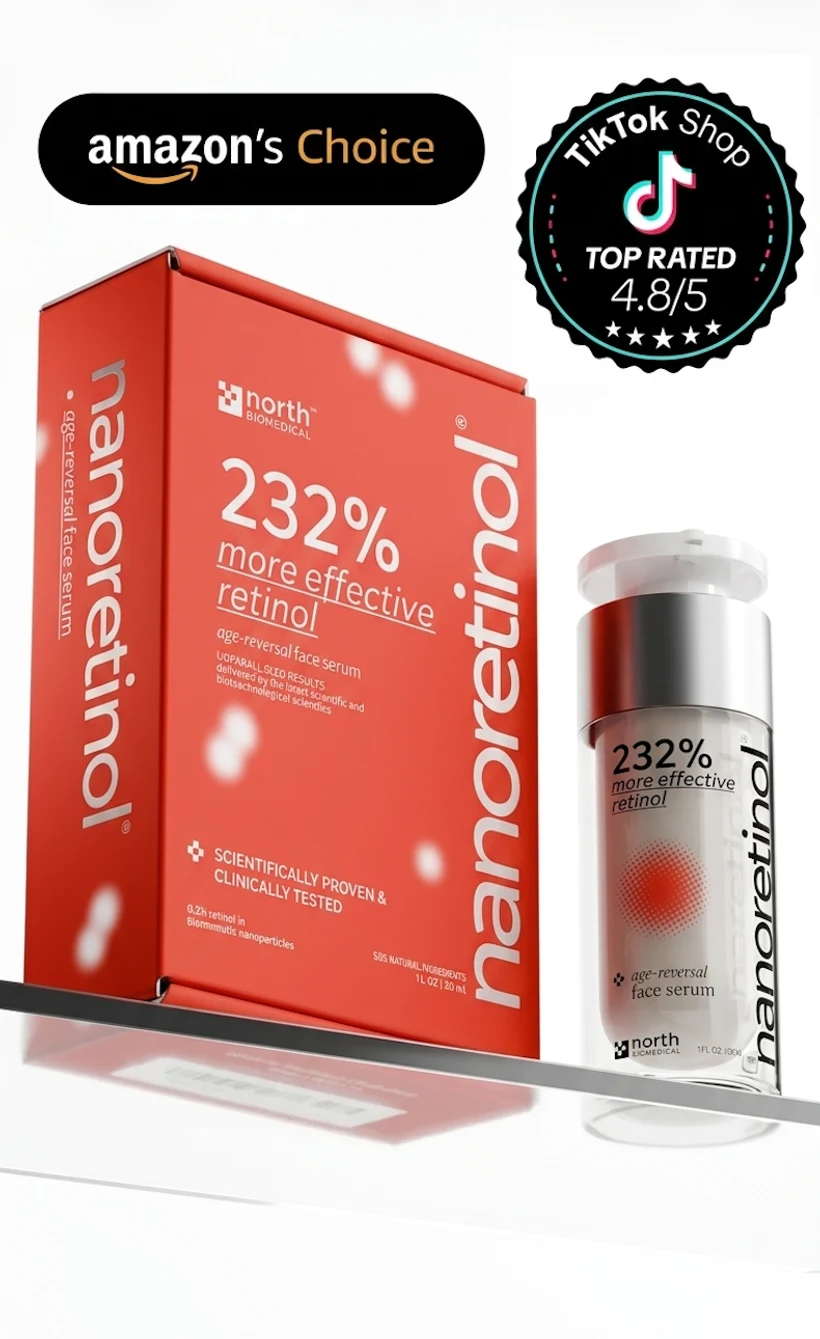
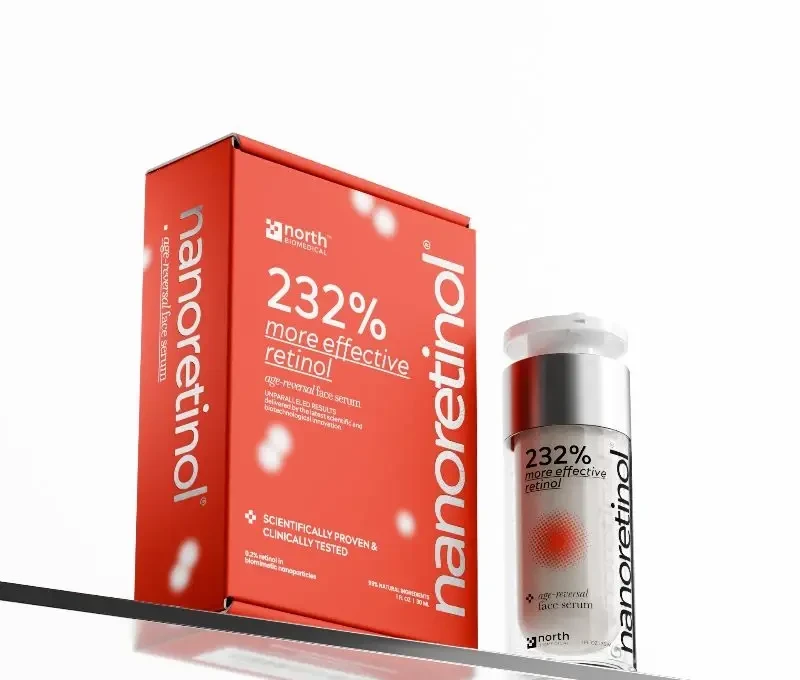
Nanoretinol, with its biomimetic lipid nanoparticle delivery, is specifically designed to bypass the barrier sensitivity concerns that conventional retinol causes — the same irritation issues that push women toward gentler exfoliants in the first place. Both ingredients address the same skin type: mature, sensitive, and serious about long-term results.
In clinical testing, Nanoretinol showed +232% more effective collagen recovery and +73% more effective elastin recovery compared to conventional retinol. Gluconolactone, for its part, provides equivalent anti-aging exfoliation to glycolic acid while adding 50% UV photoprotection and measurable barrier-strengthening properties. Together, they cover the two primary mechanisms of skin aging that most affect women over 40: surface accumulation and structural degradation.
References
- Edison BL, Green BA, Wildnauer RH, Sigler ML. “A polyhydroxy acid skin care regimen provides antiaging effects comparable to an alpha-hydroxyacid regimen.” Cutis. 2004;73(2 Suppl):14–17. https://pubmed.ncbi.nlm.nih.gov/15002657/
- Grimes PE, Green BA, Wildnauer RH, Edison BL. “The use of polyhydroxy acids (PHAs) in photoaged skin.” Cutis. 2004;73(2 Suppl):3–13. https://pubmed.ncbi.nlm.nih.gov/15002656/
- Green BA, Yu RJ, Van Scott EJ. “Clinical and cosmeceutical uses of hydroxyacids.” Clinics in Dermatology. 2009;27(5):495–501. doi:10.1016/j.clindermatol.2009.06.023
- Bernstein EF, Brown DB, Schwartz MD, Kaidbey K, Ksenzenko SM. “The polyhydroxy acid gluconolactone protects against ultraviolet radiation in an in vitro model of cutaneous photoaging.” Dermatologic Surgery. 2004;30(2 Pt 1):189–195. doi:10.1111/j.1524-4725.2004.30060.x
- Warowna M, Strzelecka A, Kręcisz B. “Influence of Lactobionic Acid on Hydration and Elasticity Parameters in Women Aged 30–40 and 50–60 Years in Comparison to Mandelic Acid.” Journal of Clinical Medicine. 2025;14(5):1619. doi:10.3390/jcm14051619
- Zerbinati N, Di Francesco S, Capillo MC, Maccario C, Stabile G, Galadari H, Rauso R, Sommatis S, Mocchi R. “Investigation on the Biological Safety and Activity of a Gluconolactone-Based Lotion for Dermocosmetic Application.” Pharmaceuticals (Basel). 2023;16(5):655. doi:10.3390/ph16050655