
Best Wrinkle Filler Cream: What Actually Plumps Lines (and What Just Hides Them)
Most 'wrinkle fillers' are silicone optical illusions that wash off at night. Here's what the evidence says about what truly fills a wrinkle from underneath.
The phrase “wrinkle filler cream” is doing a lot of heavy lifting in skincare marketing. It promises something that sounds like an over-the-counter syringe of dermal filler — instant volume, instant smoothness, lines actually filled. The reality is that the products sold under that label fall into two completely different categories, and the difference between them determines whether you’ll see results that last past your morning shower or results that compound for years.
This guide separates the two, walks through what the clinical literature actually shows for each, and explains how to pick the right tool for the wrinkle you’re trying to address.
The Two Categories Hidden Behind One Marketing Term
Category 1: Optical wrinkle fillers (instant-blur creams). These rely primarily on silicones — typically dimethicone, cyclomethicone, or related silicone elastomers — combined with film-forming polymers and light-reflecting micro-particles. When applied to skin, they create a thin, flexible film that fills the surface depression of a wrinkle, reflects light evenly, and produces an immediate optical smoothing effect. Most contain almost no active ingredient that biologically affects the skin underneath. They wash off, and the wrinkle returns as it was [1].
Category 2: Structural wrinkle fillers (collagen-rebuilding creams). These contain ingredients with clinical evidence for actually changing the dermal matrix beneath the wrinkle — most commonly retinoids, peptides, and certain growth factors. They don’t produce same-day results, but with consistent use over months they reduce the depth of the wrinkle structurally. The wrinkle is shallower because the dermis is denser, not because a film is sitting on top of it.
The two categories serve very different purposes. An optical filler is a same-day cosmetic — it makes a Tuesday meeting look better. A structural filler is a long-term investment — it changes what your face looks like in 2027, 2028, and beyond. Neither is a scam, but using one when you wanted the other is the source of most “wrinkle filler doesn’t work” reviews.
What the Evidence Says About Each Category
Optical fillers (silicones and film-formers)
Silicone-based topical products have real, measurable, immediate effects on the appearance of fine lines. Independent research on silicone film-forming systems confirms that they form a thin, breathable layer on the skin that smooths surface texture and reflects light to create an optical blurring effect. Trials of medical-grade silicone wrinkle patches have shown that the majority of users perceive softer, less noticeable forehead lines after overnight wear, attributed to enhanced hydration and surface smoothing [1].
The ceiling on what these products can do is also real. They do not penetrate the dermis, do not stimulate collagen, and do not affect the underlying biology of the wrinkle. They are makeup-adjacent — a same-day enhancement — and that’s exactly how to think about them. Use them on the morning of a video call. Don’t expect them to change your face.
A structural filler is a long-term investment — it changes what your face looks like in 2027, 2028, and beyond.
Structural fillers — Retinoids
Retinoids are the most-studied class of topical anti-aging actives in dermatology. A 24-week randomized vehicle-controlled trial of topical retinol on naturally aged skin demonstrated significant reductions in fine wrinkling, accompanied by measurable increases in glycosaminoglycan synthesis and procollagen I production in skin biopsies [2]. The mechanism is well-understood: retinoids upregulate fibroblast activity, increase collagen synthesis, and modulate the matrix metalloproteinases (MMPs) that break collagen down. Independent reviews of retinoid clinical trials confirm consistent wrinkle reduction across both prescription tretinoin and over-the-counter retinol, with prescription strengths producing faster results and OTC retinol producing comparable effects on a longer timeline [3].
This is structural change. You can biopsy it. The dermis is literally thicker after sustained use. (For a closer look at the underlying biology, our deep-dive on how retinol stimulates collagen covers the gene-expression cascade in detail.)
Structural fillers — Peptides
Two peptide subclasses have meaningful clinical evidence. The first is signal peptides like palmitoyl pentapeptide-4 (Matrixyl), a fragment of procollagen I that triggers fibroblasts to make more collagen. In a 12-week double-blind trial in 93 women aged 35-55, twice-daily use produced statistically significant reductions in wrinkle depth and improvements in skin density compared to vehicle [4]. The second is neurotransmitter-inhibiting peptides like acetyl hexapeptide-3 (Argireline), which partially mimic the muscle-relaxing effect of botulinum toxin in topical form. A clinical trial of 10% Argireline showed wrinkle depth reductions up to 30% over 30 days of twice-daily application — slower and weaker than injectable Botox but cumulating with use [5]. (For more on this class, see our pieces on Matrixyl 3000 and Argireline.)
What about hyaluronic acid?
Topical hyaluronic acid is often marketed as a “filler” because it draws water into the skin, transiently plumping the dermal layer. The plumping effect is real but temporary — it lasts as long as the hydration does, and it does not change underlying structure [3]. Treat hyaluronic acid as a same-day enhancement layered with an optical filler, not as a structural treatment.
How to Pick — by Wrinkle Depth and Time Horizon
| Your priority | What to use |
|---|---|
| Smooth lines for a single event today | Silicone-based optical filler, applied 20-30 min before makeup |
| Soften fine, dynamic lines long-term | Topical retinoid + Matrixyl-class peptide, nightly |
| Reduce deep, static wrinkles structurally | Topical retinoid (best delivery system you can get) + peptide stack, nightly, 6-12 month commitment |
| Soften muscle-driven lines (frown, forehead) | Argireline-class peptide + retinoid; consider Botox alternatives |
| Improve overall skin density and “youthfulness” | Retinoid backbone + antioxidant in AM + SPF |
Notice that retinoid shows up in almost every long-term row. That’s not laziness — it’s that no other topical class has comparable structural evidence across the full range of wrinkle types. Peptides are excellent additions; retinoid is the foundation.
A 1% retinol applied twice a week with irritation is delivering less active to the dermis than a 0.2% retinol applied nightly with no irritation.
The Delivery Problem That Limits Most Retinol Creams
This is where most people’s structural-filler routine quietly fails. The bottleneck is not how much retinol the cream contains — it’s how much of that retinol actually crosses the epithelial barrier into the dermis where the fibroblasts live.
Conventional retinol formulations rely on chemicals and petroleum derivatives that disrupt the barrier’s lipid structure to push the active through. The mechanism works for some skin, but it produces the burning, redness, and peeling that drive most users to skip nights, dilute the product, or quit entirely. A 1% retinol applied twice a week with irritation is delivering less active to the dermis than a 0.2% retinol applied nightly with no irritation. Frequency, not concentration, drives total exposure.
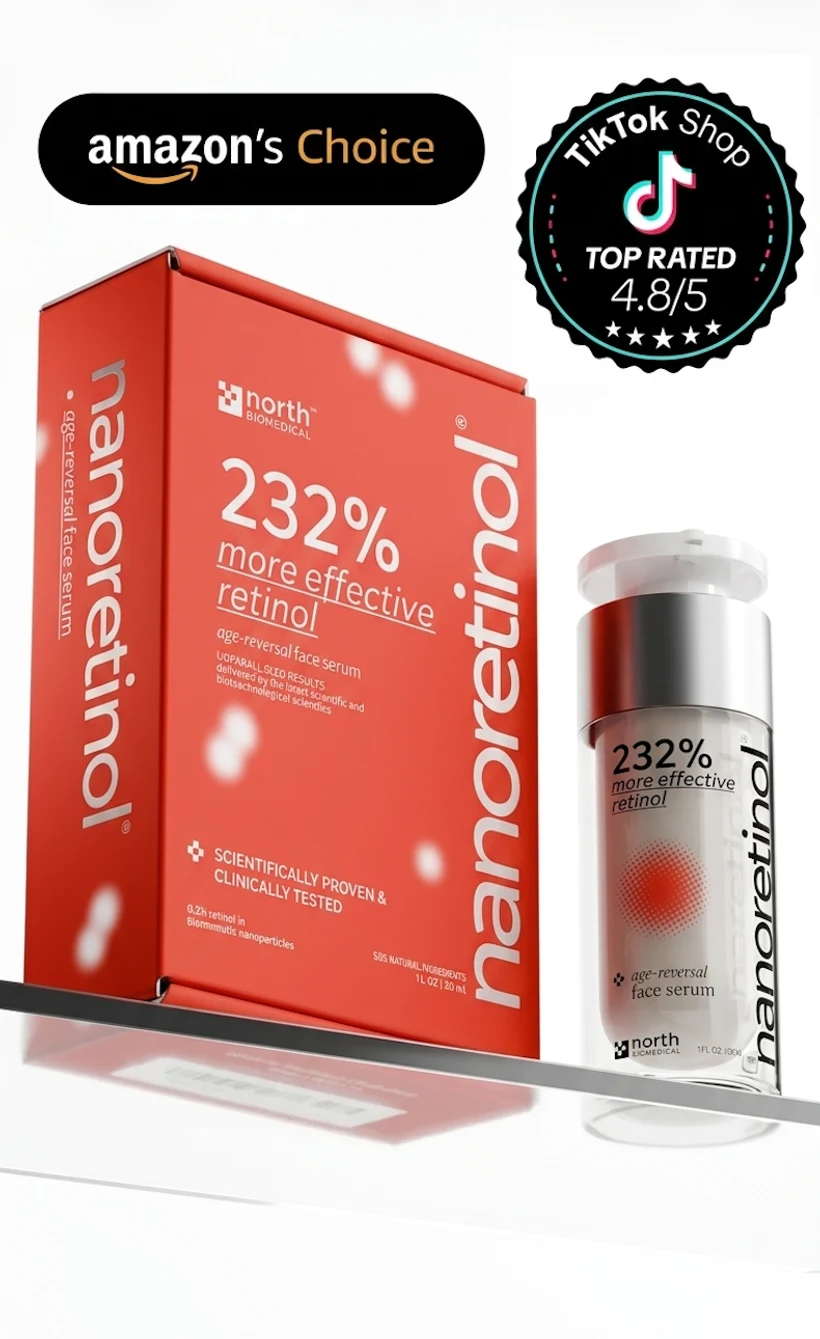
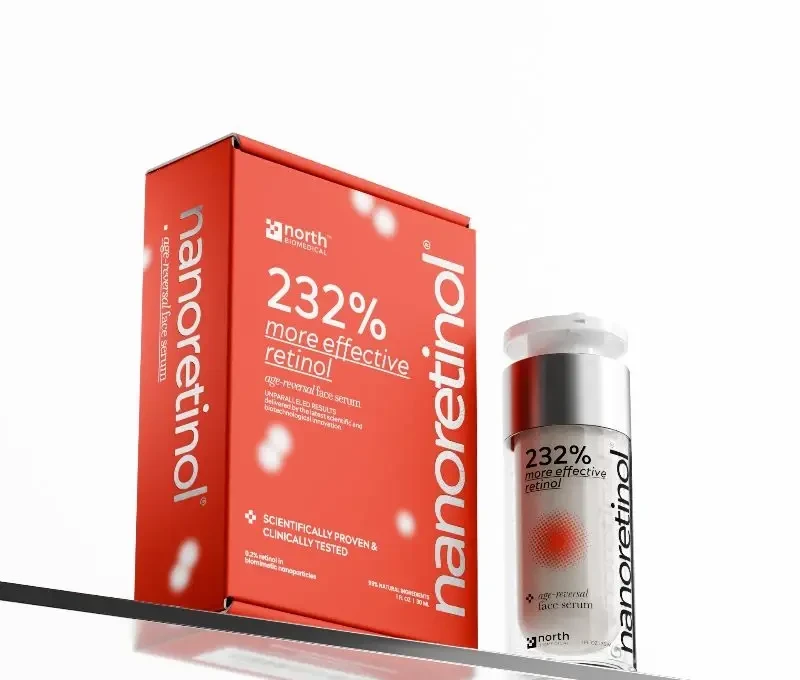
Nanoretinol takes the opposite approach. Retinol is encapsulated inside biomimetic lipid nanoparticles — particles externally identical to skin-cell membranes. The body recognizes these as “self” and allows passage through the epithelial barrier without disrupting it. The same delivery technology underlies modern targeted drug delivery in oncology. In comparative studies, this approach produced 232% greater collagen recovery and 73% greater elastin recovery versus conventional retinol. Clinical trials showed 61% increased firmness and 56% increased elasticity in 56 days of use. Just as importantly, because the barrier isn’t being disrupted, nightly application becomes sustainable — meaning more cumulative active exposure for the dermis to actually respond to.
This is the structural-filler half of the equation. For same-day blurring, an optical filler still works. The two categories are not competitors; they’re tools for different jobs.
A Closing Honest Take
If you’ve ever bought a product called a “wrinkle filler” and wondered why nothing changed permanently, you weren’t doing anything wrong. You were probably using a perfectly good Category 1 product (optical filler) and expecting Category 2 (structural) results. The fix isn’t a more expensive optical filler — it’s adding a structural one to the routine, ideally one whose delivery system gets the active where it actually needs to go.
The best wrinkle filler cream isn’t a single product. For most skin, it’s a pairing: a structural cream that rebuilds the dermis over months, plus an optical cream that takes the edge off in the meantime. Used together, you get the morning-of result and the year-from-now result. Used alone, you get half of what you wanted.
References
-
Pintea A, Manea A, Pintea C, et al. “Peptides: Emerging Candidates for the Prevention and Treatment of Skin Senescence: A Review.” Biomolecules. 2025;15(1):88. doi:10.3390/biom15010088
-
Kafi R, Kwak HS, Schumacher WE, et al. “Improvement of naturally aged skin with vitamin A (retinol).” Archives of Dermatology. 2007;143(5):606-612. doi:10.1001/archderm.143.5.606
-
Mukherjee S, Date A, Patravale V, Korting HC, Roeder A, Weindl G. “Retinoids in the treatment of skin aging: an overview of clinical efficacy and safety.” Clinical Interventions in Aging. 2006;1(4):327-348. doi:10.2147/ciia.2006.1.4.327
-
Robinson LR, Fitzgerald NC, Doughty DG, Dawes NC, Berge CA, Bissett DL. “Topical palmitoyl pentapeptide provides improvement in photoaged human facial skin.” International Journal of Cosmetic Science. 2005;27(3):155-160. doi:10.1111/j.1467-2494.2005.00261.x
-
Blanes-Mira C, Clemente J, Jodas G, et al. “A synthetic hexapeptide (Argireline) with antiwrinkle activity.” International Journal of Cosmetic Science. 2002;24(5):303-310. doi:10.1046/j.1467-2494.2002.00153.x
-
North Biomedical LLC. “Nanoretinol vs. Conventional Retinol: Efficacy in Collagen and Elastin Recovery.” Clinical Study Summary, 2024. northbiomedical.com/documents/Nanoretinol-Study_Summary.pdf